

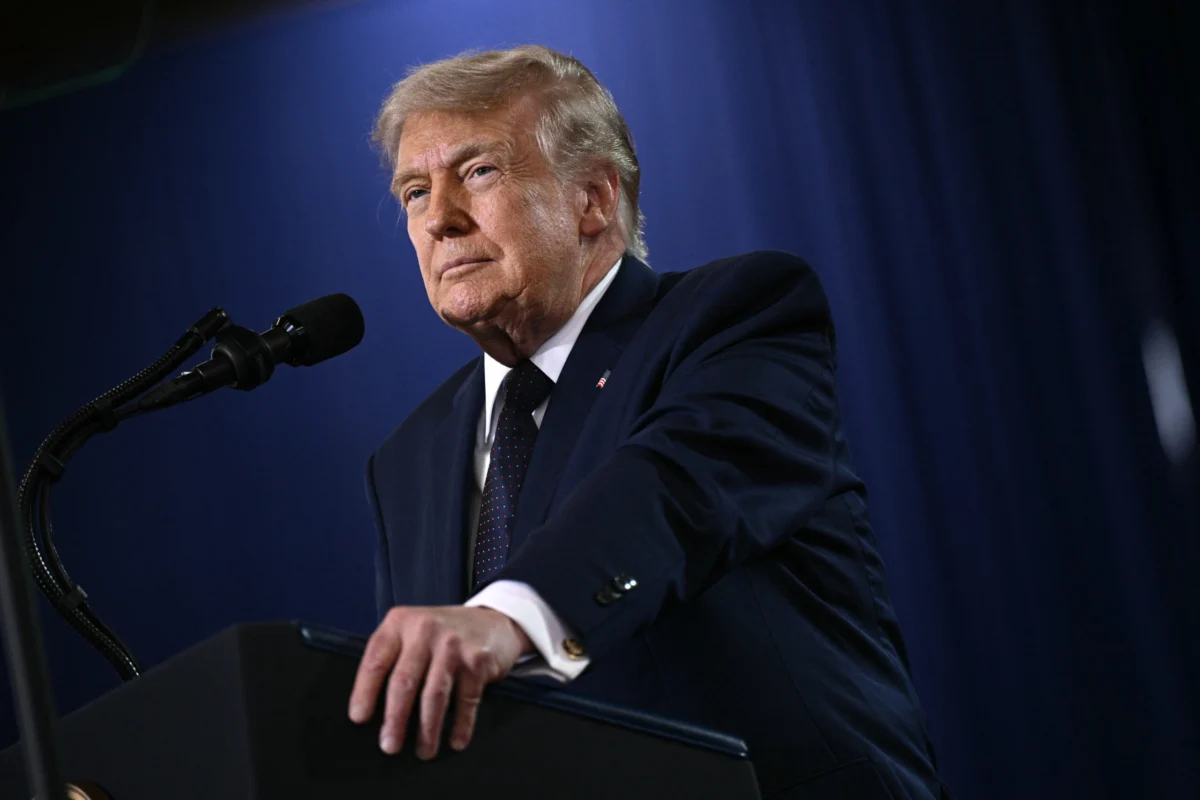
President Donald Trump, speaking on May 22, 2026, at the Rockland Community College Fieldhouse in Suffern, New York, affirmed his administration’s commitment to diplomatic engagement with Iran, stating that any forthcoming agreement with Tehran would be "good and proper." This pronouncement comes amidst persistent, high-stakes mediation efforts involving multiple international actors, seeking to de-escalate long-standing tensions and potentially revive aspects of the nuclear accord that collapsed years prior. The President’s remarks signal a potentially significant shift or a continued pragmatic approach in US foreign policy towards Iran, suggesting a willingness to explore diplomatic pathways even after years of an assertive "maximum pressure" campaign.
The statement by President Trump, made during a speech primarily focused on economic issues, quickly reverberated across diplomatic capitals, underscoring the delicate and complex nature of US-Iran relations. It suggests a tacit acknowledgement of the limitations of a purely confrontational approach and the imperative to find a stable resolution to the nuclear standoff and broader regional security concerns. Mediation efforts, often conducted through discreet back channels and involving nations like Oman, Qatar, and key European allies, have intensified over the past year, aiming to bridge the deep chasm of distrust and policy differences between Washington and Tehran.
A Decades-Long Diplomatic Labyrinth: Background to Current Tensions
The relationship between the United States and Iran has been fraught with tension for over four decades, particularly since the 1979 Islamic Revolution. This history includes periods of proxy conflicts, economic sanctions, and intermittent, often clandestine, diplomatic overtures. The most significant attempt at de-escalation and nuclear non-proliferation in recent memory was the 2015 Joint Comprehensive Plan of Action (JCPOA), commonly known as the Iran nuclear deal. Signed by Iran and the P5+1 group (China, France, Germany, Russia, the United Kingdom, and the United States, plus the European Union), the JCPOA imposed stringent limits on Iran’s nuclear program in exchange for the lifting of international sanctions.
The deal was hailed by its proponents as a landmark achievement in preventing nuclear proliferation and fostering regional stability. However, it faced strong criticism from opponents, including then-candidate Donald Trump, who argued it did not adequately address Iran’s ballistic missile program or its regional activities. In May 2018, the Trump administration withdrew the United States from the JCPOA, re-imposing and significantly escalating sanctions on Iran. This decision triggered a downward spiral in relations, with Tehran gradually scaling back its commitments under the deal and intensifying its uranium enrichment activities, moving further away from the limits set by the original agreement. The "maximum pressure" campaign, designed to compel Iran to negotiate a broader, more comprehensive agreement, has had a severe impact on Iran’s economy but has not, by many accounts, fundamentally altered Iran’s strategic calculus or halted its nuclear advancements.
A Chronology of Escalation and Stalled Diplomacy
Understanding the current context requires a brief look at the trajectory of US-Iran relations since the JCPOA’s unraveling:
- May 2018: The United States unilaterally withdraws from the JCPOA and begins re-imposing sanctions.
- 2019: Iran announces it will begin to reduce its commitments under the JCPOA in response to US sanctions and the inability of European partners to fully mitigate their economic impact. This includes exceeding uranium enrichment limits and increasing its stockpile.
- 2020: Tensions escalate dramatically with the US assassination of Iranian General Qassem Soleimani in Iraq, followed by Iran’s retaliatory missile strikes on US bases. Iran further increases its nuclear activities.
- 2021-2022: Attempts by the Biden administration to revive the JCPOA through indirect talks in Vienna largely fail, primarily due to disagreements over sanctions relief, guarantees, and the scope of the deal. Iran continues to advance its nuclear program, reaching higher enrichment levels closer to weapons-grade.
- 2023: Regional tensions persist, with maritime incidents and proxy confrontations. Diplomatic efforts, though not always public, intensify through intermediaries, often focusing on prisoner swaps or limited de-escalation measures.
- Early 2024: Reports emerge of discreet back-channel communications between US and Iranian officials, often facilitated by countries like Oman and Qatar, aimed at preventing further escalation.
- Late 2024 – Early 2025: As the political landscape in both Washington and Tehran undergoes shifts, a renewed sense of urgency propels more structured, albeit indirect, discussions. The focus begins to shift from a full revival of the JCPOA to a potential interim agreement or a "less for less" deal, aimed at capping Iran’s nuclear program in exchange for some sanctions relief.
- May 2026: President Trump’s statement indicates that these prolonged mediation efforts may be nearing a critical juncture, with the prospect of a concrete agreement on the horizon. His emphasis on an agreement being "good and proper" suggests a move away from the rhetoric of unconditional surrender previously associated with "maximum pressure."
Economic Pressures and Strategic Realities: Supporting Data
The "maximum pressure" campaign has undeniably crippled Iran’s economy. According to data from the International Monetary Fund, Iran’s GDP contracted significantly in the years following the re-imposition of sanctions, with oil exports plummeting from over 2.5 million barrels per day (bpd) in 2017 to less than 500,000 bpd by 2020. While Iran has found clandestine ways to export some oil, the official revenue stream has been severely curtailed. Inflation has soared, reaching over 40% in some years, eroding the purchasing power of ordinary Iranians and exacerbating social discontent. Unemployment, particularly among youth, remains a critical issue.
However, despite the economic hardship, the Iranian regime has demonstrated resilience and a continued commitment to its nuclear program and regional foreign policy objectives. The International Atomic Energy Agency (IAEA) has consistently reported Iran’s accumulation of enriched uranium beyond JCPOA limits, including uranium enriched to 60% purity, a significant technical step towards weapons-grade material (around 90%). By early 2026, estimates from various intelligence agencies suggested Iran possessed enough highly enriched uranium to produce several nuclear devices if it chose to do so, though the timeline for actual weaponization remains a subject of debate.
The global energy market also plays a role. Amidst fluctuating oil prices and geopolitical uncertainties in other producing regions, the potential return of Iranian oil to legitimate global markets could offer a significant supply boost, potentially stabilizing prices and providing a much-needed buffer against supply shocks. This economic incentive, coupled with the desire to prevent further nuclear proliferation, provides a strong impetus for diplomatic engagement.
Official Responses and Anticipated Reactions
While President Trump’s statement provides a clear indication of the US position, the specifics of any potential agreement remain shrouded in diplomatic secrecy.
United States: Beyond the President’s remarks, US officials would likely emphasize a commitment to non-proliferation, regional stability, and ensuring any deal is verifiable and enforceable. A senior State Department official, speaking on background, indicated that "the administration remains focused on a comprehensive approach that addresses not only nuclear proliferation but also Iran’s destabilizing regional actions. Any agreement must be robust and ensure long-term security." This suggests that while a nuclear agreement might be the immediate focus, broader issues would remain on the table for future discussions.
Iran: Tehran’s consistent demand has been the complete and verifiable lifting of all US sanctions, particularly those related to its oil and banking sectors, as a prerequisite for any return to nuclear compliance. Iranian Foreign Minister Hossein Amir-Abdollahian, in recent public statements, has reiterated that "the ball is in America’s court. If they demonstrate genuine political will and lift the oppressive sanctions, the path to a sustainable agreement is open." Iran would also likely seek guarantees that any future US administration would not unilaterally withdraw from a renewed agreement, a major sticking point in past negotiations.
European Allies (EU3 – France, Germany, UK): European leaders have consistently advocated for the revival of the JCPOA or a similar diplomatic solution. They view a nuclear-armed Iran as an unacceptable risk and prefer diplomacy over military confrontation. A joint statement from the EU3 foreign ministers would likely welcome any constructive dialogue and potential agreement, emphasizing the importance of diplomacy for regional and global security. They would likely offer support for verification mechanisms and technical assistance to ensure compliance.
Regional Actors:
- Israel: Israeli officials have historically expressed deep skepticism and outright opposition to any deal that they perceive as too lenient on Iran or that does not dismantle its nuclear program entirely. Prime Minister Benjamin Netanyahu would likely voice strong reservations, emphasizing Iran’s continued regional aggression and calling for a "much stronger, longer, and broader agreement." Israel’s primary concern remains Iran’s nuclear breakout capability and its ballistic missile program.
- Saudi Arabia and Gulf States: These nations have also expressed concerns about Iran’s regional influence and proxy networks. While some might welcome a de-escalation of tensions, they would likely seek assurances that any agreement does not embolden Iran or neglect their security interests. Recent efforts by Saudi Arabia to engage in direct dialogue with Iran suggest a pragmatic approach, but deep-seated mistrust persists.
International Atomic Energy Agency (IAEA): The IAEA, as the international nuclear watchdog, would play a crucial role in verifying Iran’s compliance with any new agreement. Its Director-General would likely stress the importance of robust monitoring and verification mechanisms to ensure transparency and build confidence.
Broader Impact and Implications
The potential for a new or renewed agreement between the US and Iran carries significant implications across several domains:
Geopolitical Stability: A diplomatic breakthrough could significantly de-escalate tensions in the volatile Middle East. Reduced confrontation between the US and Iran could lessen the risk of regional proxy conflicts, improve maritime security in the Persian Gulf, and potentially pave the way for broader regional dialogue. Conversely, a failure to reach an agreement after such high-level statements could lead to renewed escalation and a heightened sense of regional insecurity.
Nuclear Non-Proliferation: The primary objective of any deal is to prevent Iran from developing nuclear weapons. A "good and proper" agreement would likely involve Iran rolling back its uranium enrichment to agreed-upon levels, allowing enhanced IAEA inspections, and potentially addressing its advanced centrifuge program. Success here would be a major win for global non-proliferation efforts.
Economic Revival: For Iran, an agreement would mean significant sanctions relief, potentially unlocking billions of dollars in frozen assets and allowing its oil to re-enter global markets legitimately. This could stimulate economic growth, reduce inflation, and alleviate social pressures. For the global economy, increased Iranian oil supply could help stabilize energy prices, benefiting consumers and industries worldwide. Foreign investment, particularly in Iran’s energy and infrastructure sectors, could also see a resurgence.
Domestic Politics: In the US, any agreement with Iran would face scrutiny from both sides of the political spectrum. Supporters would hail it as a diplomatic achievement preventing war, while critics would likely argue it offers too many concessions to Tehran. In Iran, the hardliners may view concessions as a sign of weakness, while pragmatists would welcome the economic relief. The specific contours of the deal would heavily influence its domestic reception in both countries.
Trust Deficit: One of the most significant challenges remains the profound trust deficit between Washington and Tehran. The US withdrawal from the JCPOA left a deep scar on Iranian perceptions of US reliability. Any new agreement would need to incorporate mechanisms or guarantees that address this, perhaps through UN Security Council resolutions or multi-party assurances, though legally binding a future US administration remains complex.
President Trump’s statement marks a pivotal moment in the ongoing, intricate dance of US-Iran diplomacy. While the details remain elusive, the public affirmation of a "good and proper" agreement suggests a pragmatic, albeit cautious, step towards de-escalation. The path forward is fraught with obstacles, from negotiating the specifics of sanctions relief and nuclear limitations to securing regional buy-in and addressing the deep-seated mistrust. However, the prospect of a diplomatic resolution, after years of heightened tension and economic pressure, offers a glimmer of hope for a more stable and secure future in one of the world’s most volatile regions. The coming months will reveal whether these mediation efforts can translate into a concrete, lasting peace.
