

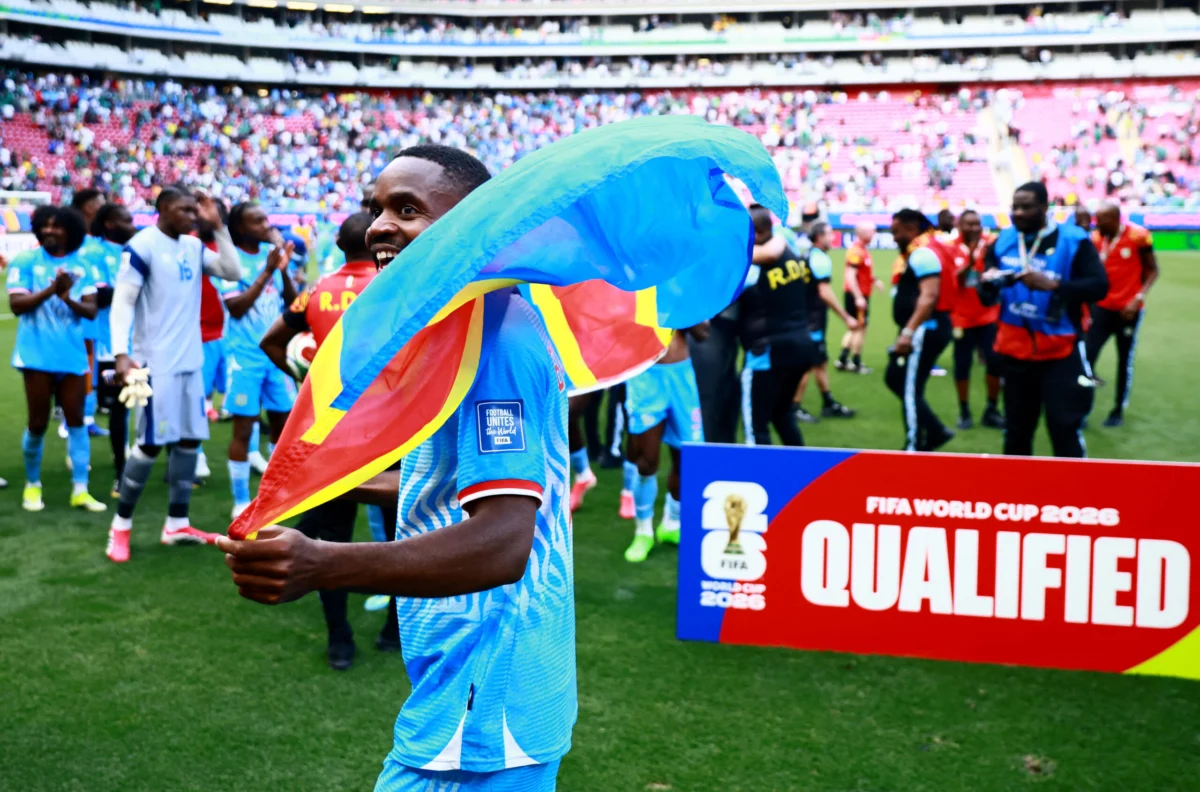
The United States government, acting in its capacity as a primary co-host for the 2026 FIFA World Cup, has issued a formal directive to the Democratic Republic of the Congo (DRC) national football team, requiring a strict 21-day isolation period prior to their arrival on American soil. This mandate comes in response to a burgeoning public health crisis in Central Africa, where a resurgence of the Ebola virus has triggered international alarm. The directive, delivered by the White House Task Force for the World Cup, establishes a high-stakes ultimatum for the Congolese delegation: maintain a verified "biosecurity bubble" or face a denial of entry into the United States, a move that could jeopardize the team’s participation in their first World Cup tournament in over half a century.
Andrew Giuliani, the executive director of the White House Task Force for the World Cup, confirmed the administration’s stance during a series of briefings on Friday and Saturday. The core of the requirement centers on the 21-day incubation period of the Ebola virus. US health officials are insisting that the Congolese squad, currently training in Belgium, remain isolated from any external contact that could lead to exposure. "We’ve been very clear to Congo that they should maintain the integrity of their bubble for 21 days before they can then come to Houston on June 11," Giuliani told ESPN. He emphasized that the communication has been extended directly to the DRC government, underscoring the severity of the situation. "We’ve made it very clear to the Congo government as well that they need to maintain that bubble, or they risk not being able to travel to the United States. We cannot be any clearer."
The Epidemiological Context: The Bundibugyo Strain
The urgency behind the US mandate is rooted in the recent escalation of Ebola cases within the DRC and neighboring Uganda. The World Health Organization (WHO) recently elevated the risk level of the current outbreak to "very high" at the national and regional levels. Unlike some previous outbreaks, this specific surge involves the rare Bundibugyo strain of the virus. While the Zaire strain is more commonly known and has been the subject of recent vaccine developments, the Bundibugyo strain presents unique challenges for containment and treatment.
According to data released by health authorities, nearly 750 suspected cases have been identified, with 177 recorded deaths. The WHO’s declaration of the outbreak as a Public Health Emergency of International Concern (PHEIC) has triggered a wave of travel advisories and tightened border controls globally. Ebola is characterized by high fever, internal and external bleeding, and organ failure. It is transmitted through direct contact with the blood or other bodily fluids of infected people. Because the incubation period—the time between infection and the onset of symptoms—ranges from two to 21 days, the US Task Force has identified this three-week window as the critical threshold for ensuring the safety of the tournament’s players, staff, and millions of fans.
Conflict Over Training Schedules and Logistics
Despite the stern warnings from Washington, the DRC national team appears to be proceeding with its original preparations, albeit with significant modifications to their travel itinerary. A team spokesperson indicated that, as of this week, there are no plans to alter their scheduled friendly matches in Europe. The Leopards—as the Congolese team is known—are slated to face Denmark in Liege, Belgium, on June 3, followed by a match against Chile in Cadiz, Spain, on June 9.
The Congolese football federation (FECOFA) argues that the risk of transmission within the squad is negligible. "We have kept our training programme. No player in the squad has come from DR Congo," a team official stated. The majority of the roster consists of players who ply their trade in European professional leagues, including France, Belgium, and England. The head coach, Sébastien Desabre, is also based in Europe. However, the situation is complicated by the recent arrival of several team officials and support staff who traveled directly from Kinshasa to the Belgian training camp earlier this week.
While the team has officially canceled a planned three-day celebratory send-off in Kinshasa to mitigate risk, the scheduled matches in Belgium and Spain remain a point of contention. US officials argue that these matches, which involve contact with other teams and exposure to public venues, could technically constitute a breach of the 21-day "bubble" protocol required for entry into Houston on June 11.
Historical Significance of the 2026 Campaign
The tension surrounding these health protocols is amplified by the historical weight of the DRC’s qualification. The 2026 World Cup marks the first time the nation has qualified for the global stage since 1974, when the country competed as Zaire. That 52-year hiatus has created a massive wave of national pride and expectation. For a generation of Congolese fans, this tournament represents a return to international relevance.
The DRC was drawn into Group K, a challenging bracket that includes Portugal, Colombia, and Uzbekistan. Their schedule is as follows:
- June 17: Opening fixture against Portugal at NRG Stadium in Houston, Texas.
- June 23: Second group match against Colombia at the Estadio Akron in Guadalajara, Mexico.
- June 27: Final group stage match against Uzbekistan at the Mercedes-Benz Stadium in Atlanta, Georgia.
If the team is barred from entering the United States, it would create an unprecedented logistical and competitive crisis for FIFA. As a co-host, the United States holds significant sovereign authority over its borders, yet FIFA regulations generally require host nations to facilitate the entry of all qualified participating teams. The intersection of national biosecurity and international sporting obligations is currently a "grey zone" that sports law experts are monitoring closely.
Supporting Data: The Impact of Ebola on International Travel
Historical data from previous Ebola outbreaks, such as the 2014-2016 West Africa epidemic, shows that travel restrictions often precede broader economic and social disruptions. During that period, several African nations were forced to withdraw from sporting events or host "home" matches in neutral countries. The current situation with the DRC is unique because the players themselves are largely based in non-affected regions, yet the "national" designation of the team subjects them to the scrutiny applied to their home country’s health status.
The 21-day isolation period is a standard epidemiological tool. According to the Centers for Disease Control and Prevention (CDC), monitoring individuals for 21 days after their last potential exposure is the only definitive way to ensure they are not carrying the virus. For a high-profile event like the World Cup, which attracts visitors from every corner of the globe, the US Task Force views any breach of this protocol as an unacceptable risk to domestic and international health security.
Official Responses and Reactions
The Congolese government has expressed concern that the strictness of the US mandate may be disproportionate given the squad’s European base. Diplomatic sources suggest that FECOFA is currently in talks with FIFA to mediate the dispute. They are seeking a compromise that would allow the friendly matches in Europe to proceed while implementing enhanced testing and "mini-bubbles" for the players.
In contrast, US officials remain firm. The White House Task Force, established specifically to manage the complex logistics of a 48-team tournament spread across three countries, has prioritized biosecurity as a pillar of their operational plan. "Our priority is the safety of the American public and the integrity of the tournament," a spokesperson for the Task Force stated. "We are working with all participating nations to ensure they meet the health requirements necessitated by current global conditions."
Football analysts suggest that the mental toll on the players could be significant. Preparing for a World Cup is a high-pressure endeavor under normal circumstances; doing so under the threat of disqualification and the constraints of a 21-day isolation period adds a layer of psychological stress that could impact the team’s performance on the pitch.
Broader Implications for the 2026 World Cup
The situation with the DRC serves as a litmus test for the 2026 World Cup’s organizational resilience. With the tournament expanded to 48 teams and matches held across the US, Canada, and Mexico, the logistical complexity is unparalleled. This incident highlights the potential for non-sporting issues—such as public health crises, geopolitical tensions, or environmental factors—to disrupt the world’s most-watched sporting event.
If the DRC team is unable to meet the US requirements, FIFA may be forced to consider several difficult options:
- Forfeiture: The DRC could be forced to forfeit their matches, resulting in 3-0 wins for Portugal, Colombia, and Uzbekistan.
- Replacement: A standby team (potentially the highest-ranked team from the African qualifiers that did not make the cut) could be called up, though the short timeframe makes this nearly impossible.
- Relocation: Moving the DRC’s US-based matches to Mexico or Canada, provided those host nations have different entry requirements. However, this would disrupt ticket sales, broadcasting rights, and team travel schedules.
As of now, the "Houston Bubble" remains the mandatory path forward for the Congolese delegation. The world of international football and global health monitoring will be watching closely as the June 11 deadline approaches. The resolution of this standoff will likely set a precedent for how future mega-events balance the thrill of global competition with the rigorous demands of public safety in an era of emerging biological threats.
Chronology of the Crisis
- May 10: WHO reports a cluster of hemorrhagic fever cases in the DRC’s North Kivu province.
- May 15: Laboratory results confirm the presence of the Bundibugyo strain of Ebola.
- May 18: DRC national team begins assembling in Belgium for World Cup training.
- May 20: WHO declares the outbreak a Public Health Emergency of International Concern.
- May 22: The US White House Task Force for the World Cup issues the first formal warning to the DRC delegation regarding the 21-day isolation requirement.
- May 24: DRC cancels its Kinshasa send-off event but affirms its European friendly schedule.
- May 25: Andrew Giuliani reaffirms that the "bubble" must be maintained or entry will be denied.
- June 3: Scheduled friendly: DRC vs. Denmark (Liege, Belgium).
- June 9: Scheduled friendly: DRC vs. Chile (Cadiz, Spain).
- June 11: Mandatory arrival date in Houston, Texas, for the start of the 21-day isolation verification.
The coming days will be critical for the Leopards. The intersection of their 52-year dream and a global health emergency has created a narrative of tension that extends far beyond the football pitch, testing the limits of international cooperation and the protocols of the modern sporting world.
