

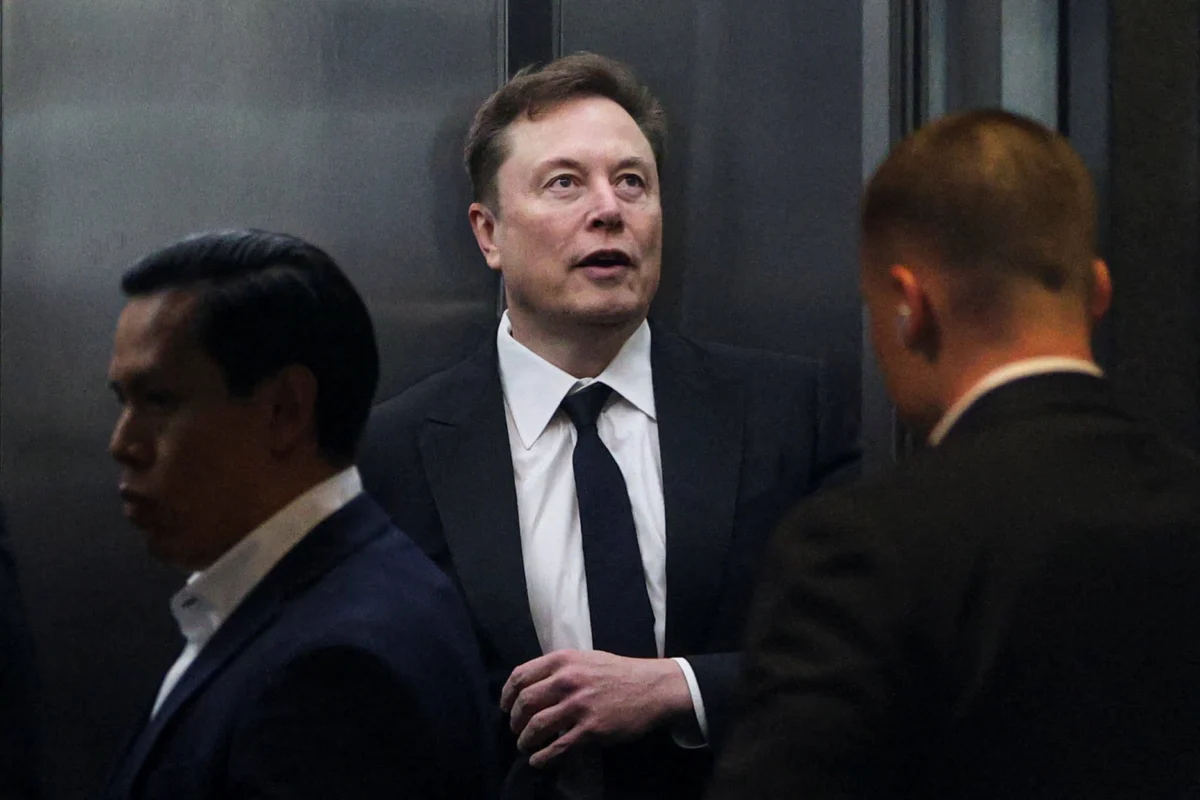
In a decisive legal victory for the architects of the modern artificial intelligence era, a federal jury in Oakland, California, has rejected Elon Musk’s high-profile lawsuit against OpenAI and its Chief Executive Officer, Sam Altman. Following a three-week trial that captivated the technology sector, the jury reached its verdict in less than two hours on Monday, effectively ending a bitter legal chapter between the world’s wealthiest individual and his former collaborators. U.S. District Judge Yvonne Gonzalez Rogers presided over the case, ultimately concurring with the advisory jury’s determination that OpenAI, Altman, and co-defendant Microsoft were not liable for the claims brought forward by Musk.
The court’s decision centered on a procedural but fundamental hurdle: the statute of limitations. Judge Gonzalez Rogers dismissed Musk’s claims of breach of charitable trust and unjust enrichment, ruling them "untimely." The jury concluded that Musk had a three-year window to initiate litigation regarding the alleged shift in OpenAI’s corporate mission and governance, a window that had closed long before his 2024 filing. While Musk’s legal team, led by Steven Molo, expressed an intent to appeal the decision directly to the judge, Judge Gonzalez Rogers signaled a firm stance, noting she was prepared to dismiss such an appeal "on the spot" due to the "substantial amount of evidence" supporting the jury’s findings.
The Core of the Dispute: Humanity vs. Profit
The legal battle, which began in early 2024, sought to address the fundamental transformation of OpenAI from a non-profit research laboratory into a commercial powerhouse. Musk, who helped co-found the organization in 2015 alongside Altman and Greg Brockman, alleged that the leadership team had "betrayed" the founding mission. At the heart of Musk’s testimony was his assertion that he contributed approximately $38 million to the project under the explicit understanding that OpenAI would remain a non-profit entity dedicated to developing artificial general intelligence (AGI) "for the benefit of humanity" rather than for shareholder profit.
Musk’s legal team argued that OpenAI’s pivot toward a "capped-profit" model in 2019, followed by multi-billion-dollar investments from Microsoft, constituted a "theft of a charity." They contended that Altman and Brockman exploited the non-profit’s early branding and tax-exempt status to build proprietary technology that was later gated behind commercial licenses. The lawsuit specifically sought to force OpenAI and Microsoft to relinquish as much as $134 billion in what Musk termed "ill-gotten gains," and further demanded the removal of Altman and Brockman from their leadership roles.
However, OpenAI’s defense presented a starkly different narrative. Lead attorney William Savitt characterized the lawsuit not as a quest for justice, but as a strategic maneuver by a disgruntled competitor. Savitt argued that Musk’s claims were brought forward only after he failed to secure control over OpenAI himself. The defense produced evidence suggesting that in the years leading up to his 2018 departure from the board, Musk had proposed a for-profit structure for OpenAI under his personal control, and at one point suggested the lab be folded into Tesla to utilize the automaker’s resources.

A Timeline of the Fractured Partnership
The deterioration of the relationship between Musk and Altman is a saga that mirrors the explosive growth of the AI industry itself. To understand the jury’s verdict, one must look at the chronology of events that defined the transition from partnership to rivalry:
- December 2015: OpenAI is founded as a non-profit research lab. Founding members include Elon Musk, Sam Altman, Greg Brockman, Ilya Sutskever, and others, with a combined pledge of $1 billion.
- February 2018: Elon Musk resigns from the OpenAI board. Official statements cite a potential future conflict of interest with Tesla’s self-driving AI developments, though internal tensions over the pace of progress and leadership control are later revealed.
- March 2019: OpenAI creates "OpenAI LP," a "capped-profit" entity designed to attract the massive capital required for compute power and talent.
- July 2019: Microsoft announces its initial $1 billion investment in OpenAI, becoming its exclusive cloud provider.
- November 2022: The launch of ChatGPT triggers a global AI arms race, propelling OpenAI to the forefront of the tech industry and dramatically increasing its valuation.
- March 2023: Musk founds xAI, a direct competitor to OpenAI, while publicly criticizing the "woke" and "closed" nature of Altman’s models.
- February 2024: Musk officially files suit in California, alleging breach of contract and breach of fiduciary duty.
- May 2026: The trial concludes in Oakland with a full dismissal of Musk’s claims.
Testimony from the Titans of Tech
The trial featured a "who’s who" of the technology world, providing rare insights into the inner workings of the most influential companies in AI. Microsoft CEO Satya Nadella testified regarding the software giant’s relationship with the startup, defending the partnership as a necessary alliance to scale technology that requires unprecedented levels of investment. Nadella emphasized that Microsoft’s role was to provide the "engine" for OpenAI’s research, rather than dictating its charitable mission.
Sam Altman and Greg Brockman also took the stand, addressing the 2025 restructuring that Musk sought to unwind. They argued that the move to a more traditional corporate structure was the only viable path to compete with Google’s DeepMind, which at the time held a significant lead in AI research and resources. OpenAI’s lawyers successfully argued that the organization’s evolution was a response to the shifting economic realities of AI development—specifically the soaring costs of Nvidia GPUs and the specialized engineering talent required to build large language models.
The jury was particularly moved by the defense’s argument regarding the statute of limitations. By demonstrating that Musk was aware of the for-profit shift as early as 2019—and had even engaged in discussions about similar structures—the defense convinced the jury that his 2024 lawsuit was a tactical delay. "You brought your claims too late," Savitt told reporters outside the courthouse. "And you did it because you were sitting on them to use them as a weapon of a competitor who can’t compete in the marketplace."
Financial Implications and Market Valuations
The verdict arrives at a pivotal financial juncture for both parties. OpenAI recently concluded a funding round in late March 2026, raising $122 billion at a staggering valuation of over $850 billion. This capital injection is intended to fund the development of "GPT-5" and expand its enterprise AI services, where it faces stiff competition from Anthropic and Google.
Musk, despite the legal setback, remains a dominant force in the AI landscape. His aerospace firm, SpaceX, which merged with his AI venture xAI in February 2026, was recently valued at $1.25 trillion. Reports indicate that SpaceX has confidentially filed for an Initial Public Offering (IPO), with a prospectus expected to be released to the public as early as this week. The legal victory for OpenAI removes a significant cloud of uncertainty that could have hampered its own future public offering or continued partnership with Microsoft.

Microsoft, for its part, expressed relief at the verdict. An attorney for the company stated, "The facts and the timeline in this case have long been clear, and we welcome the jury’s decision to dismiss these claims as untimely. We remain committed to our work with OpenAI to advance and scale AI for people and organizations around the world."
Analysis of Broader Industry Impact
The dismissal of Musk’s lawsuit has profound implications for the governance of AI startups and the legal definition of "charitable trust" in the context of emerging technology. Legal analysts suggest that the ruling reinforces the ability of non-profit boards to adapt their structures to meet commercial and competitive demands, provided they do so within the bounds of their corporate bylaws.
Furthermore, the case highlights the increasing "weaponization" of the legal system in the tech industry. As AGI becomes the most sought-after technology of the century, the battle for control over its development is moving from the laboratory to the courtroom. The jury’s quick rejection of Musk’s claims suggests a skepticism toward attempts to use the courts to settle personal and professional rivalries between industry leaders.
However, the ethical questions raised by Musk remain a topic of public debate. While the court ruled on the legality and timeliness of the claims, the moral question of whether a non-profit-born technology should be commercialized for private gain continues to be a point of contention among AI ethicists. For now, OpenAI and Microsoft have secured the legal right to continue their current trajectory, unburdened by the $134 billion shadow cast by Musk’s litigation.
As the legal teams for OpenAI and Microsoft celebrated with "hugs and back slaps" in downtown Oakland, the tech world now turns its attention to the next frontier: the public markets. With OpenAI’s valuation nearing the trillion-dollar mark and Musk’s SpaceX/xAI empire preparing for an IPO, the rivalry between Altman and Musk is far from over—it has simply moved from the jury box to the stock exchange.
