

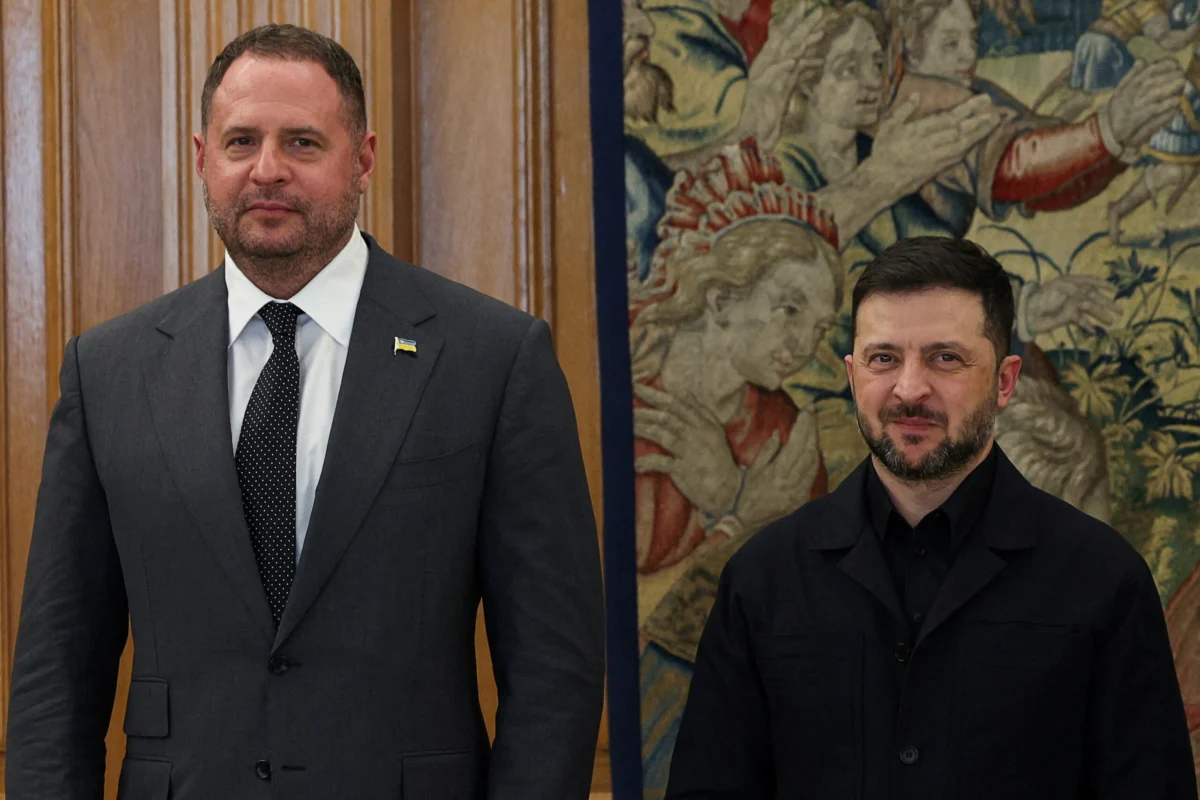
Andriy Yermak, who previously served as Ukrainian President Volodymyr Zelenskyy’s chief of staff and was a close confidant, now stands at the epicentre of the most significant corruption investigation to grip the nation since Russia’s full-scale invasion commenced in February 2022. Anticorruption authorities formally named Yermak an official suspect on Monday, May 12, 2026, in connection with an alleged multimillion-dollar money laundering scheme. This sophisticated operation is reportedly linked to a luxury housing development situated just outside the capital city of Kyiv. The unfolding scandal, which saw Yermak appear at a Kyiv court the following day for a hearing related to the charges, is part of a widening probe that has begun to draw in other senior figures closely associated with the president, including his national security chief. While President Zelenskyy himself has not been accused of any wrongdoing, the pervasive nature and high-profile targets of this scandal could profoundly threaten Ukraine’s aspirations for European Union membership, as Kyiv strives to convince the bloc that its ambitious anticorruption drive remains robust and effective, even amidst the exigencies of war. Furthermore, the allegations risk undermining the crucial military and financial support Ukraine receives from its Western allies, who have consistently tied aid to governance reforms and a genuine commitment to eradicating systemic corruption.
The Allegations Unveiled: A Multimillion-Dollar Scheme
The specific charges against Andriy Yermak are being spearheaded by Ukraine’s National Anti-Corruption Bureau (NABU) and the Specialized Anti-Corruption Prosecutor’s Office (SAPO), two independent bodies established with significant international backing to combat high-level graft. According to their joint investigation, Yermak is suspected of direct involvement in an organised criminal group that allegedly laundered approximately 460 million hryvnias, an amount equivalent to roughly $10.5 million, through a luxury real estate project near Kyiv. Prosecutors have underscored the seriousness of these allegations by seeking to impose a substantial bail of about $5.4 million on the 54-year-old former official, pending the continuation of their exhaustive investigation.
Yermak, who tendered his resignation in November 2025, has vehemently rejected all claims, branding the accusations as "unfounded." In a statement published on his Telegram channel following his court appearance on Tuesday, he asserted his commitment to legal principles: "As a lawyer with more than 30 years’ experience, I have always been guided by the law. And now, in the same way, I will defend my rights, my name and my reputation." During the court hearing, Yermak made a point of telling reporters that he "owns only one apartment and one car," seemingly aiming to contradict the impression of illicit wealth. His legal counsel, Ihor Fomin, echoed his client’s stance, labelling the allegations "groundless" and explicitly denying any role by Yermak in laundering funds through the high-end development. Fomin further suggested in an interview with Ukraine’s public broadcaster Suspilne that "this entire situation has been provoked by public pressure," implying a potential political motivation behind the charges.
However, NABU director Semen Kryvonos has firmly defended the integrity of the proceedings, emphasizing that authorities only move to issue formal notices when they are confident that they possess sufficient evidence to sustain charges in court. Kryvonos also took care to clarify that President Zelenskyy himself is not currently subject to any investigation in connection with the case. Despite this clarification, the sheer proximity of the accused to the presidential office has undeniably cast a shadow of corruption closer to the Ukrainian president than at any point during his tenure. The gravity of the situation is further amplified by the fact that the web of accusations extends beyond Yermak, implicating other individuals within Zelenskyy’s broader circle.
A Broader Net: Other Key Figures Under Scrutiny
The probe, officially known as "Operation Midas," is a sweeping anticorruption effort led by NABU and SAPO. It has brought into sharp focus several other prominent figures with ties to President Zelenskyy, significantly broadening the scope of the investigation. One such individual is Timur Mindich, a wealthy businessman who shares a past professional connection with Zelenskyy from the latter’s pre-presidential career in the entertainment industry. Mindich reportedly departed for Israel last year following the initial surfacing of corruption allegations against him. The "Midas" operation was first publicly disclosed in November 2025, at which time prosecutors accused Mindich of orchestrating a substantial $100 million kickback scheme within Energoatom, Ukraine’s state-owned nuclear energy company. Mindich has also refuted these charges.
Adding further layers of complexity and political sensitivity, the investigation has also drawn in Rustem Umerov, who currently serves as the head of Ukraine’s National Security and Defence Council. Prior to assuming this critical role, Umerov held the position of Ukraine’s defence minister until last year and is recognized as President Zelenskyy’s primary representative in United States-backed diplomatic initiatives aimed at bringing an end to Russia’s ongoing war against Ukraine. Prosecutors have confirmed that Umerov has been interviewed as a witness in the luxury real estate development case, although he has not been named as a suspect. The implication of such high-ranking officials underscores the profound challenge Ukraine faces in demonstrating its commitment to institutional integrity and accountability, particularly when key figures in its wartime leadership are drawn into corruption probes.
Ukraine’s Enduring Battle Against Corruption: Historical Context
Ukraine’s struggle with corruption is not a new phenomenon; it is a deeply entrenched problem with roots tracing back to the post-Soviet era, profoundly affecting its governance, economy, and public trust. For decades, systemic graft permeated various levels of government and business, hindering economic development and fostering public disillusionment. The Euromaidan Revolution of 2014, a pivotal moment in modern Ukrainian history, was fundamentally driven by a widespread public demand for democracy, transparency, and, crucially, an end to rampant corruption that characterized the previous pro-Russian government of President Viktor Yanukovych.
In the wake of the revolution, significant international pressure, particularly from the International Monetary Fund (IMF), the European Union (EU), and the United States, led to the establishment of new, independent anti-corruption institutions designed to break the cycle of impunity. NABU and SAPO were created with mandates to investigate and prosecute high-level corruption without political interference. These bodies were seen as cornerstones of Ukraine’s reform agenda, vital for unlocking Western financial aid and paving the way for closer integration with European structures. President Zelenskyy himself rose to power in 2019 on an anti-establishment platform, campaigning vigorously on promises to tackle corruption, which resonated deeply with a Ukrainian populace weary of political elites perceived as self-serving. His initial actions included significant legislative changes aimed at strengthening anti-corruption measures, though the path has been fraught with challenges. The current "Operation Midas" serves as a stark reminder of the persistent nature of this battle, even as the nation confronts an existential military threat. The resilience and independence of these anti-corruption bodies are continuously tested, demonstrating the ongoing tug-of-war between reformist forces and entrenched interests.
A Chronology of Mounting Pressure
The current investigation, culminating in Yermak’s formal accusation, is not an isolated event but rather the latest development in a series of efforts to combat corruption within Ukraine’s highest echelons. The first whispers of the scandal that would eventually implicate Timur Mindich, a key figure in "Operation Midas," emerged last year, prompting his departure to Israel. In November 2025, the broader "Midas" operation was officially unveiled to the public, with prosecutors accusing Mindich of orchestrating a massive $100 million kickback scheme at Energoatom. It was also around this time that Andriy Yermak resigned from his pivotal role as chief of staff, though the specific timing of his resignation relative to the corruption allegations against him and his associates remains a point of public scrutiny and speculation.

A crucial preceding event, highlighting the fragile independence of Ukraine’s anti-corruption architecture, occurred in July 2025. At that time, the Ukrainian government passed a controversial law that sought to strip the independence of NABU and SAPO, effectively bringing them under greater political control. This move, widely criticized by civil society and international partners, sparked immediate and widespread protests across Ukraine. Within days, the public outcry and strong admonishments from Western allies forced President Zelenskyy to reverse course, signing a new law to restore the hard-won independence of these vital anti-corruption institutions. This episode underscored the constant vigilance required to safeguard these bodies from political interference and demonstrated the power of public pressure and international solidarity in upholding democratic reforms. The fact that these same institutions are now actively pursuing a case against a former close aide to the president, just months after their independence was reaffirmed, is seen by some as a testament to their operational autonomy.
Reactions from Kyiv and Beyond
The formal accusation of Andriy Yermak has naturally elicited a range of reactions, both domestically and internationally. From Yermak himself, the response has been one of categorical denial, reiterated through his Telegram channel and public statements in court. His lawyer, Ihor Fomin, has consistently described the allegations as "groundless," attributing the situation to "public pressure" – a narrative that suggests a degree of political motivation or external influence rather than pure legal merit.
NABU director Semen Kryvonos, on the other hand, has steadfastly defended the integrity and professionalism of his agency’s investigation, emphasizing that formal notices are only issued when sufficient evidence has been gathered to support charges in court. Crucially, Kryvonos also made a point to confirm that President Zelenskyy is not currently under investigation, attempting to insulate the head of state from direct implication in the scandal. However, President Zelenskyy has yet to publicly comment on the allegations involving his former chief of staff, with a communications aide stating on Monday that it was "premature" to offer an official response. This silence, while perhaps strategically prudent, is also noted by observers.
Within Ukraine, the sentiment is complex. Oleksiy Goncharenko, a prominent Ukrainian opposition politician, asserted that the allegations have reached a point that President Zelenskyy "personally cannot ignore," implying a moral and political imperative for the president to address the situation more directly. Conversely, Olena Halushka, a board member at the Anti-Corruption Action Centre in Kyiv, offered a more positive interpretation. Speaking to Al Jazeera, Halushka contended that the case against Yermak and others serves as a "clear example that the checks and balances system really works." She elaborated that it proves "law enforcement institutions functioning independently and professionally, exercising their powers in defence of democracy." Halushka further underscored the importance of this institutional strength, stating, "These institutions were protected by the Ukrainian society and European partners from the political attack last summer, and now we see the tangible results of their activities." This perspective highlights the critical role of civil society and international partners in buttressing Ukraine’s anti-corruption framework.
Geopolitical Ramifications: EU Aspirations and Western Aid
The timing of this high-profile corruption scandal could not be more sensitive for Ukraine, as it finds itself at a critical juncture in its geopolitical aspirations and its reliance on international support. One of the most immediate and profound implications of the Yermak probe is its potential impact on Ukraine’s bid for European Union membership. Accession to the EU requires strict adherence to rule of law, democratic governance, and, critically, a proven track record in combating corruption. The EU has consistently emphasized that progress on anti-corruption reforms is non-negotiable for candidate countries.
German Chancellor Friedrich Merz, for instance, cautioned just last month against a swift accession of Ukraine to the EU, citing several key concerns, including the ongoing war and the persistent challenge of fighting corruption. Such statements underscore the rigorous standards and expectations that Ukraine must meet, and a high-level corruption scandal involving a former presidential aide naturally raises questions about the depth and effectiveness of its reform efforts. While the prosecution of such a senior figure could be viewed as evidence of a functioning anti-corruption system, the sheer scale and proximity of the alleged graft to the presidential administration could equally fuel skepticism among some EU member states.
Beyond the EU, the scandal also poses a significant challenge to Ukraine’s relationship with its Western allies, particularly the United States and Canada, who provide vast amounts of military and financial aid essential for its war effort against Russia. Western capitals have repeatedly stressed that continued support is contingent upon Ukraine demonstrating accountability and transparency in its governance. Last July, US Senators Jeanne Shaheen and Lindsey Graham issued a strongly worded statement denouncing the Ukrainian government’s earlier attempt to curb the independence of NABU and SAPO. They articulated a prevalent concern among some Western policymakers: "One of the most widely used talking points for ending support for Ukraine is that it was awash with corruption." They added, "We acknowledge that Ukraine continues to make progress on this front and we urge the government to refrain from any actions that undermine that progress." The Yermak scandal directly tests this progress, potentially providing ammunition to those in Western countries who advocate for reducing or conditioning aid. Maintaining donor confidence and ensuring the integrity of financial assistance flows are paramount, and any perception of unchecked corruption at the highest levels risks eroding this crucial trust.
Domestic Fallout: Public Trust and Wartime Challenges
The domestic fallout from the Yermak corruption probe is arguably as significant as its international repercussions. Public trust in institutions and government officials is a fragile commodity, particularly in a nation at war. A survey conducted on May 6 by the Kyiv International Institute of Sociology revealed a stark and concerning reality: 54 percent of Ukrainians identified corruption as a bigger threat to the country than the ongoing war with Russia. This statistic is a powerful indicator of the deep-seated frustration and disillusionment among the populace regarding governmental integrity. It suggests that while Ukrainians are united in their fight against an external aggressor, internal battles against graft continue to undermine national cohesion and morale.
The perception of corruption can have profound effects on the domestic front. It can erode public confidence in the leadership, weaken the legitimacy of state institutions, and even impact the willingness of citizens to contribute to the war effort through taxes or voluntary service. If citizens believe that resources are being siphoned off by corrupt officials rather than directed towards national defense or public welfare, it can foster cynicism and division. For President Zelenskyy, whose approval ratings have remained remarkably high throughout the war, the proximity of this scandal to his inner circle presents a unique challenge. Even without direct accusations, the implication of his former chief of staff and other associates demands a robust and transparent response to maintain public trust. The ability of Ukraine to fight a successful war is inextricably linked to its internal strength, unity, and the belief of its citizens in the fairness and integrity of their government. The Yermak investigation thus becomes a crucial test of Ukraine’s resilience not just against external aggression, but against internal pathologies that threaten its very foundations.
The Road Ahead: A Test of Democratic Resilience
The high-profile corruption investigation involving Andriy Yermak and other senior figures marks a pivotal moment for Ukraine. It is a stark reminder that even under the immense pressure of a full-scale invasion, the battle against internal corruption remains a critical front. The independence and effectiveness of institutions like NABU and SAPO are being tested in real-time, demonstrating whether Ukraine’s democratic safeguards can function even when the targets are politically powerful. The outcome of this probe will send a powerful message, both domestically and internationally, about Ukraine’s commitment to rule of law and good governance. Should the prosecution proceed fairly and transparently, leading to convictions if evidence warrants, it could bolster confidence in Ukraine’s reform trajectory and strengthen its hand in negotiations for EU membership and continued Western aid. Conversely, any perception of political interference or whitewashing could severely damage its international standing and internal cohesion. This scandal, therefore, is not merely a legal case; it is a profound test of Ukraine’s democratic resilience and its long-term viability as a European nation. The global community watches closely, understanding that the future of Ukraine hinges not only on its military victories but also on its triumph over the insidious forces of corruption from within.
