

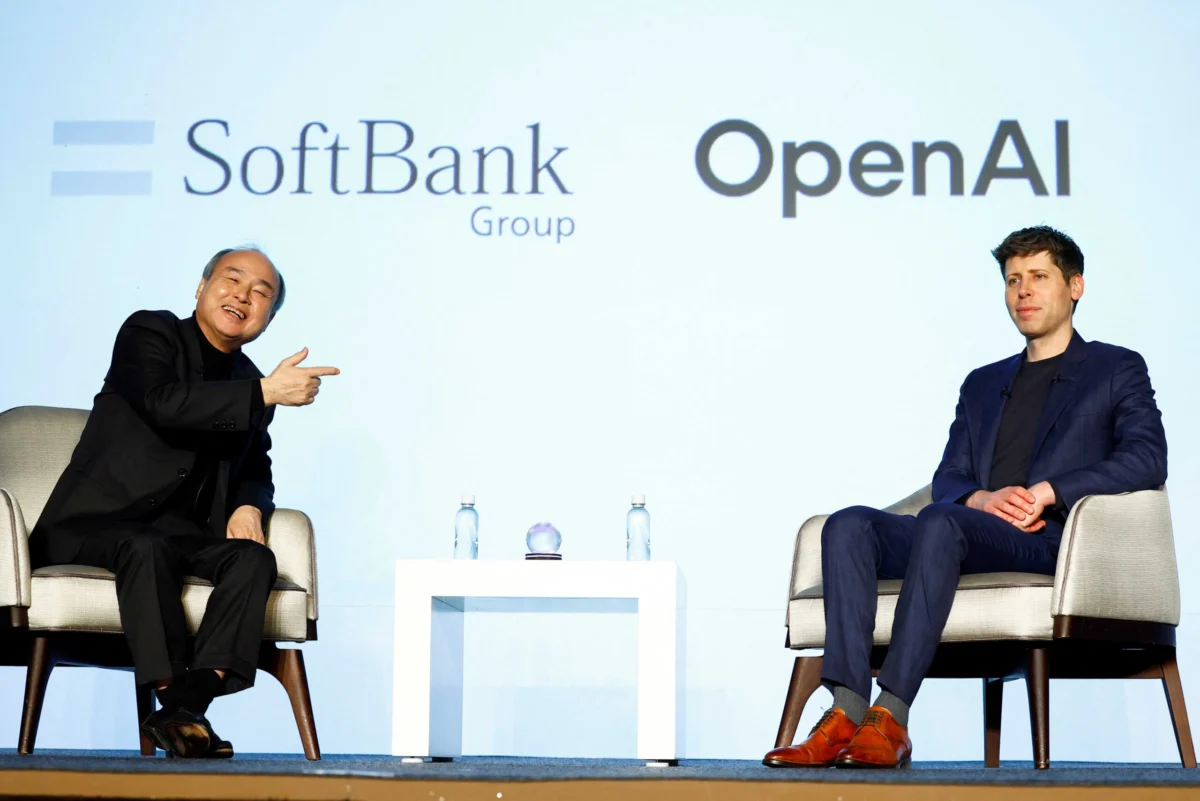
The SoftBank Group has signaled a definitive return to its aggressive investment roots, reporting a staggering $46 billion annual gain within its Vision Fund segment for the fiscal year ended March. This dramatic financial turnaround is primarily attributed to the explosive appreciation of the company’s stake in OpenAI, the San Francisco-based artificial intelligence powerhouse behind ChatGPT. According to the latest financial disclosures, the Japanese conglomerate has committed more than $30 billion to OpenAI, a series of strategic moves that have yielded approximately $45 billion in investment gains over the past twelve months. This performance represents one of the most significant single-year wealth creation events in the history of venture capital, marking a triumphant chapter for SoftBank Chairman and CEO Masayoshi Son, who has spent the last two years pivoting the entirety of his empire toward the burgeoning field of Artificial Super Intelligence (ASI).
A Strategic Pivot to Artificial Intelligence
The reported $46 billion gain marks a stark contrast to the turbulent years of 2022 and 2023, during which SoftBank’s Vision Funds suffered from a "tech winter" characterized by rising interest rates and the devaluation of high-growth startups. During that period, Son moved the company into "defense mode," halting most new investments and focusing on capital preservation. However, the emergence of generative AI as a transformative global force prompted a swift transition back to "offense."
The catalyst for this shift was the meteoric rise of OpenAI. SoftBank’s relationship with the AI firm reached a fever pitch in late 2024 and early 2025, culminating in a high-profile joint appearance by Masayoshi Son and OpenAI CEO Sam Altman in Tokyo on February 3, 2025. During this event, the two executives pitched AI solutions to Japan’s largest corporations, framing the technology not merely as a tool for efficiency, but as a fundamental shift in the global economic order.
SoftBank’s $30 billion-plus commitment to OpenAI is believed to be a combination of direct equity purchases and participation in various funding rounds that have seen OpenAI’s private valuation soar toward the $200 billion mark. By securing a significant portion of the AI leader’s cap table, SoftBank has positioned itself as the primary financial beneficiary of the generative AI boom outside of Microsoft, which remains OpenAI’s largest corporate partner.
Chronology of the SoftBank and OpenAI Partnership
The path to this record-breaking gain was paved by a series of calculated risks and high-level negotiations. In mid-2023, Masayoshi Son began publicly expressing his "daily" use of ChatGPT, often describing himself as a "heavy user" who engaged in philosophical debates with the bot. This personal fascination soon translated into corporate strategy.
By early 2024, reports surfaced that SoftBank was looking to lead a massive funding round for OpenAI, potentially valuing the startup at over $80 billion. As OpenAI’s revenue began to scale—surpassing the $3 billion annualized mark—investor appetite reached unprecedented levels. In late 2024, OpenAI closed a historic funding round that valued the company at $157 billion. SoftBank’s participation in this round, along with secondary market acquisitions of employee shares, solidified its $30 billion exposure.
The culmination of this partnership was on display in Tokyo in February 2025. At the "AI for Business" summit, Son and Altman presented a unified front. Altman emphasized the importance of Japan as a strategic hub for AI development, citing the country’s high-tech infrastructure and sophisticated industrial base. Son, meanwhile, doubled down on his prediction that Artificial Super Intelligence—AI that is 10,000 times smarter than human intelligence—would arrive within the next decade. The $45 billion gain booked by the end of March is the tangible financial manifestation of this visionary rhetoric.
Financial Breakdown and Vision Fund Performance
The $46 billion gain is not just a win for OpenAI; it is a validation of the Vision Fund’s survival. For several years, the Vision Fund 1 and Vision Fund 2 were weighed down by high-profile failures and stagnant valuations in sectors like real estate (WeWork) and ride-sharing (Didi). The current fiscal year’s results suggest a massive rebalancing of the portfolio.
While OpenAI provided the lion’s share of the gains, other segments of the SoftBank empire contributed to the overall health of the balance sheet. Arm Holdings, the UK-based chip designer in which SoftBank maintains a roughly 90% stake, has seen its market capitalization swell as demand for AI-capable processors skyrockets. Although Arm is technically separate from the Vision Fund’s direct OpenAI gains, the synergy between Arm’s hardware and OpenAI’s software has created a "virtuous cycle" for SoftBank’s stock price.
Analysts note that the $45 billion gain from OpenAI is largely "unrealized," meaning it reflects the updated valuation of SoftBank’s holdings rather than cash in hand. However, the magnitude of the gain provides SoftBank with significant "dry powder." The company’s Loan-to-Value (LTV) ratio—a key metric for its financial health—has improved drastically, allowing Son to pursue even larger deals in the semiconductor and data center space.
Industry Reactions and Market Analysis
The financial community has reacted with a mixture of awe and caution. "Masayoshi Son has once again proven that he is the world’s most audacious tech investor," said a senior analyst at a major Tokyo-based brokerage. "To swing from multi-billion dollar losses to a $46 billion gain in such a short window is unprecedented. However, the concentration of risk in a single entity like OpenAI is something that conservative investors will watch closely."
From OpenAI’s perspective, the partnership with SoftBank provides more than just capital. It offers a gateway into the Asian market and a strategic alliance with a company that controls the intellectual property behind the world’s most ubiquitous mobile processors (Arm). Sam Altman has frequently spoken about the need for "massive infrastructure" to support the next generation of AI models, and SoftBank’s deep pockets and global network are essential to that vision.
In Japan, the reaction has been largely positive, viewed as a sign that the country is reclaiming its spot at the forefront of global technology. The February event in Tokyo was attended by hundreds of C-suite executives from Mitsubishi, Mitsui, and Toyota, many of whom are now exploring deep integrations with OpenAI’s enterprise tools facilitated by SoftBank’s local sales teams.
Broader Implications for the Global AI Landscape
The success of SoftBank’s OpenAI investment has profound implications for the global venture capital landscape. It reinforces the "winner-takes-all" dynamic of the AI industry, where the cost of entry—measured in billions of dollars for compute power and talent—is so high that only a handful of firms can compete.
Furthermore, SoftBank’s massive gain is likely to trigger a new wave of capital deployment from rival investment houses. Firms like Sequoia, Andreessen Horowitz, and sovereign wealth funds from the Middle East are now under pressure to find "the next OpenAI" or secure larger stakes in existing AI leaders. This could lead to further valuation inflation in the private markets.
For SoftBank, the focus now shifts to the sustainability of these gains. The company is reportedly planning a massive $100 billion AI chip venture, internally codenamed "Izanagi," to compete with Nvidia and provide the hardware necessary for OpenAI’s future models. This indicates that Son is not content with being a mere passive investor; he intends to build the entire vertical stack of the AI era.
Conclusion and Future Outlook
As the fiscal year concludes, SoftBank stands at a historic crossroads. The $46 billion gain has erased years of skepticism and restored Masayoshi Son’s reputation as a kingmaker in the technology world. With a $30 billion stake in OpenAI and a controlling interest in Arm, SoftBank is arguably the most influential non-operating company in the AI ecosystem.
However, challenges remain. Regulatory scrutiny of AI companies is intensifying in the United States and Europe, and the competition for AI talent and energy resources is reaching a breaking point. The "breaking news" of this massive gain is a milestone, but for Masayoshi Son, it is likely just the beginning. During the February summit, he told the audience, "I am not interested in small gains. I am interested in the evolution of humanity." With $45 billion in fresh gains from a single investment, the market is finally beginning to see the scale of that ambition.
Investors will now look toward the next quarterly earnings report for more granular data on the Vision Fund’s exit strategies and the potential for an OpenAI IPO, which would be the ultimate test of these paper gains. For now, the "Son-led" AI revolution is in full swing, backed by a balance sheet that has regained its formidable strength.
