

New York City stands at the forefront of a burgeoning global trend, with Mayor Zohran Mamdani and Governor Kathy Hochul championing a novel tax on pied-à-terre properties—second homes, vacation apartments, and luxury units that often sit partially or entirely unused. This policy, once considered niche, is rapidly moving into the mainstream of urban finance, mirroring initiatives in cities from Vancouver to London, as metropolises worldwide grapple with acute housing affordability crises and mounting fiscal pressures. The proposed tax aims to help close a significant budget deficit for New York State and City, estimated in the hundreds of millions, while simultaneously addressing highly visible symbols of wealth inequality.
The Genesis of a New York Policy
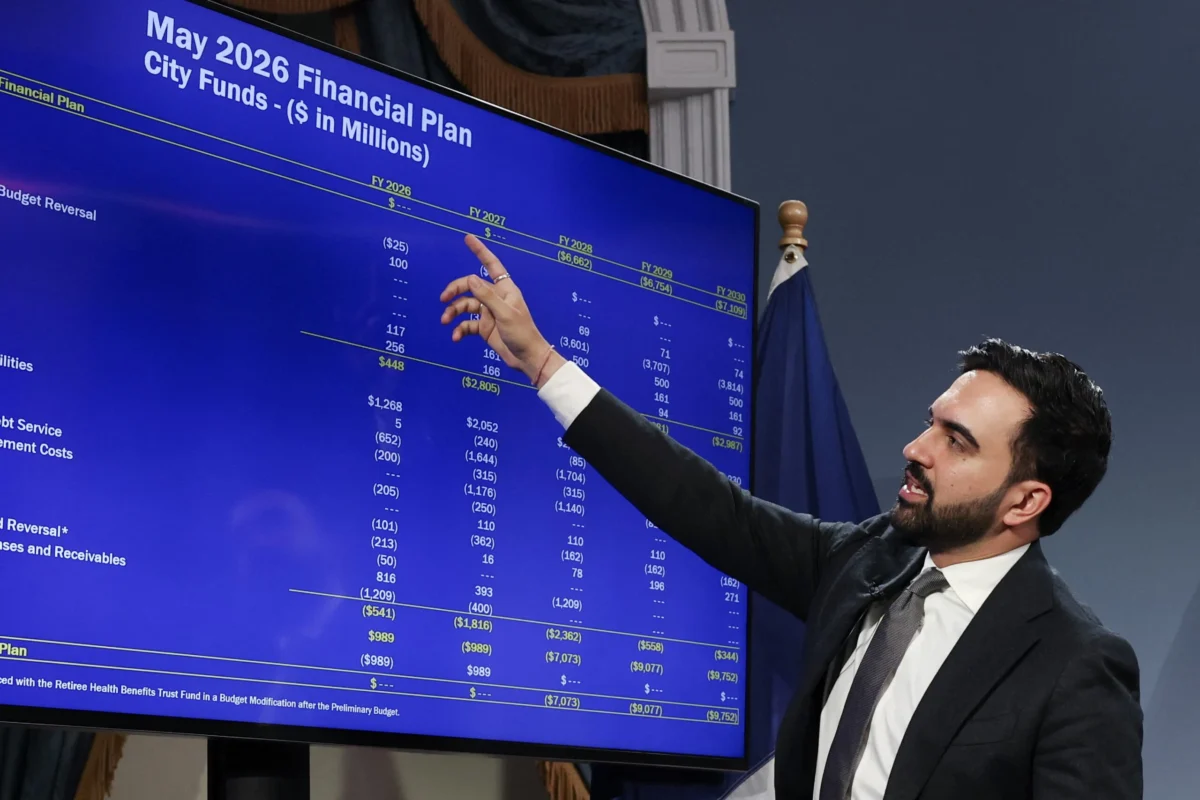
The fiscal year 2027 budget discussions in New York City have brought the pied-à-terre tax to the forefront of Mayor Zohran Mamdani’s agenda. On May 12, 2026, Mayor Mamdani publicly addressed the city’s budget challenges, underscoring the necessity of innovative revenue streams. The city faces a substantial budget shortfall, exacerbated by a complex interplay of post-pandemic economic shifts, including increased demand for social services, a slower-than-expected return to full office occupancy impacting commercial real estate values, and persistent inflation driving up operational costs.
In a politically calculated move outlined in his latest budget proposal, Mayor Mamdani strategically abandoned earlier plans to raise property taxes on a broader base of middle-class homeowners. This decision, likely aimed at sidestepping potential widespread public and political backlash, underscored the administration’s pivot towards targeting a more affluent and numerically smaller segment of the property-owning population. The pied-à-terre tax emerged as the favored alternative, positioned as a progressive solution that shifts the tax burden onto non-resident owners of high-value properties. Governor Kathy Hochul has also voiced her support, signaling a unified front from state and city leadership on this fiscal approach.
However, the path to implementation has not been without its immediate controversies. The proposal sparked a notable political crisis for Mayor Mamdani after he posted a video in early May 2026, standing outside a luxury building where hedge fund billionaire Ken Griffin owns a unit. This direct challenge prompted a swift and vocal pushback from Griffin, a prominent politically conservative figure, who publicly threatened to reduce his business operations in New York, potentially diverting investments and job creation to lower-tax jurisdictions like Miami. While such tensions between the billionaire class and a self-described socialist democratic mayor might be anticipated, the incident highlighted the high-stakes nature of the proposed tax. Despite the political skirmish, reports from May 11, 2026, indicated that luxury real estate sales in Manhattan remained robust, suggesting that the immediate market impact of the controversy was limited.
The fundamental question now confronting New York City is not just about the political feasibility of this new form of property taxation, but its actual efficacy. Can it deliver on its promises of substantial revenue generation and tangible improvements in housing affordability? Existing examples from around the world offer a crucial lens through which to examine these complex questions.
Global Precedents: Vacancy and Second Home Taxes
The concept of taxing underutilized or non-primary residences is not unique to New York. Versions of second-home and vacancy taxes have been implemented across several major housing markets globally, driven by a shared urgency to address worsening housing affordability, escalating rents, and mounting fiscal pressures. These policies often target highly visible symbols of inequality: the dark, unoccupied luxury condominiums that dot prime urban neighborhoods while many residents struggle to find affordable housing.
In Canada, Vancouver has been a pioneer with its "Empty Homes Tax" (EHT), introduced in 2017. The EHT levies an annual tax on properties deemed vacant for more than six months of the year, with rates escalating over time. Initially set at 1% of the property’s assessed taxable value, it has since risen to 3% for 2021 and subsequent years. City of Vancouver officials explicitly framed the EHT as an attempt to "return empty or under-utilized properties to use as long-term rental homes for people who live and work in Vancouver." Public materials from the city emphasize that net revenues from the tax are reinvested directly into affordable housing initiatives, providing a clear policy objective beyond mere revenue generation. The federal government of Canada followed suit with its own "Underused Housing Tax," effective January 1, 2022, broadening the scope of such taxation nationwide. Toronto subsequently introduced its own "Vacant Home Tax" in 2023, reflecting a growing consensus among Canadian municipalities.

Europe has also seen similar policy developments. London applies forms of surcharge or higher taxation on second residences and underused properties, particularly through increased council tax rates for long-term empty homes. Paris, too, has a system of higher taxation for vacant properties and is now moving towards even steeper vacancy penalties. According to a report by Le Monde in April 2026, Paris plans to significantly increase taxes on vacant housing, with local officials hoping to push thousands of units back onto the market. Jacques Baudrier, Paris deputy mayor for housing, expressed optimism, stating, "We hope that at least 20,000 homes will return to the market as a result." This aggressive stance highlights the growing desperation to alleviate housing shortages in prime urban centers.
Beyond North America and Europe, Singapore stands out with some of the most aggressive foreign buyer surcharges globally. Introduced primarily to curb speculative buying and ensure housing remains accessible for its citizens, these surcharges can reach as high as 60% of the property value for foreign purchasers in certain cases. While not a direct vacancy tax, it reflects a similar policy impulse to control non-resident ownership and its impact on the local housing market.
Effectiveness and Limitations: Lessons from Abroad
The critical question for New York is whether these global examples demonstrate tangible success. According to Thomas Brosy, a senior research associate at the Urban-Brookings Tax Policy Center, these policies generally fall into two categories: recurring property tax surcharges and one-time transaction taxes. The distinction is crucial, he notes, because it "affects how strongly owners adjust behavior over time." New York’s proposal for an annual tax on non-resident second homes worth $5 million or more falls squarely into the recurring surcharge category. Brosy also points out that, unlike New York’s value-based threshold, many cities impose these charges without specific regard to the property’s price, taxing homes based on occupancy or ownership status rather than the owner’s income or wealth.
However, the efficacy of these taxes in achieving their stated goals—particularly improving broad housing affordability—is a subject of considerable debate among experts. Paul Cheshire, a professor of economic geography at the London School of Economics, argues that "New York is a follower, not a leader," but cautions that policymakers often misdiagnose the underlying problem. "The biggest misconception is that these taxes will improve housing affordability in large ‘super cities.’ The problem is mainly constrained housing supply via policy," Cheshire asserts. He suggests that restrictive zoning laws, cumbersome permitting processes, and local opposition to new development (NIMBYism) are more significant drivers of housing unaffordability than a limited number of vacant luxury units. Furthermore, he notes that second homes typically constitute a relatively small share of the total housing stock, even in communities with high concentrations, often around 15%, which structurally limits the potential scale and impact of such taxes.
Empirical evidence from cities like Vancouver and Paris appears to back this cautious view. Brosy notes that while these taxes "raise some revenues and lower vacancy, they don’t lower rents or prices overall – which should be expected, since the luxury housing market is largely disconnected from the broader housing market." This suggests that even if some high-end units are pushed onto the rental market, their impact on the overall affordability for average residents seeking entry-level or middle-income housing is negligible.
Revenue Realities Versus Projections
One of the most consistent findings among experts examining global vacancy and second-home taxes is that they generate far less revenue than policymakers initially expect. New York City’s Mayor Mamdani, in his announcement on Tuesday, May 12, 2026, projected that the city’s first-ever pied-à-terre tax "will generate $500 million every year." However, global trends suggest this number may prove to be overly optimistic.
The New York City Comptroller’s office, an independent fiscal watchdog, issued a comprehensive report in early May 2026 that tempered these projections. While acknowledging that Vancouver’s data showed a notable decline in vacant homes after its tax was implemented, the report cautioned that New York’s revenue estimates must account for significant potential behavioral changes. The Comptroller’s report suggested a more realistic annual revenue figure of $340 million to $380 million, "after accounting for properties that could be already rented to primary residents and for the behavioral changes that have followed taxes imposed elsewhere." These behavioral responses could include converting properties to long-term rentals, owners claiming properties as primary residences for relatives, outright sales to avoid the tax, or potential legal challenges. The report further noted that while higher tax rates might induce a larger behavioral effect, they also introduce greater uncertainty.
The Comptroller’s report also highlighted that while there might be an initial, potentially positive, impact on real property transactions as owners rush to sell to avoid the tax, "broad effects on development or rents… have generally not been significant." However, it warned that "concentrated effects on the luxury market could be felt more deeply, as suggested by London’s experience." London’s policy, particularly its higher council tax rates for long-term empty homes, has sometimes been cited as a cautionary tale, implying that while it might not solve the broader housing crisis, it can create specific pressures within the high-end market without delivering substantial fiscal windfalls.

Abir Mandal of the Tax Foundation, a center-right think tank, further emphasizes that revenue potential is heavily dependent on design and enforcement, but even then, remains modest relative to overall housing needs. Mandal’s analysis of existing patterns across numerous global cities concludes that the fiscal impact is "meaningful in absolute terms, but marginal in fiscal context." For instance, even in Vancouver, which implemented one of the most aggressive and successful vacancy taxes in terms of reducing vacancy rates, the revenue generated typically accounts for roughly 1% of the city’s total tax revenue, according to the Institute on Taxation and Economic Policy.
Mandal also introduces an often-overlooked perspective: unoccupied second homes, by their very nature, impose lower marginal service costs on a city (e.g., less strain on police, schools, sanitation, public transit) while still contributing to the property tax base. From this viewpoint, they can be "net fiscal positives" even without additional taxation, challenging the "free lunch" narrative often associated with taxing absentee "speculators" or the ultra-wealthy.
Wealth Migration and Cumulative Burdens
A prominent concern often raised by opponents of wealth-targeted taxes is the potential for mass migration of ultra-wealthy individuals and capital, leading to a diminished tax base and economic activity. Globally, however, the evidence does not suggest that any single tax policy change will trigger such an exodus. The consensus among experts is that second-home taxes may influence marginal decisions but rarely determine whether wealthy individuals invest in global cities. Brosy describes the effect as incremental rather than decisive: "They should certainly shift demand and push prices downward for trophy properties, but they are unlikely to determine whether someone owns in London, New York, or Singapore."
Nevertheless, when combined with broader tax regimes, these policies can contribute to gradual shifts in where ultra-wealthy individuals allocate assets. This is particularly evident in the increasing competition among global cities and jurisdictions. Policymakers in Europe and North America are increasingly facing pressure from regions offering low or near-zero property taxation alongside attractive residency incentives for wealthy investors. Dubai, for instance, has significantly risen as a magnet for global wealth, offering a stark contrast in its tax and regulatory environment, though its long-term stability has been subject to geopolitical considerations, such as the implications of the U.S.-Iran war mentioned in the original reporting.
Mandal points out that for the ultra-wealthy, it’s often "a matter of cumulative impact rather than single policy." He explains, "Tipping points emerge from cumulative burdens rather than isolated surcharges." Evidence from the U.S. supports this, with observed millionaire migration from high-tax states like California and New York to lower-tax states such as Florida and Texas. Similarly, changes in UK tax policy have prompted some London residents to relocate to Dubai. This sensitivity extends beyond the ultra-wealthy to other demographics, including retirees, individuals reliant on investment income, and business owners. While a single NYC tax is unlikely to "empty Manhattan," Mandal concludes, combined with existing high costs of living and doing business, it could accelerate decisions for those with flexible footprints, "especially with many global cities providing a welcoming haven and strong passports."
Political Symbolism Versus Fiscal Pragmatism
Ultimately, the enduring appeal of pied-à-terre taxes for urban governments may lie less in their formidable fiscal power and more in their powerful symbolism. These taxes offer a politically palatable solution because they target a narrow and affluent slice of homeowners, rather than imposing broader tax increases on the middle class or working families, a move that Mayor Mamdani explicitly avoided.
The policy allows governments to be seen as actively responding to pervasive housing inequality and budget deficits without alienating a large segment of their full-time resident base. It taps into a widespread public sentiment that the wealthy should contribute more, particularly when their properties contribute to perceived housing shortages by remaining vacant. In an era of heightened awareness of economic disparities, a pied-à-terre tax provides a visible demonstration of addressing these concerns.
While the New York City Comptroller’s office and various experts have urged a "prudent revenue assumption" and highlighted the limitations of such taxes in fundamentally altering broad housing affordability or generating massive fiscal windfalls, the political dividends might be substantial. For Mayor Mamdani and Governor Hochul, the pied-à-terre tax represents a strategic balance: an attempt to generate much-needed revenue while projecting an image of progressive governance that prioritizes fairness and addresses the challenges faced by everyday New Yorkers. The true impact, however, will only become fully observable after its implementation, as behavioral responses and market dynamics unfold in one of the world’s most dynamic real estate landscapes.
