

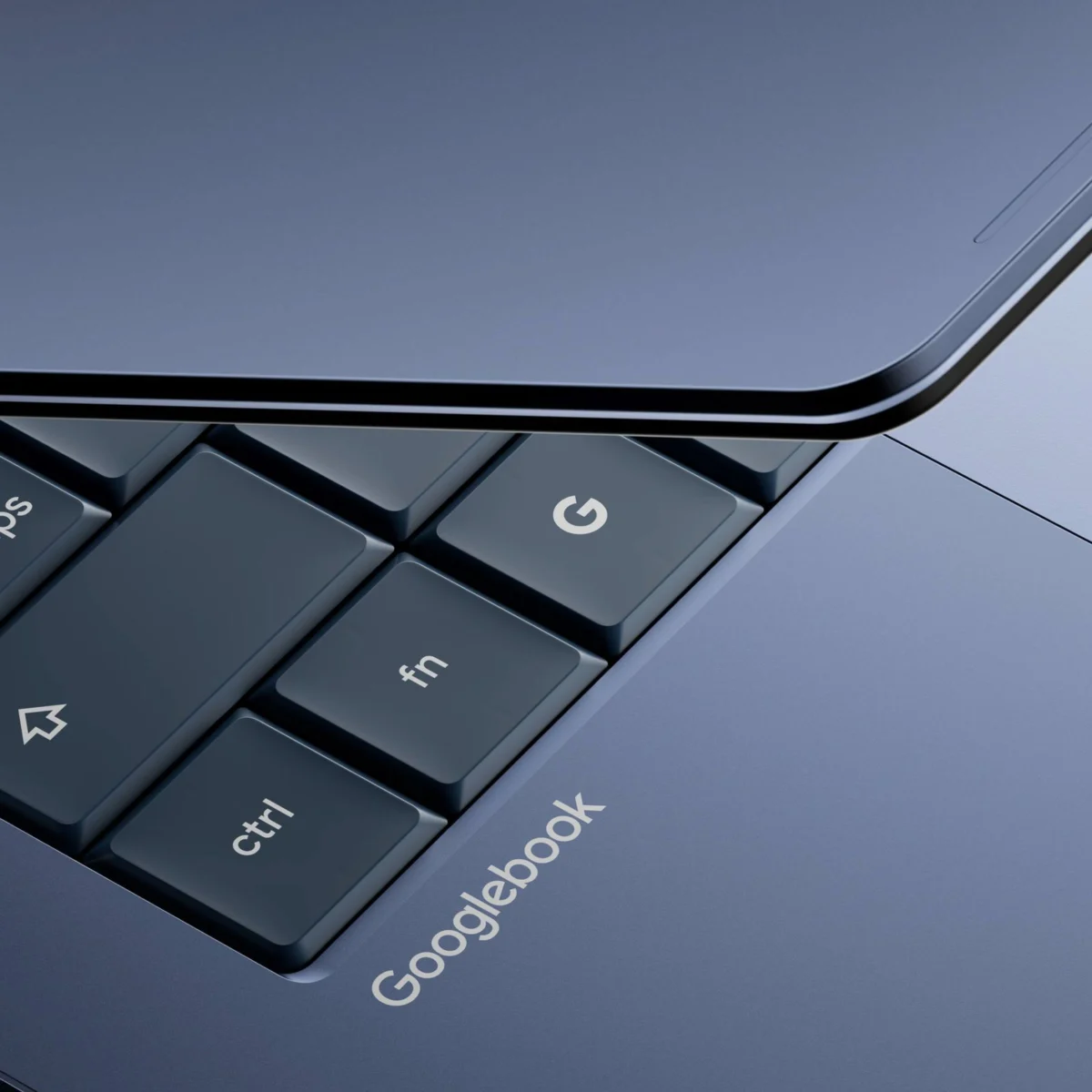
In a strategic move that signals the most significant shift in its hardware philosophy in over a decade, Google has officially announced the launch of Googlebook. Debuting during a special broadcast of The Android Show on YouTube, this new platform represents a fundamental departure from the web-centric architecture of ChromeOS, pivoting instead toward a deep integration of the Android operating system and generative artificial intelligence. The announcement comes almost exactly fifteen years after the introduction of the first Chromebooks, marking a new era where Google aims to transcend the budget-friendly education sector and establish a formidable presence in the premium, high-performance laptop market.
The Googlebook platform is built upon a technological foundation previously codenamed Aluminium OS. While Google is currently branding the hardware category as Googlebook rather than a specific operating system name, the underlying software is a highly optimized version of Android designed specifically for desktop environments. Unlike the ChromeOS experience, which relied on a Linux-based kernel to run a browser-first environment, Googlebook treats Android applications as "primary citizens." This architectural shift allows apps to have direct access to hardware and system-level resources, promising a level of performance and capability that has historically eluded the Chromebook ecosystem.
A Fifteen-Year Evolution: From Web-First to AI-Native
To understand the significance of Googlebook, one must look at the trajectory of Google’s computing efforts. In 2011, Google introduced ChromeOS with the promise of a "nothing but the web" experience. At the time, the concept was revolutionary: a lightweight, secure, and easily manageable operating system that resided almost entirely in the cloud. This strategy was immensely successful in the US education market, where Chromebooks eventually came to dominate nearly 60% of the K-12 sector. However, this success in schools often pigeonholed the devices as "budget" or "limited" tools, unable to compete with the robust creative and professional suites found on macOS and Windows.
Googlebook is designed to shatter that perception. By leveraging the rapid innovation within the Android ecosystem, Google is positioning this new platform as a high-end alternative for professionals and power users. Alexander Kuscher, Senior Director at Google leading Android tablets and laptops, emphasized that the speed of innovation in Android makes it the ideal foundation for the next generation of laptops. According to Kuscher, building on top of Android technologies allows Google to keep laptops at the "tip of the innovation wave," ensuring that mobile advancements in AI and hardware efficiency translate immediately to the desktop form factor.
Technical Architecture and the AI Core
The centerpiece of the Googlebook experience is the integration of Gemini Intelligence, Google’s most advanced suite of generative AI models. While Chromebooks have recently begun receiving "Plus" branding for AI-capable models, Googlebook is designed from the ground up to be AI-native. This is most evident in the "Magic Pointer," a revolutionary cursor system developed in collaboration with Google’s DeepMind team.
The Magic Pointer utilizes contextual awareness to predict user needs based on on-screen elements. By simply "wiggling" the cursor over an app icon, a block of text, or an image, users trigger Gemini-powered suggestions. For instance, hovering over a date in an email allows the Magic Pointer to suggest a calendar event, while selecting multiple images in the Files app and performing the wiggle gesture prompts Gemini to offer options for merging files or creating a collage. This interaction model represents a shift away from traditional right-click menus toward a more fluid, proactive user interface.

Furthermore, Googlebook will debut features scheduled for Android 17, such as "Create a Widget." This tool allows users to generate custom desktop widgets using natural language prompts. A user could, for example, ask Gemini to "create a widget that tracks the exchange rate between the US Dollar and the Euro alongside the local weather in Paris," and the system will build and deploy that functional element in real-time.
Bridging the App Gap: Native Performance and Adaptive Design
One of the primary criticisms of high-end Chromebooks has been the "constrained" nature of Android apps running on ChromeOS. Historically, these apps ran in a containerized environment, often leading to scaling issues, poor optimization, and a lack of desktop-grade features. Googlebook addresses this by introducing a "native platform" approach.
Under this new framework, developers are encouraged to create "adaptive apps" that are not merely scaled-up mobile versions but are true desktop-grade applications. Because Googlebook provides apps with direct access to the OS and hardware—including advanced GPU acceleration and NPU (Neural Processing Unit) resources—developers can build software that rivals the complexity of traditional desktop programs. Kuscher noted that even core Google services, such as the Chrome browser, will function as native Android-based desktop versions on this platform, rather than the web-based iterations seen previously.
The platform is designed to support both ARM and x86 architectures, giving manufacturers the flexibility to choose between the high-efficiency, mobile-inspired performance of ARM chips or the traditional raw power of Intel and AMD processors. This dual-architecture support is crucial as the industry shifts toward "AI PCs," which require specialized silicon to handle local AI processing.
Hardware Partnerships and the Return of the Glowbar
Google is not launching this platform in isolation. Major industry players, including Dell, Acer, Asus, HP, and Lenovo, have already signed on to produce Googlebook hardware. These devices are expected to hit the market in the fall of high-end configurations, featuring "premium craftsmanship and materials" such as magnesium alloys and high-refresh-rate OLED displays.
A defining aesthetic feature of the Googlebook category is the "Glowbar." This is a multi-colored LED strip integrated into the laptop’s chassis that displays the classic Google colors. Long-time enthusiasts will recognize this as a direct homage to the original 2013 Chromebook Pixel, which featured a similar lightbar. However, the new Glowbar is more than just a brand element; it serves functional purposes, acting as a notification light and providing status updates through "Easter egg" animations. Notably, the bar is positioned to face away from the user when the laptop is open, serving as a distinctive visual signature in public spaces or office environments.
Ecosystem Integration: The Android Synergy
Google is marketing Googlebook as the "best device for Android users." The level of integration between an Android smartphone and a Googlebook is designed to mirror the "walled garden" benefits often associated with the Apple ecosystem. Users will be able to seamlessly transition tasks from their phones to their laptops, with the Googlebook Files app capable of searching and opening documents stored locally on a paired mobile device.

While Google has expressed a commitment to building cross-device experiences for iPhone users, the company admitted that platform limitations would restrict the depth of that integration. For the Android faithful, however, the Googlebook represents a unified computing vision where the phone and the laptop operate as two halves of the same whole.
Market Implications and Professional Analysis
The introduction of Googlebook is a clear response to the changing landscape of personal computing. With Microsoft pushing "Copilot+ PCs" and Apple continuing to dominate the premium creative market with its M-series silicon, Google could no longer rely solely on the budget-friendly, browser-based ChromeOS to remain relevant in the high-end sector.
By moving to an Android-based foundation, Google is effectively consolidating its development efforts. Rather than maintaining two distinct operating systems with separate development cycles, the company can now push features to phones, tablets, and Googlebooks simultaneously. This consolidation is likely to attract more developers to the Android ecosystem, as the incentive to optimize apps for larger screens becomes much stronger with a dedicated laptop platform.
However, the survival of ChromeOS remains a key part of the strategy. Google has confirmed that ChromeOS will continue to receive investment and updates, with some devices guaranteed support for up to 10 years. This "two-track" strategy allows Google to protect its dominance in the education and enterprise sectors with ChromeOS while using Googlebook to hunt for market share in the lucrative $1,000+ consumer and professional segments.
Chronology of Google’s Laptop Ambitions
- 2009: Google announces the ChromeOS project, focusing on speed, simplicity, and security.
- 2011: The first Chromebooks from Samsung and Acer are released to the public.
- 2013: The Chromebook Pixel is launched, Google’s first attempt at a premium, self-branded laptop with a high-resolution touch screen.
- 2016: Google brings the Play Store and Android app support to ChromeOS, though the experience remains fragmented.
- 2017-2019: The Pixelbook and Pixelbook Go are released, further testing the waters for high-end web-based computing.
- 2023: The "Chromebook Plus" category is established to set minimum hardware standards for AI features.
- Current Year: Google announces Googlebook, a platform pivot from ChromeOS to an AI-native, Android-based architecture.
Official Responses and Future Outlook
Industry analysts suggest that the success of Googlebook will depend heavily on developer adoption. "The hardware is clearly there, and the AI features like the Magic Pointer are genuinely innovative," says market analyst Sarah Jenkins. "But the real test will be whether professional-grade software like Adobe Creative Cloud or advanced CAD tools find a native home on Android."
When asked about the possibility of Google producing its own "Pixelbook" version of the Googlebook, Alexander Kuscher remained coy, suggesting that while he represents the platform team, the hardware division (Pixel) would have to speak for itself. The Pixel team has declined to comment on future hardware roadmaps.
As the fall release window approaches, the tech industry will be watching closely to see if Google can finally convince the professional world that a laptop doesn’t need Windows or macOS to be a "real" computer. With Googlebook, the company isn’t just selling a new device; it is selling a new vision of what a computer should be in the age of artificial intelligence.
