

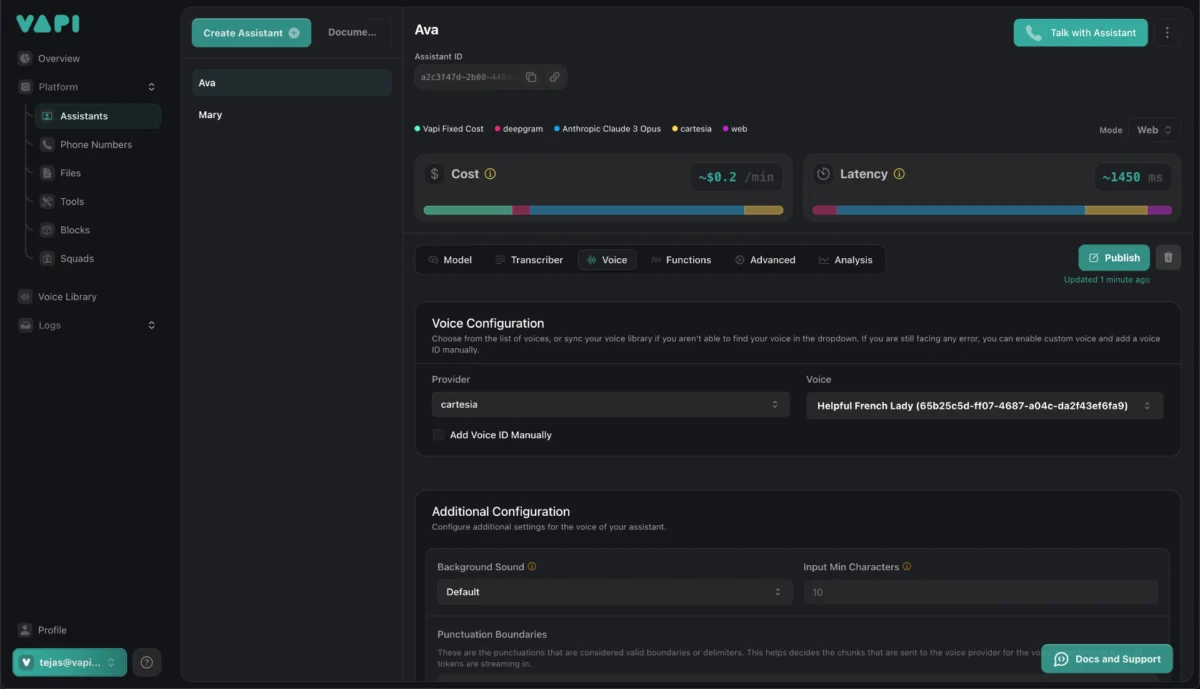
The landscape of automated customer service has reached a significant milestone as Amazon Ring, the smart home security giant, transitioned 100% of its inbound phone traffic to AI-driven voice agents developed by the startup Vapi. This aggressive deployment, initiated during the high-pressure holiday season of 2023, served as a proof of concept that has now propelled Vapi to a $50 million Series B funding round. Led by Peak XV Partners, the investment values the startup at approximately $500 million post-money, signaling a shift in how major enterprises view the reliability and capability of generative AI in high-stakes consumer interactions.
The partnership between Amazon Ring and Vapi highlights a growing trend among tech-centric enterprises to move beyond traditional, often frustrating, Interactive Voice Response (IVR) systems toward more fluid, natural-sounding AI agents. For Ring, the decision was born out of necessity. During the fourth quarter of 2023, the company faced a massive surge in customer support inquiries—a perennial challenge for consumer electronics firms during the gift-giving season. Faced with the choice of rapidly scaling its human call-center capacity or relying on legacy automation, Ring opted to evaluate the emerging field of Conversational AI.
According to Vapi Chief Executive Officer Jordan Dearsley, Ring conducted an exhaustive vetting process, evaluating more than 40 different AI voice vendors before selecting Vapi. The deciding factor was not merely the quality of the synthetic voice, but the level of granular control the platform offered. Ring’s engineers required the ability to fine-tune how the AI agents behaved during live interactions, ensuring that the brand’s specific tone and technical accuracy remained consistent even when the underlying large language models (LLMs) faced complex queries.
The Evolution of Voice Infrastructure and the Pivot to Vapi
Vapi’s journey to becoming a critical infrastructure provider for Amazon Ring is a testament to the rapid iteration common in the Silicon Valley ecosystem. Founded by Jordan Dearsley and Nikhil Gupta, classmates from the University of Waterloo, the duo originally participated in the Y Combinator accelerator program with a productivity-focused startup called Superpowered.
The genesis of Vapi occurred in early 2023 when Dearsley built an experimental AI therapist designed to hold conversations with him during his daily walks. While the consumer demand for an AI therapist was modest, Dearsley and Gupta noticed a significant trend: other developers and startups were less interested in the therapy application and more intrigued by the low-latency voice infrastructure that powered it. The ability to minimize the delay between a human speaking and an AI responding—a technical hurdle known as "latency"—is the primary barrier to making AI voice feel natural.
Recognizing this gap in the market, the founders pivoted in late 2023 to launch Vapi as a dedicated voice API platform. By the time they launched publicly in early 2024, they had already built a "battle-tested" system through a self-serve developer platform. This strategy allowed Vapi to refine its orchestration layer—the software that coordinates speech-to-text (STT), the LLM reasoning, and text-to-speech (TTS) outputs—before attempting to court enterprise-grade clients.
Strategic Impact on Amazon Ring’s Operations
For Amazon Ring, the implementation of Vapi has yielded measurable operational improvements. Jason Mitura, Vice President of Software Development at Amazon Ring, noted that the deployment led to an increase in customer satisfaction (CSAT) scores. One of the most significant advantages cited by Mitura was the democratization of the AI experience within the company. Because Vapi provides tools that allow non-engineering teams to "tune" the AI agent’s behavior, the customer support department could make real-time adjustments to scripts and responses without waiting for a developer sprint cycle.
This flexibility is crucial in a retail environment where product updates or shipping delays can require immediate changes to support messaging. By removing the engineering bottleneck, Ring was able to iterate on its support experience at a pace that traditional call centers or legacy software providers could not match. The fact that 100% of inbound calls are now routed through Vapi suggests that the "hallucination" risks and technical glitches often associated with early-stage AI have been sufficiently mitigated for Ring’s use cases.
Funding Details and Financial Trajectory
The $50 million Series B round is a clear indicator of investor confidence in the "infrastructure-first" approach to AI voice. Beyond the lead investment from Peak XV Partners (formerly Sequoia India and Southeast Asia), the round saw participation from a roster of high-profile venture firms, including Microsoft’s M12, Kleiner Perkins, and Bessemer Venture Partners. This brings Vapi’s total funding to date to $72 million.
While Vapi has not publicly disclosed its exact revenue, sources familiar with the company’s financials indicate an annual recurring revenue (ARR) run rate in the "healthy" eight-figure range. The company’s growth is fueled by a dual-track business model: a self-serve platform that has attracted over 1 million developers and a bespoke enterprise service for large-scale clients.

Currently, Vapi processes between 1 million and 5 million calls per day. While the developer community provides a broad base of experimentation and innovation, the bulk of the call volume is driven by enterprise customers. In addition to Amazon Ring, Vapi’s client list includes names like Intuit, New York Life, Instawork, and the Mexican "unicorn" Kavak.
The Competitive Landscape of Conversational AI
Vapi enters a crowded and well-funded market. The race to dominate the voice AI sector includes several prominent players:
- Sierra: Co-founded by former Salesforce co-CEO Bret Taylor, focusing on high-end conversational AI for brands.
- ElevenLabs: A leader in high-fidelity synthetic voice and cloning technology.
- PolyAI: A UK-based firm specializing in enterprise-grade voice assistants for hospitality and retail.
- Retell and Bland AI: Startups focusing on the developer-friendly API layer, similar to Vapi’s original model.
Dearsley maintains that Vapi’s differentiator is its focus on the "orchestration layer" rather than pre-packaged applications. By providing the plumbing—managing the complex handoffs between different models and ensuring high availability—Vapi allows enterprises to bring their own models or logic while relying on Vapi for the "last mile" of voice delivery. This is particularly attractive to enterprises that have strict compliance requirements or those that wish to use proprietary data to train their agents.
Technical Challenges: Taming the "Indeterminate Beast"
The primary technical challenge in voice AI is the unpredictable nature of large language models. Unlike traditional software, which follows a deterministic "if-then" logic, LLMs can sometimes produce unexpected results. Dearsley refers to this as the "golden problem" of the industry: taking an "indeterminate beast" and taming it to provide consistent, safe, and helpful value.
To solve this, Vapi has invested heavily in its engineering and infrastructure teams, which now make up a significant portion of its 100-employee headcount. The new funding will be used to further expand these teams, as well as the go-to-market strategy required to win more Fortune 500 contracts. The goal is to move beyond simple support queries and into more complex interactions such as lead qualification, appointment scheduling, and even outbound sales, all while maintaining a level of latency that makes the AI indistinguishable from a human responder.
Broader Implications for the Global Support Industry
The success of the Ring-Vapi partnership sends a ripple through the global Business Process Outsourcing (BPO) industry. For decades, companies have outsourced customer service to massive call centers in regions like India, the Philippines, and Eastern Europe to manage costs. However, the ability for a startup like Vapi to handle millions of calls with high CSAT scores suggests that the economic calculus of outsourcing is changing.
While human agents are still necessary for highly empathetic or uniquely complex problem-solving, the "tier one" support layer—which handles routine questions about order status, basic troubleshooting, and account management—is rapidly being automated. The implications for the global workforce are profound, as companies prioritize the 24/7 availability and instant scalability of AI over human-staffed centers.
Furthermore, the involvement of Microsoft’s M12 in the funding round suggests a strategic alignment with broader cloud ecosystems. As enterprises move their data to the cloud, the integration of voice AI into existing CRM (Customer Relationship Management) systems becomes the next logical step in the digital transformation journey.
Conclusion and Future Outlook
As Vapi scales toward its next phase of growth, the focus will remain on reliability at scale. The company has already handled over 1 billion calls, a milestone that places it among the most utilized AI voice platforms in the world. For Jordan Dearsley and Nikhil Gupta, the journey from an AI therapist experiment to a $500 million enterprise partner represents a broader shift in the tech industry: the transition from AI as a novelty to AI as essential infrastructure.
With the backing of top-tier venture capital and a flagship success story in Amazon Ring, Vapi is positioned to lead the next generation of voice-based commerce and support. The "golden problem" of taming AI models remains a work in progress, but for the millions of customers calling Ring this holiday season, the solution may already be on the other end of the line.
