

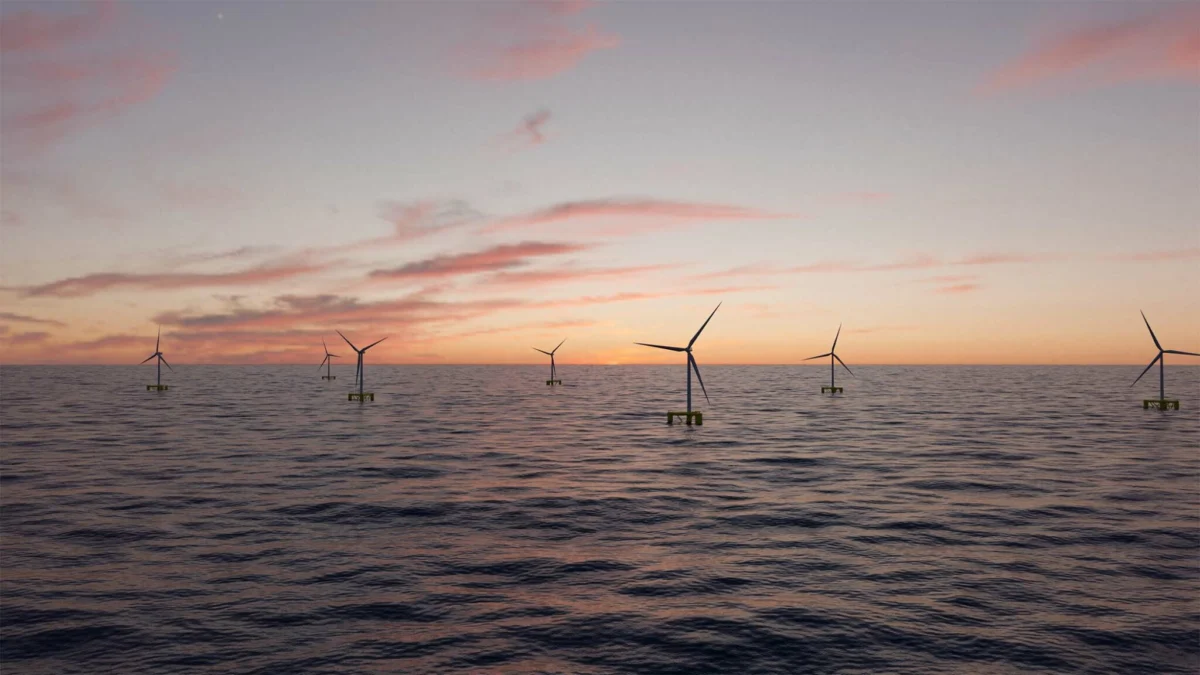
The Philippine energy landscape is undergoing a fundamental shift as the nation transitions from theoretical resource mapping to the active development of a large-scale offshore wind pipeline. For decades, the archipelago’s vast wind potential remained largely unexploited, with industry focus primarily remaining on onshore projects. However, recent data and strategic modeling have identified specific maritime zones that could transform the country into a regional leader in renewable energy. The central challenge now facing the administration and private developers is how to convert a clearly defined 3.5-gigawatt (GW) pipeline into actual electrons flowing into the national grid—a task that involves navigating complex infrastructure gaps, supply chain constraints, and social integration.
Strategic Wind Zones: San Miguel Bay and Guimaras Strait
At the heart of this energy evolution are two primary locations: San Miguel Bay in the Bicol region and the Guimaras Strait in Western Visayas. According to a 2026 study by the Global Wind Energy Council (GWEC), these sites have moved beyond the conceptual stage. They are now modeled with specific capacity targets and phased development timelines that represent the most significant potential additions to the Philippine power system in recent history.
San Miguel Bay is projected to serve as a cornerstone of the northern wind strategy. The site is expected to begin with an initial 1 GW of capacity, eventually scaling to 2 GW. Simultaneously, the Guimaras Strait is positioned to provide a steady energy supply to the Visayas grid, starting at 500 megawatts (MW) and expanding to 1.5 GW. When combined, these two zones represent a 3.5 GW pipeline.
The scale of this endeavor is best understood through its projected energy output. Using GWEC’s production estimates of approximately 3,205 megawatt-hours (MWh) per megawatt annually, these projects are estimated to generate roughly 11 terawatt-hours (TWh) of electricity per year at full buildout. In a national context where total generation hovers around 100–110 TWh, this contribution is not merely marginal; it represents a double-digit percentage of the country’s annual demand. Such a volume is sufficient to power millions of Filipino households and significantly reduce the carbon intensity of a grid currently dominated by coal-fired power plants.
The Economic Imperative for Indigenous Energy
The push for offshore wind is driven by more than just environmental targets; it is a matter of national energy security. The Philippines currently grapples with some of the highest electricity rates in Southeast Asia, largely due to its heavy reliance on imported fossil fuels. Coal and natural gas prices are subject to the volatility of global markets, leaving Filipino consumers vulnerable to external price shocks.
Offshore wind offers a structural remedy to this vulnerability. As an indigenous energy source, wind power is not purchased on international markets. While the upfront capital expenditure for offshore wind is high, the marginal cost of generation is near zero, and the long-term price profile is exceptionally stable. The GWEC study frames this transition as a pathway toward strategic energy independence. By anchoring a significant portion of the energy mix in a resource the country controls, the Philippines can decouple its electricity prices from the fluctuations of global fuel commodities.
A Chronology of Policy and Ambition
The journey toward 3.5 GW of offshore wind has been marked by several key policy milestones that have paved the way for current development efforts:
- 2008: The Renewable Energy Act (RA 9513) is passed, providing the initial legal framework for renewable energy development.
- 2022: The Department of Energy (DOE), in collaboration with the World Bank, releases the Philippines Offshore Wind Roadmap, identifying a potential for 178 GW of offshore wind resources.
- 2023: President Ferdinand Marcos Jr. signs Executive Order No. 21, directing the DOE to establish a clear policy and administrative framework for offshore wind and creating "green lanes" for faster permitting.
- 2024-2025: Pre-development phases intensify, with the government awarding over 80 offshore wind service contracts to both local and international developers.
- 2026-2028: Projected period for financial closures, detailed engineering designs, and the commencement of port upgrades.
- 2029-2032: Target window for first power, with San Miguel Bay reaching its first gigawatt by 2029 and Guimaras Strait following in 2030.
Despite this clear roadmap, a significant gap remains between modeling and execution. As of late 2024, no offshore wind project in the Philippines has reached the stage of full marine construction. There is currently no "steel in the water"—no foundations have been driven into the seabed, and no turbines are yet operational offshore.
Infrastructure and Supply Chain Bottlenecks
The transition from "paper gigawatts" to physical generation is hindered by several critical bottlenecks. Offshore wind is not a "plug-and-play" technology; it requires a sophisticated industrial ecosystem that the Philippines is only beginning to build.
Port readiness is perhaps the most immediate obstacle. Offshore wind components, including turbine blades that can exceed 100 meters in length and nacelles weighing hundreds of tons, require specialized ports for staging and assembly. These facilities must have high floor-loading capacities and deep-water access. Currently, the Philippines lacks a dedicated offshore wind port, and existing commercial ports would require significant retrofitting to handle the logistics of a 3.5 GW pipeline.
Furthermore, the grid infrastructure must be capable of absorbing large, variable loads. The National Grid Corporation of the Philippines (NGCP) faces the challenge of upgrading transmission lines to connect remote offshore sites to major load centers like Metro Manila and Cebu. Without synchronized grid expansion, even completed wind farms could face curtailment, where generated power cannot be sent to consumers due to line limitations.
Workforce Development and Social Integration
The GWEC study highlights another critical gap: the lack of a mature offshore wind workforce. While the Philippines has a robust maritime tradition and a large pool of seafarers, the specific engineering and technical skills required for offshore wind construction and subsea maintenance are not yet available at scale. Bridging this gap will require a coordinated effort between the government, academia, and industry to establish specialized training programs.
Beyond the technical and economic challenges, the social dimension of offshore wind is equally consequential. The proposed zones in San Miguel Bay and the Guimaras Strait are vital areas for the Philippine fishing industry. Construction phases will inevitably disrupt fishing activities, raising concerns among local coastal communities.
The DOE and developers have acknowledged that coexistence is the only viable path forward. This requires meticulous marine spatial planning to ensure that wind farm footprints do not permanently destroy critical fishing grounds or migratory paths. Compensation mechanisms and community benefit agreements will be essential to ensure that local stakeholders view offshore wind as an economic opportunity rather than a threat to their livelihoods.
Analysis of Implications and Global Context
The Philippines is entering the offshore wind market at a unique global juncture. The technology has matured significantly over the last decade, with costs falling and turbine efficiency increasing. However, the global supply chain is currently under immense pressure due to high demand in Europe and North America, coupled with inflationary pressures on raw materials like steel and copper.
For the Philippines, this creates both a risk and an opportunity. The risk is that project timelines may slip as developers compete for limited global installation vessels and specialized components. The opportunity lies in the potential to build a modern, localized industry from the ground up. By investing in local port infrastructure and manufacturing components where feasible, the Philippines can insulate its projects from some global supply chain shocks while creating high-value domestic jobs.
The stakes for the 3.5 GW pipeline are high. If the current timelines hold and power begins flowing by the early 2030s, the Philippines will have successfully executed one of the most ambitious energy transitions in the developing world. It would signal to international investors that the country is a stable and viable destination for large-scale green capital.
Conclusion: From Ambition to Execution
The question for the Philippines has shifted from "if" offshore wind is viable to "when" it will be realized. The resource mapping is complete, the capacity targets are modeled, and the policy signals from the executive branch are clear. However, the road to 11 TWh of annual clean energy is paved with logistical and structural hurdles that require immediate action.
The coming three to five years will be the "make or break" period for the industry. During this time, the government must move beyond policy signaling and facilitate the physical infrastructure—ports, roads, and wires—necessary to support the first wave of turbines. If the Philippines can successfully bridge the gap between its 2026 targets and actual construction, it will secure a cleaner, more affordable, and more independent energy future. If not, the country risks remaining in a state of perpetual pre-development, where its vast wind resources remain nothing more than a breeze felt by no one.
