

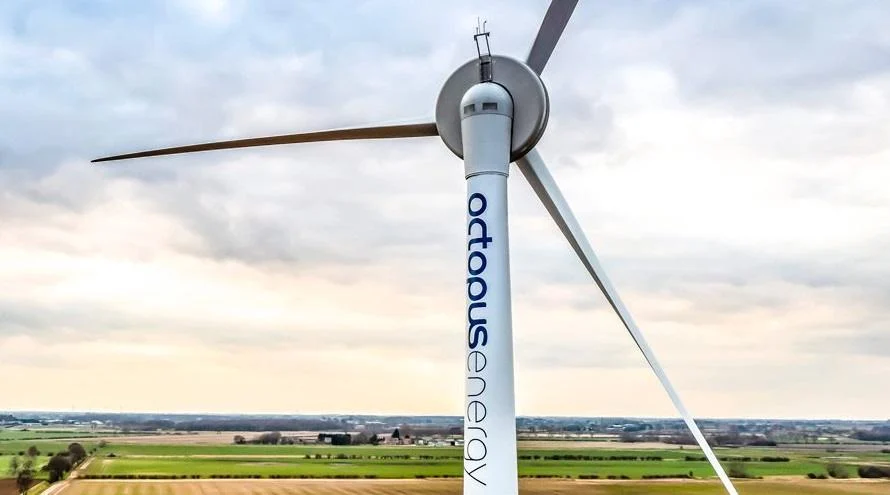
In a decisive move to bolster the continent’s renewable infrastructure, Octopus Energy Generation has announced a landmark investment of €584 million (approximately USD $687 million) to significantly scale its onshore wind energy portfolio across Europe. This capital injection facilitates the acquisition of 321 megawatts (MW) of onshore wind capacity across 17 distinct sites situated in France, Germany, and Poland. The move underscores a burgeoning trend among private investors to accelerate the transition toward decentralized power sources, aiming to secure energy independence for European nations while mitigating the long-term impacts of climate change.
The investment was executed through the company’s specialized "Sky" fund, a vehicle designed to channel institutional capital into large-scale green energy projects. By adding these 17 sites to its managed assets, Octopus Energy Generation is poised to generate enough clean electricity to power more than 250,000 homes annually. This expansion reflects the company’s broader strategy to diversify its geographic footprint and capitalize on the varying regulatory environments and wind profiles of the European mainland.
Strategic Rationale and Energy Sovereignty
The timing of this investment is particularly significant given the current geopolitical landscape of Europe. According to Zoisa North-Bond, CEO of Octopus Energy Generation, the shift toward renewables is no longer solely an environmental imperative but a matter of national security and economic stability. As European nations grapple with the volatility of global gas prices and the inherent risks of relying on imported fossil fuels, homegrown wind energy offers a localized, stable, and increasingly affordable alternative.
"From France to Germany and Poland, these latest projects are part of a wider shift away from polluting fossil fuels and towards homegrown, affordable, clean power," North-Bond stated. She emphasized that renewables provide decentralized power sources that enable energy independence, shielding consumers from the price shocks associated with geopolitical instability.
The integration of these wind farms into the European grid is expected to provide a consistent stream of green energy, reducing the carbon intensity of the regional power mix. Furthermore, the decentralized nature of onshore wind—where turbines are spread across various climatic zones—helps in balancing the grid, as wind conditions in the Baltic region of Poland may differ from those in the central plains of France or the northern corridors of Germany.
Regional Breakdown: France, Germany, and Poland
The acquisition is strategically distributed across three of Europe’s most critical energy markets, each presenting unique opportunities and developmental stages for renewable integration.
France: A Diversified Geographic Spread
In France, Octopus Energy Generation acquired a total of 143.5 MW of wind capacity. This portion of the investment covers 10 separate sites located in several key regions: Hauts-de-France, Grand Est, Bourgogne-Franche-Comté, Brittany, Centre-Val de Loire, and Nouvelle-Aquitaine. The French portfolio includes a mix of operational assets and projects currently under construction. Once fully operational, these sites are projected to supply renewable electricity to approximately 65,000 homes each year.
France has historically relied heavily on nuclear power, but recent policy shifts have emphasized the need for a more diversified energy mix. Onshore wind is a cornerstone of this diversification, providing a rapid-deployment solution to meet the country’s 2030 renewable energy targets.
Germany: Strengthening the Energiewende
Germany, often seen as the pioneer of the European energy transition (the Energiewende), remains a focal point for Octopus. The company acquired four wind farms with a combined capacity of 102.5 MW. These sites are located across Lower Saxony, Brandenburg, Hesse, and Baden-Württemberg. Currently, two of these projects are operational, while the remaining two are in the construction phase. Together, they are expected to generate enough clean energy to power roughly 71,000 German households annually.
The German government has recently streamlined permitting processes for onshore wind projects to meet its ambitious goal of having renewables account for 80% of its power mix by 2030. Octopus’s investment aligns with these national objectives, providing the capital necessary to bring new capacity online during a critical period for the German industrial sector.
Poland: Transitioning from Coal to Clean Energy
In Poland, the investment targeted three operational wind farms in the northern part of the country, totaling 75 MW of capacity. These sites are capable of supplying approximately 120,000 homes each year—a high efficiency rate reflecting the strong wind conditions of the Baltic coast.
Crucially, the Polish transaction also includes access to a pipeline of renewable energy projects currently under development. Poland has traditionally been one of Europe’s most coal-dependent nations, but the country is now undergoing a rapid transformation. By securing operational assets and a developmental pipeline, Octopus is positioning itself as a key player in Poland’s move toward a greener grid, helping the nation reduce its reliance on carbon-heavy domestic coal and imported fuels.
Portfolio Growth and Global Impact
Following this latest series of acquisitions, Octopus Energy Generation now manages 67 onshore wind farms across Europe. On a global scale, the company’s portfolio has expanded to include over 400 large-scale renewable projects, spanning wind, solar, and energy storage technologies.
The growth of Octopus Energy Generation reflects a broader surge in Environmental, Social, and Governance (ESG) investing. Institutional investors are increasingly seeking "real assets" that provide long-term, inflation-linked returns while fulfilling sustainability mandates. The Sky fund, which backed this €584 million deal, serves as a bridge between this institutional capital and the physical infrastructure required to decarbonize the economy.
Economic and Environmental Implications
The deployment of 321 MW of wind capacity carries significant economic weight beyond the immediate investment figure. The construction and maintenance of these 17 sites contribute to local job creation in rural areas where wind farms are typically situated. In regions like Hauts-de-France or Lower Saxony, the renewable energy sector has become a vital component of the local economy, providing high-skilled technical roles in turbine maintenance, grid management, and site operations.
From an environmental perspective, the impact is equally substantial. By powering 250,000 homes with wind energy instead of the traditional European energy mix—which still includes significant contributions from coal and natural gas—these projects will prevent hundreds of thousands of tonnes of CO2 emissions from entering the atmosphere annually. This is essential for the European Union to meet its "Fit for 55" goals, which aim for a 55% reduction in net greenhouse gas emissions by 2030 compared to 1990 levels.
Industry Context: The Onshore Wind Advantage
While offshore wind often captures headlines due to the massive scale of individual turbines and projects, onshore wind remains a critical and cost-effective pillar of the energy transition. Onshore projects typically have shorter development timelines and lower capital expenditures per megawatt than their offshore counterparts. This allows companies like Octopus to deploy capital quickly and begin generating returns—and clean energy—sooner.
Furthermore, the technological maturity of onshore wind has led to significant improvements in turbine efficiency. Modern turbines can generate power at lower wind speeds and have higher "capacity factors" than models from a decade ago. This technological progression ensures that the 17 sites acquired by Octopus will remain productive and economically viable for decades to come.
Looking Ahead: A Future Defined by Renewables
The investment by Octopus Energy Generation is indicative of a "new normal" in European energy finance. As the European Union continues to implement the REPowerEU plan—a strategy designed to end the bloc’s dependence on Russian fossil fuels and fast-forward the green transition—the demand for private sector investment in renewables is expected to grow.
Market analysts suggest that the success of such large-scale acquisitions depends on navigating the complex regulatory landscapes of multiple countries. By successfully closing deals in France, Germany, and Poland simultaneously, Octopus has demonstrated a sophisticated ability to manage cross-border regulatory and operational risks.
As these 321 MW of capacity come fully online, they will serve as a testament to the viability of onshore wind as a primary energy source. For Octopus, the focus now shifts to the operational management of these assets and the continued development of its Polish pipeline. The company’s trajectory suggests that further multi-million dollar investments are likely as it seeks to maintain its position at the forefront of Europe’s renewable energy revolution.
In summary, the €584 million investment is more than just a financial transaction; it is a strategic expansion of the European green grid. By securing energy for 250,000 homes and expanding its reach into three pivotal markets, Octopus Energy Generation is helping to build a more resilient, sustainable, and independent energy future for the continent.
