

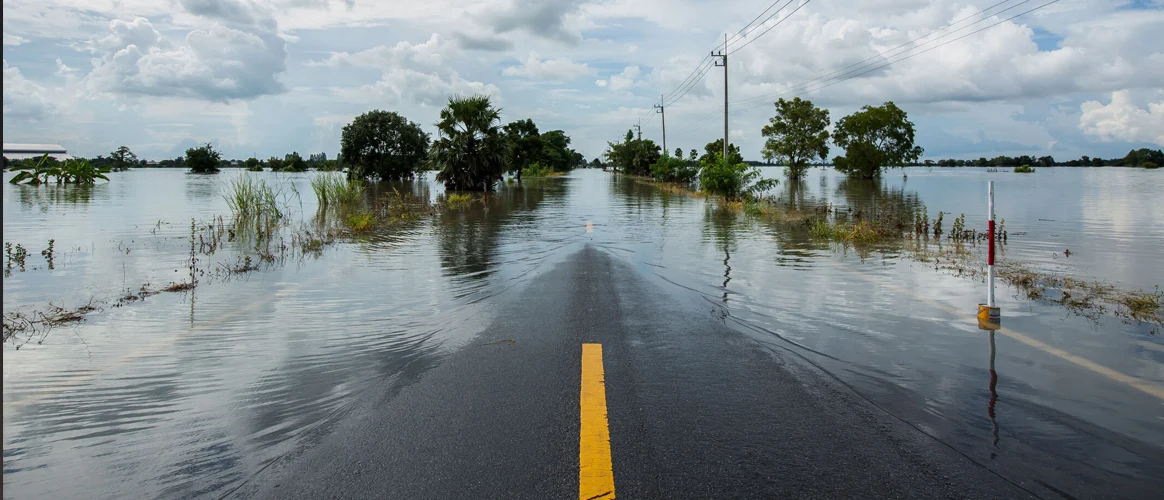
The evolution of this risk from a theoretical concern to a critical financial signal marks a turning point for the investment community. However, as the industry matures, it faces a complex landscape defined by inconsistent data, a widening gap between climate science and insurance cycles, and the difficult task of pricing "defensive" resilience measures into asset valuations.
The Shift from Decarbonization to Physical Materiality
For the better part of the last decade, the investment narrative was dominated by "transition risk"—the financial hazards associated with moving toward a low-carbon economy, such as carbon taxes and regulatory shifts. While transition risk remains vital, a growing consensus among asset managers suggests that physical risk has overtaken it in terms of immediate materiality. Georgie Nelson, Head of ESG for Real Estate at abrdn (formerly Aberdeen), notes that physical risk is now regarded by much of the investor community as the most material risk, even above decarbonization.
The challenge lies in the integration. While investment firms have integrated physical climate risk assessments into their core processes, there is a pervasive skepticism regarding the reliability of third-party data. Investors are finding that the results provided by private data firms are often "wildly different," making it difficult to establish a standardized benchmark for risk. In the United Kingdom, local government flood maps provide a rare instance of reliable, granular data. However, on a global scale, the lack of uniform data creates a "minefield" where the biggest fear is misclassifying a high-risk asset as a low-risk one.
Nick Minto, a senior investment strategist, highlights that physical risk is perhaps the most tangible ESG factor to benchmark when assessing asset performance and resilience. The industry is now forced to calculate how these risks—and the costs associated with mitigating them—reflect in both operating expenses (opex) and eventual exit multiples.
The Data Dilemma: Top-Down Scenarios vs. Bottom-Up Reality
The methodology for assessing physical risk is currently caught between two necessary but often conflicting approaches: top-down systemic modeling and bottom-up granular visibility. Matt Bullivant, Director of ESG Strategy at Athora, argues that investors invariably need both, yet the application of this data is rarely uniform across different asset classes.
While real estate requires asset-level granularity, other sectors must account for extended supply chains. A physical impact on a distant manufacturing hub may not affect the valuation of a headquarters in London, but it could catastrophically disrupt the value chain. This complexity raises a fundamental question: Should an investor use a different data provider for every asset class, or is there a path toward a universal dataset? Currently, the industry lacks a "gold standard," leaving investment committees to interrogate proxies and fill data gaps with varying degrees of success.
The Maturation of the Climate Risk Ecosystem
Despite the data challenges, the ecosystem surrounding physical risk assessment is undergoing a rapid "maturity evolution." Utsha Saha of Climate X observes that the industry has moved from a period of general awareness to one of rigorous validation. The impetus for this shift is twofold: technological advancement and regulatory pressure.
In the last five years alone, the ability to model physical risks has expanded significantly. Firms can now model up to 11 distinct physical risks with high precision. This technological leap is being met by increased scrutiny from regulators, such as the Prudential Regulation Authority (PRA) in the UK. Regulated entities are now required to provide higher levels of transparency and granularity, forcing them to interrogate which models are being used and how data is validated.
This evolution is leading to more sophisticated partnerships between data providers and investors. The goal is no longer just to identify a risk, but to understand how that risk specifically impacts opex and valuations.
The Insurability Gap and the Bottleneck of Time Horizons
One of the most significant hurdles in translating climate risk into a financial signal is the discrepancy between climate forecasts and insurance underwriting cycles. Edward Pugh, Head of Sustainability Strategy at Patrizia, points out a critical bottleneck: climate risk models often look 20 years into the future, while insurance policies are typically renewed on a one-to-three-year basis.
This "insurability gap" makes it difficult to match long-term climate projections with current underwriting practices. Many investors fall into the trap of assuming that because an asset is insurable today, it remains a safe long-term bet. However, as extreme weather events become more frequent, the "backward-looking" mentality of the valuation industry is increasingly at odds with the "forward-looking" reality of climate science.
Real Estate and the Primacy of Flood Risk
In the real estate sector, particularly within the UK and Europe, flood risk remains the dominant physical metric. Kathryn Barber of Orchard Street Investment Management notes that flood risk is often a binary factor that can halt acquisitions or sales entirely. While other risks, such as heat stress or minor wind damage, can often be addressed through capital expenditure (capex), flood risk frequently represents an unmanageable threat to asset viability.
However, heat stress is beginning to emerge as a secondary concern, driven by tenant demand rather than just regulation. As summers become hotter, tenants are increasingly questioning whether their office or retail spaces can maintain "thermal comfort." This shift demonstrates how physical risk is starting to influence rental yields and tenant retention, even if it is not yet fully codified in regulatory metrics.
Adaptation Finance: The Cost of Inaction
The rise of "adaptation finance"—capital specifically earmarked to improve the resilience of assets—is gaining traction, but it faces a unique psychological and financial hurdle. Unlike decarbonization, which can offer a clear return on investment (ROI) through energy savings or higher rental premiums for "green" buildings, adaptation finance is often defensive.
As Matt Bullivant explains, adaptation is frequently about "paying money to continue doing what you’re doing anyway." Protecting a building from a one-in-33-year flood event doesn’t necessarily increase its income; it simply prevents the total loss of that income. This makes it difficult to fit adaptation costs into traditional valuation models, leading to a debate over the "cost of inaction."
Cain Christoforou suggests that as more granular data becomes available, physical risk is finally being priced in throughout the entire lifecycle of an asset—from pre-acquisition to the hold period and eventual sale. Sustainability-linked loans (SLLs) are becoming a primary vehicle for this, as banks face their own regulatory requirements to increase "green" lending.
Defining the Resilient Asset: A Three-Tiered Approach
To truly understand a resilient asset, investors are moving toward a three-tiered assessment of risk:
- Asset Location: Direct physical impact on the specific site.
- Infrastructure Resilience: The ability of tenants to access the site (e.g., are the surrounding roads flooded even if the building is dry?).
- Business Disruption: The impact of climate events on a tenant’s wider operations, which could impair their ability to pay rent.
Aleksandra Njagulj, Global Head of ESG at DWS, emphasizes that resilience is about an asset’s ability to perform across a range of scenarios, not just the "base case." This involves identifying the most cost-effective measures to improve resilience. For example, while a green roof might help with flooding, it may be prohibitively expensive compared to simpler drainage improvements.
International Precedents and the Role of Regulation
The global community is looking to mature markets for guidance on how to handle uninsurable risks. In Japan, a country prone to earthquakes and tsunamis, many assets cannot obtain full insurance coverage. To combat this, the country has developed a robust framework of public-private partnerships and stringent building regulations.
Edward Pugh suggests that as physical risks mount in Europe and North America, governments may be forced to play a greater role in adaptation through stricter planning laws and building codes. This would shift the burden of resilience from voluntary investor action to mandatory compliance, much like the current trajectory of energy efficiency standards.
The Path Forward: Education and Cultural Change
The final barrier to effectively pricing physical climate risk is cultural. The investment industry remains largely backward-looking, relying on historical data to predict future performance. To bridge this gap, a massive effort in "change management" and education is required.
Investment teams must move beyond "ticking the box" on scenario analysis and start tying climate data directly to risk appetite and decision-making metrics. As Caroline Holman notes, the industry must not be afraid to reject tools or models that are not fit for purpose, advocating instead for a clearer definition of what resilience means for their specific business.
The consensus among experts is clear: the data is becoming more granular, the technology is improving, and the regulatory pressure is mounting. The next step is for the industry to align on the "cost of inaction," ensuring that physical climate risk is no longer a footnote in an ESG report, but a primary driver of global financial strategy. Only by integrating local datasets into high-level financial models can investors accurately map out adaptation costs and protect long-term income in an increasingly volatile world.
