

The race to appoint the next United Nations Secretary-General, succeeding Antonio Guterres, has entered its critical final weeks, marked by intense geopolitical maneuvering and the looming specter of a leaderless world body. With the December 31 deadline for Guterres’s departure rapidly approaching—a deadline never breached in the UN’s 78-year history—global powers are locked in a contentious struggle over eight diverse candidates, threatening to plunge the organization into an unprecedented leadership vacuum. This opaque selection process, characterized by secret polls and deep-seated geopolitical rivalries, underscores a broader crisis of multilateralism and the escalating competition for influence within the world’s foremost diplomatic institution.
The Stakes and the Looming Deadline
Antonio Guterres, who assumed office on January 1, 2017, is set to conclude his term amidst a period of profound global instability. His departure date of December 31 is enshrined in the UN Charter’s framework for the Secretary-General’s five-year renewable term. The absence of a confirmed successor by this date would not only create an administrative and diplomatic vacuum but also cast a long shadow over the efficacy and relevance of the United Nations. The UN Charter, surprisingly, does not explicitly outline a succession plan or interim leadership mechanism should the Secretary-General’s post become vacant without a chosen successor. This constitutional ambiguity amplifies concerns among member states and civil society organizations alike, raising fears of a period of paralysis at a time when global challenges demand robust leadership.
"There is widespread concern that the United States and possibly other influential states are running down the clock, potentially to increase pressure to settle for a less popular candidate or to leave the UN leaderless and weakened for a period," observed Ben Donaldson, an adviser to the 1 for 8 Billion campaign, a civil society initiative advocating for a more transparent selection process. Such a scenario would undoubtedly undermine the UN’s already strained credibility and operational capacity, potentially setting a dangerous precedent for future transitions.
The "Most Difficult Job in the World" Amidst Crisis
The role of the UN Secretary-General has often been likened to that of a "secular pope," a figure expected to embody moral authority, unite disparate nations, and spearhead global diplomacy. However, the position transcends mere symbolism. The Secretary-General serves as the chief administrative officer of the UN, responsible for overseeing the vast UN Secretariat, which employs tens of thousands of staff worldwide, and for appointing senior officials across various UN agencies and departments. This dual mandate requires a unique blend of diplomatic acumen, political savvy, and managerial prowess.
"The secretary-general must be a skilled politician to navigate the geopolitics; a skilled diplomat and mediator to help settle disputes; a charismatic person in the public eye; and a solid and skilled administrator," stated Jan Klabbers, professor of international law at the University of Cambridge. "It has been called ‘the most difficult job in the world’ for a reason."
This year’s selection takes place against a backdrop of unprecedented strain on the UN system. Under Guterres’s leadership, the organization has faced significant challenges, including its perceived marginalization from major conflicts in Ukraine and Iran, which have highlighted the limitations of multilateral diplomacy in an increasingly fragmented world. The UN has also endured blistering criticism, notably from former United States President Donald Trump, who advocated an "America First" foreign policy that often viewed international bodies with skepticism. Furthermore, the organization has grappled with a persistent financial crisis, leading to severe budget cuts and staff reductions, further complicating its ability to respond effectively to global crises. Georgina Holmes, a senior lecturer in politics and international studies at the Open University, United Kingdom, emphasized that this protracted contest is part of a "struggle over who will exercise political influence within the UN at a time when multilateralism is under considerable pressure and attack."
A Contentious Selection Process: Opacity and Veto Power
The selection of the UN Secretary-General is a two-stage process, primarily driven by the 15-member UN Security Council (UNSC) and ultimately affirmed by the 193-member UN General Assembly (UNGA). The UNSC conducts a series of anonymous straw polls, where members cast "encourage," "discourage," or "no opinion" votes for each candidate. Crucially, the five permanent members (P5)—China, France, Russia, the United Kingdom, and the United States—possess veto power, meaning a single "discourage" vote from any of these nations can effectively block a candidate’s bid. To be recommended by the UNSC, a candidate needs at least nine "encourage" votes and no vetoes from the P5.
Historically, this process has been largely opaque, with much of the real negotiation happening behind closed doors. However, reforms spearheaded by civil society campaigns like "1 for 8 Billion" have pushed for greater transparency, including public hearings where candidates present their visions and answer questions from member states. Despite these advances, the P5’s veto power remains the ultimate arbiter, making the selection inherently political and subject to the shifting alliances and rivalries of the world’s most powerful nations. "P5 member states are not as politically aligned as they have been in previous eras, arguably even during the Cold War," Holmes noted, underscoring the current difficulty in forging consensus.
The Field of Candidates: Diverse Profiles, Deep Divisions
Eight individuals, formally nominated by their respective member states, are currently vying for the top job. In line with informal UN protocol that often favors regional rotation, a significant number of candidates hail from Latin America or the Caribbean. There is also a strong push for the UN to select its first female Secretary-General, with five women among the current slate.
Rebeca Grynspan (Costa Rica): The Frontrunner Under Scrutiny
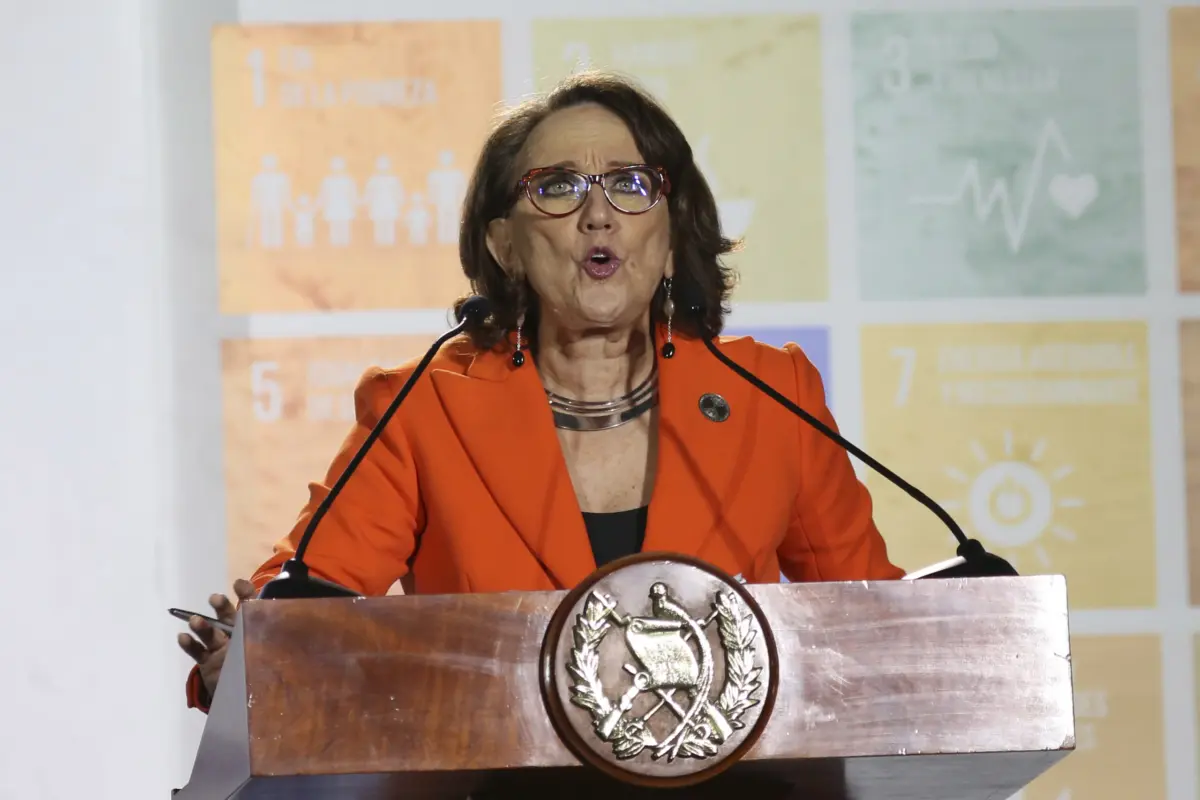
Costa Rican diplomat Rebeca Grynspan, who currently heads the UN Conference on Trade and Development (UNCTAD), has emerged as a leading contender based on anonymous straw polls conducted by the UNSC. In the most recent poll on November 5, Grynspan reportedly received 12 "encourage" votes and three "discourage" votes, according to PassBlue, a non-profit reporting on UN affairs. Described as a "continuity candidate," Grynspan’s experience within the UN system is a strength, but it also raises questions about her capacity to enact the necessary reforms for an organization under immense pressure.
Her candidacy, however, faces significant hurdles. Richard Gowan, program director of global issues and institutions at the International Crisis Group, indicated that Grynspan "still appears to face opposition from the US and Russia, which could veto her bid." While Grynspan has largely avoided direct confrontation with veto-wielding nations, some of her UNCTAD reports have voiced concerns over Israel’s actions in Gaza and the occupied West Bank, positions that diverge from Washington’s strong support for Israel. Similarly, she has expressed disagreement with Russian justifications for suspending the Black Sea grain deal. Despite these points of contention, Grynspan’s team remains optimistic, engaging in active lobbying with key member states, including a meeting with Russian Foreign Minister Sergei Lavrov in April. Gowan added, "Grynspan’s team argue that they can still nudge Washington and Moscow to accept her, and US officials do seem to be leaving open the possibility of working with her in the end."
Rafael Grossi (Argentina): The Washington Alignment
Rafael Grossi, the Argentinian head of the International Atomic Energy Agency (IAEA), secured second place in the latest straw poll with nine "encourage" and four "discourage" votes. Grossi’s reputation for being closely aligned with Washington is a double-edged sword. While it might garner him US support, it is likely to generate opposition from other P5 members, particularly China and Russia. Despite this, Grossi has reportedly made diplomatic overtures to Beijing and Moscow in recent weeks, seeking to broaden his appeal.

Other Latin American and Caribbean Candidates:
- Carolyn Rodrigues Birkett (Guyana): A former Guyanese diplomat whose description of Israel’s actions in Gaza as "genocide" has drawn scrutiny in the US, received five "discourage" votes.
- Maria Fernanda Espinosa (Antigua and Barbuda): A former President of the UN General Assembly, received 10 "discourage" votes, making her path forward challenging.
- Ivonne A-Baki (Ecuador): An Ecuadorian diplomat, received 14 "discourage" votes, indicating minimal support.
Late Entries: Shaking Up the Race
The late inclusion of two candidates has further complicated the race:
- Lana Nusseibeh (United Arab Emirates): The UAE’s Minister of State and former Permanent Representative to the UN, is reportedly favored by the US and Russia. However, her candidacy has faced pushback over allegations concerning her country’s alleged arming of paramilitary forces involved in atrocities in Sudan, a claim the UAE denies. Nusseibeh received six "discourage" votes. "Nusseibeh’s main challenge is to win over China, which has so far seemed sceptical about her candidacy," Gowan commented. "If she can get Beijing’s support, she could break through."
- Feridun Sinirlioglu (Turkiye): Turkiye’s nominee, a veteran diplomat, received eight "discourage" votes. His candidacy is expected to face opposition, particularly from UNSC member Greece, given the historical tensions between the two countries.
Olara Otunnu (Uganda): The African Voice
Ugandan politician Olara Otunnu, the sole remaining African candidate, received nine "discourage" votes, dimming his prospects significantly.
Viktor Orban (Hungary): The Dark Horse Suggestion
Intriguingly, former Hungarian Prime Minister Viktor Orban, known for his far-right policies, has been floated as an outside choice by the US, as reported by The Wall Street Journal. While not an official candidate, his potential consideration highlights the desperate search for consensus and the willingness of some P5 members to explore unconventional options.
Geopolitical Chessboard: P5 Dynamics and Strained Multilateralism
The protracted nature of this selection process is a stark reflection of heightened geopolitical tensions. Ellen Ravndal, an associate professor in political science at the University of Stavanger, Norway, noted that the drawn-out struggle for consensus mirrors an era of "more geopolitical tensions" and a UN that is in "near-constant crisis mode."
The P5 nations are actively leveraging their influence to shape the outcome:
- United States and Russia: Reports suggest both have thrown their weight behind the UAE’s Lana Nusseibeh, with France and the UK offering "little resistance," according to diplomats cited by Devex. This alignment, though surprising given their broader disagreements, could be a strategic move to secure a candidate perceived as amenable to their respective interests.
- China: Beijing has signaled a preference for a Latin American candidate, as reported by The New York Times, though it has refrained from publicly endorsing anyone. China’s stance aligns with its broader efforts to cultivate relationships with the Global South and potentially counterbalance Western influence within the UN.
The informal P5 consultations often involve intricate "backroom deals" where P5 members might trade support for a candidate in exchange for a national being appointed to a key role within the future Secretary-General’s cabinet. Donaldson explained that a "discourage" vote in a straw poll doesn’t always translate to an eventual veto, but can be "used in the past as a basis to extract a concession from a candidate."
Historical Context and Precedent
While the current race feels exceptionally contentious, it is not entirely unprecedented in its length. Adam Day, head of the Geneva office of the United Nations University Centre for Policy Research, pointed out that while leadership contests for former Secretaries-General Guterres (2016) and Ban Ki-moon (2006) were less protracted, some earlier races extended into December. "In the broader scope of secretary-general races, this one is still within the range of what has been normal," Day clarified. However, he cautioned, "But the longer it takes, the less time the incoming secretary-general has to prepare a transition," which is crucial for effective leadership from day one.
The UN’s history of leadership transitions has seen varying degrees of transparency and speed. The push for a more open process, including public hearings and formal candidate lists, is a relatively recent development, aimed at democratizing a selection that was once almost entirely decided by the P5. Yet, the current deadlock demonstrates the enduring power of geopolitical interests over procedural reforms.
The Specter of a Leaderless UN: Implications for Global Governance
The gravest concern remains the possibility of December 31 arriving without a successor. If no candidate secures the necessary UNSC approval by then, the UN Charter’s silence on interim leadership would create a profound institutional crisis. Such a vacuum would necessitate extraordinary measures from the UNSC and other UN bodies to establish temporary leadership and manage daily operations. This could involve designating an acting Secretary-General or creating a caretaker committee, but any such arrangement would likely be temporary, politically fraught, and lack the full authority and legitimacy of a formally appointed chief.
A leaderless UN, even for a brief period, would severely cripple its ability to address ongoing global crises, coordinate humanitarian efforts, maintain peace operations, and provide a platform for diplomatic dialogue. It would send a chilling message about the state of multilateralism and the capacity of major powers to cooperate, even on fundamental institutional matters. The resulting uncertainty would further embolden critics of the UN and potentially accelerate the trend of nations seeking unilateral solutions to global problems.
The coming weeks are therefore not just about selecting a new leader but about reaffirming the very principles of international cooperation and the foundational role of the United Nations in global governance. The world watches anxiously as the P5 nations navigate their differences, knowing that the outcome will define not only the future trajectory of the UN but also the broader landscape of international relations for years to come.
