

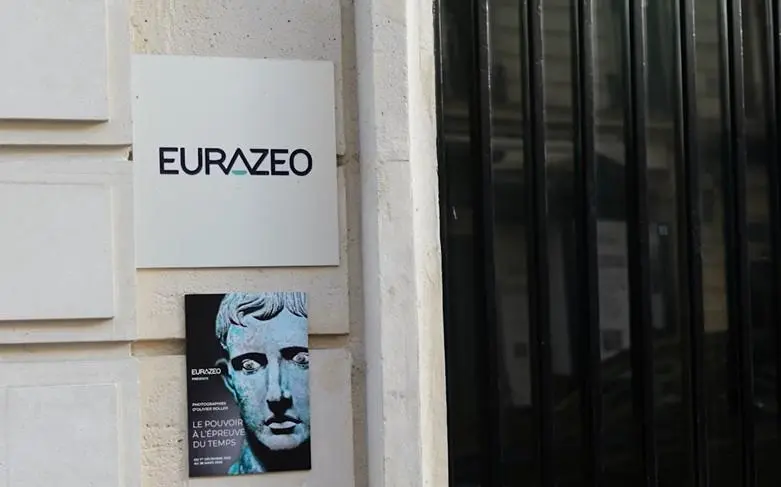
French investment powerhouse Eurazeo has finalized an agreement to acquire a majority stake in Miya Water, a leading Spanish provider of water efficiency solutions, marking a significant milestone in the private equity firm’s commitment to environmental sustainability. This strategic transaction is designed to propel Miya Water’s international expansion and catalyze the growth of its sophisticated platform, which specializes in helping municipal and private utilities drastically reduce water loss. The acquisition is executed through the Eurazeo Planetary Boundaries Fund (EPBF), a thematic impact buyout strategy that targets businesses capable of reversing or mitigating the breach of critical ecological limits.
The deal represents the fourth investment for the EPBF since its inception in 2024. With a target fund size of €750 million, the EPBF focuses on high-growth companies that offer scalable solutions to global environmental challenges. By bringing Miya Water into its portfolio, Eurazeo is positioning itself at the forefront of the water-energy nexus, an area increasingly recognized as vital for both climate adaptation and economic stability.
The Strategic Importance of Water Efficiency
The acquisition of Miya Water occurs against a backdrop of intensifying global water scarcity. As climate change disrupts traditional precipitation patterns and leads to more frequent and severe droughts, the management of existing water resources has moved to the top of the international policy agenda. Infrastructure in many parts of the developed world is aging, leading to systemic leaks, while rapidly urbanizing regions in developing nations struggle to implement efficient distribution networks.
Miya Water, headquartered in Madrid and founded in 2007, has spent nearly two decades refining its approach to Non-Revenue Water (NRW). NRW refers to water that has been produced and treated but is lost before it reaches the end customer. These losses typically occur through physical leaks in aging pipe networks, unauthorized consumption (theft), or inaccuracies in metering and billing.
The scale of the problem is immense. Industry data suggests that approximately 126 billion cubic meters of treated water are lost annually on a global scale. This volume is sufficient to meet the basic water needs of hundreds of millions of people. Beyond the humanitarian implications, NRW represents a staggering economic loss for utilities, estimated at nearly $39 billion per year. By reducing these losses, Miya Water enables utilities to improve their financial health while simultaneously conserving a precious natural resource.
Technical Expertise and Global Reach
Since its launch, Miya Water has established a formidable track record, having implemented over 200 projects across five continents. The company’s approach is holistic, combining advanced engineering with data-driven management strategies. Its service offering includes pressure management, leak detection, asset management, and the implementation of smart metering systems.
One of Miya’s core strengths is its ability to operate under performance-based contracts. In these arrangements, the company’s compensation is directly tied to the actual volume of water saved, aligning its incentives with those of the utility and the environment. This model has proven particularly effective in regions with constrained municipal budgets, as the savings generated by the reduction in NRW often fund the capital improvements required to modernize the network.
Under the new ownership structure, Miya’s founding team and current management will remain significant co-investors. This continuity is expected to ensure that the company maintains its technical edge while leveraging Eurazeo’s financial depth and global network to enter new markets. Noam Komy, Executive Chairman of Miya, emphasized that the partnership with Eurazeo is not merely about scaling operations but about evolving into a comprehensive international water services platform.
The Planetary Boundaries Framework
Eurazeo’s decision to invest through the EPBF is rooted in the "Planetary Boundaries" scientific framework, which identifies nine Earth system processes that regulate the stability and resilience of the planet. Crossing these boundaries increases the risk of generating large-scale, irreversible environmental changes.

Eurazeo has identified three specific boundaries where Miya Water’s operations have a direct positive impact:
- Freshwater Change: By reducing leaks and improving distribution efficiency, Miya limits the unnecessary abstraction of water from aquifers and rivers. This is critical for maintaining healthy ecosystems and ensuring long-term water security for human populations.
- Pollution Control: Miya’s expertise extends to wastewater management. By optimizing systems and preventing overflows, the company helps divert organic and chemical pollution away from freshwater bodies, protecting biodiversity and water quality.
- Climate Change: There is a deep intrinsic link between water and energy. Pumping, treating, and heating water are energy-intensive processes. When water is lost through leaks, the energy used to treat and transport that water is also wasted. By reducing NRW, Miya directly lowers the carbon footprint of water utilities, contributing to global greenhouse gas mitigation efforts.
Chronology of Eurazeo’s ESG Integration
The acquisition of Miya Water is part of a multi-year trajectory for Eurazeo, which has sought to transition from a traditional private equity firm to a leader in sustainable finance.
- 2020-2022: Eurazeo accelerated its ESG (Environmental, Social, and Governance) integration, establishing clear decarbonization targets for its portfolio companies.
- 2023: The firm began the conceptualization of a dedicated impact fund that would move beyond mere "risk mitigation" toward "positive impact generation."
- 2024: Eurazeo officially launched the Eurazeo Planetary Boundaries Fund (EPBF) with an initial target of €750 million. The fund was designed to target mid-market companies in Europe and North America that provide solutions for a circular economy, sustainable water management, and clean energy.
- 2025 – Early 2026: The EPBF completed its first three investments, focusing on waste-to-energy and sustainable agriculture technologies.
- October 2026: The acquisition of Miya Water is announced, marking the fund’s largest foray into the water infrastructure sector to date.
Economic and Industrial Implications
The entry of a major private equity player like Eurazeo into the water efficiency space signals a shift in how the financial markets perceive environmental services. Historically, water utilities were seen as stable, low-growth assets. However, the integration of "smart water" technology and the rising cost of resource scarcity have transformed water efficiency into a high-growth sector.
Analysts suggest that the "efficiency-first" approach championed by Miya Water is often more cost-effective than building new desalination plants or dams. For utilities facing high debt loads, reducing NRW offers a path to increasing revenue and reducing operational expenses without necessarily raising tariffs for consumers.
Furthermore, the transaction highlights the growing importance of "Impact Buyouts." Unlike traditional buyouts that might focus on aggressive cost-cutting to drive short-term returns, impact buyouts focus on long-term value creation through the solving of systemic global problems. Erwann Le Ligné and Wilfried Piskula, Managing Partners and Co-Heads at EPBF, noted that water efficiency is likely to be one of the "defining infrastructure challenges of the coming decades." They believe Miya is uniquely positioned to lead this global transition.

Future Outlook and Market Expansion
With Eurazeo’s backing, Miya Water is expected to target aggressive growth in North America and parts of Europe where infrastructure is reaching the end of its design life. Additionally, the company is likely to explore mergers and acquisitions of its own, seeking to tuck in smaller technology firms that specialize in artificial intelligence for leak prediction and satellite-based pipe monitoring.
The integration of AI and machine learning into Miya’s platform could further revolutionize the sector. By predicting where leaks are likely to occur before they happen, utilities can move from a reactive "break-fix" model to a proactive maintenance strategy. This not only saves water but also prevents the catastrophic pipe bursts that can paralyze urban centers.
As the transaction moves toward final regulatory approvals, the broader investment community will be watching closely. The success of the Miya Water acquisition will serve as a litmus test for the viability of large-scale impact investing in the water sector. If Eurazeo can successfully scale Miya’s operations while delivering the environmental outcomes promised by the EPBF, it may provide a blueprint for how private capital can be harnessed to secure the world’s most vital resource.
In a world where water is increasingly becoming "blue gold," the ability to save every drop is no longer just an environmental imperative—it is a cornerstone of future economic resilience. Through this acquisition, Eurazeo and Miya Water are betting that the future of infrastructure lies not in extraction, but in the radical optimization of what we already have.
