

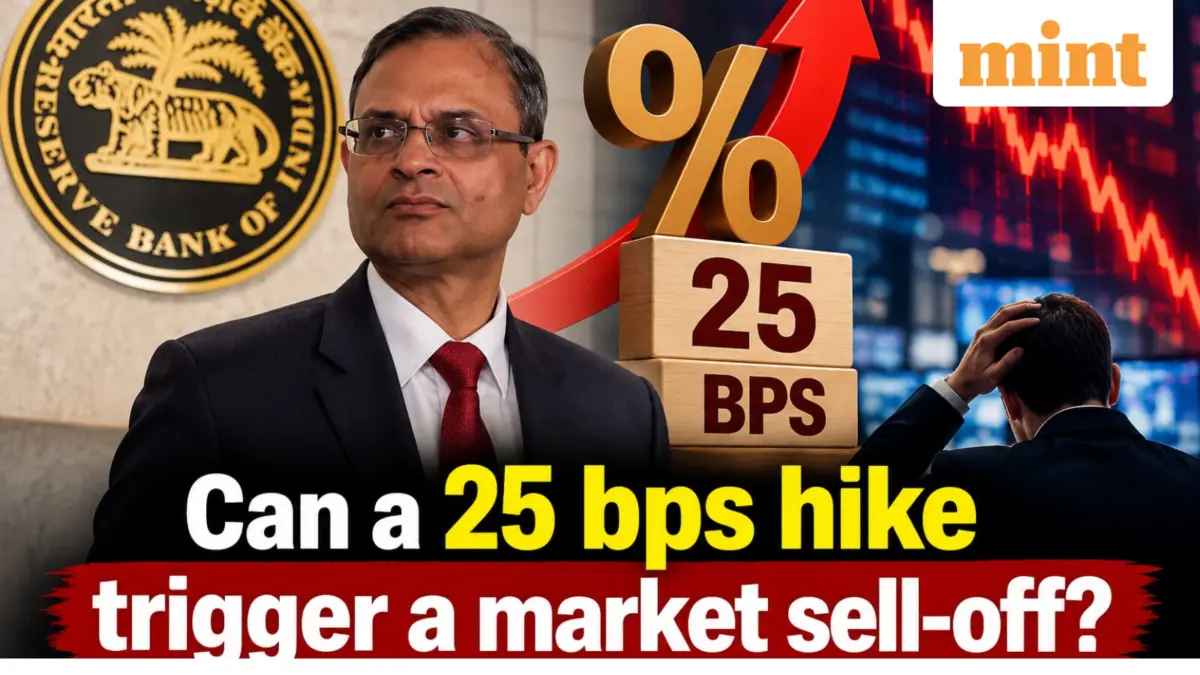
The Reserve Bank of India (RBI) is widely anticipated to increase the benchmark repo rate by 25 basis points (bps) during its upcoming Monetary Policy Committee (MPC) meeting on Wednesday, October 7. This projected move marks a significant shift in India’s monetary stance, effectively ending a prolonged pause that has lasted since February 2023. Financial analysts and market observers suggest that the RBI is likely to align itself with a global trend of synchronized monetary tightening, following in the footsteps of major central banks such as the U.S. Federal Reserve, the European Central Bank (ECB), and the Bank of Japan (BoJ). These institutions all implemented rate hikes in September to mitigate the risks of persistent inflation, which has been exacerbated by elevated global crude oil prices and geopolitical instability.
As the Indian economy navigates a complex landscape of robust internal growth and mounting external pressures, the MPC’s decision will be a critical determinant of the country’s macroeconomic stability for the remainder of the 2026-27 fiscal year. The potential hike comes at a juncture where the risks of inflation and its subsequent impact on consumer spending and corporate investment have moved to the forefront of the policy debate.
The Inflationary Surge and Macroeconomic Context
India’s retail inflation, measured by the Consumer Price Index (CPI), has shown signs of accelerating stress. In August, retail inflation surged to a 20-month high of 4.82%, breaching the RBI’s medium-term target midpoint of 4% for the third consecutive month since January 2025. This upward trajectory is particularly concerning for the central bank, which operates under a mandate to maintain price stability while supporting economic growth.
Several factors are contributing to this inflationary pressure. Domestically, the impact of a lackluster monsoon season is beginning to manifest in food prices. According to data from the India Meteorological Department (IMD), the southwest monsoon rainfall in 2026 was recorded at just 87% of the long-period average (LPA). This shortfall categorizes the 2026 monsoon as the fourth-lowest since 2001 and the 13th-lowest since records began in 1901. A deficient monsoon typically leads to lower agricultural yields, particularly for Kharif crops, which in turn drives up the prices of cereals, pulses, and vegetables—key components of the Indian consumer basket.
On the international front, the persistent US-Iran conflict has kept global energy markets on edge. Crude oil prices have remained elevated for the majority of the year, frequently trading near or above the $100 per barrel mark. Market reports indicate that global oil inventories are currently languishing below their historical five-year averages, suggesting that prices may remain high for a protracted period. For a country like India, which imports more than 80% of its crude oil requirements, expensive energy imports translate directly into higher transport costs and a wider trade deficit.
Expert Projections and the Case for Tightening
Financial experts believe that the current economic environment provides the RBI with both the necessity and the room to maneuver. Abhishek Bisen, Head of Fixed Income at Kotak Mahindra AMC, anticipates a 25-bps hike accompanied by a "neutral" stance. This stance would allow the central bank flexibility to react to future data without committing to a specific path of further increases.
"We expect a 25-bps repo-rate hike in October 2026 with a neutral stance along with measures to absorb durable liquidity, potentially around ₹1 lakh crore," Bisen stated. He further noted that the market should prepare for a cumulative tightening of 50–75 bps over the next 12 to 15 months, depending on how global conditions, inflation risks, and currency stability evolve.
Bisen also highlighted the strength of India’s underlying economy as a justification for the hike. The GDP growth for the first quarter of the 2026-27 fiscal year (Q1FY27) came in at a robust 7.8%. This stronger-than-expected growth provides a "cushion" for the RBI, allowing it to raise rates to curb inflation without immediately fearing a recessionary slowdown. However, the narrowing differential between Indian and U.S. bond yields, coupled with the depreciation of the Indian Rupee, adds urgency to the need for a rate adjustment to prevent capital outflows.
Chronology of RBI Policy Shifts (2023–2026)
To understand the significance of the upcoming October 7 meeting, it is essential to look at the timeline of the RBI’s recent monetary policy actions:
- February 2023: The RBI raised the repo rate to 6.50%, marking the end of a series of hikes aimed at post-pandemic inflation.
- April 2023 – August 2025: The MPC maintained a "status quo" on rates for over two years, focusing on a "withdrawal of accommodation" to manage liquidity while observing the impact of previous hikes.
- January 2026: Inflation began to creep above the 4% target midpoint, prompting the RBI to issue stronger hawkish guidance.
- August 2026: Retail inflation hit a 20-month high of 4.82%, making a policy intervention almost inevitable.
- September 2026: The US Fed, ECB, and BoJ raised rates, increasing the pressure on the RBI to protect the Rupee and manage the yield spread.
- October 7, 2026 (Scheduled): The expected 25-bps hike to bring the repo rate to 6.75%.
Market Sentiment and Discounted Expectations
Despite the gravity of a rate hike, the consensus among market veterans is that the equity markets are unlikely to witness a massive sell-off. V K Vijayakumar, Chief Investment Strategist at Geojit Investments, suggests that the 25-bps hike is "99% discounted" by the market.
"The rate hike itself will not have a significant impact because the market will ultimately depend on actual factors such as oil and crop prices and how they behave," Vijayakumar explained. He emphasized that the focus of investors will be less on the number and more on the commentary provided by the RBI Governor. Markets will be looking for revisions in the growth outlook, inflation forecasts, and any hints regarding the duration of the tightening cycle.
Interestingly, a rate hike could serve as a catalyst for the banking sector. Higher interest rates often lead to an expansion of Net Interest Margins (NIMs) for lenders, as they can reprice loans faster than deposits. Vijayakumar noted that Indian banks are currently in a strong position, with credit growth exceeding 19% and healthy balance sheets. Furthermore, the banking system has a liquidity cushion of approximately $127.2 billion through the Foreign Currency Non-Resident (Bank) [FCNR(B)] scheme, which is currently exempt from Cash Reserve Ratio (CRR) requirements.
The Critical Role of Oil and Agriculture
While the RBI can control the cost of money, it has limited influence over the external shocks driving inflation. G Chokkalingam, Founder and Head of Research at Equinomics Research, argues that the trajectory of the market over the next two quarters will be dictated more by the price of Brent crude than by the repo rate.
"Oil is the single most important factor," Chokkalingam remarked. "An Indian basket oil price above $115 per barrel is a serious issue because it has multiple effects. It affects the trade deficit, the exchange rate, and corporate earnings—everything is linked." He warned that if oil prices do not correct within the next three to six months, Foreign Institutional Investors (FIIs) may remain cautious about the Indian market.
Regarding the monsoon, while a 30% rainfall deficit is significant, Chokkalingam pointed out that the impact on the overall GDP might be contained. Agriculture now accounts for approximately 15% of India’s GDP, and nearly two-thirds of the country’s crop area is under irrigation, providing some resilience against erratic weather. However, the psychological and real impact on rural demand and food inflation remains a variable that the RBI cannot ignore.
Broader Implications and Outlook
The anticipated 25-bps hike is more than just a numerical adjustment; it is a signal of the RBI’s commitment to "inflation anchoring." By acting now, the central bank aims to prevent inflationary expectations from becoming entrenched in the minds of consumers and businesses.
For the common man, a repo rate hike will likely lead to an increase in Equated Monthly Installments (EMIs) for home, auto, and personal loans. For the government, higher interest rates mean an increase in the cost of servicing sovereign debt. However, for savers and senior citizens, the move is likely to be welcomed as banks will eventually pass on the benefits in the form of higher fixed deposit rates.
As the MPC concludes its deliberations, the global financial community will be watching closely. Whether the RBI maintains a "neutral" stance or adopts a more "hawkish" tone will determine the volatility of the Rupee and the direction of capital flows in an increasingly uncertain global economy. The October 7 decision will set the stage for India’s fiscal health heading into 2027, balancing the need for growth with the imperative of price stability.
