

Rabat, Morocco – A new report from Amnesty International, titled "We Start With the Verdict: Inside Morocco’s Surveillance Machine," has brought to light an alleged extensive and sophisticated surveillance apparatus deployed by Moroccan authorities against journalists, human rights defenders, and civil society members. The investigation, conducted in collaboration with 14 media organizations and coordinated by the international network of journalists Forbidden Stories, details a systematic campaign employing both advanced digital spyware and traditional physical surveillance methods. At the heart of these allegations is the use of Pegasus, the notorious mobile surveillance tool developed by the Israeli company NSO Group.
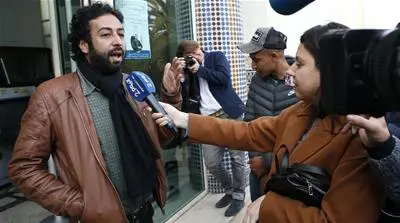
Omar Radi, a prominent Moroccan journalist and human rights defender now based in Germany, stands as a central figure in the report’s findings. Radi recounted to Al Jazeera his harrowing experience, stating, "I was surveilled not because of a specific article. I was investigating land dispossession in Morocco. I then learned I was a Pegasus target." His suspicions, which began in 2018, were confirmed in June 2020, when an examination by Amnesty International Security Lab revealed his phone had indeed been compromised. Radi described tell-tale signs of surveillance: his phone battery draining rapidly, its temperature rising inexplicably, and network speeds slowing dramatically.
The physical component of the surveillance, according to Radi, was equally overt. "They came every day to get a daily report from the parking attendants in my street, the shops I used to go to, and my friends," he explained, painting a picture of relentless monitoring. He even attempted to confront his pursuers, recalling, "I would sometimes turn around and walk towards the people following me to take photographs, but they ran quickly and hid their faces." This blend of digital and physical intrusion, as highlighted in the report, underscores the depth of the alleged surveillance operation.
The Anatomy of a Surveillance State: Key Findings of the Amnesty Report
Amnesty International’s comprehensive report identifies Morocco’s General Directorate for Territorial Surveillance (DGST) as the primary agency responsible for the deployment of Pegasus spyware. The report meticulously documents what it describes as widespread abuses of the spyware against activists and journalists between 2017 and 2021. The revelations are particularly significant as they draw on interviews with an anonymous whistleblower, identified by the pseudonym Safir, a former employee of the DGST. Amnesty International asserts that it has corroborated key elements of Safir’s testimony through independent sources, technical evidence, and interviews with at least 10 individuals identified as surveillance targets, including Omar Radi.
Beyond Radi, the report details the cases of three other prominent figures: Fouad Abdelmoumni, a veteran activist; Abdessadak El Bouchattaoui, a human rights lawyer; and Hicham Mansouri, a journalist living in exile. Mansouri, who was imprisoned in 2015 on charges of adultery and sexual exploitation – charges Amnesty describes as "trumped-up" – represents a pattern of legal harassment often faced by critical voices in Morocco.
Omar Radi noted the profound impact of the report on his understanding of his ordeal. "The Amnesty report connected many dots as to what I was living and feeling while I was under tight surveillance," he said. He further articulated the insidious reach of the surveillance, suggesting it permeated even the judicial process: "It explains the extraordinary aspect of my police interrogations and my trial, where many of my rights weren’t respected, because even the judicial police and the judges were under monitoring." This claim, if substantiated, points to a profound erosion of the rule of law and an environment where justice itself may be compromised by clandestine state interference.
Pegasus: A Global Controversy and its Modus Operandi
The Pegasus spyware, developed by the Israeli NSO Group, has become a byword for state-sponsored digital espionage. Capable of remotely and covertly extracting vast amounts of data from mobile phones, Pegasus can access messages, calls, photos, and even activate the device’s microphone and camera without the user’s knowledge. Its deployment often relies on "zero-click" exploits, meaning it can infect a phone without the target needing to click on a malicious link, making it incredibly difficult to detect. NSO Group has consistently maintained that it sells Pegasus only to legitimate government clients for the sole purpose of fighting crime and terrorism, though numerous investigations, including the broader "Pegasus Project" by Forbidden Stories in 2021, have revealed its widespread use against journalists, dissidents, and political opposition globally.
Amnesty’s analysis of Pegasus records specifically pertaining to Morocco revealed a disturbing scale. Between September and December 2017, the report matched 103 Moroccan phone numbers to individuals identified as potential targets. A significant majority of these, 65, were identifiable as civil society members. This group included 34 human rights defenders, 22 journalists and media workers, five lawyers, and four academics, underscoring a clear pattern of targeting those involved in critical reporting, advocacy, and intellectual discourse. The report states that Morocco’s Pegasus operations were "fully active" by October 2017, citing the case of human rights lawyer El Bouchattaoui, whose number was entered into the system in September 2017 and selected for targeting weeks before he received an infection link via text message.
A Hybrid Surveillance Model: Digital and Physical Methods
Safir, the whistleblower, provided chilling details of a sophisticated surveillance apparatus that seamlessly integrated digital and physical methods. According to Safir’s testimony, targeted individuals were subjected to secret filming and recording in a wide array of locations, including detention centers, offices, cars, cafes, and even private bedrooms. This suggests an almost omnipresent monitoring capability designed to capture every aspect of a target’s life.
The report also unveiled more clandestine techniques. Safir alleged that phone shops were "coopted" to sell targets devices that had already been infected with spyware. This method would allow the DGST to bypass the need for remote exploits, ensuring direct access to a target’s communications and data from the moment they acquired the device. Furthermore, neighbors of human rights defenders were reportedly recruited as informants, tasked with providing daily reports on the movements and activities of their targets. This tactic points to a deeply embedded and community-level infiltration of surveillance.
Another method described by Safir involved the use of Remote Control Systems (RCS) at internet cafes. Field agents would identify which cafes targets frequented, giving the DGST access to activity on machines that had already been infected. This would allow an operator to track calls, read messages, access photographs, and record audio, effectively turning public internet access points into surveillance hubs. The report illustrates this with the case of activist Abdelmoumni, who was secretly filmed at home with his fiancée in 2021. Abdelmoumni, based on the recording’s angle, believed the footage was captured through a hidden camera concealed within an air-conditioning unit. Safir described this episode as a "textbook case" of a DGST surveillance and cleanup operation designed to leave no trace, highlighting the professionalism and precision of these alleged covert actions.
Morocco’s Official Denials and Counter-Narratives
Moroccan authorities have consistently and vehemently rejected Amnesty International’s allegations regarding the use of Pegasus spyware to target journalists, activists, and critics. In statements issued in both 2020 and 2022, Moroccan officials challenged Amnesty to provide "material evidence" to substantiate its claims. Amnesty International stated that it had formally communicated with Moroccan authorities four weeks prior to the publication of its latest report, inviting them to respond, but received no reply. Al Jazeera also sought comment from Moroccan officials for its report but had not received a response at the time of publication.
Local Moroccan media outlets have also echoed the official denials and challenged the veracity of Amnesty’s report. For instance, Le360, a Moroccan news portal, cited arguments suggesting that the mere presence of a phone number in Pegasus targeting records does not, by itself, definitively prove that a device was infected, nor does it establish who ordered an alleged attack. The outlet further argued that Amnesty had failed to provide the "conclusive technical and material evidence" that Moroccan authorities had repeatedly demanded. These counter-arguments underscore the ongoing dispute over the burden of proof and the methodology used in such investigations.
Beyond Spyware: Broader Tactics of Intimidation and Control
The tactics of surveillance and harassment in Morocco extend beyond digital espionage, as articulated by Taoufik Bouachrine, one of Morocco’s most prominent journalists and former host of the "Talk on Politics" podcast. Although not named in Amnesty’s latest report, Bouachrine described a deeply unsettling pattern of intimidation common in Morocco and other Arab countries. "In Morocco, as in all Arab countries, inventive methods are used to silence journalists and deter them from investigative journalism, particularly when it concerns the unlawful exercise of power, financial corruption, and the intertwining of political authority and money," he told Al Jazeera.
Bouachrine outlined two primary methods of suppression. The first, he explained, involves the fabrication of criminal cases against journalists, "often involving allegations of sexual misconduct in a conservative society that amount to a journalist’s moral execution." This strategy leverages societal norms to discredit and neutralize critical voices, effectively ruining their reputations and careers. The second method involves orchestrated smear campaigns conducted through "armies of online trolls and operatives" who relentlessly target journalists and their families, creating an environment of constant pressure and fear.
Bouachrine himself is a stark example of these tactics. Arrested in 2018 on charges of rape and human trafficking, he was subsequently sentenced to 15 years in prison. He has consistently denied these charges, asserting that his prosecution was directly linked to his investigative journalism. His case garnered international attention, with the United Nations Working Group on Arbitrary Detention finding his detention to be arbitrary and declaring that he had been subjected to judicial harassment. The European Parliament also adopted a resolution calling for his release, along with other journalists tried on similar charges, highlighting a broader international concern over the state of press freedom in Morocco.
After serving more than six years, Bouachrine was eventually released under a royal pardon. However, the newspaper he founded, Akhbar Al-Youm, had already ceased operations. Bouachrine attributed the closure to authorities cutting off its advertising revenue, a tactic he described as "another method of destroying investigative journalism," by "turning off the advertising tap and leaving a newspaper to die slowly." This illustrates the economic pressures that can be brought to bear on independent media, forcing their closure and further shrinking the space for critical reporting.
Implications for Press Freedom and Civil Society
The revelations in Amnesty International’s report, combined with the testimonies of individuals like Omar Radi and Taoufik Bouachrine, paint a concerning picture of the state of human rights and press freedom in Morocco. The alleged use of sophisticated spyware like Pegasus, coupled with pervasive physical surveillance and legal and economic harassment, creates a chilling effect on journalists, activists, and anyone daring to challenge official narratives or investigate sensitive topics.
The implications are far-reaching. Such surveillance erodes public trust, fosters self-censorship, and ultimately undermines the foundational principles of a democratic society. When journalists fear that their communications are compromised, their sources are at risk, and their private lives can be weaponized against them, the ability of the press to hold power accountable is severely diminished. Similarly, for human rights defenders, the constant threat of surveillance and arbitrary detention hinders their crucial work in advocating for justice and protecting vulnerable populations.
The international community, including human rights organizations and parliamentary bodies, has increasingly voiced concerns over these practices. The call for transparency and accountability from the Moroccan government remains steadfast. The report by Amnesty International and Forbidden Stories serves as a critical document, not only exposing alleged abuses but also highlighting the urgent need for robust legal frameworks to protect individuals from state-sponsored digital and physical intrusion, and to safeguard the vital space for independent journalism and civil society. The ongoing denials from Rabat mean that the quest for definitive answers and justice for those allegedly targeted continues.
