

Kyiv, Ukraine – On what should have been a poignant commemoration of 41 years of marriage, Vera Gulyaeva found herself instead recounting the harrowing final chapter of her husband Serhiy’s life and the ongoing tragedy unfolding in the Russian-occupied Ukrainian town of Oleshky. Her story is a stark testament to the brutal realities faced by thousands trapped in territories cut off from the world, enduring deprivation, constant threat, and a creeping humanitarian catastrophe.
The Anatomy of a Personal Tragedy: Serhiy Gulyaev’s Last Days
Vera and Serhiy Gulyaev’s love story began at a friend’s wedding in 1985, blossoming into a decades-long partnership rooted in the small house they had built together in Oleshky. Their reluctance to leave, even as their children sought refuge in Kyiv-controlled areas, spoke volumes about their deep attachment to their home, their orchid, vegetable patch, five hens, water well, and the power generator that offered a fleeting respite from the darkness. It was a life of simple pleasures, meticulously maintained amidst the encroaching shadows of war. Vera, a stately 64-year-old retired schoolteacher, rarely ventured out, finding solace within their home. Serhiy, a retired 63-year-old driver, was the one who occasionally braved the outside world, his trips often for the most basic necessity: bread.
It was on one such routine errand in March that fate intervened with devastating force. A Russian drone, a silent harbinger of death in the skies above Oleshky, plunged into a bread line, a scene of everyday civilian vulnerability transformed into a target. The attack killed several people and left Serhiy Gulyaev with severe cranial wounds. What followed was a desperate, agonizing struggle to save him, a struggle emblematic of the profound collapse of healthcare infrastructure in occupied zones.
Vera’s initial attempt to transport her critically injured husband to a hospital 80km (50 miles) away in Skadovsk was thwarted by the very dangers that define life under occupation: their ambulance struck a landmine, rendering the journey impossible. Days later, a second, desperate attempt finally succeeded in getting Serhiy to a medical facility. Yet, the reprieve was tragically brief; Serhiy Gulyaev succumbed to his injuries in the hospital. Vera was left with the grim task of recovering his remains, having them cremated, and returning home with his ashes – a devastating symbol of a love reduced to dust by the indiscriminate violence of war.

Oleshky Under Siege: A Town Stripped Bare
Serhiy’s death is not an isolated incident but a microcosm of the wider, systemic suffering in Oleshky, a town that has been under Russian occupation for over four years. Situated in the Kherson region, it has been deliberately isolated, its 2,000 remaining residents trapped in a humanitarian crisis of escalating severity. For the last two and a half years, they have endured life without electricity, running water, natural gas, or functional healthcare. This isn’t merely inconvenience; it’s a regression to pre-industrial conditions, threatening every aspect of human dignity and survival.
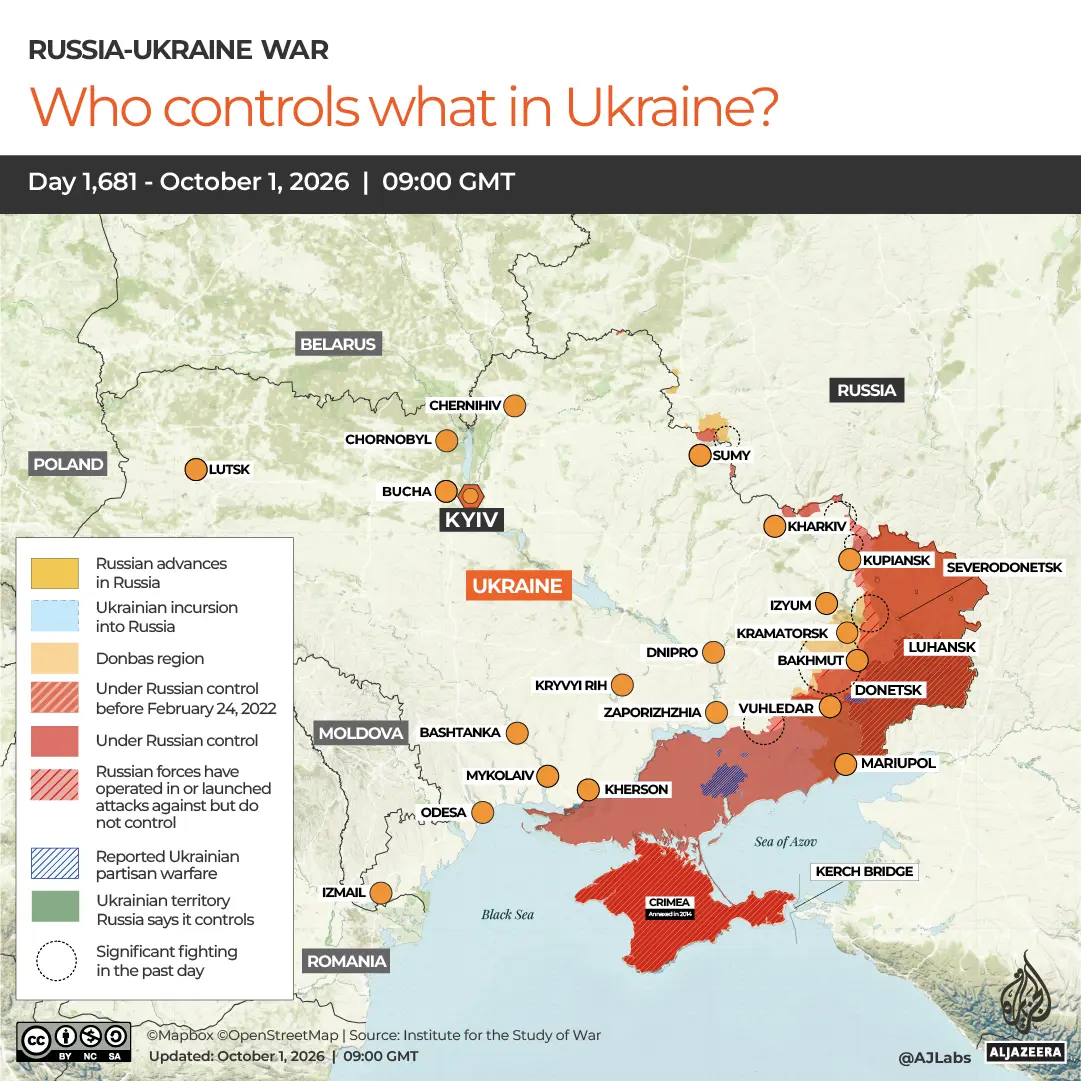
The initial occupation in the early days of the full-scale invasion saw Russian forces quickly seize control of strategic points in southern Ukraine, including parts of the Kherson region. While the regional capital, Kherson city, was liberated by Ukrainian forces in November 2022, Oleshky, located just 10km (6 miles) west across the Dnipro River, remained under Russian control. The strategic 1,400-meter (1,530-yard) bridge over the Dnipro, a vital artery connecting the two banks, was deliberately blown up by retreating Russian forces in November 2022, effectively severing Oleshky’s direct link to Ukrainian-controlled territory and exacerbating its isolation. This act of destruction cemented the town’s status as a humanitarian black hole, making the delivery of essential supplies perilous, if not impossible.
The physical isolation is compounded by a deliberate information blackout and a pervasive atmosphere of fear. Vera Gulyaeva’s departure meant leaving behind not only her family photos but also a community of friends and neighbours, many of whom have since perished. Her chilling observation, "People ate all of the food they’d stashed. People are starving," paints a grim picture of widespread food insecurity. Humanitarian organizations consistently report that access to basic necessities such as food, water, and medical supplies becomes critically challenging in conflict-affected regions, often leading to severe malnutrition and disease outbreaks. Studies by the World Food Programme indicate that millions globally face acute food insecurity due to armed conflicts, a reality tragically mirrored in Oleshky.
The Perilous Quest for Sustenance
Survival in Oleshky has become a daily act of desperation. Residents rely on what they can farm in their dwindling vegetable patches, what little they had managed to stash away, or what they can scavenge from abandoned apartments and houses. Tetiana Khasanenko, Oleshky’s mayor, who now operates from the Kyiv-controlled side but maintains contact with the trapped residents, describes a town where most people eat just once a day. She recounts stories of residents subsisting on old, dried macaroni, or resorting to common purslane – a watery weed with minimal nutritional value, eaten raw in the absence of anything else. "There’s no flour, no meat, no oil, no sugar, no salt," Hasanenko told Al Jazeera, succinctly summarizing the complete absence of staples. "There’s nothing."

The quest for food is fraught with extreme danger. Some residents attempt the treacherous 20km (12.4 miles) journey to Radensk, a neighbouring village where a functioning grocery shop might still exist. But this journey is a gamble with life itself. A resident who managed to flee Oleshky, but remains in contact with those still inside, revealed the horrific consequences: people killed by Russian drones or landmines, their bodies sometimes left exposed to be consumed by feral dogs. On one recent Thursday alone, the price of seeking sustenance was four casualties: two killed and two injured while trying to reach Radensk, brought back on a wheelbarrow and a bike.
Ukraine’s human rights ombudsman, Dmytro Lubinets, encapsulated the impossible choice facing Oleshky’s residents: "The choice that Russia leaves every day to civilian residents – stay and starve to death, leave and risk getting blown on a landmine." This statement underscores a profound violation of international humanitarian law, which mandates the protection of civilians and ensures their access to aid in conflict zones.
A Personal Exodus and Lingering Guilt
Vera Gulyaeva’s decision to leave Oleshky in March, following her husband’s death, was born of necessity, but it came with a heavy emotional toll. She now lives in western Ukraine with her daughter-in-law and two grandchildren, while her son is on the front lines, fighting Russian forces. This displacement, this splintering of families, is another enduring tragedy of the conflict. For those who escape, the relief of safety is often tainted by profound guilt. "You don’t get any joy from life knowing that something like that is happening in our country," Gulyaeva lamented. "This is a huge tragedy." Her words resonate with the experiences of countless internally displaced persons (IDPs) and refugees who carry the burden of their past and the fate of those left behind.
Conflicting Narratives and International Condemnation
The dire situation in Oleshky has not escaped international attention, sparking condemnation and highlighting the starkly opposing narratives presented by the warring parties. European officials, including European Union High Representative for Foreign Affairs and Security Policy Kaja Kallas, have cited Oleshky as a powerful argument against any territorial concessions to Moscow. Speaking on September 28, Kallas stated, "When someone says: ‘Why don’t they just give up these territories?’ it sounds so simple. Right? But in reality, this is about the people who will suffer on those territories." Her remarks underscore the moral and humanitarian implications of territorial integrity versus the immediate suffering of populations under occupation.

Moscow, while acknowledging a humanitarian disaster, vehemently denies targeting civilians and places the blame squarely on Kyiv. Kremlin spokesman Dmitry Peskov claimed on September 20 that problems with delivering food and medical drugs exist because "the Kyiv regime literally does everything to thwart these deliveries." He added, "Drones always hover in the air, killing people," a statement that, while acknowledging drone activity, attempts to invert the responsibility for civilian casualties. Pro-Russian figures in occupied areas echo these claims, with an anonymous pro-Russian woman running a Telegram channel on life in Oleshky asserting on September 28, "Those who wanted to leave have left. No one is being held here." She further claimed that locals fear speaking on camera due to relatives on the Ukrainian side and live under "Ukrainian shelling," afraid to talk. These narratives, however, are sharply contradicted by Ukrainian officials and the testimonies of residents like Vera Gulyaeva.
Mayor’s Dire Warning: A Human Shield
Tetiana Khasanenko, Oleshky’s mayor, provides a grim counter-narrative to Russian claims. She describes the remaining residents not as free agents, but as a "human shield" for Russian forces, deliberately kept in place. Her accounts reveal a town where not only are basic necessities absent, but the population also faces constant threats from Russian soldiers. With no functioning civilian administration, the soldiers operate with impunity, moving into abandoned or even inhabited houses without permission. They reportedly force residents to provide them with food and alcohol, and Khasanenko claims they are "often on drugs" and use their weapons to threaten the vulnerable population. These reports align with broader patterns of human rights abuses documented by international observers in occupied territories, including arbitrary detentions, extortion, and violence against civilians.
Geographic Isolation and Aid Challenges
The destruction of the Dnipro River bridge in November 2022 has created an almost insurmountable barrier for humanitarian aid. While Ukrainian authorities have attempted to deliver lifesaving cargo to Oleshky by car, these efforts have been repeatedly thwarted by landmines and drone attacks, turning aid missions into high-risk operations. The innovative solution of flying several tonnes of food via drones has been deployed, but even this method is fraught with complications. Residents are often afraid to provide exact geolocations for food drops, fearing severe punishment from Russian soldiers if caught receiving aid from the Ukrainian side. This fear transforms even the act of receiving humanitarian assistance into a dangerous act of defiance, further tightening the grip of isolation on Oleshky’s beleaguered population.
Most survivors have abandoned their war-damaged houses and apartment buildings, congregating in structures that remain somewhat intact, a communal act of survival in a landscape of destruction. Even with charged mobile phones, contacting the Ukrainian side is a covert operation, shrouded in fear and uncertainty.

Broader Implications: The Cost of Occupation
The tragedy of Oleshky, personified by Vera Gulyaeva’s loss, represents a profound humanitarian crisis and a stark illustration of the devastating consequences of occupation. It underscores the challenges for international humanitarian law in areas where state authority is contested, access is denied, and civilian populations are caught in the crossfire of geopolitical struggles. The deliberate creation of a humanitarian vacuum, the weaponization of hunger, and the constant threat of violence against civilians constitute grave violations of international norms and conventions designed to protect non-combatants in times of war.
The town’s plight serves as a powerful reminder of the human cost of territorial conquest and the ethical dilemmas confronting the international community. The call from European officials to resist territorial concessions is rooted in the understanding that behind every contested map line are real people facing unspeakable suffering. As the war grinds on, Oleshky stands as a grim monument to a slow-motion catastrophe, a town where life is measured not in progress, but in endurance, where the simple act of seeking bread can lead to death, and where the echoes of a 41-year marriage are silenced by the relentless machinery of conflict. The profound tragedy of Oleshky is a shared burden, demanding global attention and a renewed commitment to the protection of civilians in all conflict zones.
