

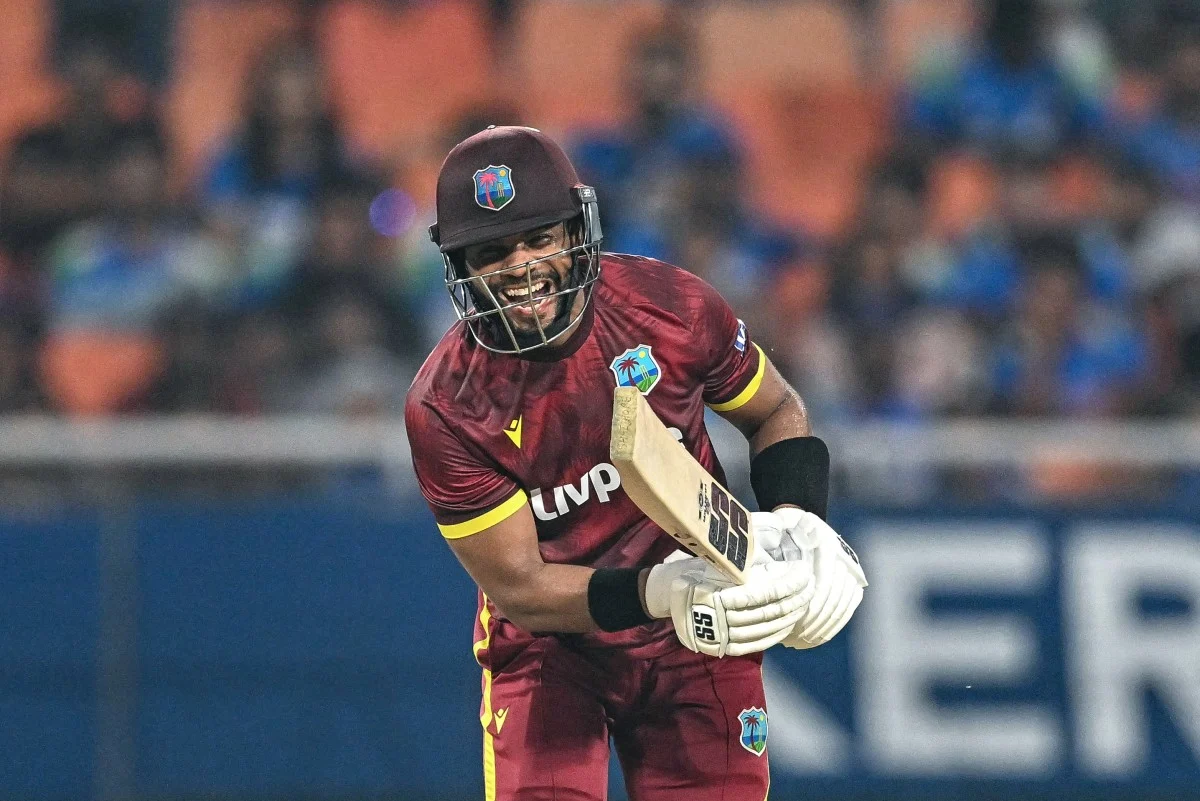
Captain Shai Hope orchestrated an extraordinary batting display, crafting an unbeaten 162 runs that propelled the West Indies to a historic five-wicket victory over India in the third and final One-Day International. The sensational chase in Chandigarh saw the West Indies successfully pursue a colossal target of 352 runs, marking their highest-ever successful run chase in ODI cricket and delivering a resounding statement after having already conceded the three-match series to the hosts. This monumental effort, achieved with 10 balls to spare, provided a dramatic conclusion to what had largely been a dominant series for India, who had clinched the first two matches with convincing eight-wicket victories in Thiruvananthapuram and Guwahati.
A Record-Breaking Pursuit
The West Indies’ pursuit of 352-5 surpassed their previous highest successful chase, etching a new chapter in their cricketing history. India, having elected to bat first after winning the toss, had posted a formidable 351-7, spearheaded by a magnificent 129 not out from Lokesh Rahul. However, it was Hope’s unwavering resolve and tactical brilliance that ultimately overshadowed India’s imposing total. His innings was not just a statistical marvel but a masterclass in pacing a high-pressure chase, especially after promoting himself to open the innings due to an unforeseen injury to regular opener Jewel Andrew.
The context of this victory is particularly significant for the West Indies. After a challenging period in international white-ball cricket, including a disappointing exit from the 2023 Cricket World Cup qualifiers, moments like these are crucial for morale and the ongoing rebuilding process. This win against India marked their first triumph over the subcontinent giants since 2023, breaking a streak of losses and injecting much-needed confidence into the squad as they look towards future assignments.
India’s Dominant First Innings
The day began with India’s captain Shubman Gill winning the toss and opting to bat first on what appeared to be a placid track at the PCA Stadium in Chandigarh. However, the initial overs presented an unexpected challenge. The West Indies’ pace spearhead, Jayden Seales, struck twice in quick succession, dismissing Gill for just 1 run and then claiming the prized wicket of Virat Kohli for a golden duck. These early setbacks left India reeling at 28-2 after the mandatory powerplay, a stark contrast to their typically explosive starts.
It was the experienced duo of Rohit Sharma and Ruturaj Gaikwad who initiated India’s recovery. Sharma, returning to form, played a measured yet authoritative innings of 92 off 85 balls, displaying a blend of caution and aggression. He anchored a crucial 137-run partnership for the third wicket with Gaikwad, who contributed a solid 57 off 69 deliveries. Sharma, unfortunate to miss out on a second consecutive century in the series, was eventually caught off the bowling of Keemo Paul in the 25th over. Four overs later, Gaikwad became Seales’ third victim, leaving India at a respectable but not yet commanding position.
The stage was then set for Lokesh Rahul, who walked in and unleashed an incredible assault on the West Indies bowlers. Rahul’s innings was a testament to his class and adaptability. He brought up his fifty off just 41 balls and accelerated further, reaching his century with remarkable ease. His second fifty came off a mere 39 balls, punctuated by six towering sixes and ten well-timed fours. Rahul forged valuable partnerships with Naman Dhir and Gurnoor Brar, ensuring India maintained a high scoring rate in the death overs. His unbeaten 129 off just 87 balls powered India to a formidable total of 351-7, a score that, on most occasions, would be considered match-winning.
Shai Hope’s Heroic Knock: A Captain’s Innings
The West Indies’ chase commenced under unforeseen circumstances. Jewel Andrew, originally slated to open, reportedly sustained a finger injury while taking a catch during India’s innings and was hospitalized. This necessitated a strategic change, with captain Shai Hope promoting himself to the top of the order. Hope, who had just completed 50 overs of wicketkeeping in high humidity, demonstrated incredible physical and mental fortitude to deliver an innings for the ages.
From the outset, Hope displayed clarity of intent, combining elegant strokeplay with astute risk assessment. He anchored the innings, forming a vital 109-run partnership for the second wicket with Amir Jangoo, who contributed a brisk 67 off 56 balls. This partnership laid a solid foundation, ensuring the required run rate remained manageable. Even after Jangoo was unfortunately run out in the 21st over, Hope maintained the momentum, finding another able partner in Sherfane Rutherford (24 runs), with whom he added 56 runs.
Hope’s milestones came steadily; he reached his fifty off 46 balls and his 21st ODI hundred off 104 deliveries, marking his fifth century against India. What was remarkable was his ability to bat through the entire innings, especially given the physical toll of keeping wicket earlier. He admitted post-match, "Felt something around the groin area but wanted to fight through till the end." This fighting spirit was palpable in his batting.
The chase gained further impetus through a rapid 65-run partnership off just 61 balls between Hope and Keemo Paul, whose aggressive cameo of 44 off 35 deliveries included five boundaries. After Paul was dismissed in the 41st over, caught off Gurnoor Brar, Hope shifted gears decisively. He launched into an astonishing acceleration, plundering 62 runs off the final 39 balls he faced, hitting seven more fours and two sixes to rush the West Indies towards victory.
Tactical Nuances and Playing Conditions
The conditions in Chandigarh played a significant role in the latter half of the match. Hope candidly acknowledged the impact of the environment: "[Chasing is] always a lot easier in India, especially with the dew." The presence of dew often makes gripping the ball difficult for bowlers and aids the ball coming onto the bat, a factor that undoubtedly benefited the West Indies’ chase in the evening session.
Adding to India’s challenges was a slow over-rate penalty. For the final four overs of the West Indies’ innings, India was forced to bring an additional fielder inside the 30-yard circle, effectively reducing their outfield protection. This tactical constraint, a direct consequence of their slow pace of bowling, provided Hope and Gudakesh Motie (19 not out off 12 balls) with valuable room to maneuver, as they added a blistering 62 runs off just 29 balls for the sixth wicket. It was fitting that Hope, who had shepherded the innings with such skill and tenacity, hit the winning run, sealing a memorable triumph for his team.
Broader Implications and Player Performances
This record-breaking chase has multifaceted implications for both teams. For the West Indies, it is a significant morale booster. Having lost the series, securing such a dramatic victory against a top-tier opponent like India showcases their potential and resilience. It validates Shai Hope’s leadership and his status as a world-class ODI batsman. The contributions from players like Amir Jangoo and Keemo Paul also highlight the emerging talent within the squad, suggesting a promising future if consistency can be maintained. This performance could serve as a psychological turning point, fostering belief and confidence within the team for upcoming challenges, including the imminent five-match Twenty20 series.
For India, while the series was already won, this defeat offers valuable lessons. It exposed certain vulnerabilities in their bowling attack, particularly in defending a high total under dew-laden conditions. The recall of Mohammed Siraj and the inclusion of debutant pacer Anshul Kamboj (who went wicketless) and all-rounder Nitish Reddy were experiments aimed at broadening their bowling options, but the collective performance fell short on the day. The slow over-rate penalty is also a point of concern for captain Shubman Gill and the team management, as such infractions can be costly in high-stakes encounters. Despite Lokesh Rahul’s individual brilliance, the team’s inability to close out the match will prompt a review of their death bowling strategies and overall execution under pressure.
Individual Milestones and Notable Efforts
Beyond the team’s record chase, several individual performances stood out. Shai Hope’s 162 not out was his second-highest ODI score, comprising 17 boundaries and three sixes from 143 balls. His consistency in the series, marked by two consecutive centuries, underscores his importance to the West Indies batting lineup. For India, Lokesh Rahul’s unbeaten 129 off 87 balls was a masterclass in aggressive batting, featuring six maximums and ten fours, coming at a crucial juncture for his team. Rohit Sharma’s 92 was another significant contribution, steadying the innings after early wickets. Jayden Seales’ three early wickets provided the West Indies with an initial advantage, momentarily unsettling the formidable Indian batting order.
Looking Ahead: The T20 Series
With the ODI series concluded, both teams will now shift their focus to the shortest format of the game. A five-match Twenty20 series is scheduled to commence on Tuesday, with the first match taking place in Lucknow, Uttar Pradesh. The West Indies’ thrilling victory in the final ODI adds an intriguing layer of anticipation to the upcoming T20 encounters. While India will aim to reassert their dominance, the West Indies will enter the T20 series with renewed confidence, fueled by their historic chase and Hope’s inspirational leadership. This dramatic ODI finale ensures that the rivalry between these two cricketing nations remains vibrant and promises more captivating contests in the days to come.
