

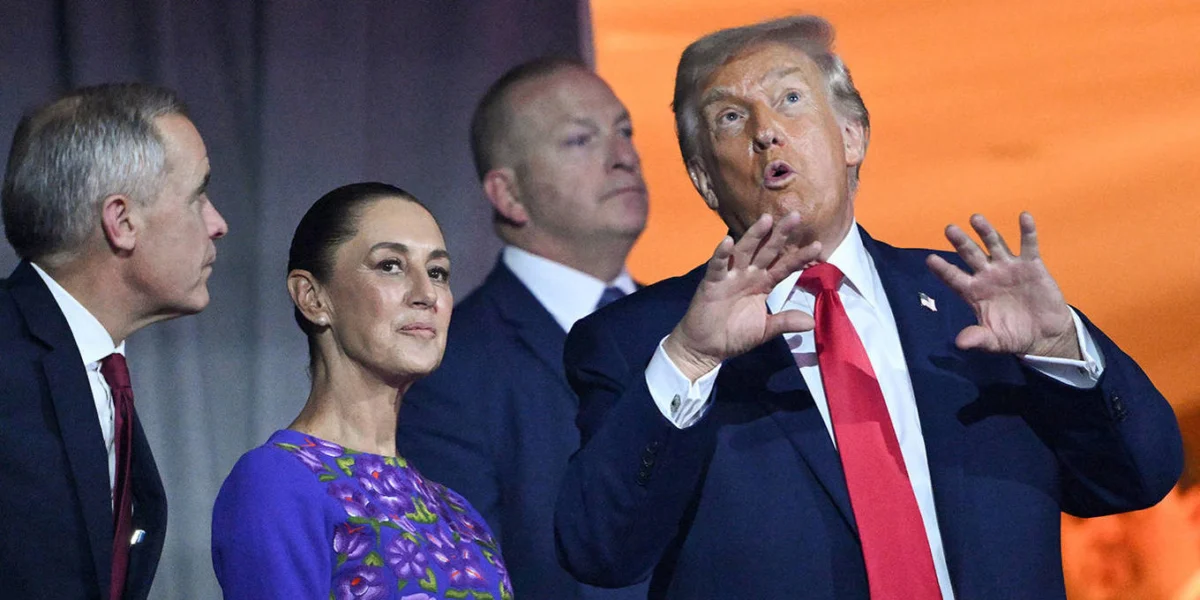
Mexico City, Mexico – September 28, 2026 – As Mexican President Claudia Sheinbaum approaches the conclusion of her second year in office, a narrative of widespread praise, both domestically and internationally, for her handling of United States President Donald Trump continues to dominate public discourse. However, a closer examination of her tenure reveals a more complex reality: Sheinbaum has, with considerable skill and a degree of calculated cynicism, largely deferred to Trump on a broad spectrum of bilateral issues, a strategy that has masked a period of economic stagnation and rising concerns about the erosion of democratic norms within Mexico.
October 1st will mark the midpoint of President Sheinbaum’s six-year term. While her administration has cultivated an image of stability and international cooperation, particularly in its relationship with the United States, the substance of her domestic policy record paints a less flattering picture. Economic growth has been described as mediocre by prominent figures, including former Mexican Finance Minister Guillermo Ortiz, who has publicly detailed the nation’s underwhelming economic performance during this period. Beyond the economic sphere, Sheinbaum’s administration faces persistent questions regarding its efficacy in addressing critical issues such as security, law enforcement, the pervasive influence of organized crime, and entrenched corruption. Perhaps the most significant and unsettling development under her leadership, however, is the discernible shift toward what many observers characterize as an authoritarian trajectory for the nation.
The Sheinbaum-Trump Dynamic: A Policy of Calculated Concessions
President Sheinbaum assumed office on December 1, 2024, inheriting a complex geopolitical landscape shaped significantly by the policies and rhetoric of then-U.S. President Donald Trump. From the outset, Trump’s administration had prioritized a transactional approach to international relations, with a particular focus on border security, trade, and immigration. Sheinbaum, in her initial public statements and diplomatic engagements, signaled an intent to foster a cooperative and pragmatic relationship, a stark contrast to some of her predecessors’ more confrontational stances.
Early in her term, faced with Trump’s persistent demands regarding border control and the flow of migrants, Sheinbaum’s administration did not engage in the kind of public disputes that characterized previous bilateral interactions. Instead, Mexico significantly increased its efforts to detain and deport migrants, particularly those from Central America, a policy shift that aligned with Trump’s stated objectives. This proactive stance, while framed by the Sheinbaum government as a measure to manage migration flows responsibly, effectively preempted many of Trump’s more aggressive demands, such as the construction of a border wall or the imposition of punitive tariffs. Data from U.S. Customs and Border Protection (CBP) indicated a substantial increase in apprehensions and deportations carried out by Mexican authorities in the initial years of Sheinbaum’s presidency, figures that were frequently cited by the Trump administration as evidence of successful cooperation.
On trade, a cornerstone of the U.S.-Mexico relationship, Sheinbaum’s government largely adhered to the framework established by the United States-Mexico-Canada Agreement (USMCA), which had been renegotiated under Trump. While there were occasional diplomatic exchanges regarding specific trade disputes, such as agricultural imports or industrial regulations, Mexico consistently avoided escalating these issues to a point that would provoke significant retaliation from the Trump administration. This approach ensured the continued flow of trade, which is vital for both economies, but it also meant that Mexico ceded considerable leverage in shaping the terms of these economic interactions. The narrative promoted by Sheinbaum’s team was one of responsible partnership, emphasizing Mexico’s commitment to regional economic stability.
Domestic Challenges: Economic Stagnation and Security Concerns
While the international front saw a period of perceived stability under Sheinbaum’s careful management of the U.S. relationship, domestic challenges have persisted and, in some areas, worsened. The Mexican economy, heavily reliant on trade with its northern neighbor, has struggled to achieve robust growth. According to data released by Mexico’s National Institute of Statistics and Geography (INEGI), Gross Domestic Product (GDP) growth averaged only 1.8% in the first two years of Sheinbaum’s term, a figure that falls short of projections and fails to significantly improve the living standards of most Mexicans. This sluggish performance has been attributed by some economists to a lack of significant structural reforms and a hesitant approach to attracting foreign direct investment in key sectors beyond manufacturing for export.
The issue of security, a perennial challenge for Mexico, has also remained a critical concern. Despite promises of enhanced law enforcement and anti-corruption measures, reports from the Mexican National Public Security System (SNSP) indicate that violent crime rates have remained stubbornly high in many regions. The influence of powerful drug cartels continues to be a destabilizing force, and instances of corruption within law enforcement and judicial bodies have, according to independent watchdog organizations, not diminished to the extent expected. Sheinbaum’s administration has focused on consolidating security forces and implementing more centralized command structures, but the tangible impact on reducing crime and enhancing public safety has been limited.
The Shadow of Authoritarianism
Perhaps the most disquieting trend observed during Sheinbaum’s second year in office is a perceptible shift toward authoritarian governance. Critics point to a series of legislative and executive actions that have concentrated power within the executive branch and curtailed avenues for dissent. These include measures that have been perceived as weakening the independence of the judiciary, increasing government control over independent media outlets, and limiting the scope of civil society organizations.
One notable development was the passage of a controversial law in early 2026 that granted the executive branch broader powers to regulate digital media and online content, ostensibly to combat misinformation. However, civil liberties advocates argued that the law’s broad provisions could be used to suppress legitimate criticism and stifle free expression. Similarly, reforms to electoral laws, while presented as measures to enhance transparency, have been criticized for potentially favoring the ruling party and diminishing the autonomy of electoral institutions.
These developments have drawn concern from international human rights organizations and democracy watchdogs. A report by Freedom House released in early 2026 classified Mexico’s democratic status as “partly free,” citing a decline in political rights and civil liberties, a trend that many attribute to the policies implemented under the current administration. The narrative that Sheinbaum is leading the country down an authoritarian path is not merely rhetorical; it is supported by a pattern of actions that systematically centralize power and diminish checks and balances.
Reactions and Implications
The dual narrative surrounding President Sheinbaum’s presidency – international acclaim for her pragmatic diplomacy versus domestic concerns about her governance – has elicited varied reactions.
From the United States, the Trump administration has consistently lauded Sheinbaum’s cooperation. In a statement released in July 2026, a White House spokesperson remarked, "President Sheinbaum has been a strong partner on critical issues, demonstrating a commitment to shared security and economic prosperity." This official endorsement has provided Sheinbaum with a degree of international legitimacy and has served to bolster her image as a capable and reliable leader on the global stage.
Within Mexico, the situation is more divided. Supporters of Sheinbaum’s administration often highlight the perceived stability in the bilateral relationship with the U.S. and argue that her pragmatic approach has protected Mexico from potential economic disruptions. They point to the continued flow of remittances and trade as evidence of her success. However, a significant segment of the population, including opposition political parties, academics, and civil society groups, has voiced deep concerns about the erosion of democratic institutions and the lack of progress on critical domestic issues.
"President Sheinbaum’s strategy of appeasing President Trump has come at a cost," stated a prominent opposition senator during a recent legislative debate. "While we may have avoided a trade war, we have sacrificed our sovereignty on key issues and, more alarmingly, we are witnessing the slow but steady dismantling of the democratic safeguards that protect our citizens."
The broader implications of Sheinbaum’s second year in office are significant. Her calculated deference to Trump, while seemingly effective in navigating a challenging international relationship, may have inadvertently created a precedent for executive overreach. If this trend of concentrating power continues, Mexico risks moving away from its democratic aspirations and towards a more centralized and potentially less accountable form of governance. The economic stagnation, coupled with persistent security challenges, further exacerbates the potential for social unrest and discontent. As Sheinbaum enters the latter half of her term, the question remains whether she will prioritize the consolidation of her power and a continuation of her pragmatic, yet arguably passive, foreign policy, or if she will pivot to address the pressing domestic issues and democratic concerns that are increasingly defining her legacy. The coming years will undoubtedly be a critical juncture for Mexico’s political and economic future.
