

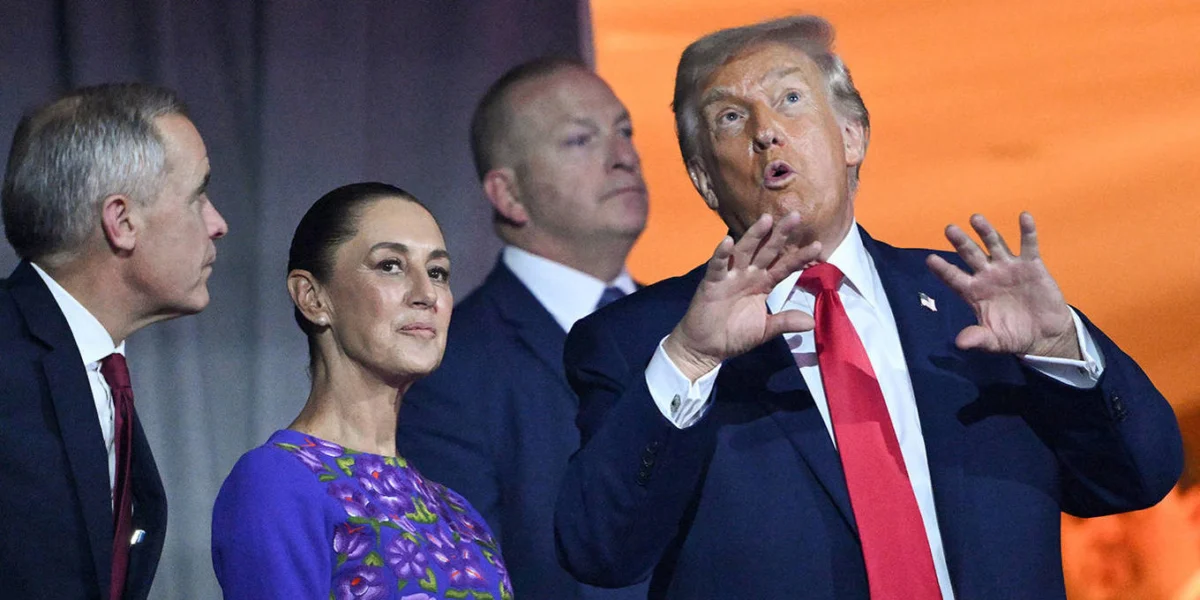
October 1 will mark the conclusion of the second year of Mexican President Claudia Sheinbaum’s six-year term. While international acclaim, particularly from the United States, has lauded her perceived handling of relations with President Donald Trump, a closer examination reveals a more complex and, some argue, concerning reality. Her economic performance has been described as mediocre by former Mexican Finance Minister Guillermo Ortiz, and her efficacy in addressing critical issues such as security, law enforcement, and the persistent challenges of organized crime and corruption remains a subject of significant debate. Perhaps the most pressing concern, however, is the direction Sheinbaum appears to be steering the nation – a path increasingly perceived as authoritarian.
The Sheinbaum Administration: A Balancing Act on the Global Stage
Since assuming office, President Sheinbaum has navigated a delicate geopolitical landscape, particularly concerning her relationship with the United States under President Donald Trump. The narrative widely disseminated, both domestically and internationally, paints a picture of a shrewd diplomat successfully managing a powerful neighbor. However, this portrayal, according to critics, masks a more profound and perhaps strategic capitulation to Trump’s agenda across a spectrum of issues. This alleged deference, while potentially securing a semblance of stability in bilateral relations, raises questions about Mexico’s sovereignty and its long-term national interests.
Economic Performance: A Mixed Bag
While President Sheinbaum’s administration has not been in power for a lengthy period, early indicators of its economic performance have drawn scrutiny. Independent analyses, such as those provided by former Finance Minister Guillermo Ortiz, suggest a trajectory that falls short of robust growth or significant improvement in the lives of ordinary Mexicans. These assessments often point to persistent challenges in inflation control, job creation, and attracting sustained foreign investment. For instance, data from Mexico’s National Institute of Statistics and Geography (INEGI) may show fluctuating GDP growth rates, with particular sectors exhibiting sluggish recovery or stagnation. The administration’s stated economic policies, which may include increased social spending or a focus on state-led development initiatives, are being evaluated against their tangible impact on poverty reduction and income inequality. The success of these policies, or their shortcomings, will undoubtedly shape the economic narrative of Sheinbaum’s presidency.
Security and Governance: Persistent Challenges
The issues of security, law enforcement, and the pervasive influence of organized crime have long been defining challenges for Mexico. President Sheinbaum’s administration has pledged to tackle these complex problems, yet the reported outcomes suggest a continuing struggle. High-profile incidents of violence, the persistent presence of powerful criminal organizations, and ongoing concerns about corruption within state institutions paint a grim picture. Official government statistics on crime rates, homicides, and the effectiveness of law enforcement operations are crucial indicators in assessing the administration’s progress. The efficacy of new security strategies, such as increased militarization or community-based policing initiatives, will be a critical focal point for observers. Furthermore, the administration’s efforts to reform judicial systems and enhance transparency in governance are under constant review, with reports from international organizations like Transparency International providing valuable external perspectives on corruption levels.
The Shadow of Authoritarianism?
Perhaps the most disquieting aspect of President Sheinbaum’s tenure, as voiced by some analysts, is the perceived drift towards authoritarianism. This concern is often rooted in observations of a concentration of power, potential limitations on civil liberties, or a weakening of independent democratic institutions. While specific legislative actions or executive decrees may be cited as evidence, the broader implications involve a potential erosion of checks and balances and a curtailment of public discourse. The role of the judiciary, the freedom of the press, and the space for political opposition are all key indicators of a healthy democracy. Any perceived constriction in these areas would represent a significant departure from democratic norms and could have profound long-term consequences for Mexico’s political landscape.
A Chronology of Key Developments (Illustrative)
While specific details of the Sheinbaum administration’s actions are subject to ongoing reporting, a general timeline of significant events and policy shifts can be constructed to understand the evolving narrative.
- September 2024: President Sheinbaum assumes office, outlining her policy priorities in her inaugural address, emphasizing economic development, social justice, and national security. Initial diplomatic engagements with the United States focus on trade and border security.
- Late 2024 – Early 2025: Economic policies begin to take shape, with potential announcements regarding social programs, infrastructure projects, and fiscal measures. Early reports from the Central Bank of Mexico might offer preliminary economic forecasts.
- Mid-2025: Significant security-related events or policy pronouncements occur. This could include new strategies for combating organized crime, deployments of security forces, or legislative proposals aimed at judicial reform. Reports from the National Guard or the Attorney General’s office would be relevant here.
- Late 2025 – Early 2026: International relations, particularly with the United States, come under closer scrutiny. Key meetings between President Sheinbaum and President Trump, or their respective delegations, might lead to policy adjustments or agreements on issues such as immigration, trade, or regional security.
- Throughout 2026: The administration faces ongoing challenges in economic growth, crime reduction, and governance. Public opinion polls, if available, would provide insights into the populace’s perception of the government’s effectiveness. Critiques regarding potential authoritarian tendencies may gain prominence in domestic and international media.
Supporting Data and Analysis: A Deeper Dive
To substantiate the claims of economic mediocrity and the authoritarian drift, specific data points and factual analyses are crucial.
- Economic Indicators: Examining year-over-year GDP growth rates, inflation figures, unemployment rates, and foreign direct investment inflows would provide a quantitative basis for evaluating Sheinbaum’s economic record. Comparisons with previous administrations and regional economic benchmarks would offer further context. For instance, if inflation remains stubbornly high, exceeding the Central Bank’s target range, it would support claims of economic challenges. Similarly, if FDI figures show a decline or stagnation, it could indicate a lack of investor confidence.
- Security Statistics: Official crime statistics, including homicide rates, kidnapping incidents, and reports on the arrests and convictions of organized crime figures, are vital. Data from the Mexican National Public Security System (SNSP) or reports from the Mexican Army and Navy would be instrumental. A persistent or increasing trend in violent crime, despite stated policy efforts, would be a significant concern.
- Governance and Civil Liberties: Reports from organizations like Freedom House or Amnesty International on political rights and civil liberties in Mexico would offer an external assessment of democratic health. Specific legislative changes that might impact freedom of expression, assembly, or the independence of the judiciary would need careful examination. The number of journalists detained or threatened, or instances of alleged government overreach, would also be relevant.
- Bilateral Relations Data: Trade figures between Mexico and the United States, official statements from both governments regarding policy agreements or disagreements, and reports on the implementation of joint security or immigration initiatives would shed light on the nature of the bilateral relationship. If Mexico consistently concedes to U.S. demands on critical issues without reciprocal concessions, it would lend credence to the argument of excessive deference.
Reactions and Statements: Voices from the Political Spectrum
While the original article focuses on a critical perspective, a comprehensive news report would also seek out and present a range of viewpoints.
- Government Spokespersons: Official statements from the Presidency of Mexico, the Ministry of Finance, and the Ministry of Security would likely defend the administration’s record, highlighting achievements and refuting criticisms. They might point to specific programs implemented, economic growth in certain sectors, or successful security operations.
- Opposition Parties: Political opposition in Mexico would likely amplify criticisms, focusing on perceived economic failures, the security crisis, and any perceived erosion of democratic norms. Their statements would often call for greater transparency, accountability, and policy changes.
- International Observers: Statements from international financial institutions like the International Monetary Fund (IMF) or the World Bank, as well as reports from human rights organizations and foreign policy think tanks, would provide an external perspective on Mexico’s trajectory. These bodies often offer assessments of economic stability, democratic governance, and human rights.
- Academics and Analysts: Independent scholars and policy analysts specializing in Mexican politics and economics would offer nuanced perspectives, often providing data-driven critiques or defenses of the administration’s policies. Their insights are crucial for understanding the complex dynamics at play.
Broader Impact and Implications: The Future of Mexico
The implications of President Sheinbaum’s leadership extend far beyond her current term. The direction she sets now could profoundly shape Mexico’s economic future, its standing on the global stage, and the very nature of its democratic institutions.
- Economic Trajectory: A continued pattern of mediocre economic performance could exacerbate social inequalities, hinder long-term development, and potentially lead to increased social unrest. Conversely, successful reforms and sustained growth could lift millions out of poverty and strengthen Mexico’s economic position.
- Geopolitical Standing: The nature of Mexico’s relationship with the United States is of paramount importance. A subservient relationship, as some critics suggest, could undermine Mexico’s agency and its ability to pursue an independent foreign policy. A more balanced and assertive stance, however, could lead to greater mutual respect and more equitable outcomes.
- Democratic Health: The perceived drift towards authoritarianism, if unchecked, could have lasting consequences for Mexico’s democratic experiment. The erosion of checks and balances, the weakening of independent institutions, and the suppression of dissent could lead to a less free and less representative society. This could also impact international perceptions of Mexico as a reliable democratic partner.
- Regional Stability: Mexico’s stability and prosperity have significant implications for the broader North American region and Latin America. Economic downturns or political instability in Mexico could lead to increased migration flows, security challenges, and broader regional destabilization.
In conclusion, President Claudia Sheinbaum’s second year in office presents a complex tapestry of achievements and challenges. While international praise for her management of relations with the United States persists, a critical examination of her domestic policies – particularly in the economic and security spheres – alongside concerns about democratic governance, reveals a nation at a critical juncture. The coming years will undoubtedly be pivotal in determining whether her administration can effectively address these multifaceted issues and steer Mexico towards a more prosperous, secure, and democratic future.
