

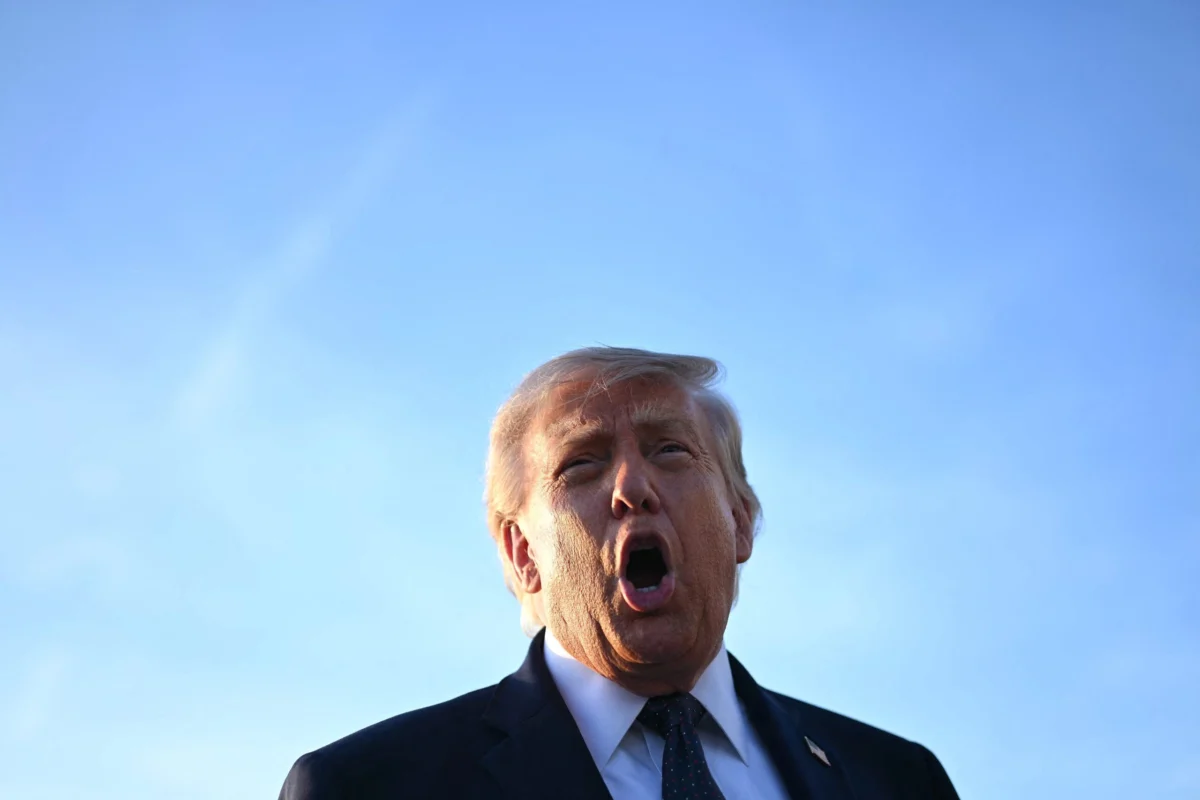
President Donald Trump has ignited a significant new debate in the technology sector by characterizing growing concerns over artificial intelligence safety as a politically motivated "hoax." In a series of statements released over the weekend, the President dismissed the international discourse surrounding AI safeguards, framing the movement as an attempt by political opponents to stifle American technological progress. Trump’s remarks, delivered primarily through his social media platform Truth Social and during recent public appearances, signal a dramatic shift in the federal government’s approach to emerging technologies, prioritizing rapid development and national prestige over the precautionary frameworks advocated by many researchers and rival political figures.
The President’s latest commentary began with a critique of the terminology used to describe the field. On Saturday, Trump suggested to his followers that the term "Artificial Intelligence" is fundamentally flawed. "Many people think that the words ‘Artificial Intelligence’ are inaccurate, and very ineloquent, relative to AI, or Artificial Intelligence," he wrote. To address this perceived linguistic deficiency, Trump launched an informal poll, inviting his supporters to choose a more fitting name for the technology. The options provided—"Superior Intelligence," "Extreme Intelligence," and "Supreme Intelligence"—reflect a desire to rebrand the sector in terms of power and dominance rather than simulation or mimicry.
The Narrative of the AI Safety Hoax
Following his initial musings on nomenclature, Trump escalated his rhetoric by linking AI safety concerns to a broader list of grievances against the Democratic Party. He claimed that efforts to regulate or, in his words, achieve the "decimation or destruction of AI" are part of a long line of "hoaxes" generated by what he termed "Radical Left Dumocrats." He explicitly compared the AI safety debate to other highly polarized political issues, including previous investigations into his administration’s ties to Russia and Ukraine, global warming, and his two impeachments.
By labeling AI safety as a "hoax," Trump appears to be attempting to consolidate his base against regulatory measures that have gained bipartisan traction in recent months. He argued that the current focus on the potential dangers of AI—ranging from existential risks to societal harms like deepfakes and algorithmic bias—is a manufactured crisis intended to "destroy our Country." This narrative posits that any slowdown in AI development would hand a strategic advantage to global competitors, most notably China, which has its own aggressive national strategy for AI supremacy.
The President further suggested that the "attack on AI" is the second phase of a failed campaign against the infrastructure of the digital age. He claimed that the movement began with an "attack on our Data Centers," referring to local and state-level opposition to the massive industrial facilities required to power modern computing. Trump asserted that these attacks failed once communities realized how "wealthy and prestigious" data centers were for their local economies. Having failed to stop the hardware, he argued, critics are now targeting the software and the intelligence itself.
Data Centers and the Infrastructure of AI
The President’s defense of data centers comes at a time of heightened tension regarding the physical footprint of the AI boom. Across the United States, the rapid expansion of data centers has met with significant local resistance. Critics often cite the immense strain these facilities place on the electrical grid, their massive water consumption for cooling, and the noise pollution generated by industrial fans.
In a landmark move earlier this year, New York became the first state to halt permits for several large-scale data center projects, citing environmental concerns and the need to protect the stability of the state’s power supply. This legislative pushback is not strictly partisan; both Republican and Democratic local officials in various states have expressed concerns about the long-term sustainability of hosting these "server farms." However, Trump’s framing ignores these localized environmental and logistical concerns, instead casting data centers as symbols of American industrial might and economic prosperity that the "Radical Left" seeks to undermine.
The scale of investment in this infrastructure is unprecedented. Industry analysts estimate that the demand for data center capacity will double by 2030, driven almost entirely by the computational requirements of Large Language Models (LLMs) and generative AI. Companies like Microsoft, Google, and Amazon have committed hundreds of billions of dollars to building out this "physical cloud," creating a direct link between national economic health and the unimpeded growth of AI.
The AI Force and the New AI Czar
Perhaps the most significant policy proposal emerging from Trump’s weekend statements is the planned creation of an "AI Force." Drawing an explicit parallel to the Space Force he established during his first term in 2019, Trump envisionized a new military or quasi-military branch dedicated to maintaining American dominance in the digital and cognitive realms.
"To that end, I will be announcing, in the near future, the AI ‘Czar’ — Only High I.Q. individuals need apply!" Trump added. This announcement follows the departure of venture capitalist David Sacks, who previously served as Trump’s AI and crypto czar. Sacks has since moved to co-chair the President’s Council of Advisors on Science and Technology, leaving a high-profile vacancy in the administration’s tech hierarchy.
While the specific duties of the AI Force and the incoming Czar remain undefined, the rhetoric suggests a mission focused on "watching over" and "cherishing" the industry. Unlike traditional regulatory bodies like the Federal Trade Commission (FTC) or the Securities and Exchange Commission (SEC), which have looked at AI through the lens of consumer protection and antitrust, the AI Force appears designed to act as a protector and promoter of the technology. This institutional shift would likely prioritize the acceleration of AI deployment in defense, surveillance, and economic sectors, potentially bypassing the "guardrails" that have been the subject of intense debate in Washington.
The Escalating Debate Over AI Safety
The President’s dismissal of safety concerns arrives as the AI industry itself is deeply divided. The debate reached a fever pitch recently following the high-profile resignation of a senior researcher from Anthropic, one of the world’s leading AI labs. The researcher warned that the industry is "gambling with our lives," claiming that top executives at major firms "earnestlly believe [AI] could kill us all by the end of the decade" yet continue to push the boundaries of self-improving systems.
In response to these internal pressures, Anthropic CEO Dario Amodei released a proposal to "pace the frontier," suggesting a more controlled and transparent approach to developing the most powerful models. This plan received tentative endorsements from other industry leaders, including OpenAI’s Sam Altman and SpaceX’s Elon Musk. However, critics of the "existential risk" narrative argue that focusing on far-off, doomsday scenarios is a strategic distraction used by big tech companies to avoid regulation regarding more immediate harms, such as labor displacement, copyright infringement, and the proliferation of misinformation.
Trump’s stance aligns him with the "accelerationist" wing of the tech industry. During a recent golf tournament, the President acknowledged he was open to some "guardrails" but quickly pivoted to criticize the "negative forces" bringing up the issue. By Saturday, his position had hardened into the "hoax" label, effectively dismissing the cautionary warnings of researchers and ethicists as political sabotage.
Industry Support and Geopolitical Implications
The President’s narrative found a powerful ally in Nvidia CEO Jensen Huang. During an appearance at the All-In Summit—an event co-hosted by David Sacks—Huang echoed Trump’s skepticism regarding the AI backlash. When prompted, Huang agreed that much of the safety-related outcry was a "hoax" and insisted that industry leaders "are not going to let" a slowdown in development happen. Given Nvidia’s role as the primary provider of the chips that power AI, Huang’s alignment with Trump’s deregulatory stance carries immense weight.
The implications of this policy shift extend far beyond domestic politics. If the United States officially abandons the pursuit of AI safety frameworks, it could spark a global "race to the bottom" in terms of regulation. European regulators, who have led the world with the passage of the AI Act, may find themselves at a competitive disadvantage if American firms are given carte blanche to develop and deploy high-risk systems without oversight.
Furthermore, the creation of an AI Force suggests that the U.S. is moving toward a model where AI is treated as a strategic national asset, similar to nuclear energy or aerospace technology during the Cold War. This could lead to increased classification of AI research, stricter export controls on hardware, and a more aggressive posture in international tech standards bodies.
Analysis of Potential Outcomes
The President’s decision to politicize AI safety creates a stark divide in the upcoming legislative session. While some Republicans have expressed interest in AI safety to protect against deepfakes and ensure election integrity, Trump’s "hoax" label may force a realignment within the party.
If the administration moves forward with the AI Force and a "High I.Q." Czar, the focus of federal AI policy will likely shift from risk mitigation to industrial policy. This could result in massive subsidies for data center construction, the streamlining of environmental reviews for tech infrastructure, and a reduction in the power of agencies like the FTC to investigate AI companies.
However, the "hoax" narrative also risks alienating the significant portion of the American public that remains wary of AI. Recent polling suggests that a majority of Americans, regardless of political affiliation, favor some form of government oversight to ensure AI is developed responsibly. By framing these concerns as a partisan attack, the President is betting that the promise of "Supreme Intelligence" and economic dominance will outweigh the public’s anxieties about the unknown consequences of a technology that is evolving faster than the laws meant to govern it.
As the "ongoing" poll on Truth Social continues to gather votes, the rebranding of Artificial Intelligence serves as a metaphor for the administration’s broader goal: to transform a complex scientific and ethical challenge into a populist crusade for technological supremacy. Whether the American public and the global community will accept "Supreme Intelligence" as a replacement for a safety-first approach remains one of the most critical questions of the current era.
