

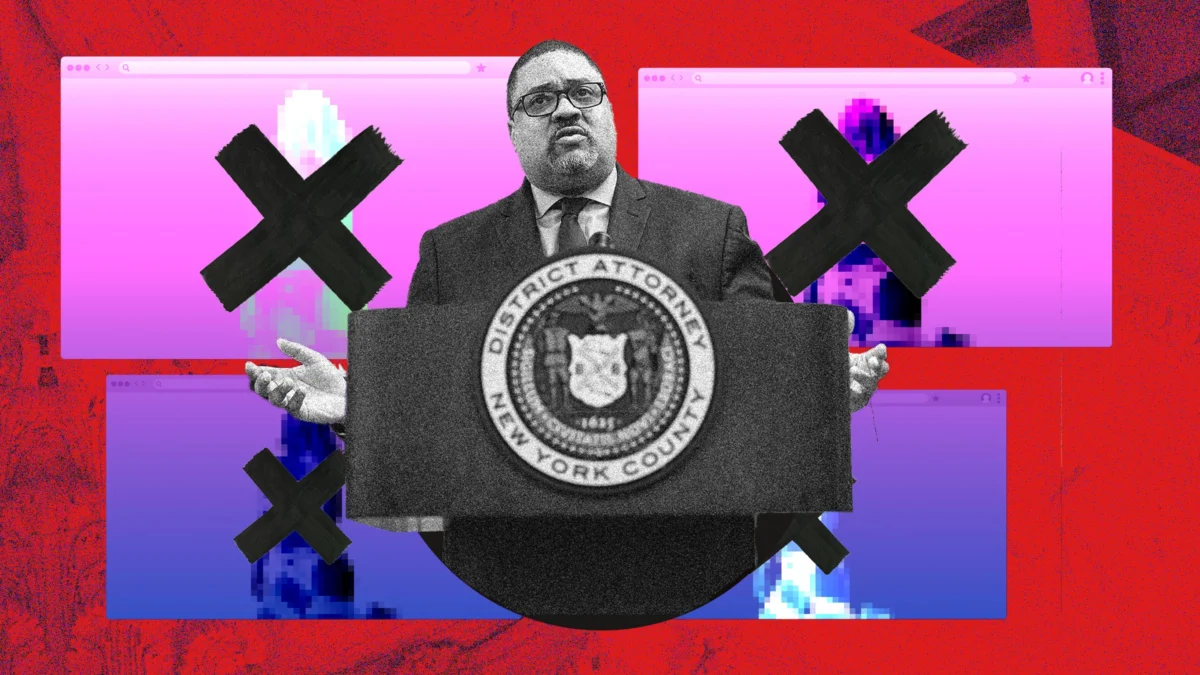
In what is being hailed as the most significant law enforcement action against the digital exploitation of women to date, the Manhattan District Attorney’s Office has announced the seizure of 12 prominent websites dedicated to the distribution of nonconsensual deepfake pornography. This coordinated strike marks a pivotal moment in the fight against synthetic media abuse, a rapidly evolving sector of cybercrime that has flourished for nearly a decade. The sites, which hosted thousands of AI-generated videos depicting high-profile celebrities, athletes, and politicians in explicit situations, were taken offline following a series of warrants issued by the New York State Supreme Court.
According to District Attorney Alvin Bragg, the investigation identified approximately 1,200 victims whose likenesses were misappropriated without consent. The vast majority of these victims are women, including Oscar-winning actors, chart-topping musicians, social media influencers, and high-ranking government officials. The seizure of these domains represents a direct strike against the infrastructure of a "dark industry" that has weaponized artificial intelligence to harass, humiliate, and monetize the identities of women globally.
The Scale and Scope of the Seizure
The Manhattan District Attorney’s Office officially confirmed the seizure on Monday, though digital footprints of the takedown were observed as early as the previous week. Visitors to these domains are now met with a stark, government-branded landing page stating, “THIS DOMAIN HAS BEEN SEIZED,” citing the New York criminal procedure laws that empowered the action. While the specific URLs have not been publicized to prevent further traffic or the promotion of mirror sites, the office noted that these platforms had collectively garnered millions of views.
The content hosted on these sites was not merely static images but complex, multi-minute videos. These "digital forgeries" typically involved "face-swapping" technology, where the likeness of a target is seamlessly mapped onto the body of a performer in an existing adult film. As AI tools have become more sophisticated and accessible, the quality of these videos has reached a point where they are increasingly indistinguishable from reality to the untrained eye.
The investigation revealed that some of these websites had been operating since as early as 2018, capitalizing on the first wave of deepfake technology that emerged on forums like Reddit in late 2017. Over the years, these platforms evolved from niche communities into highly organized hubs for the sharing and selling of nonconsensual intimate imagery (NCII).
Victim Profiles and the Global Reach of Abuse
The breadth of the victim pool highlights the indiscriminate nature of deepfake harassment. The DA’s office categorized the victims into several high-risk groups:
- Entertainment and Media: Actors and musicians remain the primary targets due to the abundance of high-quality source material (interviews, films, and social media photos) available to train AI models.
- Athletes and Influencers: This group has seen a surge in targeting as their public profiles grow, with "nudify" bots often used to strip clothing from social media posts.
- Political Figures: In a particularly concerning trend, the seizure targeted sites that maintained specific profiles for elected officials.
Benjamin Shultz, a lead researcher at the American Sunlight Project, provided critical data regarding the political dimension of this abuse. His research indicates that at least 56 European politicians were featured on the seized websites, alongside 16 U.S. politicians and two from the United Kingdom. In many cases, these officials were given dedicated pages where their names and official titles were displayed alongside a grid of manipulated explicit videos. This suggests that the platforms were used not only for sexual gratification but as tools for political character assassination and disinformation.
The Evolution of the Deepfake "Dark Industry"
To understand the significance of this takedown, it is necessary to look at the timeline of deepfake technology. When the term "deepfake" was coined in 2017, the process of creating such videos required significant technical expertise and high-end computing power. However, by 2020, the industry had shifted toward "Software as a Service" (SaaS) models.
Today, a "dark industry" of apps and bots allows even low-skilled users to generate explicit content in seconds for a nominal fee. These tools often use "generative adversarial networks" (GANs) to refine images until they look authentic. The seized websites served as the primary distribution nodes for this content. Many of the videos found on the 12 domains were reportedly "reposts" from even larger, more notorious platforms, such as the now-defunct MrDeepFakes. The collapse of MrDeepFakes followed the unmasking of its creators by investigative journalists, illustrating the ongoing battle between digital forensic researchers and site operators.
Legal Framework and Law Enforcement Strategy
The Manhattan DA’s action utilized New York’s criminal procedure laws, specifically Article 690, which governs search and seizure warrants. However, the legal landscape surrounding deepfakes remains a patchwork of state and federal regulations.
In the United States, the "Take It Down Act" has been a significant step forward, providing a framework for the removal of NCII and allowing law enforcement to target the hosting infrastructure. District Attorney Alvin Bragg emphasized that while the technology is new, the harm is traditional and devastating. "These horrific violations of privacy follow victims into their careers and personal lives and take an immense toll on emotional and mental well-being," Bragg stated.
The challenge for law enforcement is the "whack-a-mole" nature of the internet. When one domain is seized, operators often move their databases to new servers in jurisdictions with laxer regulations. However, Leonie Oehmig, a researcher at the Institute for Strategic Dialogue (ISD), noted that this specific seizure was particularly effective. Her research showed that the seized sites remained inaccessible even when using Virtual Private Networks (VPNs) to spoof locations outside the U.S. This indicates a high level of coordination with domain registrars to ensure the sites are effectively "killed" at the root.
Expert Analysis: A Significant but Incomplete Victory
While the takedown is a major achievement, experts warn that the ecosystem of synthetic abuse is resilient. The 12 seized sites represent only a fraction of the total platforms currently active.
"The takedowns are a significant win in the fight against synthetic nonconsensual intimate imagery," said Oehmig. "This shows that meaningful, coordinated enforcement is achievable even where regulation itself remains fragmented across jurisdictions."
However, Oehmig argues that for long-term success, law enforcement and regulators must target the entire supply chain of deepfake creation. This includes:
- Creation Tools: Regulating the AI models and "nudify" apps that generate the content.
- Discovery and Promotion: Holding search engines and social media platforms accountable for the algorithms that lead users to these sites.
- Monetization: Cutting off the payment processors and affiliate marketing systems that allow site operators to profit from the exploitation of women.
The American Sunlight Project’s Benjamin Shultz added that the targeting of politicians suggests an intersection between sexual violence and threats to democratic processes. When female leaders are targeted with explicit deepfakes, the goal is often to drive them out of public life or discredit their professional standing.
The Path Forward for Victims
The Manhattan District Attorney’s Office has made a public plea for potential victims to come forward. The office’s cybercrime bureau is continuing its investigation into the individuals responsible for running the sites, as well as the users who uploaded the damaging content.
For the 1,200 women identified in this specific case, the removal of these 12 domains provides a measure of relief, but the digital scars often remain. Once an image is uploaded to the internet, it can be archived, screenshotted, and re-shared on private messaging apps like Telegram or Discord, where law enforcement has less visibility.
This seizure serves as a warning to operators of similar sites that the anonymity of the "dark web" is not absolute. As forensic technology improves and legal frameworks like those in New York are tested, the cost of operating these exploitative platforms is rising.
Implications for the Future of AI Regulation
The success of this operation is likely to embolden other jurisdictions to take similar action. It highlights a shift in strategy: instead of focusing solely on the individual "creators" of deepfakes, law enforcement is now targeting the "publishers"—the websites that provide the platform and the audience for the abuse.
As AI continues to integrate into every facet of modern life, the debate over "safe AI" will increasingly focus on these types of harms. The Manhattan DA’s office has demonstrated that existing criminal laws can be adapted to meet the challenges of the digital age, provided there is the political will and the technical expertise to pursue them.
In the broader context of digital rights, this case underscores the necessity of federal legislation in the U.S. that specifically addresses synthetic NCII. While New York has taken a lead, a unified national standard would provide victims across all 50 states with the same level of protection and give law enforcement more robust tools to dismantle the networks that profit from digital sexual violence.
For now, the 12 seized domains stand as a testament to a successful counter-offensive in the ongoing war against nonconsensual synthetic media. While the battle against deepfake abuse is far from over, the message from the Manhattan District Attorney is clear: the era of consequence-free digital exploitation is coming to an end.
