

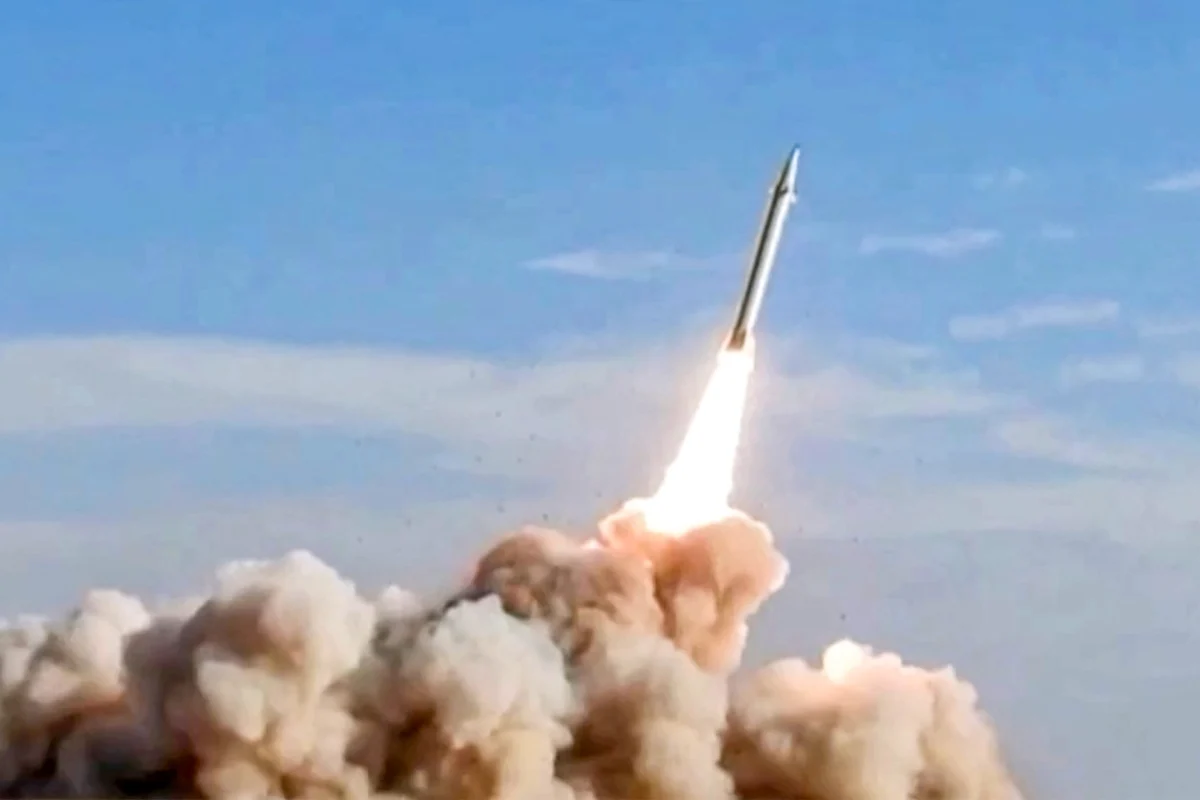
In a significant escalation of already fraught tensions in the Persian Gulf, US Central Command (CENTCOM) announced on August 31, 2026, that its forces had conducted a targeted strike against two rocket launchers belonging to Iran’s Islamic Revolutionary Guard Corps (IRGC) on Larak Island. The operation marks a direct military engagement against Iranian assets, signaling a critical juncture in the long-standing geopolitical standoff between Washington and Tehran, which has seen a dangerous uptick in recent weeks.
The precise timing of the strike was not immediately disclosed by CENTCOM, though the announcement came amidst a period of heightened military posturing and reciprocal threats. Larak Island, strategically located near the Strait of Hormuz, has long been identified as a key Iranian military outpost, capable of projecting power and potentially disrupting vital international shipping lanes. The destruction of these rocket launchers, according to CENTCOM, was a defensive measure aimed at neutralizing capabilities deemed a direct threat to US personnel and regional allies, following a series of provocative actions attributed to Iran and its proxies.
Deepening Crisis in the Persian Gulf
The strike on Larak Island did not occur in a vacuum but is the latest flashpoint in a rapidly deteriorating security situation across the Middle East. For months, the region has been teetering on the brink of wider conflict, fueled by persistent disputes over Iran’s nuclear program, its regional influence, and the continued presence of US forces. Maritime incidents involving commercial tankers, alleged drone attacks, and cyber warfare have become increasingly common, each carrying the potential for a full-scale military confrontation.
The IRGC, a powerful and ideologically driven branch of the Iranian armed forces, has frequently been at the forefront of these confrontations. Its naval arm operates extensively in the Gulf, often engaging in maneuvers that international observers describe as aggressive and destabilizing. The rocket launchers on Larak Island are believed to be part of Iran’s coastal defense network, potentially equipped with anti-ship missiles or short-range ballistic rockets capable of targeting vessels in the Strait of Hormuz or military installations on the Arabian Peninsula. CENTCOM’s action suggests that intelligence indicated an imminent threat posed by these particular systems.
Chronology of Escalation: A Volatile Summer
The summer of 2026 has been particularly volatile, laying the groundwork for the current military action. A critical sequence of events unfolded in late July, dramatically raising the stakes:
- July 20, 2026: Iran’s Revolutionary Guards (IRGC) released video footage via its Sepah News agency, purportedly showing a missile being launched from an undisclosed location within Iran towards US targets in the Gulf. While the specific targets and the extent of any damage were not independently verified, the release itself was interpreted as a clear warning and a demonstration of Iran’s willingness to strike. Analysts suggested the footage aimed to project Iranian resolve and deter further US military build-up.
- July 21, 2026: Following the IRGC’s missile launch video, official Iranian sources confirmed that their forces had targeted US radar and air defense installations in the Gulf. Simultaneously, a more ominous development emerged from Yemen, where Houthi rebels, widely believed to be backed by Iran, announced a blockade of Saudi ports. This move threatened to disrupt global oil supplies and international maritime trade, drawing immediate condemnation from Riyadh and its Western allies. Iran, in turn, issued a stark warning to Washington of "more decisive and powerful" attacks if its interests were threatened, indicating a readiness to expand the conflict.
- Late July – Mid-August 2026: The period following these events was characterized by a rapid military build-up by both sides. The US deployed additional naval assets and air defense systems to the region, while Iran conducted large-scale military exercises in the Gulf and near the Strait of Hormuz, testing various missile systems and drone capabilities. Diplomatic efforts by international bodies, including the United Nations and the European Union, to de-escalate the situation largely failed to gain traction as both sides remained entrenched in their positions. Intelligence agencies on all sides were reportedly on high alert, monitoring for any signs of offensive preparations.
- Late August 2026: Reports of increased reconnaissance flights and heightened naval activity in the vicinity of Larak Island began to circulate among maritime security circles. Unconfirmed reports from regional media suggested minor skirmishes or close encounters between US and Iranian naval vessels, though these were not officially confirmed. It is within this tense environment that CENTCOM made the decision to act, citing the need to pre-empt further aggressive actions by the IRGC. The August 31 announcement of the strike likely indicates the operation occurred in the preceding 24-48 hours.
Strategic Importance of Larak Island and the Strait of Hormuz
Larak Island holds immense strategic value for Iran, serving as a critical military base at the mouth of the Strait of Hormuz. This narrow waterway is arguably the world’s most important oil transit chokepoint, through which approximately one-fifth of global oil consumption passes daily. Iran has repeatedly threatened to close the Strait in response to sanctions or military pressure, a move that would have catastrophic consequences for the global economy.
The island hosts various military facilities, including naval docks, missile batteries, and radar installations. Its proximity to key shipping lanes makes it an ideal location for monitoring and potentially interdicting maritime traffic. For the IRGC, Larak Island is not just a defensive outpost but also a platform for projecting power and demonstrating its ability to control access to the Gulf. The destruction of rocket launchers there represents a direct challenge to this projection and Iran’s perceived ability to secure its strategic interests. The choice of Larak Island for the strike underscores CENTCOM’s determination to target specific threats in locations critical to Iran’s regional military strategy.
Official Responses and Justifications
Following CENTCOM’s announcement, reactions from Washington and Tehran were swift and sharply contrasting.
United States:
A spokesperson for CENTCOM, speaking on condition of anonymity, stated that the strike was a "proportionate and necessary measure" to safeguard US forces, partners, and the free flow of commerce in international waters. "Our intelligence indicated that these specific rocket launchers posed an imminent threat to maritime navigation and regional stability," the spokesperson elaborated. "This action was purely defensive, designed to degrade the IRGC’s capacity to launch unprovoked attacks and to deter further aggression. We do not seek conflict, but we will not hesitate to protect our interests and our allies." Secretary of Defense, appearing before a congressional committee, reiterated the administration’s commitment to maintaining freedom of navigation and vowed to hold Iran accountable for any actions that threaten international security.
Iran:
Tehran immediately condemned the US strike as an act of "state terrorism" and a "blatant violation of international law and Iranian sovereignty." A statement from the Iranian Foreign Ministry asserted that Iran reserves the right to respond decisively to any aggression. Brigadier General Amirali Hajizadeh, commander of the IRGC Aerospace Force, was quoted by state media as saying, "The Great Satan continues its provocations, but it will regret its foolish actions. Our response will be firm and painful, at a time and place of our choosing." Iranian state television aired footage of what it claimed were military preparations and vows of retaliation from various officials, aimed at bolstering national morale and demonstrating resolve. While official statements did not confirm the exact nature or extent of the damage on Larak Island, they implicitly acknowledged an incident had occurred, framing it as an attack on Iran’s defensive capabilities.
Regional and International Reactions
The strike has reverberated across the globe, eliciting a mixture of concern, condemnation, and cautious support.
- Saudi Arabia and UAE: Key regional allies, Saudi Arabia and the United Arab Emirates, expressed support for measures aimed at protecting regional security and ensuring the stability of maritime trade. While not directly endorsing the US strike, their statements underscored shared concerns about Iranian aggression and its impact on their national interests. Both nations have been victims of missile and drone attacks attributed to Iran-backed groups, making them particularly sensitive to threats emanating from the Gulf.
- European Union: The EU High Representative for Foreign Affairs and Security Policy issued a statement calling for "maximum restraint from all parties" and urged a return to diplomatic channels to de-escalate the situation. The EU emphasized the critical importance of preserving the nuclear deal (JCPOA) and avoiding any actions that could plunge the region into a broader conflict with devastating global consequences.
- United Nations: UN Secretary-General António Guterres expressed deep concern over the escalating tensions and called for an immediate cessation of hostilities. He reiterated the UN’s commitment to facilitating dialogue and preventing a further deterioration of the security situation in the Gulf, emphasizing that a regional conflict would have unbearable humanitarian and economic costs.
- Global Markets: Oil prices surged immediately following the news, with Brent crude briefly topping $90 a barrel amidst fears of supply disruptions from the Middle East. Global shipping companies issued advisories to vessels operating in the Gulf, urging increased vigilance and adherence to security protocols. The financial markets reacted nervously, reflecting the uncertainty surrounding the potential for further escalation and its economic fallout.
Broader Impact and Implications
The CENTCOM strike on Larak Island carries profound implications for regional stability, global energy security, and the future trajectory of US-Iran relations.
- Risk of Wider Conflict: The most immediate concern is the increased risk of a wider, more direct military conflict between the United States and Iran. Both nations have considerable military capabilities, and a tit-for-tat escalation could quickly spiral out of control, drawing in regional powers and potentially leading to a devastating war that would destabilize the entire Middle East. The incident moves the confrontation from proxy warfare and maritime harassment to direct military action against sovereign territory, a dangerous precedent.
- Energy Security: The Strait of Hormuz remains a critical chokepoint for global energy supplies. Any sustained disruption, whether through direct military action or Iranian threats to close the Strait, would send shockwaves through the global economy, leading to skyrocketing oil prices and potential recessions. The Houthi blockade of Saudi ports, if effective, further exacerbates this vulnerability, highlighting the interconnectedness of regional conflicts.
- Regional Power Dynamics: The strike could embolden some regional actors while further entrenching others. Countries like Israel, long an advocate for a tougher stance against Iran, might view the US action as a positive development. Conversely, Iran’s allies and proxies across the region, from Lebanon to Iraq, might feel compelled to demonstrate solidarity, potentially opening new fronts of conflict. The balance of power in the Gulf is now even more precarious.
- Deterrence vs. Provocation: The US strike is intended to be a deterrent, signaling Washington’s resolve to protect its interests. However, it also runs the risk of being perceived as a provocation by Iran, potentially fueling a cycle of retaliation rather than de-escalation. The effectiveness of the strike as a deterrent will depend heavily on Iran’s response and the diplomatic efforts that follow.
- International Diplomacy: The incident places renewed pressure on international diplomatic efforts to manage the crisis. The viability of the nuclear deal (JCPOA), already fragile, could be further jeopardized. The international community faces the challenge of finding a pathway to de-escalation that addresses the security concerns of all parties while avoiding a full-blown military confrontation.
As the dust settles on Larak Island, the world watches with bated breath. The coming days and weeks will be critical in determining whether the US strike serves as a warning that prevents further escalation or if it merely lights the fuse for a broader and more devastating conflict in the heart of the global energy supply. The actions and reactions of Washington and Tehran will shape not only the future of the Middle East but also the stability of the global order.
