

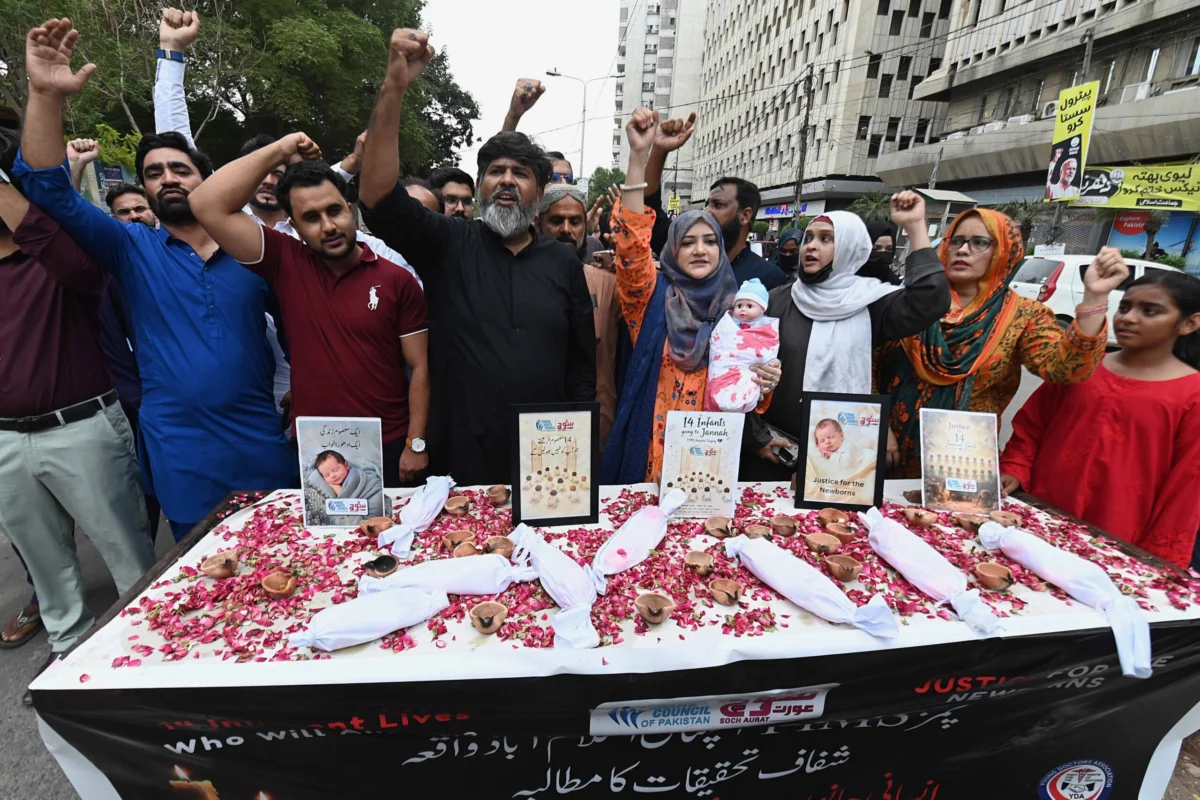
Pakistan is grappling with the profound aftermath of a devastating fire at the Pakistan Institute of Medical Sciences (PIMS) in Islamabad, which claimed the lives of 14 newborn infants in the hospital’s neonatal ward. The tragedy has triggered a swift and stern response from Prime Minister Shehbaz Sharif, who, acting on the findings of an interim investigative committee, has ordered the immediate suspension of eight high-ranking officials and initiated criminal proceedings against them. The incident, a harrowing testament to systemic failures in fire safety and emergency preparedness, has plunged the nation into mourning and ignited a fierce debate about the dilapidated state of public healthcare infrastructure and accountability within Pakistan’s governmental institutions.
The Devastating Blaze: A Timeline of Negligence
The inferno erupted shortly before 7:00 AM (02:00 GMT) on Wednesday at the Mother and Child Healthcare Centre within the sprawling PIMS complex. The fire originated in the third-floor nursery, a critical care unit dedicated to newborns. Eyewitness accounts and the subsequent interim report reveal a terrifyingly rapid escalation of the blaze, primarily attributed to the presence of oxygen outlets fitted at each incubator. These vital medical conduits, designed to sustain fragile lives, inadvertently became accelerants, transforming the nursery into a deadly inferno within minutes.
Of the 15 infants being cared for in the ward at the time, only one was successfully rescued by quick-thinking staff. The remaining 14 succumbed to the flames or smoke inhalation, leaving behind a trail of unimaginable grief and national outrage. Prime Minister Sharif, in a statement expressing profound sorrow, underscored the gravity of the loss, describing the deaths of these "innocent children" as a "heartbreaking tragedy that has left the entire nation grieving." He pledged that those found responsible would face "exemplary punishment," signaling a zero-tolerance approach to the egregious negligence uncovered by the inquiry.
Unveiling Systemic Failures: Key Findings of the Interim Report
The interim inquiry, presented to the Prime Minister this week, painted a stark picture of institutional apathy and a catastrophic lack of preparedness. Its findings were damning, highlighting a pervasive disregard for fundamental safety protocols at one of the country’s premier public healthcare facilities.
Crucially, the report established that PIMS had "no meaningful fire safety protocols in place." Out of 13 standard operating procedures (SOPs) meant to guide hospital operations, a mere two superficially addressed fire or emergency situations. This critical deficit meant that staff were not adequately trained, evacuation plans were non-existent or unpracticed, and essential fire suppression systems were either absent, non-functional, or not properly maintained. The absence of comprehensive fire safety SOPs is a glaring indictment of the hospital administration, indicating a severe oversight in patient and staff safety planning.
Furthermore, the report revealed a shocking lapse in supervisory oversight during the critical initial moments of the fire. When the blaze ignited, supervisory staff were conspicuously absent from duty. The ward, responsible for the most vulnerable patients, was manned by only two nurses, a single female security guard, and a house officer. This skeletal staffing, particularly in a high-risk area like a neonatal intensive care unit, significantly hampered immediate response efforts and compounded the tragedy. The lack of adequate personnel meant that crucial time was lost in initiating rescue operations and alerting emergency services.
The response timeline itself exposed further systemic failures. Emergency services were not contacted until a full six minutes after the fire had started. This critical delay, potentially attributable to confusion, lack of training, or the absence of designated personnel to handle such emergencies, allowed the fire to gain significant headway. Compounding this, the first emergency responders from the Capital Development Authority (CDA) arrived a further 15 minutes after receiving the delayed call, indicating deficiencies in the broader emergency response infrastructure and coordination. Such delays in an acute emergency, especially one involving rapidly spreading fire in a confined space with oxygen, drastically reduce the chances of survival.
Adding another layer to the tragedy, the panel noted a disturbing precedent: a separate fire had broken out at the hospital’s nursing hostel just a month prior to this incident. Alarmingly, this previous fire, which should have served as a stark warning, failed to prompt any significant safety improvements or preventative measures within the hospital premises. This demonstrates a pattern of negligence and a failure to learn from past incidents, suggesting a deep-seated institutional inertia towards safety compliance.
The Prime Minister’s Decisive Action and Accountability Measures
In response to the horrifying findings, Prime Minister Shehbaz Sharif moved decisively to ensure accountability. His office announced the immediate suspension of eight key officials deemed responsible for the systemic failures that contributed to the tragedy. These included the hospital’s Executive Director, two Joint Executive Directors, the Head of its Neonatal Department, two Senior Doctors, a Security Official, and the Head of the Capital Development Authority’s emergency services. The breadth of these suspensions, reaching from top administrative roles to departmental heads and external emergency service providers, underscores the widespread nature of the negligence identified.
Beyond suspensions, the Prime Minister directed the initiation of criminal proceedings against these officials, signaling a commitment to pursue justice through legal channels. This move transforms the administrative disciplinary action into a full-fledged legal battle, potentially leading to severe penalties for those found culpable. Furthermore, action was approved against the private company responsible for hospital security and its officials, highlighting the outsourced responsibilities and their potential failings.
To ensure continuity and immediate reforms, Prime Minister Sharif appointed the chief executive of the National Institutes of Health (NIH) as PIMS’s acting director. This interim appointment aims to stabilize the hospital’s administration and initiate a rapid overhaul of its safety protocols and operational procedures. The Prime Minister’s strong stance has been widely seen as an attempt to restore public confidence and demonstrate a serious commitment to addressing deep-seated issues within the public health sector.
Recognition Amidst Despair: A Heroic Act
Amidst the grim narrative of negligence and loss, a glimmer of heroism emerged. Nurse Razia Noreen was singled out in the interim report for her courageous actions during the inferno. The report highlighted how she had managed to pull one child to safety just moments before the flames engulfed the ward. Recognizing her extraordinary bravery and dedication to public service, Prime Minister Sharif awarded her the Sitara-i-Khidmat, a prestigious state honour, along with a cash reward of one million rupees (approximately $3,500). Her act stands as a testament to the selfless commitment of individual healthcare workers, even within a system plagued by systemic failures.
Broader Context: Pakistan’s "Rotten" Healthcare System
The PIMS tragedy has reignited critical conversations about the state of Pakistan’s public healthcare system, which Health Minister Mustafa Kamal candidly described as "rotten." This assessment, while stark, resonates with long-standing concerns among healthcare professionals and the public alike regarding chronic underfunding, dilapidated infrastructure, and pervasive governance issues.
Infrastructure Deficiencies: Many public hospitals across Pakistan, PIMS included, operate with aging infrastructure that often predates modern safety standards. Electrical wiring systems are frequently outdated, fire detection and suppression systems are either non-existent or poorly maintained, and building codes are often overlooked or weakly enforced. The rapid spread of fire through oxygen outlets at PIMS is a direct consequence of such infrastructure vulnerabilities, where essential medical systems are not adequately protected against unforeseen hazards. Furthermore, the absence of proper emergency exits, fire-resistant materials, and compartmentalization in older buildings can turn minor incidents into major disasters.
Underfunding and Resource Allocation: Pakistan’s public health expenditure remains significantly below international benchmarks. This chronic underinvestment translates into a severe shortage of essential equipment, medicines, trained personnel, and, critically, funds for maintenance and upgrades of facilities. Hospitals struggle to allocate resources for non-immediate, preventative measures like comprehensive fire safety audits, regular equipment checks, and staff training, prioritizing day-to-day patient care over long-term risk mitigation. The compensation pledged to the affected families (five million rupees, about $17,700 per family) and the reward for the nurse, while significant gestures, also highlight the financial strain on the system.
Governance and Oversight: The PIMS incident starkly exposes the weaknesses in governance and oversight within the public health sector. The suspensions of high-ranking officials and the initiation of criminal proceedings underscore a deep-seated problem of accountability. Bureaucratic inertia, corruption, and a lack of effective monitoring mechanisms often allow deficiencies to persist unchecked for years. The fact that a previous fire incident at the same hospital failed to trigger any safety improvements is a damning indictment of the administrative culture.
Emergency Preparedness: Beyond fire safety, the incident highlights a broader lack of emergency preparedness across public institutions. This includes insufficient training for staff in emergency response, inadequate communication protocols during crises, and a general absence of regular drills to test the effectiveness of emergency plans. The delays in calling emergency services and their subsequent arrival times at PIMS are indicative of these systemic failings.
Implications and Calls for Reform
The PIMS tragedy carries profound implications for Pakistan.
Erosion of Public Trust: The incident has severely eroded public trust in government-run healthcare institutions. For many, public hospitals are the only accessible option, and the failure to protect the most vulnerable patients within their walls is a betrayal of that trust.
Calls for Comprehensive Reform: The tragedy has amplified calls from civil society, healthcare professionals, and now the Health Minister himself for comprehensive reforms in the health sector. There is an urgent need for a national audit of all public hospitals’ safety infrastructure, a review of building codes and their enforcement, and a significant increase in investment in facility upgrades and staff training.
Legal and Policy Ramifications: The criminal probe against the suspended officials and the security company is expected to set a precedent, potentially leading to more rigorous enforcement of laws pertaining to negligence and public safety. Policy changes are anticipated, with greater emphasis on mandatory fire safety audits, regular drills, and robust emergency response plans for all public buildings, especially healthcare facilities.
Focus on Accountability Culture: The Prime Minister’s decisive actions signal a potential shift towards fostering a stronger culture of accountability within government institutions. The message is clear: negligence, especially when it results in loss of life, will not be tolerated. This incident could serve as a catalyst for broader administrative reforms aimed at improving efficiency, transparency, and responsibility across various sectors.
The Islamabad hospital fire is not merely an isolated incident of misfortune; it is a symptom of deeper, systemic issues plaguing Pakistan’s public health infrastructure and governance. As the nation mourns the loss of 14 innocent lives, the imperative to learn from this tragedy and implement lasting reforms has never been more urgent. The path forward demands not just punitive action, but a sustained commitment to investing in safety, fostering accountability, and ultimately, rebuilding public trust in institutions meant to serve and protect.
