

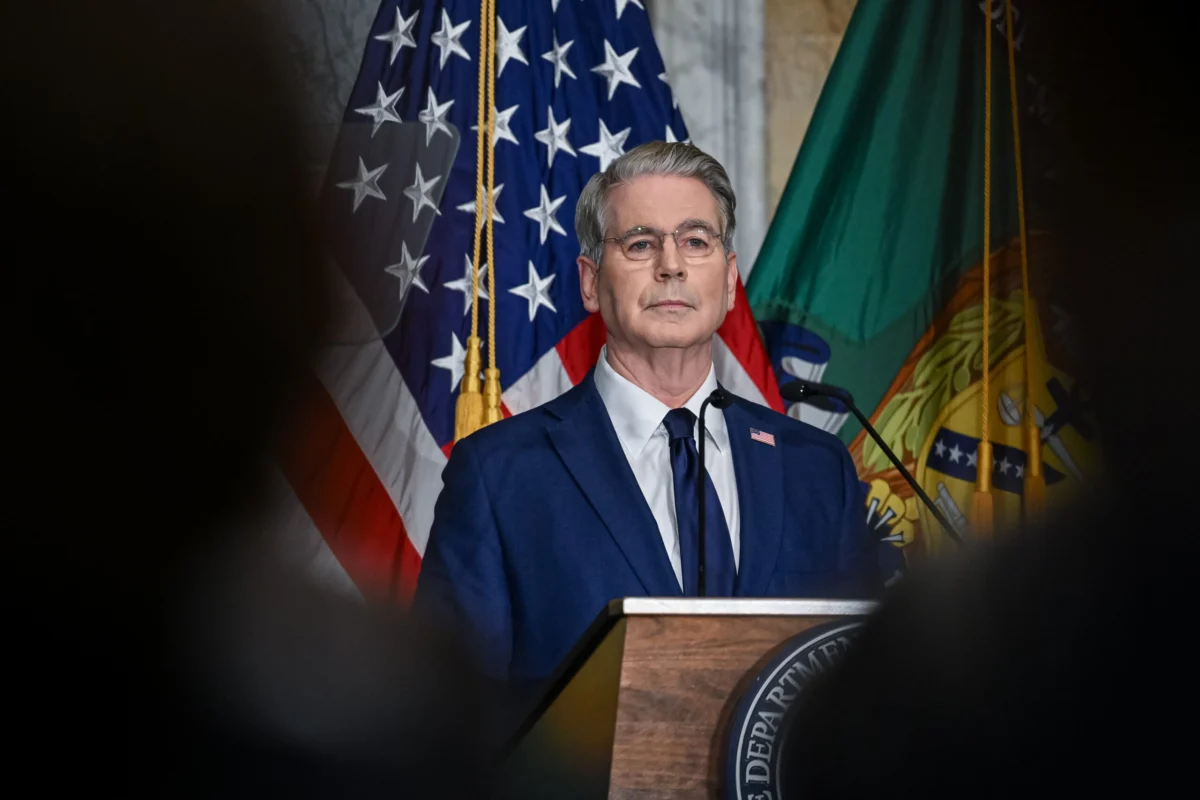
The Trump administration initiated a multifaceted economic offensive on August 24, 2026, signaling a significant shift in U.S. foreign and trade policy through the introduction of "Operation Economic Outcast." Treasury Secretary Scott Bessent, speaking from the Cash Room of the Treasury Department in Washington, D.C., detailed a sweeping sanctions framework designed to isolate the Iranian regime by targeting its global financial "enablers." Simultaneously, the administration issued fresh threats of higher tariffs against Canada, marking a period of heightened tension with both adversarial nations and traditional North American allies. These geopolitical maneuvers come at a critical juncture for the American economy, as the retail sector grapples with shifting consumer habits and the technology industry prepares for pivotal earnings reports from artificial intelligence leaders.
Operation Economic Outcast and the New Sanctions Regime
The centerpiece of the administration’s current economic strategy is "Operation Economic Outcast," a program designed to utilize the dominance of the U.S. dollar to sever Iran’s remaining links to international commerce. Secretary Bessent emphasized that the Treasury Department would no longer limit its focus to direct transactions with Tehran but would instead aggressively pursue secondary sanctions. These sanctions target third-party entities—including banks, shipping companies, and energy brokers in countries such as China, India, and Turkey—that continue to facilitate Iranian exports.
The administration’s rationale for this escalation stems from what it describes as a failure of previous diplomatic efforts to curb Iran’s regional influence and its nuclear ambitions. By threatening to lock foreign financial institutions out of the U.S. banking system, the Treasury aims to create a "choice of markets," forcing global enterprises to decide between trading with Iran or maintaining access to the world’s largest economy. This move has already sent ripples through global energy markets, as traders anticipate a further tightening of the global oil supply, which has already been under pressure throughout the first half of 2026.
In tandem with the Iranian sanctions, the administration’s rhetoric regarding Canadian trade has intensified. Citing concerns over border security and trade imbalances, officials have signaled that the United States-Mexico-Canada Agreement (USMCA) may face a "stress test" in the form of targeted tariffs. While specific categories have not been finalized, analysts suggest that the automotive and lumber industries could be the primary targets, potentially disrupting integrated North American supply chains.
Retail Sector Volatility: Dick’s Sporting Goods and the Footwear Slump
While the Treasury Department focuses on international policy, the domestic retail landscape is showing signs of fragmentation. Shares of Dick’s Sporting Goods plummeted 15% in pre-market trading on August 25, 2026, following a disappointing second-quarter earnings report. The retailer, which has traditionally been a bellwether for American consumer discretionary spending, missed Wall Street’s expectations on both the top and bottom lines.
The primary drag on the company’s performance was its Foot Locker business, which Dick’s acquired in a landmark deal in 2025. According to the earnings release, comparable-store sales at Foot Locker locations fell by 3.6% during the period. Management cited a "challenging footwear market," characterized by a surplus of inventory and a shift in consumer preference away from traditional athletic sneakers toward specialized performance gear and lifestyle brands. Consequently, Dick’s lowered its full-year outlook for the Foot Locker segment, prompting concerns among investors about the integration of the massive acquisition.
Despite the struggles in the footwear department, the core Dick’s Sporting Goods brand showed resilience. Comparable sales at flagship stores rose by 4.9%, a growth spurt attributed largely to the surge in interest surrounding the 2026 FIFA World Cup. The tournament, hosted across North America, drove record sales in soccer apparel, equipment, and fan gear, providing a necessary buffer against the broader retail slowdown.
In stark contrast to the athletic apparel sector, the toy industry appears to be thriving. The Lego Group reported record-breaking revenue for the first half of 2026, with a 21% year-over-year increase. CEO Niels Christiansen told CNBC that the company’s success is rooted in a dual strategy of "recruitment and retention." By expanding its digital-physical hybrid play sets and securing high-profile licensing agreements, Lego has managed to attract a new generation of builders while maintaining the loyalty of its adult fan base, often referred to as "AFOLs" (Adult Fans of Lego).
Nvidia and the $20 Billion Groq Integration
The technology sector remains the primary engine of market sentiment, with Nvidia at the forefront of the artificial intelligence infrastructure race. On August 24, Nvidia announced that its Groq 3 LPX rack is now in full production and slated to go online before the end of the year. This rollout represents the first major commercialization of assets acquired during Nvidia’s $20 billion purchase of Groq—the largest acquisition in the chipmaker’s history.
The Groq 3 LPX rack is designed to address the "inference bottleneck" that has plagued large-scale AI deployments. While training AI models requires massive raw computing power, the "inference" phase—where the model generates responses for users—requires low latency and high speed. Nvidia claims the new Groq-integrated racks can deliver 3,400 tokens per second, a benchmark that would significantly enhance the responsiveness of AI agents and real-time translation services.
However, the technological milestone comes amid a period of stock market turbulence for the "Magnificent 7" member. Nvidia shares have declined for seven consecutive trading days, marking the company’s longest losing streak since the market downturn of 2022. Investors appear to be exercising caution ahead of the company’s highly anticipated earnings report, scheduled for release after the closing bell tomorrow. Market analysts are looking for clarity on whether the massive capital expenditures by cloud service providers on AI hardware are beginning to yield tangible returns.
Political Scrutiny of Presidential Financial Disclosures
The intersection of policy and personal finance has returned to the forefront of congressional debate. A new report released by Democrats on the Joint Economic Committee (JEC) alleges that President Trump’s personal investments in the oil and gas sector have seen substantial gains as a direct result of global energy trends. The report claims that the president’s energy stock positions increased in value by as much as $15.5 million this year.
Based on 2025 financial disclosures, the president held between $12.5 million and $45.6 million in various oil and gas entities. The JEC estimates that these holdings experienced an average gain of 39% as of mid-August 2026, driven by an oil supply crunch that saw global crude prices reach multi-year highs. The committee’s findings suggest the value of these holdings may now range between $17.2 million and $61.1 million.
In response to the report, the Trump Organization issued a statement to CNBC clarifying that the president does not participate in individual trading decisions. The organization maintained that his investments are held in discretionary accounts managed by independent financial institutions, a standard practice intended to mitigate conflicts of interest. Over the weekend, the president disclosed more than 1,000 financial transactions for the month of June, a move aimed at providing transparency regarding his portfolio reshuffling, which included selling positions in Meta and acquiring shares in Berkshire Hathaway.
United Airlines Pivots to "Off the Beaten Path" Destinations
In the travel and aviation sector, United Airlines is charting a new course for 2027 by moving away from traditional European hubs in favor of "secondary" international destinations. The carrier announced a series of new routes this morning, including direct flights to Ljubljana, Slovenia; Okinawa, Japan; and Catania, Sicily.
This strategic pivot is a response to the growing phenomenon of "over-tourism" in major capitals like London, Paris, and Rome. Patrick Quayle, United’s Senior Vice President of Global Network Planning, noted that premium travelers are increasingly seeking unique, less-crowded experiences. "Our clientele wants to get away from the overcrowded, large European cities," Quayle stated, emphasizing that the airline is betting on the continued growth of high-end international leisure travel.
United CEO Scott Kirby further elaborated on the strategy, noting that the travel season is extending beyond the traditional summer months. Kirby highlighted that these new routes will operate through October, a month that has transitioned from a "shoulder season" to one of the airline’s most profitable periods. This shift is attributed to more flexible remote-work policies and a desire among travelers to visit Mediterranean and Asian destinations during milder autumn weather.
Analysis of Implications: The AI Reasoning Debate
As the global economy becomes increasingly intertwined with artificial intelligence, leaders in the financial sector are raising alarms about the long-term cognitive impact of the technology. Chris Churchman, a partner at Goldman Sachs, issued a warning regarding the "outsourcing of intellect." Churchman argued that as AI models become more capable of performing complex tasks, there is a risk of "cognitive atrophy" among professionals.
"There’s a huge danger here that in the era of AI, we outsource our reasoning to these models, and we have cognitive atrophy that stops us being able to reason from first principles ourselves," Churchman remarked. This sentiment reflects a broader concern in the 2026 economic landscape: while AI drives efficiency and market valuations (as seen with Nvidia), it also poses fundamental challenges to human labor and decision-making processes.
As the week progresses, the markets will remain focused on three key pillars: the geopolitical fallout of "Operation Economic Outcast," the resilience of the American consumer in the face of retail volatility, and the ability of technology giants to justify their massive valuations through continued innovation. With Nvidia’s earnings on the horizon and the administration’s trade posture hardening, the final days of August 2026 are set to define the economic trajectory for the remainder of the year.
