

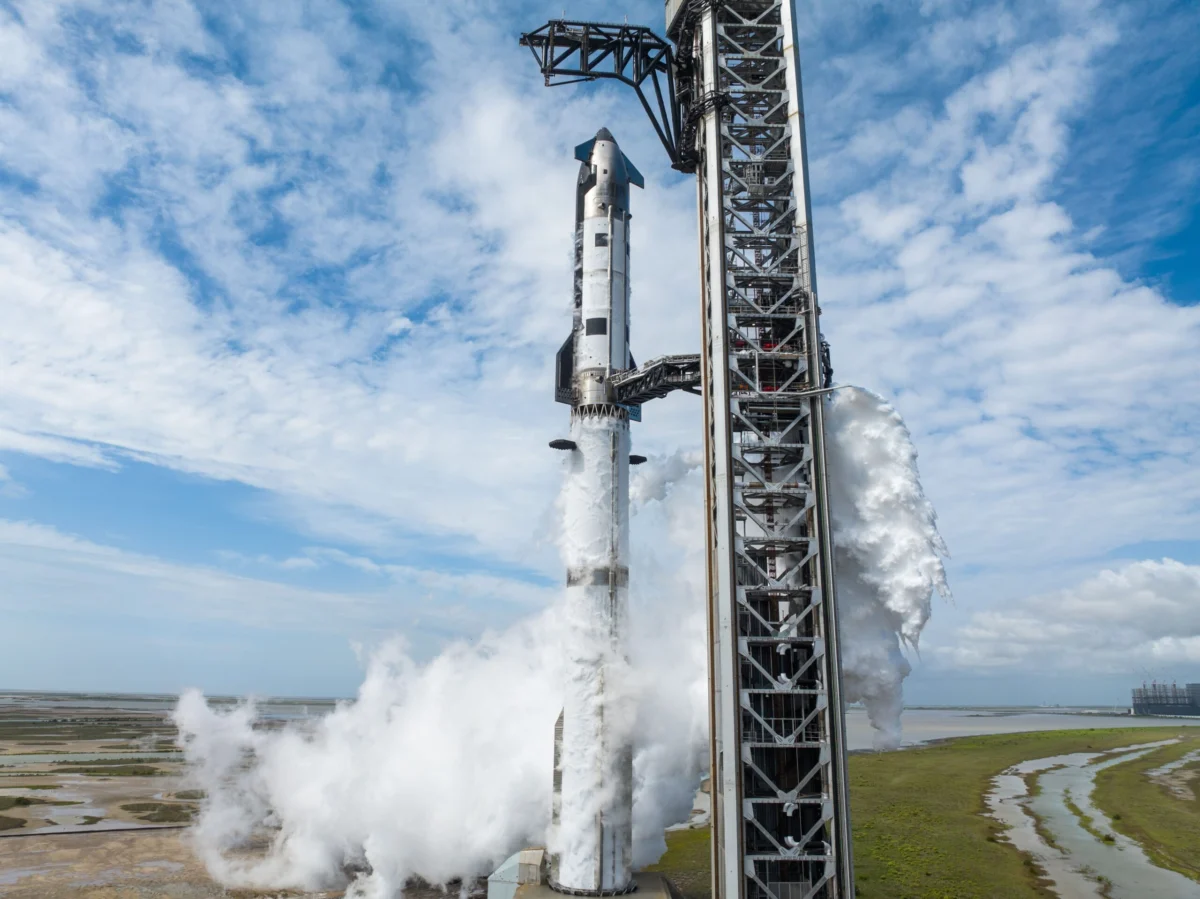
SpaceX has officially announced plans to construct a massive second spaceport dedicated to its Starship launch vehicle on a former Exxon property in Vermilion Parish, Louisiana. This strategic expansion, representing a $100 billion capital investment, concludes a rigorous seven-year search for a location capable of supporting the high-frequency launch cadence required for the company’s next-generation deep-space missions. The new campus is positioned along the Gulf Coast, approximately 10 hours by road from the company’s existing "Starbase" facility in Boca Chica, Texas. While SpaceX has set an ambitious target for the first Starship launch from the Louisiana site in 2029, state officials have provided a more conservative timeline, anticipating that initial operations will come online by 2030 following a construction phase slated to begin in late 2027.
A New Era for Commercial Spaceflight Infrastructure
The selection of Louisiana marks a significant milestone in the evolution of SpaceX from a launch service provider into a global infrastructure powerhouse. The $100 billion investment is one of the largest private industrial commitments in the history of the Gulf Coast, signaling a shift in the scale of commercial aerospace operations. Unlike traditional launch pads that rely on federal range support, the Louisiana site is envisioned as a "self-sustaining spaceport." According to company filings and statements, the facility will integrate every stage of the launch lifecycle, including propellant production, on-site power generation, deep-water shipping capabilities for large-scale logistics, and dedicated vehicle processing facilities.
The inclusion of an airport and specialized shipping docks suggests that SpaceX intends to move away from the logistical bottlenecks associated with overland transport of massive rocket components. The Starship vehicle, standing nearly 400 feet tall when integrated with its Super Heavy booster, presents unique transportation challenges that are best mitigated by direct maritime access. By establishing a second hub on the Gulf Coast, SpaceX creates a dual-node system that allows for simultaneous processing and launch operations, effectively doubling its potential throughput for orbital missions.
The Strategic Necessity of Starship
The move to Louisiana is driven by the internal requirements of SpaceX’s broader business ecosystem. While the Falcon 9 and Falcon Heavy rockets have dominated the commercial launch market for the past decade, they lack the payload capacity and full reusability required for SpaceX’s long-term objectives. Elon Musk, the founder and CEO of SpaceX, recently confirmed that the company intends to retire the Falcon fleet once Starship reaches a high level of operational maturity.
Starship is central to the expansion of Starlink, SpaceX’s satellite internet constellation. The current v2.0 Starlink satellites are too large and heavy to be launched efficiently by Falcon 9 in the quantities needed to complete the constellation. Furthermore, SpaceX has revealed plans to deploy a new network of satellites specifically designed for artificial intelligence (AI) processing, a venture that requires the massive lift capacity of Starship to be economically viable. With more than $8 billion already spent on the development of the Starship program, the Louisiana expansion represents the "all-in" bet the company is making on this specific architecture.
Timeline and Developmental Milestones
The path to a 2029 launch from Vermilion Parish is contingent on SpaceX’s ability to master the complexities of the Starship system over the next three years. To date, the company has conducted 13 test flights from its Texas facility. While these tests have demonstrated significant progress in stage separation, heat shield durability, and booster recovery, the system has yet to achieve full, rapid reusability.
A critical hurdle remains the successful return of both the Super Heavy booster and the Starship upper stage to their respective landing zones on a single flight. For the program to be financially sustainable and meet Musk’s goal of "multiple flights per week," the refurbishment time must be reduced from months to days. The upcoming 14th test flight is expected to attempt an orbital insertion of the upper stage, a prerequisite for the long-duration missions planned for the Louisiana site.
Louisiana Economic Development (LED) has indicated that the construction phase will be a multi-year endeavor. Starting in 2027, the site will undergo significant environmental remediation and infrastructure build-out. The discrepancy between SpaceX’s 2029 launch goal and the state’s 2030 operational estimate reflects the historical volatility of aerospace development schedules, particularly for a vehicle as complex as Starship.
Economic Impact and Workforce Development
The economic implications for Louisiana are profound. The LED projects that the "Starbase Louisiana" site will create 3,000 direct new jobs over the first decade of operation. These positions are expected to command an average annual salary of $92,600, significantly higher than the regional average in Vermilion Parish. Beyond direct employment, the construction phase is expected to peak at 30,000 jobs, providing a massive short-term stimulus to the local economy.
Chad Vallo, President of the Vermilion Parish Police Jury, expressed optimism regarding the generational impact of the project. "We are very excited to be in this position to receive one of the best opportunities of a lifetime," Vallo stated. He emphasized that the project would offer high-tech employment opportunities that would allow local residents and future generations to remain in the parish rather than seeking work in other tech hubs.
The state has already begun coordinating with local universities and technical colleges to align curriculum with the needs of a spaceport. This includes specialized training in cryogenic engineering, advanced manufacturing, and aerospace logistics. The influx of high-earning professionals is also expected to drive demand for housing, services, and local infrastructure, potentially transforming the rural coastal landscape of Vermilion Parish.
Lessons from Texas: Safety and Social Structure
The expansion into Louisiana comes amid scrutiny of SpaceX’s operational history in South Texas. The original Starbase site in Boca Chica has faced criticism for its high rate of workplace injuries. Reports submitted to the Occupational Safety and Health Administration (OSHA) indicate that the Texas site has experienced injury rates that outpace industry rivals, including a fatal fall involving a contractor in early 2024. As SpaceX scales its operations in Louisiana, regulatory bodies and local labor advocates will likely demand more stringent safety protocols to prevent a recurrence of these issues.
There is also the question of the "company town" model. In Texas, SpaceX has effectively created a private municipality, renaming the area Starbase and staffing local government positions with company employees or their relatives. This level of corporate autonomy has sparked debates over local sovereignty and the balance of power between a multi-billion-dollar entity and a small community. While SpaceX’s Louisiana announcement focused on the industrial aspects of the site, the mention of an "airport" and "self-sustaining" features suggests a similar desire for high levels of control over the surrounding environment.
Environmental Stewardship and Coastal Protection
Louisiana’s coastal regions are among the most ecologically sensitive and rapidly changing environments in the United States. Recognizing the potential for legal and environmental opposition—challenges that have frequently delayed operations in Texas—SpaceX has taken a more proactive stance in Louisiana. The company has already engaged with the Louisiana Department of Wildlife and Fisheries and the Coastal Protection and Restoration Authority.
SpaceX has committed to integrating its facility plans with Louisiana’s Coastal Master Plan. This includes funding and engineering support for Gulf shoreline protection breakwaters. These structures are designed to reduce wave energy and mitigate the shoreline erosion that threatens the region. By positioning the spaceport as a partner in coastal restoration, SpaceX aims to navigate the complex permitting process required for heavy industrial operations in a wetland-adjacent area.
The company will also have to manage the noise and vibration impacts of the Starship’s 33 Raptor engines. Each launch produces millions of pounds of thrust, creating acoustic energy that can affect local wildlife and human settlements. The vastness of the former Exxon property provides a buffer, but the long-term impact on the Gulf ecosystem remains a subject of study for environmental agencies.
Analysis of Global Implications
The establishment of a second Starship hub cements SpaceX’s lead in the global space race. With NASA relying on Starship for its Artemis moon landings, the redundancy provided by a Louisiana site is of strategic importance to the U.S. government. If one site is grounded due to weather, maintenance, or an accident, the second site can maintain the mission cadence.
Furthermore, the scale of the $100 billion investment suggests that SpaceX is preparing for a future where orbital transit becomes a routine part of global logistics. The "Starship-to-Starship" AI satellite network and the potential for point-to-point Earth travel using the Starship architecture require a network of spaceports that look more like modern airports than traditional, isolated launch pads.
As construction begins in 2027, the world will be watching to see if SpaceX can replicate the speed of its Texas development while addressing the safety and environmental concerns that have trailed its previous efforts. If successful, Vermilion Parish will not just be a launch site, but a primary gateway for the next era of human expansion into the solar system. The transition from the "Falcon era" to the "Starship era" is no longer a theoretical goal; it is a $100 billion reality taking shape on the Louisiana coast.
