

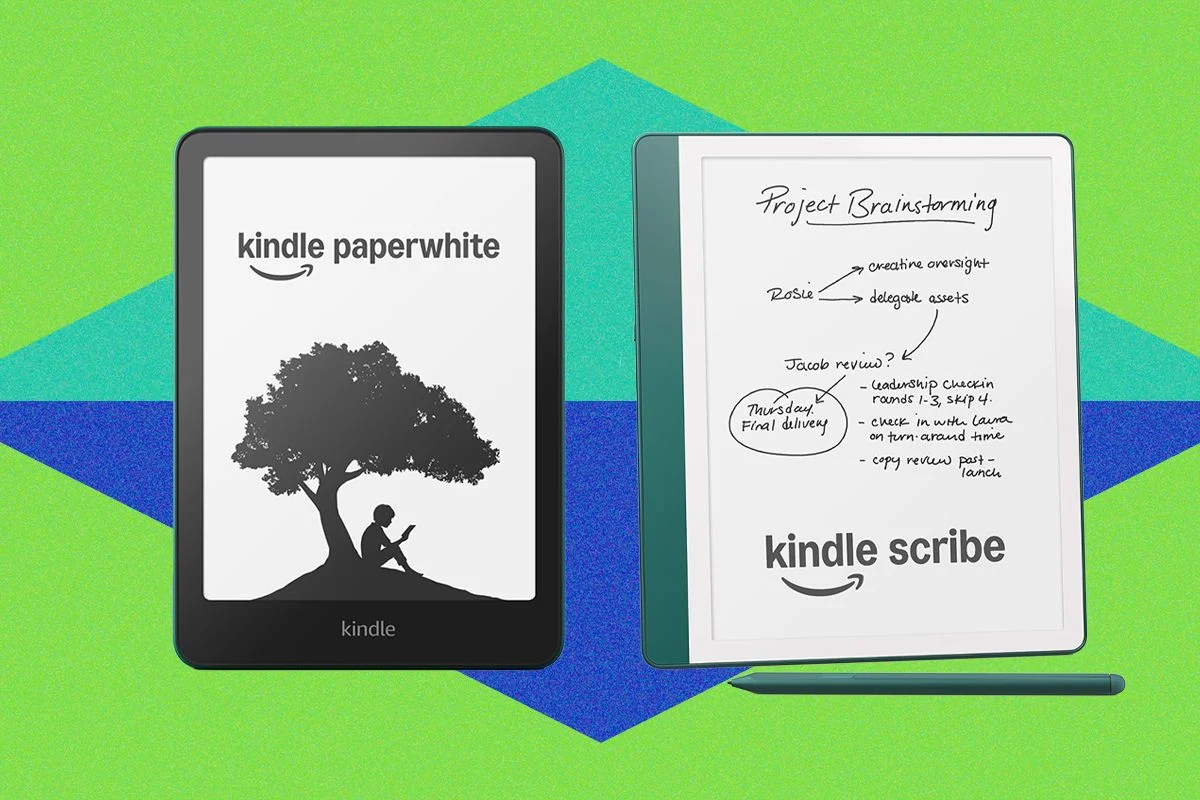
Amazon has officially diversified its premium e-reader segment with the launch of three distinct Kindle Scribe models, marking a significant strategic pivot toward high-performance digital note-taking and color ink technology. Released between late 2025 and mid-2026, the new lineup includes the flagship Kindle Scribe Colorsoft, a third-generation standard Kindle Scribe, and a specialized Kindle Scribe variant without a front light. This expansion reflects Amazon’s commitment to capturing the growing market of students, professionals, and digital minimalists who require more than a passive reading experience. By integrating generative artificial intelligence and cloud-based productivity tools, the company is positioning the Kindle not just as a library, but as a comprehensive workspace for marking up documents and organizing research.
The Evolution of the Kindle Scribe: Models and Pricing
The current lineup represents a major design overhaul from the original Scribe launched in late 2022. All three models now feature a taller 11-inch display, moving away from the 10.2-inch standard of the previous generation. This increased screen real estate is intended to better accommodate A4 and US Letter document formats when scaled, reducing the need for constant zooming and panning during PDF annotations.
The Kindle Scribe Colorsoft, retailing at $630, is the most technologically ambitious of the trio. It utilizes Amazon’s proprietary Colorsoft technology to provide a high-resolution color experience that maintains the eye-comfort benefits of traditional electronic paper. However, the inclusion of color layers and a more demanding refresh cycle results in a reduced battery life of approximately eight weeks.
The third-generation standard Kindle Scribe, priced at $500, serves as the direct successor to the previous model. It offers a balanced profile with a 12-week battery life and a refined grayscale display that emphasizes contrast and clarity. At the entry point of the large-format category is the Kindle Scribe Without Front Light, priced at $430. This model is specifically designed for users who primarily read and write in well-lit environments or who prefer the most natural "paper-like" experience possible without the interference of a light guide layer. This version boasts the longest battery life in the series, lasting up to 16 weeks on a single charge.
Technical Innovations and AI Integration
Under the hood, Amazon has replaced the aging processors of previous generations with a new quad-core chipset across all three Scribe models. This upgrade is essential for supporting the suite of AI-driven features that Amazon plans to roll out through 2027.
One of the most anticipated updates is the AI-powered search and summarization tool. Unlike standard keyword searches, the new AI search allows users to query their handwritten notes and the text of books using natural language. Furthermore, a new "anti-spoiler" summarization tool is designed to provide readers with context for complex plots or character arcs without revealing major narrative twists. While the hardware is ready, Amazon has indicated that several of these software tools will arrive as over-the-air updates in the coming year.
Connectivity has also seen a significant boost. For the first time, Kindle Scribe users can directly connect to Google Drive and Microsoft OneDrive. This integration allows for the seamless import of documents for markup and the export of annotated files back to the cloud. This move addresses a long-standing criticism of the Kindle ecosystem, which previously relied on a more cumbersome "Send to Kindle" email-based system for document management.
A Chronology of Kindle Innovation (2007–2026)
To understand the significance of the 2025/2026 releases, it is necessary to look at the timeline of Amazon’s e-reader development:
- 2007: The original Kindle is released, selling out in hours and establishing the e-ink market.
- 2012: The Paperwhite introduces the front light, allowing for reading in the dark without eye strain.
- 2019: The Kindle Oasis introduces adjustable warm light, moving the device into the luxury tier.
- 2021: The 11th Generation Paperwhite moves to USB-C and larger 6.8-inch screens.
- 2022: The first Kindle Scribe is launched, introducing stylus support and note-taking.
- 2025 (Late): The Kindle Scribe (3rd Gen) and Colorsoft are announced, marking the transition to 11-inch displays and color e-ink.
- 2026 (June): The Scribe Without Front Light is released, catering to a niche of "pure" e-ink enthusiasts.
This timeline illustrates a clear trajectory from simple text consumption to complex interaction and productivity.
Supporting Data: Performance and Market Positioning
Market analysts suggest that the e-reader industry is currently seeing a "second wave" of growth driven by the digital paper tablet segment. While the standard 6-inch Kindle remains the volume leader, the Scribe series targets the higher-margin professional and educational sectors.
Battery Life Comparison:
- Kindle Scribe Without Front Light: 16 Weeks
- Kindle Scribe (3rd Gen): 12 Weeks
- Kindle Scribe Colorsoft: 8 Weeks
- Kindle Paperwhite (11th Gen): 10 Weeks
Resolution and PPI:
All new Scribe models maintain a 300 pixels per inch (PPI) resolution for black-and-white text. The Colorsoft model maintains 300 PPI for grayscale but operates at a lower effective resolution for color elements, a common trade-off in current e-ink technology to ensure color saturation doesn’t compromise text sharpness.
Official Responses and Addressing Technical Challenges
The launch of the Colorsoft technology has not been without its hurdles. Shortly after the initial release, a segment of users reported a "yellow bar" or slight discoloration at the bottom of the screen on some units. Amazon has been proactive in addressing these reports.
An Amazon spokesperson confirmed to industry analysts, "We are aware of reports regarding display consistency in early units of the Colorsoft Signature and Scribe Colorsoft. We have made adjustments to our manufacturing calibration processes to ensure future units meet our high standards. Customers experiencing these issues are encouraged to contact customer support for a full replacement or refund."
Furthermore, Amazon has addressed concerns regarding the longevity of its devices. As of May 2026, the company officially ended support for Kindles released in 2012 or earlier. These legacy devices can no longer access the Kindle Store directly or register to new Amazon accounts, though they remain functional for side-loading content via USB using software like Calibre. This move emphasizes the company’s push toward its modern, more secure, and feature-rich hardware.
The Accessory Ecosystem: Enhancing Ergonomics
As Kindles become larger and heavier, the demand for ergonomic accessories has increased. The move to an 11-inch screen makes the Scribe models more difficult to hold for extended periods compared to the 6-ounce basic Kindle.
To combat hand fatigue, a new market of specialized stands and grips has emerged. Tablet pillow stands, such as those from Lamicall, have become popular for "hands-free" reading in bed or on couches. These accessories often include receptacles for snacks or phones, acknowledging the Kindle’s role in a broader relaxation routine. For more permanent setups, gooseneck holders that clamp to bed frames or desks are increasingly used by students who use the Scribe as a secondary reference screen.
For mobile use, hand straps and adhesive grips like PopSockets have become essential. Amazon’s own line of cases for the Scribe has been updated to include a more secure magnetic attachment for the stylus, which now features haptic feedback to better simulate the friction of pen on paper.
Broader Impact and Implications for the Future of Reading
The introduction of the new Scribe lineup signals a broader shift in how digital content is consumed. By including AI summarization and cloud productivity, Amazon is blurring the lines between an e-reader and a tablet like the iPad. However, by sticking to e-ink technology, they maintain a "distraction-free" value proposition that LCD tablets cannot match.
For the educational sector, the Kindle Scribe represents a potential replacement for heavy textbooks and paper notebooks. The ability to mark up documents directly and sync them to university-standard cloud services could significantly reduce the physical burden on students. However, the higher price points—ranging from $430 to $630—put these devices in direct competition with entry-level laptops and high-end digital notebooks like the reMarkable 2.
The long-term implication of Amazon’s AI integration remains to be seen. While "anti-spoiler" summaries are a boon for casual readers, the use of AI to synthesize information could fundamentally change how researchers interact with texts. As Amazon continues to update its software, the Kindle Scribe is likely to become a central hub for the "slow tech" movement, where productivity is prioritized without the constant interruptions of social media and notifications typical of modern smartphones and tablets.
In conclusion, the 2025-2026 Kindle Scribe expansion is a calculated move to dominate the high-end e-ink market. By offering specialized versions for color lovers and lighting purists alike, Amazon is ensuring that its ecosystem remains the default choice for the world’s most dedicated readers and note-takers.
