

The strategic landscape of the Indo-Pacific is undergoing a period of profound uncertainty as the United States maneuvers its limited military assets to address escalating hostilities in the Middle East. This recalibration, marked most notably by the departure of the final U.S. aircraft carrier from Asian waters, has sparked significant concern among regional allies who fear a vacuum of American power. As the conflict involving the United States, Israel, and Iran enters its sixth month, the resulting "carrier gap" in Asia is being interpreted by analysts not merely as a temporary logistical hurdle, but as a potential dent in the long-term effectiveness of U.S.-led deterrence against an increasingly assertive People’s Republic of China.
The Relocation of the USS George Washington and the Carrier Gap
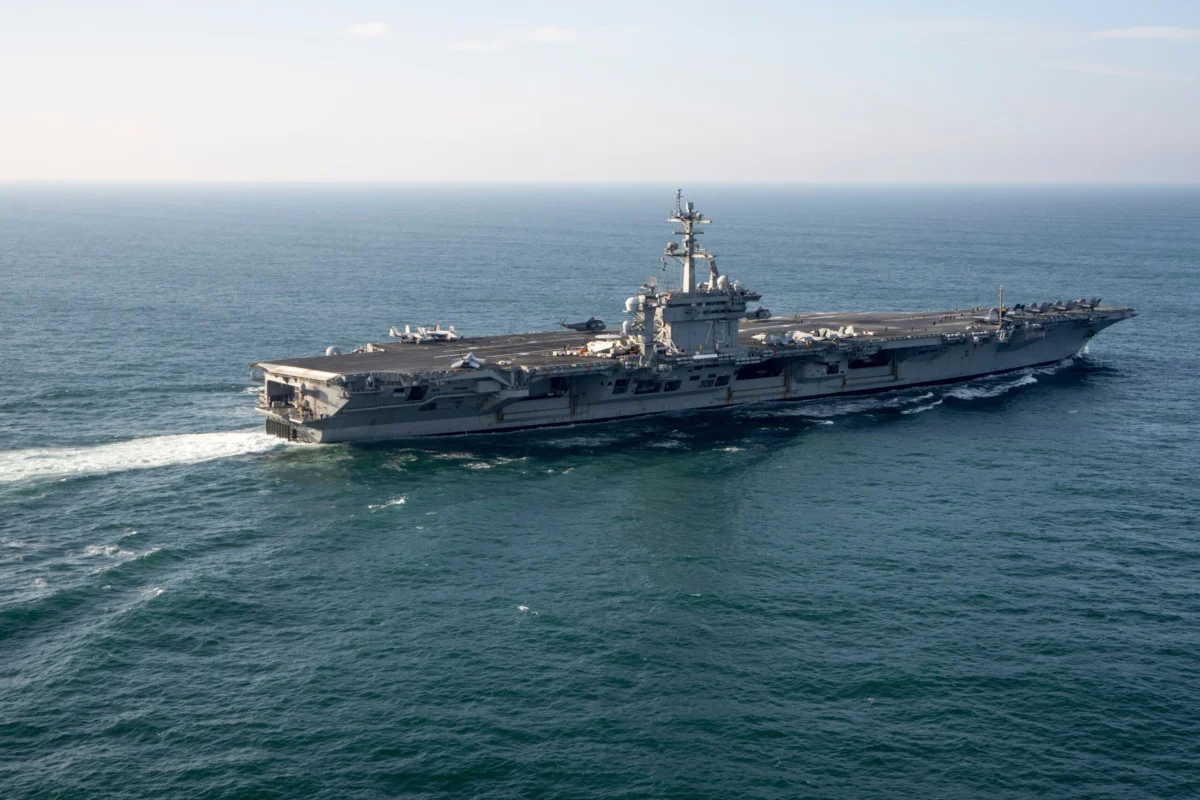
The most visible sign of this strategic shift occurred this week when the U.S. Navy redeployed the USS George Washington from its forward-deployed base in Japan to the Middle East. The move was necessitated by the exhaustion of the USS Abraham Lincoln, which has been operating at a high tempo for nine consecutive months. The redeployment highlights the strain on the U.S. Navy’s global fleet, as the Pentagon struggles to maintain a continuous presence in two volatile theaters simultaneously.
Reports from the USS Abraham Lincoln have painted a grim picture of the human cost of these extended deployments. Multiple internal accounts and journalistic reports have indicated severe logistical failures aboard the vessel, including critical food shortages and a breakdown of basic infrastructure. Sailors have reported broken toilets and non-functional showers, leading to unsanitary living conditions and a decline in overall crew health. Perhaps most concerning were reports of the psychological toll on the personnel, with at least one reported attempt by a sailor to jump overboard during the grueling nine-month stint. The USS George Washington’s arrival in the Middle East is intended to provide much-needed relief to these overextended forces, but its absence in Asia leaves the Pacific without a dedicated U.S. carrier strike group for the first time in recent memory.
A Pattern of Resource Depletion
The departure of the USS George Washington is not an isolated incident but rather the latest in a series of drawdowns. Earlier this year, the U.S. military quietly relocated components of its Terminal High Altitude Area Defense (THAAD) system from South Korea. These advanced missile defense assets were redirected to the Middle East to bolster defenses against Iranian ballistic missile threats.
Furthermore, the sustained nature of the conflicts in the Middle East and Ukraine has placed an unprecedented demand on U.S. munitions stockpiles. Interceptor missiles, such as the SM-3 and SM-6, as well as artillery shells and precision-guided bombs, are being consumed at rates that exceed current production capacities. This depletion of "ready-to-use" stockpiles in Asia limits the ability of the U.S. Indo-Pacific Command (INDOPACOM) to respond to a sudden contingency in the Taiwan Strait or the South China Sea. William Yang, a senior analyst for Northeast Asia at the International Crisis Group, noted that these collective moves "certainly create an impact on the overall effectiveness of the US-led regional deterrence against China."
Chinese Assertiveness in the Vacuum
As the U.S. military footprint in the Pacific temporarily shrinks, Beijing has demonstrated a readiness to test the boundaries of regional security. The "First Island Chain"—a Cold War-era defensive perimeter stretching from the Japanese archipelago through Taiwan and the northern Philippines to Borneo—has become increasingly porous. Chinese naval assets, including the aircraft carriers Liaoning and Shandong, have frequently ventured into the Western Pacific, conducting high-intensity drills that signal Beijing’s ability to project power far beyond its immediate coastline.
The shift in the naval balance is accompanied by intensified activity from the Chinese Coast Guard. Since June, there has been a marked uptick in operations in the waters east of Taiwan, an area that overlaps with the Exclusive Economic Zones (EEZs) of both Japan and the Philippines. These maneuvers are viewed by security experts as a multi-pronged strategy to intimidate regional neighbors. According to Yang, these operations are "aimed at Taipei, aimed at Manila, aimed at Tokyo," and serve the dual purpose of testing U.S. reaction times and assessing the operational readiness of local defense forces.
Regional Reactions and the Rise of "Burden-Sharing"
U.S. allies are responding to these developments with a mixture of pragmatic defense expansion and strategic anxiety. Ja Ian Chong, a political scientist at the National University of Singapore, suggests that the primary concern for allies like Japan and the Philippines is that China may become emboldened by the perceived lack of U.S. operational flexibility. "I think US allies and partners may wonder if the move gives [China] more confidence to test and push," Chong observed, noting that this could result in increased daily pressure on the sovereignty of smaller regional actors.
This shift coincides with a broader evolution in U.S. strategic doctrine. The 2026 National Defense Strategy emphasizes "burden-sharing," a concept that has gained significant traction under the current political climate in Washington. This doctrine posits that regional allies must take the primary role in their own defense, with the United States providing high-end support rather than serving as the sole guarantor of security.
To this end, the U.S. has called for its allies in Europe and Asia to significantly increase their military spending. The target benchmarks are ambitious: defense spending at 3.5 percent of Gross Domestic Product (GDP) and security-related infrastructure spending at 1.5 percent of GDP by the early 2030s.
The Economic Pivot: Defense Spending Surges
In response to both the U.S. drawdown and Chinese pressure, several Asian nations have accelerated their defense procurement and budgeting:
- Taiwan: Taipei recently announced a plan to boost its defense spending by 18 percent in 2027. The focus is on asymmetric warfare capabilities, including sea mines, mobile missile launchers, and drone technology, designed to make a cross-strait invasion prohibitively costly for Beijing.
- The Philippines: Defense Secretary Gilberto Teodoro Jr. has advocated for raising defense spending to 4 percent of GDP. Manila is also deepening its "minilateral" security ties, establishing new cooperation frameworks with Tokyo and quietly strengthening its alignment with Taipei to protect its interests in the West Philippine Sea.
- Japan: Tokyo continues its historic departure from its post-war pacifist constraints, investing heavily in counter-strike capabilities and long-range missiles.
Despite the carrier’s departure, the U.S. maintains a substantial presence in the region. Approximately 375,000 military and civilian personnel remain assigned to INDOPACOM, with tens of thousands of troops stationed at permanent bases in South Korea and Japan. Furthermore, the U.S. still maintains Amphibious Ready Groups (ARGs) in the region, which carry F-35B stealth fighters and provide a significant, albeit smaller, aviation footprint.
Chronology of the Strategic Shift
- October 2023: Escalation of the Middle East conflict begins, drawing U.S. carrier strike groups to the Eastern Mediterranean and Red Sea.
- Early 2024: Reports emerge of THAAD missile defense components being transferred from the Korean Peninsula to the Middle East.
- June 2024: Significant increase in Chinese Coast Guard activity in the Philippine EEZ and waters east of Taiwan.
- August 2024: The USS Abraham Lincoln reaches the nine-month mark of its deployment; internal reports of poor conditions and morale surface.
- November 2024: The USS George Washington departs Japan for the Middle East, leaving the Asia-Pacific without a resident aircraft carrier.
- Late 2024: Taiwan and the Philippines announce major increases in projected defense spending for the 2026–2027 fiscal years.
Analysis of Long-term Implications
The current "carrier gap" is viewed by many experts as a short-term tactical necessity rather than a permanent strategic retreat. Kei Koga, an expert in East Asian security at Nanyang Technological University, argues that while the move is "concerning from a short-term perspective," it does not constitute evidence of long-term disengagement. The U.S. remains economically and strategically tethered to Asia, particularly through its competition with China, which remains the primary "pacing challenge" for the Department of Defense.
However, the symbolic impact of the move cannot be overstated. For decades, the presence of a U.S. carrier in the Pacific was the ultimate visual shorthand for American commitment. Its absence, even if temporary, forces allies to confront a future where U.S. resources are increasingly stretched thin by multiple global crises.
K Tristan Tang, a fellow at the National Bureau of Asian Research, suggests that regardless of current naval movements, the fundamental U.S. focus will inevitably return to China. "Deep down… the most important thing will still be US economic interests and the economic issue with China," Tang stated. This suggests that while the U.S. may be distracted by the "war on Iran" and the broader Middle Eastern theater today, the gravitational pull of the Indo-Pacific’s economic and military significance will eventually force a re-centering of American power.
The enduring impact of this period may be the permanent transformation of regional security architecture. As allies build their "organic capabilities" and form closer ties with one another—independent of a direct U.S. presence—the Indo-Pacific is moving toward a more multipolar security model. Whether this new model will be sufficient to deter a superpower like China remains the defining question for the remainder of the decade.
