

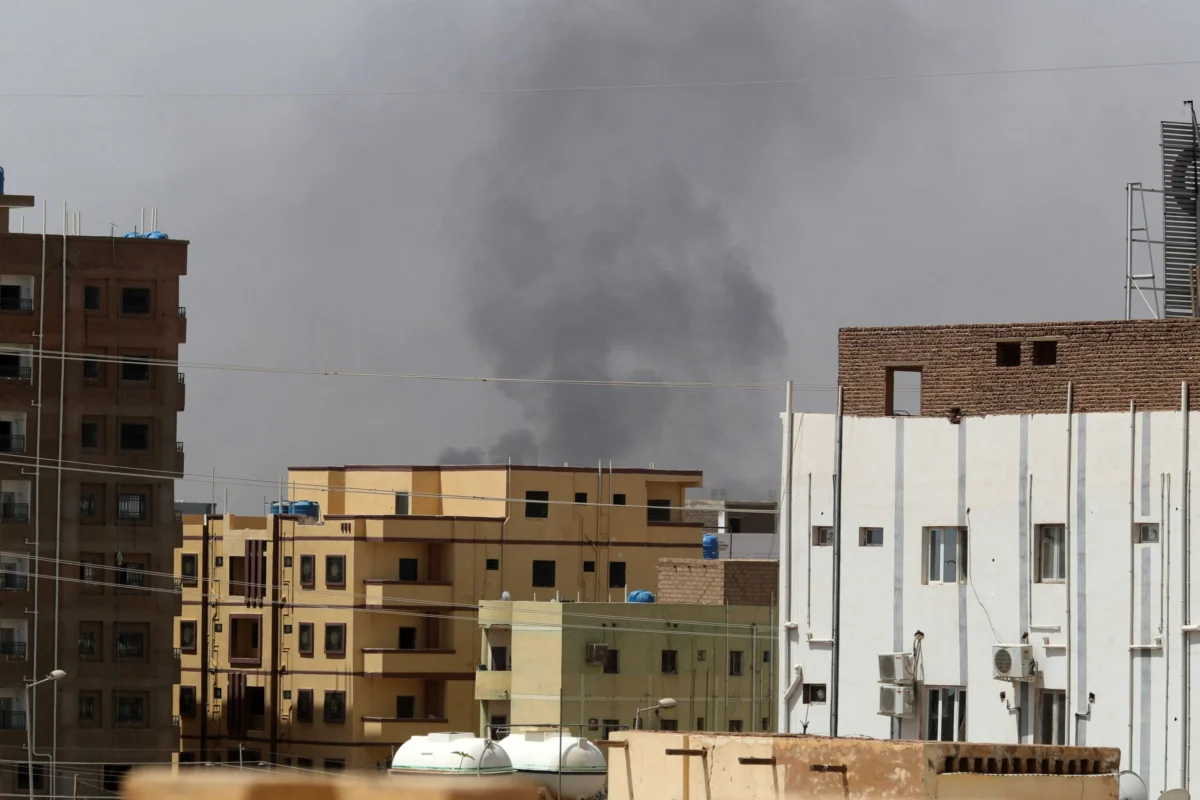
Sporadic fighting between Sudan’s warring factions continued to reverberate across the capital city of Khartoum on Sunday, even as residents and the international community looked toward a newly signed, week-long ceasefire deal intended to provide a much-needed reprieve from five weeks of relentless violence. The agreement, brokered by the Kingdom of Saudi Arabia and the United States, was finalized in the city of Jeddah and is scheduled to take effect on Monday evening. Unlike previous verbal commitments, this pact represents the first formal, signed truce between the Sudanese Armed Forces (SAF) and the paramilitary Rapid Support Forces (RSF) since the conflict erupted in mid-April.
The deal includes an internationally supported monitoring mechanism, a critical component that mediators hope will ensure compliance where previous efforts failed. However, the atmosphere in Khartoum remains tense, with the sound of heavy artillery and small arms fire persisting in central and southern districts. For the millions of civilians trapped in the crossfire, the coming days represent a precarious window of hope for the delivery of life-saving humanitarian aid and the restoration of essential services that have been obliterated by the urban warfare.
The Jeddah Agreement and the Monitoring Mechanism
The signing of the "Agreement on a Short-Term Ceasefire and Humanitarian Arrangements" marks a significant diplomatic milestone in the Sudanese crisis. Negotiated over several weeks in Jeddah, the document outlines a seven-day period during which both the SAF, led by General Abdel Fattah al-Burhan, and the RSF, commanded by Mohamed Hamdan Dagalo (widely known as Hemedti), agree to cease all military operations.
A primary differentiator of this agreement is the establishment of a Ceasefire Monitoring and Coordination Committee. This body is expected to be comprised of representatives from the United States, Saudi Arabia, and both warring factions. By including a formal monitoring component—likely involving satellite imagery and data analysis—the mediators aim to hold both parties accountable for violations in real-time. The agreement specifically focuses on allowing the safe passage of civilians, the evacuation of medical facilities, and the repair of critical infrastructure such as water pumping stations and power grids.
Despite the formality of the signing, skepticism remains high among political analysts and the Sudanese populace. Neither General al-Burhan nor Hemedti traveled to Jeddah personally to sign the document, opting instead to send mid-level delegations. This absence has raised questions regarding the level of commitment from the top leadership and whether they possess the requisite command and control to enforce a total halt in hostilities among their respective rank-and-file soldiers on the ground.
Five Weeks of Escalation: A Chronology of the Conflict
The current war did not emerge in a vacuum but is the result of a long-simmering power struggle between the two generals who once collaborated to seize power. To understand the current state of Khartoum, it is necessary to examine the timeline of the breakdown:
- The 2019 Uprising: Mass protests led to the ousting of long-time autocrat Omar al-Bashir. A transitional government was formed, intended to lead Sudan toward civilian-led democracy.
- The 2021 Coup: In October 2021, General al-Burhan and Hemedti joined forces to dissolve the transitional government and arrest civilian leaders, effectively stalling the democratic transition.
- The Integration Dispute: Tensions began to rise in early 2023 over a framework agreement for a new transition. The primary sticking point was the timeline for integrating the RSF into the regular Sudanese Army. The SAF pushed for a two-year integration period, while the RSF demanded ten years.
- April 15, 2023: Fighting broke out simultaneously in Khartoum and several other cities. Both sides accused the other of firing the first shot, leading to an immediate escalation into full-scale urban combat.
- May 2023: Multiple "humanitarian pauses" were announced during the Eid al-Fitr holiday and subsequent weeks, but none were fully respected, with heavy shelling and airstrikes continuing daily.
The Humanitarian Toll and Mass Displacement
The human cost of the conflict has been catastrophic. According to the latest data from the World Health Organization (WHO), at least 705 people have been confirmed killed and over 5,287 injured. However, medical professionals on the ground and local "Resistance Committees" warn that the actual death toll is significantly higher, as many bodies remain uncollected in the streets or are buried in backyards due to the danger of moving outdoors.
The conflict has triggered a massive displacement crisis. The United Nations High Commissioner for Refugees (UNHCR) reports that approximately 1.1 million people have been forced to flee their homes. Of these, roughly 840,000 are internally displaced within Sudan, seeking refuge in relatively stable states like Al-Jazirah or the Red Sea coast. More than 250,000 people have crossed international borders into neighboring countries, including Egypt, Chad, Ethiopia, and South Sudan.
In Khartoum, those who have not fled are facing a complete collapse of civil society. Mass looting of banks, grocery stores, and private homes has become rampant. The healthcare system is in a state of near-total failure; the Sudanese Doctors’ Union reports that roughly 70% of hospitals in conflict zones are out of service. Facilities that remain open are operating without consistent electricity, water, or surgical supplies, often coming under direct fire or being occupied by military forces.
Voices from the Ground: A Desperate Search for Safety
For the residents of Khartoum, the ceasefire is less about political transitions and more about basic survival. Safaa Ibrahim, a 35-year-old resident who has witnessed the destruction of her neighborhood, expressed the exhaustion felt by millions. "We’re tired of this war. We’ve been chased away from our homes, and the family has scattered between towns in Sudan and Egypt," she told Reuters. "We want to return to normal life and safety. Al-Burhan and Hemedti have to respect people’s desire for life."
This sentiment is echoed by activists who have stayed behind to coordinate local aid. Mohamed Hamed, an activist in the capital, emphasized that the priority must be the "opening of humanitarian corridors." He noted that the health situation is deteriorating daily, with chronic disease patients—such as those requiring dialysis—facing a death sentence due to the lack of functioning clinics.
However, the rhetoric from the military leadership remains combative. Senior army general Yassir al-Atta recently spoke on Sudan state TV, defending the army’s use of heavy weaponry in residential areas by claiming they are attempting to "dislodge" RSF forces from civilian infrastructure. In a move that observers fear could lead to a wider civil war, al-Atta also suggested that while the army is not yet officially arming civilians, residents have a "natural right" to arm themselves for self-defense against intruders.
Regional Instability and the Darfur Dimension
While the focus remains on Khartoum, the conflict has reignited old ethnic tensions in other parts of Sudan, most notably in the western region of Darfur. In cities like El Geneina and Nyala, the power vacuum has allowed for a resurgence of tribal violence and militia attacks reminiscent of the conflict that devastated the region in the early 2000s. Reports of markets being burned and entire neighborhoods being razed have emerged, suggesting that the war is rapidly evolving into a multi-front ethnic struggle.
The destabilization of Sudan carries grave implications for the Horn of Africa and the Sahel. Sudan shares borders with seven countries, many of which are already grappling with their own internal instabilities, droughts, and economic crises. A prolonged conflict in Sudan threatens to disrupt vital trade routes, increase the flow of illicit weapons, and create a permanent refugee crisis that could overwhelm the resources of neighboring states like Chad and South Sudan.
Analysis of Implications: Can the Truce Hold?
The success of the Jeddah agreement hinges on whether the monitoring mechanism can exert enough pressure on the commanders to halt their forces. There are several factors that will determine the outcome of the coming week:
- Command and Control: The RSF is a highly decentralized paramilitary force. Even if Hemedti orders a ceasefire, local units engaged in looting or localized skirmishes may not comply. Similarly, the SAF’s use of airstrikes requires centralized coordination that has, at times, appeared disconnected from diplomatic promises.
- Logistics of Aid: For the ceasefire to be meaningful, aid agencies must be able to move large quantities of food and medicine from Port Sudan to the interior. This requires the removal of checkpoints and a guarantee of safety for humanitarian workers, many of whom have already been attacked or killed.
- The Path to Permanent Peace: Mediators have clarified that this seven-day truce is merely a "bridge." Further talks will be required to address the "permanent cessation of hostilities" and the withdrawal of military forces from urban centers. Crucially, any long-term solution must re-incorporate civilian political leaders who have been largely sidelined since the fighting began.
As Monday evening approaches, the people of Sudan remain in a state of watchful waiting. The Jeddah deal offers a glimmer of hope, but the scars of the last five weeks—and the underlying grievances of the last four years—suggest that the road to a stable, civilian-led Sudan remains fraught with immense challenges. For now, the immediate goal is simple: to stop the shelling long enough to bury the dead, feed the hungry, and provide a moment of silence in a city that has known only the sounds of war for over a month.
