

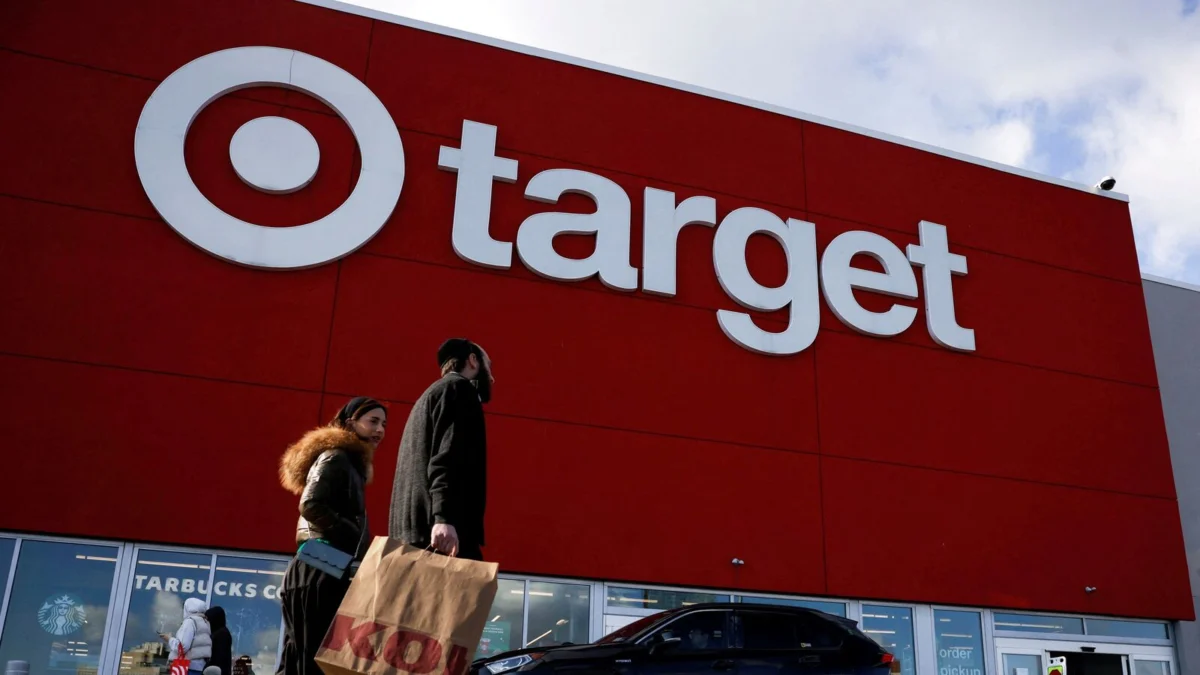
Target Corporation shares experienced a significant rally on Wednesday, climbing more than 6% after the Minneapolis-based retail giant upgraded its full-year profit and sales forecasts. The move followed a second-quarter earnings report that comfortably surpassed Wall Street expectations, providing the clearest evidence yet that the company is successfully navigating its way out of a multi-year sales slump. The positive momentum suggests that Target’s strategic pivot—focusing on value-driven essentials alongside its traditional "cheap chic" discretionary items—is resonating with a consumer base that has grown increasingly price-sensitive amid fluctuating economic conditions.
At the heart of the investor optimism is Target’s revised guidance for the current fiscal year, which concludes in early 2027. The retailer now anticipates that net sales will increase by approximately 5%, a notable upward revision from its previous projections. This one-percentage-point increase in the top-line forecast, combined with a boosted outlook for adjusted earnings, signals management’s confidence in the durability of the current sales trajectory. By the midpoint of the Wednesday trading session, Target shares were trading at $161.75, up 6.08%, representing a gain of $9.27 per share.
A Turnaround in Financial Performance and Market Standing
The latest quarterly results represent a pivotal moment for Target, which has spent the better part of the last three years grappling with declining revenue and shifting consumer priorities. For the quarter ended August 1, the company reported a 3.8% increase in comparable sales—a metric that tracks performance across physical stores and digital platforms operational for at least 12 months. This growth was primarily fueled by a surge in customer traffic, indicating that shoppers are returning to Target’s aisles both in-person and online with greater frequency.
The company’s stock performance has been nothing short of remarkable over the past several months. Prior to Wednesday’s opening bell, Target shares had already recorded a 56% gain throughout the calendar year 2026. This performance outpaces the broader market significantly, more than quadrupling the gains seen in the S&P 500 index over the same period. The rally reflects a growing consensus among analysts that Target’s "reclamation project" is bearing fruit, moving the company from a defensive posture back into a growth phase.
Chief Executive Officer Michael Fiddelke, speaking on a conference call with reporters and analysts, struck a tone of cautious optimism. “We’re encouraged by the progress made so far and we’re also clear-eyed about the important work still ahead,” Fiddelke stated. His leadership has been defined by a focus on stabilizing the company’s core operations while aggressively pursuing new avenues for revenue, particularly in the high-frequency categories of food and beauty.
Strategic Overhaul: Redefining the "Cheap Chic" Legacy
For decades, Target distinguished itself from rivals like Walmart and Amazon by perfecting the "cheap chic" aesthetic—offering stylish, designer-influenced home goods and apparel at accessible price points. However, as inflation pressured household budgets, many consumers shifted their spending away from discretionary items toward groceries and everyday essentials. To counter this, Target has undertaken a comprehensive overhaul of its product assortment.
The retailer’s strategy now involves a delicate balance of maintaining its trend-setter reputation while expanding its footprint in the "needs-based" economy. One of the most successful elements of this shift has been the introduction of its largest packaged-food overhaul in more than a decade. The results have been immediate: snack sales grew by double digits in the second quarter. The company has leaned into modern health trends, introducing protein-focused products such as specialized potato chips and a variety of healthier, "better-for-you" options that have seen robust demand.
Beyond the grocery aisles, Target is attempting to restore the "treasure-hunt" experience that once defined its brand. This involves refreshing merchandise more frequently and introducing distinctive, exclusive products that cannot be found at competitors. Recent additions to the inventory, such as floral-patterned phone cases and high-end beauty collaborations, are designed to drive impulse purchases and increase the average basket size.
Overcoming Historical Headwinds and Social Pressures
The path to this recovery has been fraught with challenges. Between 2023 and 2025, Target faced a series of self-inflicted and external setbacks. The company struggled with an inventory glut following the pandemic, which forced aggressive discounting that eroded profit margins. Furthermore, the retailer became a flashpoint in the "culture wars," facing significant backlash and political controversy regarding its diversity, equity, and inclusion (DEI) policies and specific seasonal merchandise collections.
These controversies coincided with a period where competitors like Walmart and Costco were strengthening their market positions. Walmart, in particular, leveraged its massive grocery business to capture middle-income shoppers looking to stretch their dollars, while Costco’s membership model provided a stable cushion against retail volatility. In response, Target has had to work doubly hard to win back consumer trust and re-establish its value proposition.
The company’s recent success is partly attributed to operational efficiencies. Adjusted earnings per share were bolstered not only by sales growth but also by internal cost-saving measures and favorable developments in international trade, including refunds related to previously paid tariffs. Additionally, the company has invested heavily in its "Target Circle" loyalty program and enhanced its digital fulfillment capabilities, ensuring that the "last mile" of the shopping experience is as seamless as possible.
Operational Enhancements and the In-Store Experience
Target’s turnaround is not merely a result of what is on the shelves, but also how those items are sold. The company, which operates more than 2,000 stores across the United States, has prioritized upgrading its physical infrastructure. This includes shortening checkout wait times, improving product availability through better supply chain management, and investing in employee training to enhance customer interactions.
Executives noted that the investments in technology and store staff are paying dividends. During the second quarter, the company saw strong performance across several key categories, including toys, electronics, and sporting goods, in addition to the aforementioned success in beauty and food. By improving the "store-of-the-future" layout, Target has managed to make its locations a destination for both quick essential runs and longer, browsing-heavy shopping trips.
The retailer is also leveraging its stores as fulfillment hubs for its digital business. By utilizing its physical footprint to ship orders and facilitate "Drive Up" pickups, Target has managed to lower its shipping costs while providing a level of convenience that rivals pure-play e-commerce entities. The "Drive Up" service remains one of the highest-rated features among Target’s customer base, contributing significantly to the 3.8% comparable sales growth.
Broader Economic Implications and Future Outlook
Target’s strong performance is being viewed by many economists as a bellwether for the health of the American consumer. The fact that shoppers are willing to engage with discretionary categories—even if they are choosing lower-priced "chic" items—suggests that consumer confidence may be stabilizing despite broader economic uncertainty.
However, the retail landscape remains highly competitive. As Walmart continues to lower prices on staples like ground beef and everyday household goods, Target must continue to innovate to avoid being squeezed out of the market. The company’s focus on exclusive brands and a curated shopping experience is its primary defense against the "commoditization" of retail.
Looking ahead to the remainder of the fiscal year and into 2027, Target’s management remains focused on execution. The raised guidance suggests that the company expects the momentum from the second quarter to carry through the critical holiday shopping season. If Target can maintain its current trajectory of traffic growth and margin expansion, it will solidify its position as one of the most resilient players in the global retail sector.
In summary, Target’s Wednesday rally is more than just a reaction to a single earnings beat; it is a validation of a multi-year strategic pivot. By successfully blending its "cheap chic" heritage with a renewed focus on value and essentials, the retailer has managed to reclaim its status as a favorite among both consumers and investors. While challenges remain—ranging from competitive pricing pressures to the need for constant merchandise innovation—the latest data suggests that Target has finally found the right formula to navigate the complexities of the modern retail environment. The 56% stock gain in 2026 stands as a testament to the market’s belief that the "Bullseye" is once again hitting its mark.
