

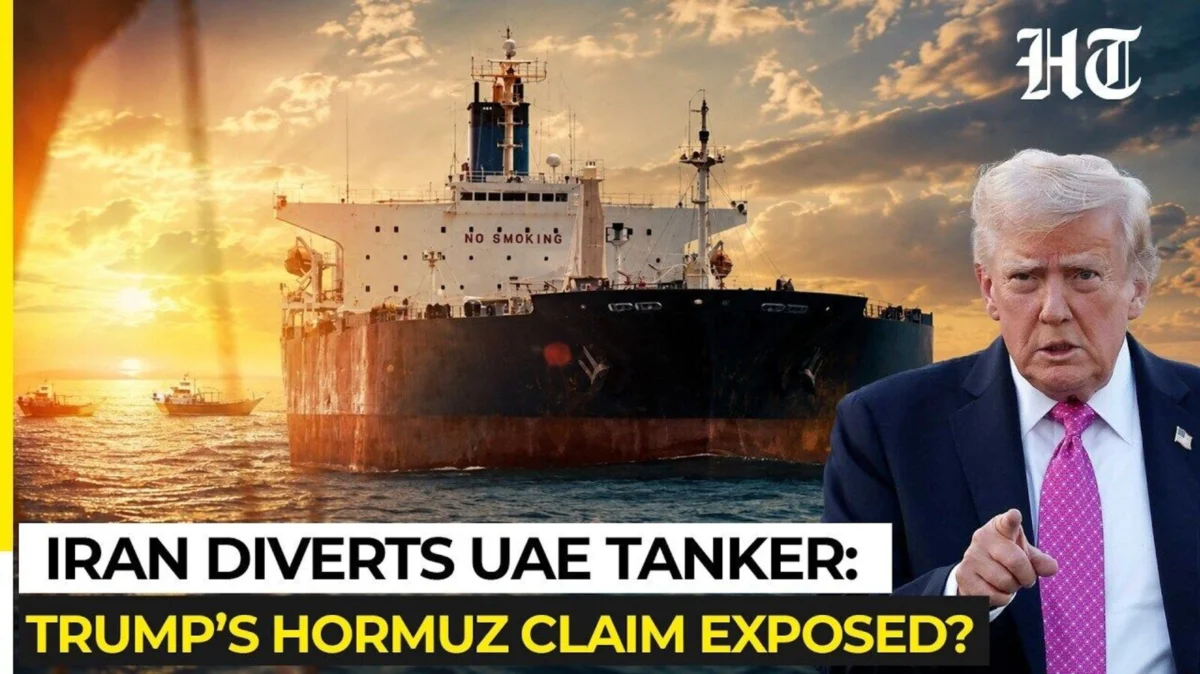
The current market sentiment is being driven by a complex interplay of physical supply threats and shifting diplomatic alliances. While traditional inventory data in the United States showed a surprise build in crude stocks, traders have largely looked past those figures, focusing instead on the precarious nature of the Strait of Hormuz—the world’s most vital oil chokepoint. With the United Arab Emirates taking the unprecedented step of severing all economic ties with Iran, the region has entered a new and more volatile phase of a conflict that has already redefined global energy logistics in 2026.
The Geopolitical Standoff and the UAE Factor
The primary catalyst for the most recent price support is the sudden and sharp deterioration of relations between Iran and the United Arab Emirates. On Wednesday, the UAE government announced a total cessation of economic and financial ties with Tehran. This decision followed a series of grave allegations from Abu Dhabi, which accused the Iranian military of launching ballistic missiles toward UAE territory. The UAE has historically served as a critical economic vent for Iran, providing a hub for trade, finance, and the movement of goods that allowed the Islamic Republic to mitigate the effects of long-standing Western sanctions.
The severance of these ties marks a significant shift in regional dynamics. For years, the UAE maintained a delicate balancing act, hosting a large Iranian expatriate community and facilitating billions of dollars in cross-border trade while remaining a staunch security partner of the United States. By cutting these ties, the UAE has effectively signaled that the security threat posed by Iran’s missile program now outweighs the economic benefits of the bilateral relationship. This move is expected to deepen Iran’s economic isolation, further straining its domestic economy as it continues to resist a "maximum pressure" campaign from Washington.
In Washington, President Donald Trump addressed the situation on Wednesday, adopting a characteristically nuanced yet firm stance. While acknowledging the tension, the President noted that a significant amount of oil was still managing to navigate the Strait of Hormuz despite the hostilities. When questioned by reporters regarding the possibility of returning to the negotiating table with Tehran to de-escalate the conflict, Trump remarked, "maybe at some point," suggesting that while the door to diplomacy is not permanently bolted, the current conditions do not favor immediate talks.
Securing the Strait of Hormuz: A New Maritime Reality
The Strait of Hormuz, a narrow waterway through which roughly one-fifth of the world’s daily oil consumption passes, remains the focal point of the global energy security apparatus. Following months of sporadic attacks on commercial shipping, the deployment of sea mines, and the seizure of tankers, the traditional flow of maritime traffic has been severely disrupted. Visible traffic through the strait remains significantly below historical norms as many shipping companies avoid the route or operate under extreme caution.
However, the market has found some solace in reports that Persian Gulf producers and the U.S. military are adapting to the crisis. According to reports from Axios, the U.S. military has successfully established a secured maritime corridor within the waterway to protect commercial vessels. This "protected lane" is designed to provide a safe passage for tankers, backed by the presence of international naval assets.
Furthermore, there are growing indications that regional producers have become more sophisticated in their logistics. To bypass the risks associated with the standoff, some crude volumes are being shipped out via "dark" or covert methods, utilizing ship-to-ship transfers in less contested waters or employing "ghost fleets" to ensure that global markets remain supplied despite the overt threats of a blockade. This adaptability has prevented a total supply shock, though the costs of insurance and security for these shipments have added a persistent "war premium" to every barrel of oil.
U.S. Energy Data: Refining Strength Amid Stockpile Growth
While the geopolitical situation dominates the headlines, domestic data from the United States provided a mixed but ultimately supportive backdrop for prices. The Energy Information Administration (EIA) reported that U.S. refinery runs have climbed to their highest levels since 2019. This surge in refinery activity indicates robust domestic and international demand for refined products, even as the raw crude market faces uncertainty.

The EIA data also highlighted a persistent concern for the global economy: the tightness of the distillate market. Nationwide distillate inventories, which include diesel and heating oil, fell to their lowest level in more than a month. Diesel is the lifeblood of the global industrial sector, powering everything from freight trucks and trains to heavy machinery and agricultural equipment. The continued depletion of these stocks, despite high refinery utilization, suggests that the market remains structurally undersupplied.
These bullish factors helped to offset the bearish news of a 4.4 million-barrel increase in nationwide crude stockpiles. Typically, such a significant build in crude inventories would exert downward pressure on prices. However, in the current environment, the market is prioritizing the risk of a future supply disruption in the Middle East over the current surplus in domestic storage.
A Timeline of Escalation: The Road to $90 Oil
The current crisis did not emerge in a vacuum. The rally in crude prices throughout 2026 has been a staged escalation, beginning with the breakdown of previous maritime security agreements early in the year.
- January – March 2026: Tensions began to simmer as the U.S. and Iran traded accusations over failed diplomatic overtures. Oil prices rose from the mid-$60s to the low $70s as small-scale harassment of tankers was reported in the Gulf of Oman.
- April – June 2026: The situation turned kinetic with the reported laying of sea mines in the Strait of Hormuz. Several tankers, including those flying European and Asian flags, sustained minor damage. Insurance premiums for shipping in the Persian Gulf skyrocketed, pushing Brent crude toward the $80 mark.
- July 2026: A series of drone strikes on regional infrastructure led to a brief but sharp spike in prices. The U.S. responded by increasing its naval presence, leading to the current standoff.
- August 2026: The crisis reached a fever pitch with the alleged Iranian missile launches toward the UAE. The subsequent decision by Abu Dhabi to cut economic ties and the establishment of the U.S.-led maritime corridor have solidified the current price floor near $84 for WTI and $92 for Brent.
Broader Implications and Economic Analysis
The implications of a sustained stalemate in the Middle East are profound for the global economy. As oil prices hold their gains, the specter of "sticky" inflation remains a primary concern for central banks. Higher energy costs translate directly into higher transportation and manufacturing costs, which are inevitably passed on to consumers.
From a strategic perspective, the establishment of a military-protected corridor in the Strait of Hormuz represents a significant commitment by the United States and its allies. It suggests that the "tanker war" of 2026 is expected to be a long-term engagement rather than a short-lived skirmish. For oil-importing nations in Asia, such as China, India, and Japan, the instability in the Persian Gulf is forcing a rapid diversification of energy sources, with many turning toward increased imports from Russia, West Africa, and the Americas.
Furthermore, the "UAE-Iran divorce" could have lasting effects on the regional financial landscape. Dubai has long served as a clearinghouse for regional trade. If Iranian businesses are permanently locked out of the UAE’s financial system, Tehran may be forced to rely even more heavily on informal "hawala" networks or digital assets to conduct international trade, potentially making its economy even more opaque and difficult for international monitors to track.
Market Outlook: What Lies Ahead?
As the market looks toward the final quarter of the year, the trajectory of oil prices will likely depend on whether the current "cold war" in the Persian Gulf turns into a "hot war." Analysts suggest that any direct military engagement between U.S. and Iranian naval forces would almost certainly send Brent crude into the triple digits, potentially testing the $110 to $120 range.
Conversely, should the secured corridor prove successful in stabilizing shipments and should President Trump’s hint at "maybe" restarting talks come to fruition, the market could see a rapid "relief sell-off," bringing prices back down toward the $75-$80 range. For now, however, the "Hormuz Factor" remains the dominant force in the energy complex. Traders are remaining cautious, preferring to hold long positions as long as missiles are flying and the world’s most important energy artery remains a militarized zone.
The four-day run of gains is a testament to a market that is on edge. With distillate stocks low and geopolitical risks at a multi-year high, the path of least resistance for oil appears to be upward, even in the face of rising domestic stockpiles in the West. The global energy map is being redrawn in real-time, and the Strait of Hormuz is once again the center of the world’s attention.
