

Palestinian politicians and seasoned analysts have issued stark warnings against what they describe as an insidious Israeli strategy to illegally annex the occupied West Bank. This alleged plan is unfolding through a series of incremental decisions and actions, often cloaked under various pretexts, designed to fundamentally alter the legal and demographic reality of the territory. The latest and most alarming step in this trajectory came on a recent Friday, when Israel’s Defence Minister, Yoav Gallant (formerly Israel Katz, as per the source, but current events place Gallant in this role), issued a directive to the military. This order mandates the preparation of a comprehensive plan for transferring civilian law enforcement responsibilities within the occupied West Bank from the Israeli military to the Israeli police.
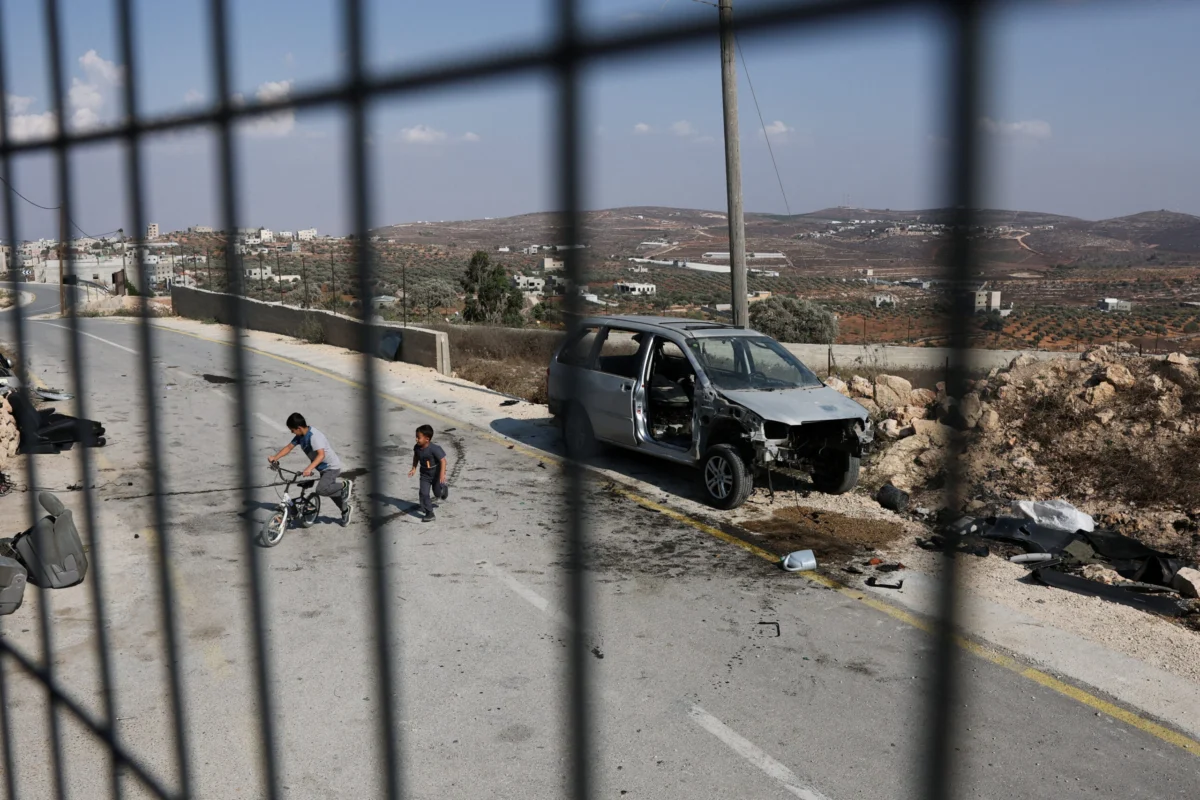
This pivotal decision, reported by the prominent Israeli newspaper Haaretz, emerged in the wake of significant criticism leveled against the Israel Defense Forces (IDF) regarding its perceived lenient handling of Israeli settlers. The specific incident that brought this to a head involved a siege on a Palestinian home in the village of Qusra, where settlers reportedly engaged in aggressive actions. Defence Minister Gallant (or Katz, depending on the precise date of the original event, for the purpose of this expanded article, we will refer to the current Defence Minister in a general sense, while acknowledging the original source named Katz) justified this structural shift by articulating a clear division of roles: “The army’s role is to combat Palestinian terrorism… and not chase hilltop youth.” This statement underscores a strategic redefinition of responsibilities, effectively separating the military’s primary focus on security operations from what are ostensibly considered civilian enforcement matters involving Israeli citizens residing in settlements. The Defence Ministry further indicated that the Israeli police would be tasked with establishing a specialized unit dedicated to handling these civilian affairs, thereby institutionalizing the new arrangement.
However, for Palestinian officials and a broad spectrum of political experts, this seemingly administrative transfer is far more than a mere reallocation of police duties. It is perceived as a dangerous and explicit acceleration of illegal annexation, a deepening of an apartheid system, and a calculated move towards ethnic cleansing. The implications, they argue, are profound, threatening to irrevocably alter the future of the West Bank and the prospects for an independent Palestinian state.
The Historical Context of Occupation and Annexation Concerns
To fully grasp the gravity of this latest development, it is crucial to understand the historical backdrop. The West Bank, including East Jerusalem, has been under Israeli military occupation since the 1967 Six-Day War. International law, particularly the Fourth Geneva Convention, prohibits an occupying power from transferring its own population into occupied territory and mandates that it must respect the existing laws unless absolutely necessary for security reasons. Despite this, Israel has established numerous settlements across the West Bank, housing hundreds of thousands of its citizens. These settlements are widely considered illegal under international law, a position affirmed repeatedly by the United Nations Security Council and the International Court of Justice.
Over decades, Israeli governments have pursued policies that have led to the expansion of these settlements, the confiscation of Palestinian land, and the imposition of a complex system of military orders and restrictions on Palestinians. The legal framework in the West Bank has long been a dual one: Israeli civil law applies to settlers and settlements, while Palestinians are subject to military law. This dual system has been a cornerstone of arguments that Israel maintains an apartheid system in the territory.
The Oslo Accords of the 1990s, intended to be a pathway to a two-state solution, divided the West Bank into Areas A, B, and C. Area C, comprising over 60% of the West Bank, remains under full Israeli security and administrative control and is where most Israeli settlements are located. This latest decision to transfer civilian law enforcement specifically to the Israeli police is seen as a direct challenge to the Oslo framework and an overt attempt to further solidify Israeli sovereignty over Area C and beyond.
Palestinian Alarm: Warnings of "Judaisation" and Historical Parallels
Mustafa Barghouti, the secretary-general of the Palestinian National Initiative, articulated the profound concern within Palestinian leadership. Speaking to Al Jazeera, Barghouti unequivocally stated that Israeli settlers are acting as the "spearhead in the process of annexation and Judaisation." The term "Judaisation" refers to a systematic process aimed at increasing the Jewish presence and control over land and resources, often at the expense of the indigenous Palestinian population and their cultural heritage.
Barghouti drew chilling historical parallels to the mass displacement of Palestinians during the 1948 Nakba (catastrophe), remarking, "They repeat what the Zionist terror gangs did in 1948, like the Haganah and the Stern Gang." These historical references serve to highlight the deep-seated fears among Palestinians that the current actions are part of a broader, long-term strategy of demographic and territorial transformation.
Furthermore, Barghouti issued a stark warning regarding the influence of key figures within the current Israeli government. He argued that placing security matters in the hands of National Security Minister Itamar Ben-Gvir, a far-right politician with a history of anti-Arab rhetoric, and entrusting illegal Israeli settlements to Finance Minister Bezalel Smotrich, another ultranationalist who openly advocates for annexation, amounts to "handing over the West Bank to the settlers." He stressed the gravity of the situation, characterizing it as an "open war on the population," and provocatively added, "The actual ruler in the West Bank is the known fascist terrorist Smotrich." These strong statements reflect the perception among many Palestinians that the current Israeli government is not merely facilitating settlement expansion but actively empowering its most extreme elements to dictate policy in the occupied territories.
De Facto Annexation: A Legal Transformation
Analysts specializing in Israeli affairs have emphasized the profound legal ramifications of this policy shift. Mohanad Mustafa, an academic and researcher, explained to Al Jazeera that replacing military occupation law with domestic Israeli civilian law fundamentally alters the legal reality of the territory. This decision, he argued, effectively "legally erases the borders."
"The government is dealing with the West Bank not as an occupied territory," Mustafa asserted. He elucidated that by transferring power to a civilian police force, "this means that the government has annexed the West Bank." This move, he noted, also strategically absolves the military of its obligations under international humanitarian law, which govern the conduct of an occupying power. Instead, enforcement responsibilities are placed under the purview of Ben-Gvir, whose past actions and statements have frequently been criticized for their extremism.
Mustafa warned that Ben-Gvir, known for overseeing the demolition of thousands of Arab homes within Israel in his previous roles, will now command a police force empowered to "support the settlers more and more and push them more and more towards deepening their repression and terrorism against the Palestinians." This highlights the fear that the new arrangement will not only normalize the presence of settlers but also provide them with enhanced state backing for actions against Palestinians.
Official Palestinian Condemnation and International Law Violations
The Palestinian leadership reacted with immediate and unequivocal condemnation. Hussein al-Sheikh, secretary-general of the Palestine Liberation Organization’s (PLO) executive committee, described the move as a "blatant violation of international agreements" and a transparent attempt to "impose Israeli law and sovereignty over the occupied West Bank, including East Jerusalem, and to entrench the illegal annexation of Palestinian land." His statement, shared widely on social media, reflects the unified Palestinian rejection of the Israeli decision.
The Palestinian group Hamas echoed this sentiment, releasing a statement that characterized the order as a "dangerous step on the path to imposing de facto annexation." Hamas further contended that the measure provides "cover and more protection for the escalating attacks and crimes of the settlers," suggesting a direct link between the policy change and the intensification of violence against Palestinians.
From an international legal perspective, such a transfer of authority from military to civilian law in occupied territory is highly problematic. The Fourth Geneva Convention dictates that an occupying power must maintain the status quo ante and cannot unilaterally change the legal system or annex territory. Any attempt to apply the domestic law of the occupying power to an occupied territory is a clear violation of these principles, which form the bedrock of international humanitarian law.
The Rise of "Fascist Militias" and State-Sponsored Violence
The Palestinian Authority has long accused the Israeli government and its military of complicity in, and even sponsorship of, settler violence. These accusations have even found resonance within parts of the Israeli political spectrum, with some Israeli members of parliament occasionally criticizing the army’s inaction or perceived bias towards settlers.
Analysts stress that relieving the military of its civilian law enforcement duties in the West Bank essentially deputizes settler violence, transforming it into an armed extension of the state. Nihad Abu Ghosh, an expert in Israeli affairs, told Al Jazeera that the distinction between the army and the settlers is increasingly blurred. He observed that settlers have evolved into "fascist militia formations" that effectively carry out the state’s "dirty work."
Abu Ghosh drew parallels to historical authoritarian regimes, stating, "These are fascist militia formations, and there are similar precedents in many countries that were ruled by fascism, whether in Spain, Italy, Germany, or even Chile." He explained that these militias are employed to perform roles that "require evading any discipline, rules, or laws" to achieve a "creeping, gradual annexation to make it a reality." This analysis suggests a deliberate strategy to use non-state actors, or actors with ambiguous state ties, to achieve political goals while potentially insulating the official state apparatus from direct accountability. The "hilltop youth," often associated with the most extreme and violent elements of the settler movement, are frequently cited as examples of such groups. Their actions, ranging from land incursions to assaults on Palestinians and their property, are often met with minimal intervention or prosecution by Israeli authorities.
Apartheid and Displacement: A Dual Legal Framework
The establishment of a dual legal framework – Israeli civilian law for settlers and military law for Palestinians – has consistently drawn sharp international and local criticism, frequently being labeled as apartheid. Shadi al-Shurafa, a researcher in Israeli affairs, told Al Jazeera that the situation presents a "textbook definition of segregation."
"We are facing an application of an overt racist apartheid system in the West Bank," al-Shurafa declared, underscoring that it involves "one regime operating with two entirely different laws based on ethnicity." This system, he argued, ensures that Israeli settlers enjoy rights and protections akin to those of citizens within Israel proper, while Palestinians endure a military occupation characterized by severe restrictions on movement, land use, and civil liberties.
He further elaborated that the ultimate, overarching goal of the current Israeli government is the implementation of complete ethnic cleansing, aiming to confine Palestinians to "isolated cantons and isolated Bantustans." This refers to fragmented, non-contiguous areas, reminiscent of the Bantustans under South African apartheid, which were ostensibly self-governing but ultimately controlled by the dominant power. Such a scenario would effectively extinguish any realistic possibility of a viable, contiguous Palestinian state.
Other experts contend that this move fundamentally alters the international legal status of the territory, pushing the protracted crisis into a new and far more dangerous phase. Adel Shadid, another expert in Israeli affairs, remarked, "The subject has bypassed the issue of annexation to a post-annexation phase and creating a reality where the Palestinian finds himself forced to think about migration." This chilling assessment suggests that the policies are now so oppressive and the future so bleak that they are designed to induce voluntary displacement, or forced migration, of Palestinians from their homeland.
Supporting Data: The Reality on the Ground
The fears expressed by Palestinian officials and analysts are supported by concrete data and trends on the ground.
- Settler Population Growth: Over 500,000 Israeli settlers currently reside in the West Bank (excluding East Jerusalem, where an additional 200,000 live). This population has grown steadily since 1967, often with significant government incentives and infrastructure development.
- Land Confiscation: A vast amount of Palestinian land has been seized for settlement expansion, bypass roads, and military zones. Roughly 40% of the West Bank is effectively controlled by settlements or designated for their future expansion.
- Demolitions: Israeli authorities routinely demolish Palestinian homes and structures in Area C of the West Bank, often citing lack of building permits which are nearly impossible for Palestinians to obtain. In 2023 alone, hundreds of Palestinian structures were demolished, displacing thousands.
- Settler Violence: Incidents of settler violence against Palestinians, including assaults, property destruction, and uprooting of olive trees, have been on a sharp rise. UN OCHA reported a significant increase in such incidents, particularly since the current Israeli government took office, with many cases occurring in the presence of or with minimal intervention from Israeli forces.
- "Outposts": The proliferation of illegal settlement outposts, which are even illegal under Israeli law but are frequently retroactively legalized, further illustrates the creeping annexation strategy.
The International Community’s Stance and Perceived Complicity
Analysts have also turned a critical eye towards the role of the international community, particularly the United States, in what they view as enabling this systemic shift. Adel Shadid dismissed recent US condemnations of settler violence as mere "theatre to mislead global public opinion." He argued that the underlying project of annexation and control enjoys full US backing, asserting that "all that is happening now is an American-Israeli plan and there is harmony between the two right-wing administrations in Washington and here in Israel." While the US has consistently affirmed its commitment to a two-state solution and has criticized settlement expansion, its concrete actions to halt these developments have often been perceived as insufficient by Palestinians and many international observers.
Andrew Whitley, a former United Nations official and director of the Balfour Project, unequivocally stressed that the planned transfer of civilian law enforcement is "completely illegal" under international law. He urged immediate and robust global intervention, lamenting that "the Palestinian state is disappearing before our eyes." Whitley demanded that the international community move beyond mere rhetoric and condemnations. "We have to do much more than just wring our hands and complain that governments are not doing anything about this," he stated, calling for concrete sanctions and diplomatic pressure to halt what he described as the rapid erasure of the Palestinian presence and the viability of their future state.
The European Union, the United Nations, and various human rights organizations have consistently expressed concern over Israeli settlement expansion and the deteriorating humanitarian situation in the West Bank. However, these statements have rarely been followed by substantial punitive measures or effective diplomatic interventions capable of altering Israeli policy. This perceived inaction or insufficient response from key international actors is often interpreted by Palestinians as tacit approval or, at best, a failure to uphold international law.
The transfer of civilian law enforcement in the West Bank is not an isolated administrative adjustment; it is a meticulously calculated move with profound implications. It is viewed as a significant step towards formalizing the annexation of the West Bank, cementing a system of apartheid, and accelerating the demographic transformation of the territory. As the international community grapples with the escalating crisis, the urgent calls for concrete action resonate against a backdrop of a rapidly changing reality on the ground, where the prospects for a just and lasting peace appear increasingly distant.
