

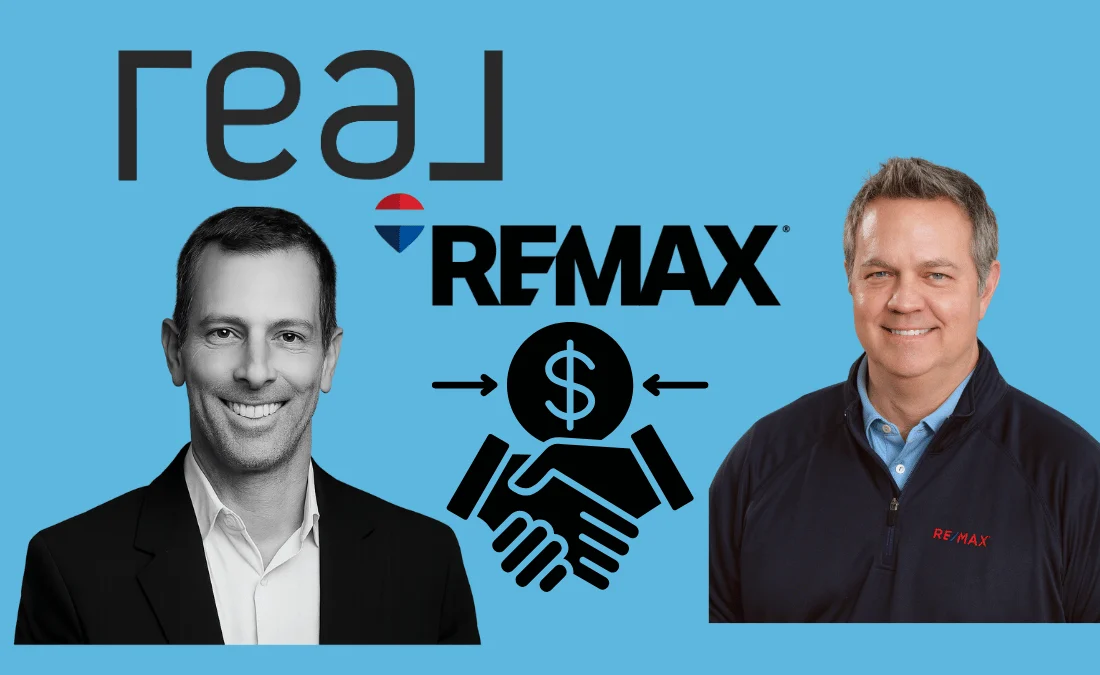
Shareholders of The Real Brokerage Inc. and RE/MAX Holdings Inc. on Friday overwhelmingly approved a proposed acquisition and merger agreement, marking a definitive step toward the creation of the Real REMAX Group. The high-stakes vote, conducted during separate special meetings of security holders for both companies, signals broad investor confidence in a deal that aims to reshape the global real estate landscape by blending high-tech infrastructure with one of the industry’s most recognizable legacy brands.
The path to this merger began in April 2026, when the two companies first announced an $880 million deal that would see The Real Brokerage Inc. acquire RE/MAX Holdings. Since that initial announcement, the real estate sector has watched closely as two distinct business models—Real’s cloud-based, technology-first platform and RE/MAX’s traditional global franchise network—worked to align their interests. With the shareholder vote now finalized, the companies are moving into the final stages of integration, pending minor regulatory and court-ordered formalities.
Shareholder Mandate and Voting Results
The level of support for the merger was nearly unanimous among the stakeholders of The Real Brokerage Inc. According to the official announcement, the special resolution approving the arrangement was backed by approximately 99% of the votes cast by Real shareholders. When accounting for a broader class of voters—including optionholders and restricted share unit (RSU) holders—the approval rating remained remarkably high at 98.9%. This overwhelming consensus suggests that Real’s investor base views the acquisition of RE/MAX not just as an expansion of scale, but as a critical evolution of the company’s business model.
At RE/MAX Holdings Inc., the voting results also reflected a clear majority, though they were slightly more nuanced. Holders of approximately 78.8% of the voting power of RE/MAX common stock voted in favor of the acquisition. While lower than the near-total consensus seen at Real, the 78.8% figure represents a strong mandate from the RE/MAX base, particularly given the legacy nature of the brand and the complexities involved in transitioning from a long-standing independent franchise model to a combined entity.
The successful vote clears one of the most significant hurdles in the merger process. Under the terms of the agreement, the combined company will operate under the banner of Real REMAX Group. The new entity will be headquartered with a focus on leveraging the strengths of both organizations: Real’s proprietary technology, which includes advanced AI-driven agent tools and a streamlined transaction platform, and RE/MAX’s massive global footprint and brand equity built over five decades.
A New Titan in Global Real Estate
The scale of the Real REMAX Group is expected to be unprecedented. Upon the final closing of the deal, the combined entity will support a network of more than 180,000 real estate professionals. This workforce will span more than 120 countries and territories, making it one of the largest and most geographically diverse real estate organizations in the world.
Financially, the merger creates a powerhouse. The companies have projected a pro forma 2025 revenue of approximately $2.3 billion. Furthermore, the combined entity is expected to generate an adjusted EBITDA (earnings before interest, taxes, depreciation, and amortization) of $157 million before accounting for any synergies. Analysts suggest that "synergies"—the cost savings and efficiency gains found by combining duplicate departments and streamlining operations—could eventually push those earnings significantly higher.
For The Real Brokerage, the acquisition represents a massive leap in market share. In the second quarter of 2026, Real reported revenue of $700.6 million, a 30% increase year-over-year. Despite this growth, the company reported a net loss of $8 million for the quarter, largely attributed to $11.6 million in one-time expenses related to the pending RE/MAX acquisition. By absorbing RE/MAX, which reported Q2 2026 revenue of $68.5 million, Real is betting that the long-term value of the RE/MAX brand and its established franchise fees will provide a stable, profitable foundation for Real’s high-growth tech platform.
Regulatory Clearance and the Role of the DOJ
The shareholder approval follows a critical regulatory victory earlier this summer. In mid-July 2026, the United States Department of Justice (DOJ) granted the companies an early termination of the waiting period required under the Hart-Scott-Rodino (HSR) Antitrust Improvements Act.
The HSR Act is a cornerstone of federal antitrust law, requiring large companies to notify both the DOJ and the Federal Trade Commission (FTC) before completing significant mergers or acquisitions. The purpose of this "waiting period" is to allow federal regulators to investigate whether a merger would substantially lessen competition or create a monopoly in a specific market. The fact that the DOJ granted an early termination is a significant indicator that federal regulators do not view the Real-RE/MAX combination as a threat to a competitive marketplace.
This regulatory ease stands in contrast to the intense scrutiny other sectors of the real estate industry have faced recently, particularly regarding commission structures and agent cooperation. By clearing the HSR hurdle quickly, Real and RE/MAX have been able to maintain the momentum of the deal, avoiding the protracted legal battles that often stall large-scale corporate consolidations.
Strategic Vision: Technology Meets Tradition
The leadership of both companies has framed the merger as a "best of both worlds" scenario. Tamir Poleg, the Chairman and CEO of Real, has been vocal about the role of technology in the future of the industry. Real has invested heavily in artificial intelligence and automation, aiming to reduce the administrative burden on agents so they can focus on client relationships.
“We’re grateful for the strong support from securityholders of both companies, and appreciate the confidence this signals in our vision for a more connected, innovative real estate ecosystem,” Poleg said in a statement following the vote. “Together, through Real REMAX Group, we’ll have the scale, talent and resources to invest more, build faster and create even greater value for the more than 180,000 real estate professionals who choose our brands, and for the clients they serve.”
Erik Carlson, CEO of RE/MAX Holdings, echoed these sentiments, emphasizing the preservation of the RE/MAX identity within the new structure. “This combination provides the opportunity to strengthen the value for Broker/Owners and their agents while preserving the entrepreneurial culture, local leadership and trusted RE/MAX brand that have fueled success for more than 50 years,” Carlson stated.
The merger is particularly timely given the shifting dynamics of the real estate brokerage model. As traditional "brick-and-mortar" franchises face increasing pressure from low-overhead, cloud-based competitors, the RE/MAX brand was in need of a technological infusion to remain competitive in a digital-first market. Conversely, while Real was growing rapidly, it lacked the decades of brand recognition and the vast international franchise network that RE/MAX provides.
Timeline to Final Closing
While the shareholder vote is a monumental milestone, a few technical steps remain before the deal is officially closed. The transaction is still subject to a final order from the Supreme Court of British Columbia. This court involvement is a standard requirement for "plans of arrangement" involving companies with significant Canadian operations or legal structures, as is the case with The Real Brokerage.
The companies have indicated that they expect the court hearing and other remaining closing conditions to be satisfied within the next couple of weeks. If the timeline holds, the Real REMAX Group could be fully operational before the end of the third quarter of 2026.
Market Implications and Industry Reaction
Industry analysts are looking at the Real-RE/MAX merger as a potential blueprint for future consolidation. The real estate market has become increasingly fragmented, with a clear divide between "legacy" brands (like RE/MAX, Coldwell Banker, and Century 21) and "disruptor" brands (like Real, eXp Realty, and Compass). By merging a disruptor with a legacy giant, the Real REMAX Group may create a hybrid model that is difficult for competitors to replicate.
For agents, the merger promises an upgrade in tools without a loss of brand identity. RE/MAX agents are expected to gain access to Real’s proprietary "Leo" AI assistant and mobile-first transaction management software. For Real agents, the merger provides a massive referral network and the prestige of the RE/MAX balloon logo in international markets where Real had not yet established a significant presence.
However, challenges remain. Integrating two distinct corporate cultures is notoriously difficult. Real operates on a revenue-sharing model that incentivizes agent growth, while RE/MAX has traditionally operated on a franchise-fee model. Reconciling these two financial structures will be a primary focus for the Real REMAX Group leadership in the coming year.
Conclusion: A New Era of Real Estate
The approval of the Real-RE/MAX merger marks the end of an era for RE/MAX as a standalone entity and the beginning of a new chapter for the global real estate industry. As the Real REMAX Group prepares to launch, the focus shifts from boardroom negotiations to operational execution.
With $2.3 billion in projected revenue and a presence in nearly every corner of the globe, the new entity is positioned to be a dominant force. The success of this merger will likely be measured by how effectively the company can use Real’s technology to revitalize the RE/MAX brand, ultimately proving whether the future of real estate belongs to the tech-savvy, the brand-loyal, or a powerful combination of both. For now, the overwhelming shareholder support suggests that the market is betting on the latter.
