

British Columbia Premier David Eby recently signaled a significant shift in Canada’s trade diplomacy by suggesting that the province’s vast reserves of critical minerals could serve as a potent bargaining chip in the ongoing and often turbulent negotiations surrounding the Canada-United States-Mexico Agreement (CUSMA). This maneuver highlights a burgeoning realization within Canadian political circles: while oil has long been the cornerstone of the nation’s energy exports, the global transition toward a decarbonized economy is rapidly positioning critical minerals as the "new oil" of the 21st century. As the United States adopts increasingly protectionist stances and aggressive industrial policies, Canada is facing a strategic imperative to diversify its trade portfolio, with the European Union emerging as the most logical and lucrative partner for a sustainable mineral-based economy.
The conversation surrounding Canadian energy has historically been dominated by the fossil fuel sector, particularly with the recent completion and expansion of major pipeline projects. However, the underlying architecture of the global energy system has undergone a seismic shift over the last decade. The International Energy Agency (IEA) has repeatedly warned that the path to net-zero emissions requires a massive scaling of mineral production. For instance, a single electric vehicle (EV) requires approximately six times the mineral inputs of a traditional internal combustion engine vehicle. Similarly, an offshore wind plant requires nine times more mineral resources than a typical gas-fired power plant. This reality has turned minerals like lithium, cobalt, nickel, and copper into the fundamental building blocks of future economic sovereignty.
The Geopolitical Backdrop: CUSMA and the American Pivot
The context for Premier Eby’s remarks is a period of heightened uncertainty regarding North American trade relations. As the 2026 review of CUSMA approaches, Canadian officials are preparing for a landscape that may be significantly more adversarial than in previous years. The United States, under both the Biden and Trump administrations, has demonstrated a renewed focus on domestic industrial capacity and secure supply chains. Recently, the Trump administration signaled its intent to aggressively secure mineral resources, announcing over $2 billion in investments for critical-mineral-related projects. Furthermore, the U.S. is actively expanding its influence in Latin America and other regions to secure these materials, often through subsidies and "America First" policies that can disadvantage Canadian producers despite the integrated nature of the North American market.
When the United States fails to "play fair" by implementing domestic content requirements or subsidies that exclude Canadian participation, Canada’s leverage rests on its status as one of the few stable, democratic nations with significant, unexploited reserves of the 31 minerals it has officially designated as "critical." By threatening to redirect these resources, Canadian leaders are reminding their southern neighbors that Canada’s cooperation in the green energy transition is a choice, not a guarantee. However, for this leverage to be effective, Canada must have viable, high-volume alternatives. This is where the European Union provides a unique and timely opportunity.
The European Union’s Resource Crisis
The European Union currently stands as the world’s third-largest economy, yet it faces a staggering vulnerability in its energy transition: a near-total reliance on foreign imports for the minerals required to power its green ambitions. Currently, the EU depends heavily on a small handful of non-allied countries, most notably China, for its critical minerals supply. China controls approximately 60% of global rare earth element production and nearly 90% of the processing capacity. For a bloc that is aggressively moving to cut its dependence on imported fossil fuels—driven both by climate goals and the geopolitical fallout of the war in Ukraine—this new dependence on Chinese minerals is viewed in Brussels as a major strategic risk.
To address this, the EU has introduced the Critical Raw Materials Act, which sets ambitious targets for 2030. The EU aims to extract 10% of its annual consumption of critical raw materials domestically, process 40% within the Union, and recycle 15%. Most importantly, the act mandates that no more than 65% of the Union’s annual consumption of any strategic raw material should come from a single third country. This creates a massive "supply gap" that Canada is uniquely positioned to fill. EU demand for lithium, for example, is projected to increase by nine to 12 times by 2030 as the continent scales up EV manufacturing and grid-scale energy storage.
Canada’s Competitive Advantage in Sustainability
The EU is not merely looking for any supplier; it is seeking partners that align with its stringent Environmental, Social, and Governance (ESG) standards. The European market is increasingly defined by regulations like the Carbon Border Adjustment Mechanism (CBAM) and strict supply chain transparency laws. Canada’s value proposition in this regard is unparalleled. With a clean electricity grid—largely powered by hydro and nuclear—Canada can produce minerals with a significantly lower carbon footprint than competitors in jurisdictions with coal-heavy grids.
Furthermore, Canada’s maturing framework for Indigenous-led mining projects and its robust labor laws align perfectly with the EU’s desire for "ethical" minerals. In a recent analysis by Clean Energy Canada, which evaluated global suppliers based on trade reliability and sustainability criteria, Canada ranked second only to Norway. This ranking underscores the potential for a "Green Trade Corridor" between Canada and the EU, where Canadian raw and processed materials feed European high-tech manufacturing.
Moving Beyond Memorandums of Understanding
Despite the clear alignment of interests, the actual volume of critical minerals flowing from Canada to the EU has remained stubbornly low. The last 24 months have seen a flurry of diplomatic activity, including the signing of several Memorandums of Understanding (MOUs) with EU member states such as Italy, Germany, and Sweden. While these agreements are necessary precursors, industry experts argue that the time for symbolic gestures has passed. The "clean energy superpower" rhetoric frequently used by the federal government in Ottawa has yet to be matched by the infrastructure and trade volumes necessary to claim that title.
To bridge this gap, analysts suggest a more surgical approach to trade. Rather than spreading public investment across all 31 critical minerals, Canada should concentrate its resources on the "Big Six" that are most essential to the EU’s industrial strategy: cobalt, copper, graphite, lithium, nickel, and rare earth elements.
Specific opportunities are already visible on the horizon:
- Cobalt: Canada could direct its low-carbon raw cobalt to existing refineries in Finland, which is currently the only EU country with significant cobalt refining capacity. This would directly reduce European dependence on the Democratic Republic of Congo and Chinese-owned refineries.
- Graphite: With Germany’s massive automotive sector shifting toward EV production, Canadian graphite producers have a golden opportunity to displace Chinese supply, provided that Canadian processing capacity is scaled up quickly.
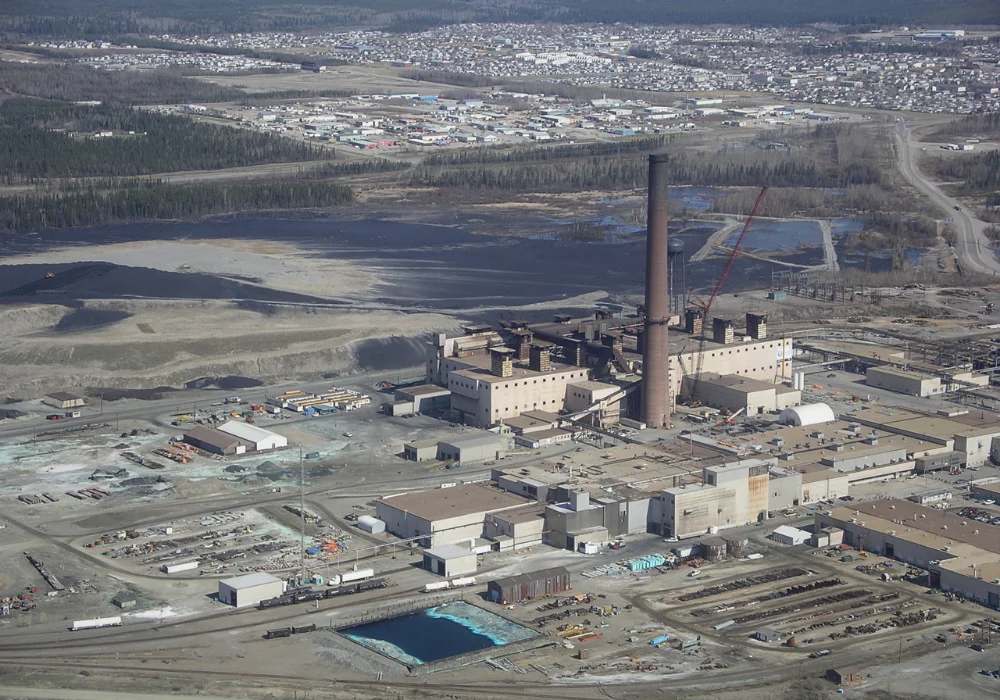
- Nickel: As evidenced by Vale Base Metals’ operations in Manitoba, Canada already has a foothold in high-quality nickel concentrate. Increasing exports to European battery manufacturers would solidify Canada’s role in the EU battery value chain.
Financial Integration and the Canada Investment Summit
The transition from extraction to a full-scale trade partnership requires significant capital. Canada has already signed a letter of intent with the European Investment Bank (EIB), one of the largest multilateral financial institutions in the world. The EIB is increasingly focused on "Global Gateway" projects that secure supply chains for the EU. Converting this letter of intent into a signed framework and facilitating the first major transaction is a critical next step.
Additionally, Canada must lobby to have more of its domestic mining and processing projects included on the EU’s "Strategic Projects" list. Inclusion on this list can unlock streamlined permitting processes and access to European private and public capital, creating a "fast-track" for Canadian minerals entering the European market.
The upcoming Canada Investment Summit, scheduled for mid-September, represents a pivotal moment for this strategy. The summit provides a platform for the Prime Minister and provincial leaders to move beyond high-level diplomacy and engage directly with European "offtakers"—the companies that actually purchase and use these minerals. By ensuring that European battery manufacturers and technology firms are at the center of these discussions, Canada can secure the long-term purchase agreements necessary to de-risk the construction of new mines and processing facilities.
Chronology of Canada-EU Mineral Relations (2021–2024)
The path toward this potential partnership has been built through several key milestones:
- June 2021: Canada and the EU formally launch the Strategic Partnership on Raw Materials, focusing on integrating raw material value chains.
- March 2023: The EU introduces the Critical Raw Materials Act, explicitly mentioning the need for reliable partners like Canada to de-risk supply chains.
- September 2023: Germany and Canada sign a Joint Declaration of Intent on a Hydrogen Alliance, which also paves the way for deeper cooperation on the minerals needed for electrolyzers.
- Early 2024: Multiple MOUs are signed with individual EU nations, focusing on specific supply chain segments like battery materials and permanent magnets.
- Summer 2024: B.C. Premier David Eby raises the stakes by linking mineral exports to CUSMA negotiations, signaling a more aggressive use of resources in foreign policy.
Analysis: The Risk of Inaction
The window of opportunity for Canada is not infinite. Other nations, including Australia and Brazil, are also vying for the EU’s attention and investment. If Canada remains stuck in the "MOU stage," it risks losing first-mover advantage in the European market. Furthermore, if CUSMA negotiations take a turn for the worse without Canada having established alternative trade routes, the country could find itself in a vulnerable position, with its most valuable future assets tied to a single, increasingly protectionist customer.
The shift toward the EU is not a rejection of the North American partnership, but rather a sophisticated diversification strategy. By becoming a primary supplier to the EU, Canada increases its global stature, ensures economic resilience, and provides its domestic mining sector with the stability of multiple high-demand markets. As the world moves toward a net-zero future, Canada’s ability to move its minerals across the Atlantic may well determine its economic success for the next half-century. The September summit will be the ultimate test of whether the "clean energy superpower" is a reality or merely a tagline.
