

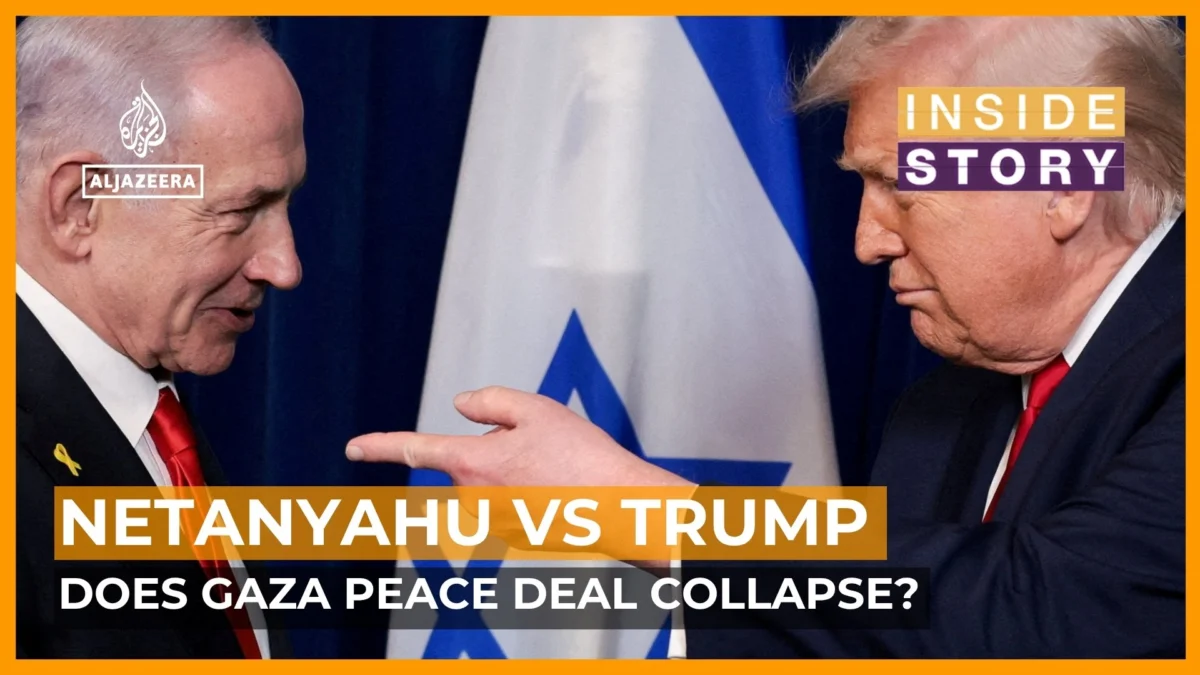
The rejection by Israeli Prime Minister Benjamin Netanyahu of a comprehensive 15-point peace plan for Gaza, meticulously brokered by the United States, marks a critical juncture in the perpetually fraught Israeli-Palestinian conflict. This decisive refusal by the Israeli premier immediately throws into sharp relief the severe humanitarian and political consequences for millions of Palestinians residing in Gaza and the West Bank, simultaneously posing significant diplomatic and strategic risks for Netanyahu himself in challenging the foreign policy agenda of the U.S. administration, particularly one led by then-President Donald Trump. The proposed framework, designed to address multifaceted dimensions of the conflict, from security and governance to economic development and humanitarian aid, aimed to chart a path toward de-escalation and potential resolution in one of the world’s most intractable geopolitical flashpoints.
Background and Context of the Peace Initiative
The Israeli-Palestinian conflict, rooted in competing national aspirations and historical grievances, has defied numerous attempts at resolution over decades. Gaza, a densely populated coastal strip, has been under an Israeli and Egyptian blockade since 2007, following the Hamas takeover. This blockade, coupled with successive military operations, has led to a severe humanitarian crisis, characterized by high unemployment rates, widespread poverty, dilapidated infrastructure, and a struggling healthcare system. International bodies and humanitarian organizations have consistently highlighted the dire conditions, frequently describing Gaza as an "open-air prison" and warning of its impending uninhabitability.
Against this backdrop, the U.S. administration, particularly during Donald Trump’s presidency, embarked on an ambitious, albeit controversial, diplomatic effort to forge a new paradigm for peace. This initiative, often dubbed the "Deal of the Century," sought to move beyond traditional two-state solution frameworks, which had faltered repeatedly. The U.S. approach emphasized economic development and regional integration as potential catalysts for stability, alongside security arrangements. The 15-point peace plan for Gaza emerged as a critical component of this broader strategy, presumably focusing on immediate and tangible steps to alleviate the humanitarian crisis, stabilize the security situation, and lay groundwork for future governance arrangements in the enclave.
Such a plan would typically encompass several key pillars:
- Security Arrangements: Measures to ensure Israeli security while potentially facilitating demilitarization or robust monitoring within Gaza.
- Humanitarian Aid: Accelerated delivery and expansion of essential services, including water, electricity, sanitation, and healthcare infrastructure.
- Economic Development: Investment in key sectors, job creation initiatives, and proposals to ease restrictions on goods and movement.
- Governance: Discussions on the future administrative structure of Gaza, potentially involving a reformed Palestinian Authority or an internationally supported transitional body.
- Reconstruction: Funding and mechanisms for rebuilding infrastructure damaged by conflicts.
- Border Management: Proposals for the opening of crossings, potentially under international or joint supervision.
- Refugee Issues: While often contentious, any comprehensive plan might touch upon the future of Palestinian refugees.
The specific details of the 15 points, while not publicly disclosed in the original prompt, can be inferred to address these complex, interwoven challenges that have plagued Gaza for years. The plan’s design would have aimed to offer a pragmatic, albeit potentially controversial, pathway to alleviate immediate suffering and prevent further escalation, even if it sidestepped some of the more intractable final-status issues of the broader conflict.
Chronology of Events Leading to Rejection
The trajectory towards the plan’s rejection likely involved a series of diplomatic engagements and internal deliberations.
- Early 2019 – Mid-2020 (Inferred Period): The U.S. administration intensifies its diplomatic efforts, holding discussions with regional allies and both Israeli and Palestinian officials, though Palestinian leadership had largely boycotted the Trump administration’s peace efforts following the recognition of Jerusalem as Israel’s capital.
- Late 2020 (Inferred): The U.S. special envoy or a dedicated team works on refining the specific proposals for Gaza, recognizing the urgency of the situation. This likely involved shuttle diplomacy and closed-door meetings with Israeli officials and potentially indirect communications with other stakeholders.
- Early 2021 (Inferred): The U.S. formally presents the comprehensive 15-point peace plan for Gaza to the Israeli government, outlining specific steps, commitments, and potential international backing. The plan would have been the culmination of months, if not years, of preparation, reflecting U.S. strategic interests in regional stability.
- Weeks Following Presentation (Inferred): Intense internal debates and assessments within the Israeli government. Security establishments, political factions, and coalition partners would have weighed the implications of each point, particularly concerning Israel’s security imperatives and its control over Gaza’s borders.
- Prime Minister Netanyahu’s Formal Rejection: Following these deliberations, Prime Minister Benjamin Netanyahu publicly or privately communicates Israel’s official rejection of the U.S.-brokered plan. This decision would have been predicated on specific objections to certain clauses, perceived security risks, or an overall assessment that the plan did not align with Israel’s long-term strategic interests or the political feasibility within his governing coalition.
Netanyahu’s Stance and Motivations
Prime Minister Netanyahu’s rejection of the U.S. plan is consistent with his long-standing political philosophy and his approach to the Israeli-Palestinian conflict. A seasoned politician who has served multiple terms, Netanyahu has consistently prioritized Israel’s security above all else, often adopting a cautious, even skeptical, stance towards comprehensive peace agreements that involve significant territorial concessions or perceived risks to national security. His political base, largely composed of right-wing and religious Zionist parties, generally favors maintaining Israeli control over strategic areas and has a deep distrust of Palestinian intentions.
Key motivations for his rejection likely include:
- Security Concerns: Any plan for Gaza would invariably involve discussions about border control, demilitarization, and the prevention of weapons smuggling. Netanyahu’s government has always viewed Hamas’s control over Gaza as an existential threat and would likely be wary of any arrangement that could be perceived as weakening Israel’s security posture or enhancing Hamas’s legitimacy. The 15 points, no matter how well-intentioned, might have been seen as insufficient in guaranteeing Israel’s long-term security.
- Political Constraints: Netanyahu’s coalition governments have often relied on the support of hardline parties that oppose significant concessions to Palestinians. Accepting a U.S. plan that might entail even partial relinquishment of control or substantial aid to Gaza without direct Israeli oversight could trigger a coalition crisis, potentially leading to the government’s collapse.
- Sovereignty and Control: Israel maintains a high degree of control over Gaza’s borders, airspace, and territorial waters. Any plan seeking to alter these arrangements, even for humanitarian purposes, would be viewed as an infringement on Israeli sovereignty and a challenge to its security doctrine.
- Distrust of Palestinian Leadership: Netanyahu has frequently expressed skepticism regarding the capacity and willingness of Palestinian leadership, both in Gaza (Hamas) and the West Bank (Palestinian Authority), to adhere to peace agreements and prevent militant activity. This distrust forms a significant barrier to accepting externally imposed solutions.
- "Deal of the Century" Context: The broader "Deal of the Century" proposed by the Trump administration was largely rejected by Palestinians, who viewed it as biased towards Israel. Netanyahu’s rejection of a component of it might also be strategic, aimed at demonstrating Israel’s independence even from its closest ally, or perhaps indicating that even the "pro-Israel" U.S. plan didn’t meet Israel’s irreducible demands.
Consequences for Palestinians
The rejection of the U.S.-brokered plan carries profound and potentially devastating consequences for the Palestinian population, particularly those residing in the Gaza Strip.
- Exacerbation of Humanitarian Crisis: Without a robust international framework for aid and development, the already dire humanitarian situation in Gaza is likely to worsen. Access to clean water, reliable electricity, adequate healthcare, and essential goods will remain severely restricted. The UN Office for the Coordination of Humanitarian Affairs (OCHA) has consistently reported critical shortages and infrastructure collapse in Gaza, with over 80% of the population dependent on humanitarian assistance.
- Deepened Economic Despair: The blockade and lack of a political horizon perpetuate Gaza’s economic stagnation. Unemployment rates, particularly among youth, regularly hover above 50%, with general unemployment at 45% as of late 2023. The absence of a plan to inject significant investment or ease movement restrictions means continued high poverty levels and limited opportunities, fueling despair and potentially radicalization.
- Erosion of Hope and Political Vacuum: The failure of another peace initiative further erodes any lingering hope for a political solution among Palestinians. This can lead to increased cynicism towards international diplomacy and a feeling of abandonment. The political division between Hamas in Gaza and the Palestinian Authority in the West Bank is also likely to persist, hindering any unified Palestinian approach to future negotiations. This fragmentation weakens Palestinian agency and their capacity to negotiate effectively.
- Increased Risk of Conflict: Frustration and despair often serve as fertile ground for renewed cycles of violence. Without a diplomatic off-ramp or tangible improvements in daily life, the risk of military confrontations between Israel and militant groups in Gaza remains high. Each conflict results in significant loss of life, further destruction of infrastructure, and deeper trauma for the civilian population.
- International Isolation: The continued impasse leaves Palestinians reliant on humanitarian aid rather than sustainable development, perpetuating a state of dependency. The lack of progress on a political track could also lead to a decline in international attention and funding for Palestinian causes, as donor fatigue sets in. Adnan Joulani, Director of the Palestinian Academic Society for the Study of International Affairs, would likely emphasize how such rejections reinforce Palestinian perceptions of an unjust status quo and the inadequacy of international mediation without sufficient pressure on all parties.
Risks for Netanyahu in Defying Donald Trump
Defying a U.S. administration, especially one that had demonstrated strong pro-Israel leanings like Donald Trump’s, presented unique and significant risks for Prime Minister Netanyahu.
- Strain on U.S.-Israel Relations: While the U.S.-Israel alliance is historically robust, a direct rejection of a meticulously crafted peace plan could strain diplomatic ties. The Trump administration, known for its transactional approach to foreign policy, might have viewed such a rejection as a lack of reciprocity, potentially leading to a reassessment of its diplomatic support for Israel, including at the United Nations where the U.S. frequently vetoes resolutions critical of Israel.
- Reduced Diplomatic Leverage: The U.S. plays an indispensable role as a mediator and diplomatic partner for Israel on the international stage. Alienating the U.S. could diminish Israel’s diplomatic leverage in other arenas, such as countering Iran’s regional influence or securing advanced military aid. The U.S. provides approximately $3.8 billion in military aid to Israel annually, a crucial component of its defense strategy. While this aid is enshrined in a long-term agreement, a major diplomatic rift could introduce uncertainties. Ambassador Marc Ginsberg, a former U.S. diplomat experienced in Arab-Israeli affairs, would likely highlight the critical importance of maintaining a strong, trusting relationship with the U.S. and the potential long-term costs of such a public divergence.
- Domestic Political Backlash: While rejecting a plan perceived as compromising Israeli security might appeal to Netanyahu’s right-wing base, it could also invite criticism from centrist and left-wing opposition parties. They might argue that Netanyahu is jeopardizing Israel’s most vital strategic alliance and missing an opportunity for stability, potentially undermining Israel’s long-term security interests by isolating it diplomatically. Mitchell Barak, a former aide to Netanyahu, would be keenly aware of the delicate balance between satisfying the domestic political base and managing critical international relationships.
- International Isolation and Credibility: The U.S. often acts as Israel’s primary advocate on the world stage. A perceived defiance could lead to Israel facing increased international pressure and criticism, particularly from European nations and the UN, who might view Israel as an obstacle to peace. This could damage Israel’s international standing and credibility as a partner in peace efforts.
- Impact on Regional Normalization Efforts: During the Trump administration, there was a significant push for normalization agreements between Israel and Arab states (the Abraham Accords). While those accords largely bypassed the Palestinian issue, a rejection of a U.S.-brokered plan for Gaza could complicate future normalization efforts or broader regional integration, as some Arab states might find it harder to justify closer ties with Israel if it is seen as unwilling to compromise on the Palestinian issue.
Official Responses and Broader Implications
The rejection of the 15-point peace plan would have elicited a range of responses from key stakeholders:
- U.S. Administration: Official statements would likely express disappointment, urging continued dialogue while perhaps signaling a reevaluation of future mediation strategies. There might be subtle hints of diplomatic repercussions, even if the public rhetoric remained guarded.
- Palestinian Authority: The PA would likely condemn Netanyahu’s rejection, framing it as further proof of Israel’s unwillingness to pursue genuine peace. They would reiterate their demands for a just resolution based on international law and potentially call for greater international intervention to protect Palestinian rights and end the blockade.
- Hamas: While Hamas would likely have rejected the U.S. plan itself, Netanyahu’s refusal would be leveraged to reinforce their narrative that negotiations are futile and that armed resistance is the only path.
- International Community: The United Nations, European Union, and other international bodies would likely issue statements expressing regret, calling for both sides to de-escalate tensions and return to negotiations. However, without strong U.S. leadership and unified international pressure, such calls often prove ineffective.
The broader implications of this rejection are significant:
- Protracted Conflict: The absence of a viable peace plan perpetuates the conflict, ensuring continued instability and suffering. It pushes the prospect of a lasting resolution further into the future.
- Diminished Role for U.S. Mediation: If a U.S.-brokered plan is rejected by a key ally, it could diminish the credibility and effectiveness of the U.S. as an honest broker in future peace efforts, both in the Middle East and elsewhere.
- Heightened Regional Tensions: The unresolved situation in Gaza remains a flashpoint with the potential to destabilize the broader region, drawing in other actors and complicating regional security dynamics.
- Shift in Global Priorities: As the conflict continues without a clear diplomatic path, international attention and resources might shift to other global crises, potentially leaving the Israeli-Palestinian issue in a prolonged state of neglect.
The rejection of the U.S.-brokered 15-point peace plan for Gaza by Prime Minister Benjamin Netanyahu underscores the deep complexities and seemingly insurmountable obstacles to achieving peace in the region. While rooted in Israel’s perceived security imperatives and domestic political considerations, this decision carries significant, long-term consequences for the Palestinian people, who face continued humanitarian hardship and political disenfranchisement. Simultaneously, it poses considerable diplomatic risks for Israel’s relationship with its most crucial ally, the United States, potentially impacting its international standing and future strategic options. The path forward remains shrouded in uncertainty, with the immediate aftermath suggesting a continuation of the intractable status quo and a renewed search for alternative diplomatic avenues, if any.
