

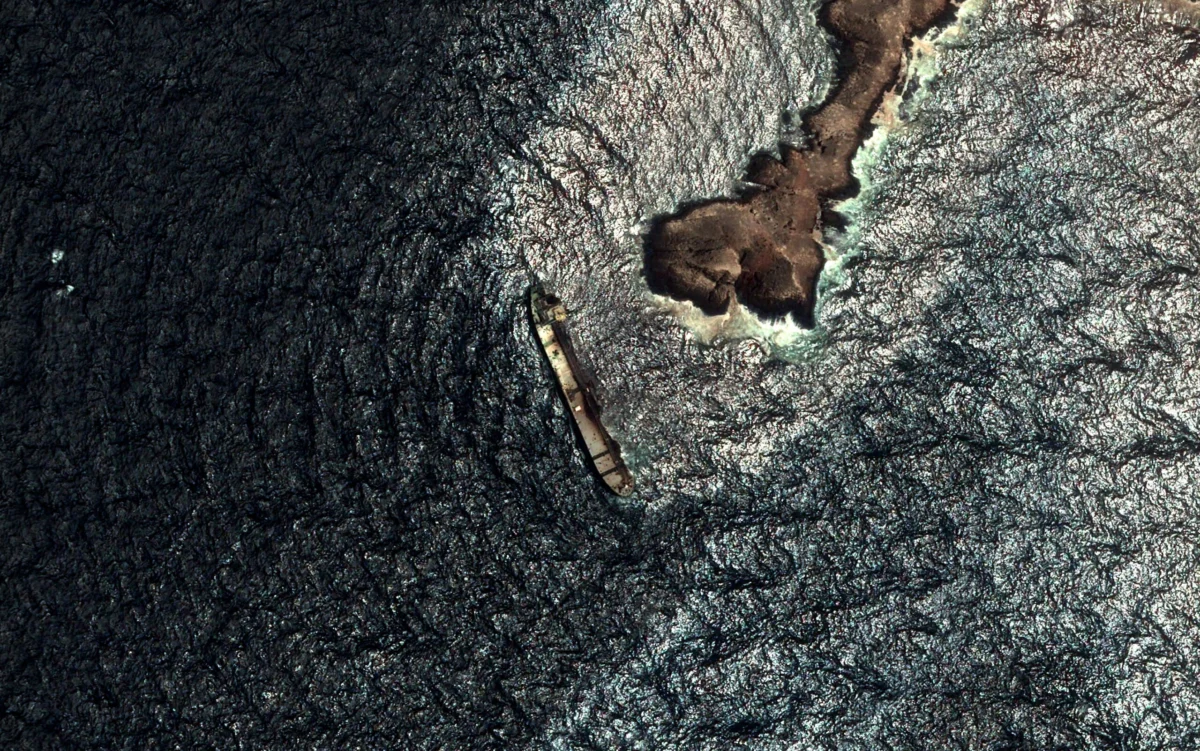
Oman is currently battling a severe environmental crisis as a significant oil spill, stretching across hundreds of square kilometres, emanates from the stricken tanker Caroline Bezengi off its southern coast. The vessel, believed to be a critical component of Russia’s "shadow fleet" designed to circumvent Western sanctions on its oil exports, has been stranded for over a month within a highly sensitive and protected marine area. This incident has not only triggered an urgent environmental response from Omani authorities but has also cast a harsh spotlight on the inherent risks associated with the burgeoning, clandestine shipping operations that underpin global illicit trade and sanctions evasion.
The Oman Environment Authority (OEA) reported on Monday that the ongoing spill covered an estimated 400 square kilometres (approximately 150 square miles) and was encroaching within 7 kilometres (4.4 miles) of the coast. This official assessment, however, stands in contrast to estimates provided by the environmental advocacy group Greenpeace last week, which, citing an independent analysis of satellite imagery, placed the slick at a considerably larger 600 square kilometres (230 square miles). The discrepancy underscores the challenge in accurately gauging the full extent of such a disaster, particularly in dynamic marine environments. Regardless of the precise measurement, the scale of the spill represents a substantial threat to Oman’s rich marine biodiversity and coastal ecosystems.
A Chronology of Disaster: The Caroline Bezengi’s Troubled Journey
The unfolding environmental catastrophe began to take shape in early June when the Caroline Bezengi became stranded near Oman’s al-Qibliyyah Island. An investigation conducted by the AFP news agency revealed that the tanker had suffered an explosion, leading to water ingress into several sections of the vessel and subsequently immobilizing it. The tanker, with its substantial cargo of approximately one million barrels of crude oil destined for Asian markets, has since been a ticking environmental time bomb in the Gulf of Oman.
According to ship-tracking data, the Caroline Bezengi had loaded its controversial cargo at Russia’s Black Sea port of Novorossiysk in April. Its passage through the Suez Canal at the end of May marked its entry into the wider Indian Ocean, a route increasingly utilized by vessels involved in shadow fleet operations. The vessel’s subsequent stranding and the resulting oil spill highlight the precarious nature of these journeys and the significant environmental and economic risks they pose to transit nations. Omani authorities have yet to officially identify the precise cause of the explosion and subsequent spill, initiating a comprehensive investigation into the incident. The lack of clarity surrounding the initial event further complicates immediate response efforts and long-term accountability.
Ecological Hotspot Under Threat: The Hallaniyat Archipelago
The slick is most concentrated around Oman’s Hallaniyat archipelago, a region of immense ecological significance. Last year, Sultan Haitham bin Tariq Al Said established a dedicated marine reserve in this area, specifically to protect its sensitive ecosystems. This pristine environment is renowned for its diverse marine life, including critical habitats for rare sea turtles, vibrant coral reefs, and a multitude of fish species and other invertebrates. The establishment of the reserve underscored Oman’s commitment to marine conservation, making the current spill a particularly devastating blow.
The Oman Environment Authority has emphasized the urgent need for rapid action to protect the area’s irreplaceable biodiversity. Their concerns specifically highlight "coral reefs, turtle nesting areas, marine habitats and coastal areas of ecological importance." The long-term impacts on these delicate ecosystems could be profound, potentially leading to widespread mortality among marine species, disruption of food chains, and irreparable damage to habitats that have taken millennia to form. The Hallaniyat archipelago is not merely a collection of islands; it is a vital nursery and feeding ground for numerous species, some of which are endangered, underscoring the gravity of the potential environmental disaster.
Oman’s Coordinated Response and International Concerns
In response to the escalating crisis, Omani authorities have mobilized a multi-faceted effort. A report from the state-backed Oman News Agency quoted an official from the Transport Ministry confirming that authorities are conducting extensive aerial surveillance to monitor the spill’s trajectory and extent. Additionally, divers have been deployed to assess the damage to the Caroline Bezengi and to support preliminary containment measures. The official further outlined that authorities are in the early stages of developing a comprehensive plan to transfer the vessel’s remaining oil cargo. This critical operation aims to "reduce the risks arising from the incident, ensure navigational safety and protect the marine environment." Such a transfer, particularly from a damaged vessel in a remote and environmentally sensitive area, presents significant logistical and technical challenges.
The gravity of the situation has drawn international attention. Environmental organizations like Greenpeace, alongside the Dutch peace organization PAX, have voiced serious concerns, telling AFP that the spill is on the verge of causing an "environmental disaster." These groups have been vocal in highlighting the broader risks posed by vessels operating outside conventional regulatory frameworks. Their warnings underscore the potential for catastrophic consequences when such incidents occur in ecologically vital regions, especially when the vessels involved are part of opaque shipping networks.
The Shadow Fleet: A Global Concern
At the heart of this incident lies the complex and increasingly problematic phenomenon of Russia’s "shadow fleet." This clandestine network of oil tankers has emerged as a crucial mechanism for Moscow to circumvent the extensive Western sanctions imposed on its oil exports following the invasion of Ukraine. These sanctions, spearheaded by the European Union, the United Kingdom, the United States, and other allies, aim to curtail Russia’s revenue streams, thereby impacting its ability to finance its war efforts.
The modus operandi of the shadow fleet involves ships sailing under the flags of various nations, often with obscure or frequently changing ownership structures, to deliberately mask their true affiliations and origins. This deliberate obfuscation makes it incredibly challenging for international authorities to track these vessels, enforce compliance, and hold responsible parties accountable in the event of an incident. The Caroline Bezengi itself is subject to sanctions imposed by a coalition of international bodies, including the European Union, Ukraine, the United Kingdom, Canada, and Switzerland, highlighting its direct involvement in these illicit operations.
A key concern surrounding the shadow fleet is the age and condition of many of its vessels. Reports indicate that the fleet often comprises ageing tankers, many of which have been acquired from legitimate shipping lines looking to offload older assets. These older ships frequently face criticism regarding their maintenance, insurance coverage, and overall safety standards. The incident involving the Caroline Bezengi serves as a stark validation of these fears. Operating without adequate insurance or proper maintenance oversight dramatically increases the risk of accidents, posing not only environmental hazards but also threats to maritime safety and human life. The global shipping industry relies heavily on international conventions and regulatory bodies to ensure safety and environmental protection. The shadow fleet, by operating largely outside these established norms, creates significant regulatory gaps that can have far-reaching consequences.
Broader Implications: Environmental, Economic, and Geopolitical
The oil spill from the Caroline Bezengi has implications that stretch far beyond the immediate environmental damage in Oman. Environmentally, the long-term recovery of the Hallaniyat archipelago’s delicate ecosystems could take decades, if full recovery is even possible. Coral reefs, in particular, are extremely vulnerable to oil pollution, which can smother polyps, interfere with photosynthesis, and introduce toxic compounds. The impact on marine wildlife, from micro-organisms to large mammals, can cascade through the food web, potentially disrupting the entire marine ecosystem. For Oman, a nation that relies on its coastal resources for fishing and a growing eco-tourism industry, the economic fallout could be substantial. Fisheries may suffer from contaminated waters and depleted fish stocks, while the pristine image vital for tourism could be severely tarnished.
From a geopolitical and maritime security perspective, this incident underscores the growing challenges posed by the shadow fleet. The Gulf region has historically been a critical waterway for global energy supplies, and any disruption, whether from geopolitical tensions or environmental disasters, has global ramifications. While the original article referenced tankers being frequently targeted in the Gulf region since "the US-Israel war on Iran began at the end of February," this phrasing is unusual and likely a mischaracterization of broader maritime security concerns or heightened incidents in the region. Nevertheless, the presence of unregulated and potentially unsafe vessels like the Caroline Bezengi exacerbates these existing maritime security challenges, creating new vectors for environmental and navigational hazards.
The incident also raises uncomfortable questions about international accountability. When vessels operate under flags of convenience and with obscured ownership, tracing responsibility for environmental damage and demanding compensation becomes a convoluted legal and diplomatic nightmare. This lack of transparency undermines international maritime law and conventions designed to prevent such disasters. It places an unfair burden on the affected nations, like Oman, which must bear the immediate costs of cleanup and environmental remediation.
Lessons from Past Disasters and the Path Forward
History is replete with examples of devastating oil spills, from the Exxon Valdez in Alaska to the Deepwater Horizon in the Gulf of Mexico, each offering grim lessons on the long-term ecological and economic consequences. While the scale of the Caroline Bezengi spill is still being fully assessed, its location within a protected marine reserve amplifies its potential impact. Effective cleanup operations are notoriously complex and expensive, often requiring specialized equipment and international expertise. Challenges include the vast area covered, the specific type of oil (crude oil is particularly persistent), and the sensitivity of the affected habitats.
Looking ahead, the Caroline Bezengi incident serves as a critical wake-up call for the international community. It necessitates a more robust and coordinated approach to tracking, monitoring, and sanctioning vessels that operate outside established safety and environmental regulations. Enhanced intelligence sharing, stricter enforcement of port state controls, and international cooperation to identify and dismantle shadow fleet operations are crucial steps. For nations like Oman, investing in advanced oil spill response capabilities and strengthening marine protected area management will be paramount. Ultimately, ensuring the safety of global shipping and protecting invaluable marine ecosystems requires a renewed commitment to transparency, accountability, and the universal application of maritime law, leaving no room for "shadow" operations that jeopardize our shared environment and global security.
