

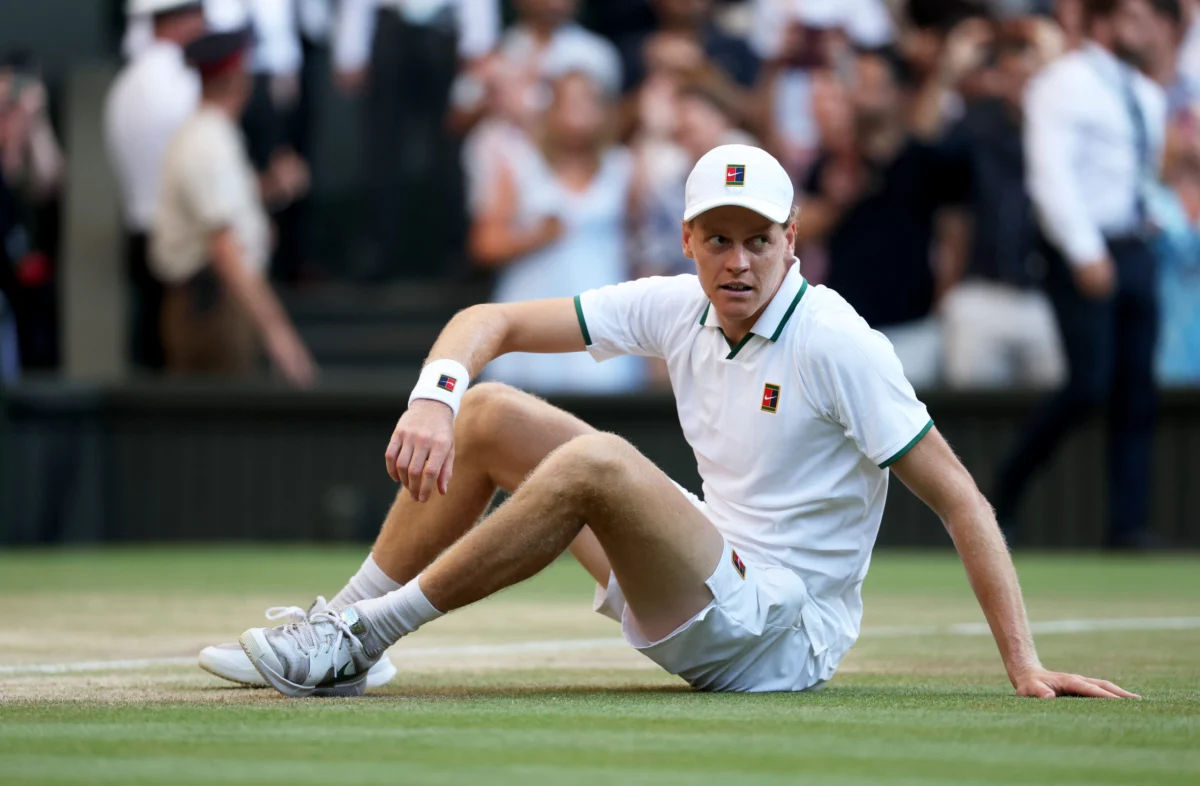
The men’s professional tennis circuit faces another significant blow as World Number One Jannik Sinner has officially announced his withdrawal from the upcoming Cincinnati Open, also known as the Western & Southern Open, citing a persistent right knee injury. The news, conveyed through a statement posted on the ATP website on Sunday, casts a considerable shadow over the Italian’s readiness for the season’s final Grand Slam, the US Open, which is scheduled to commence in New York on August 30. Sinner’s absence marks the second consecutive ATP Masters 1000 event he will miss in the crucial North American hard-court swing, having also skipped the Montreal Masters, further intensifying concerns about the physical toll on top athletes in the sport.
Sinner’s Official Statement and Immediate Context
In his candid statement, the 24-year-old Italian elaborated on the difficult decision: "After consulting with my doctors and my team, I have to announce that I need to withdraw from the Masters 1000 tournament in Cincinnati. My right knee has been bothering me and even though we have been working hard with my medical team, I have to accept that I’m not ready to compete yet." This declaration underscores the severity of the issue, indicating that despite dedicated efforts from his medical support, the discomfort persists to a degree that renders him unable to perform at the elite level required for a Masters 1000 event. The Cincinnati Open is set to begin on Thursday, August 15th, concluding the same week as the Montreal Masters, an event Sinner had initially planned to participate in before prioritizing his health.
The decision to withdraw from Montreal, announced earlier in the month, was also predicated on prioritizing his physical well-being. At that time, Sinner’s team had indicated a need for rest and recovery, without specifying a particular injury. The subsequent confirmation of a right knee injury and the follow-up withdrawal from Cincinnati suggests that the issue is more than just general fatigue and requires more focused attention. For a player who has enjoyed a meteoric rise to the pinnacle of men’s tennis, these consecutive withdrawals signal a cautious approach, placing long-term career health above immediate tournament participation, a strategy often adopted by seasoned veterans but less common for a player at the peak of his powers and still relatively early in his career.
The Western & Southern Open: A Crucial US Open Proving Ground
The Cincinnati Open holds immense significance in the ATP calendar. As one of the nine ATP Masters 1000 events, it is considered among the most prestigious tournaments outside of the four Grand Slams and the ATP Finals. Historically, the Western & Southern Open dates back to 1899, making it one of the oldest tennis tournaments in the United States. Its current format as a combined ATP and WTA event, featuring both men’s and women’s singles and doubles, attracts the sport’s biggest stars, drawing large crowds and significant media attention. Held at the Lindner Family Tennis Center in Mason, Ohio, the tournament provides a vital hard-court tune-up for the US Open.
The fast, demanding hard courts of Cincinnati often mirror the conditions players will face at Flushing Meadows, offering an invaluable opportunity for competitors to acclimatize to the North American summer heat and humidity, refine their hard-court game, and test their physical limits under tournament pressure. Winning or performing well in Cincinnati is often seen as a strong indicator of potential success at the US Open. Many past champions of Cincinnati have gone on to achieve glory in New York, reinforcing its status as a critical preparatory event. The prize money and ranking points on offer are substantial, with the winner of a Masters 1000 event earning 1000 ATP ranking points, making it a highly coveted title and a significant factor in the Race to Turin for the ATP Finals.
Jannik Sinner’s Ascent to World No. 1 and Recent Form
Jannik Sinner’s journey to the World Number One ranking has been nothing short of spectacular, culminating in his historic achievement on June 10, 2024, becoming the first Italian man to reach the top spot in the ATP rankings. His season has been marked by a series of career-defining performances. He commenced the year by capturing his maiden Grand Slam title at the Australian Open, defeating Daniil Medvedev in a thrilling five-set final. This breakthrough victory solidified his status as a major force in men’s tennis. He followed this success with a title run at the Miami Open, his second Masters 1000 crown, and later added another Masters 1000 trophy at Monte-Carlo, showcasing his versatility across different surfaces.
Sinner’s aggressive baseline game, powerful serve, and exceptional court coverage have made him a formidable opponent. His consistency throughout the early part of the season saw him accumulate significant ranking points, demonstrating a remarkable level of physical and mental resilience. However, the relentless demands of the professional tour, particularly for a player whose style relies heavily on explosive movement and powerful groundstrokes, invariably lead to physical challenges. While the source article incorrectly stated "five-time Grand Slam winner" and "six-tournament winning streak at 1000 level," Sinner’s actual achievements — one Grand Slam and three Masters 1000 titles, along with his ascent to World No. 1 — paint a picture of extraordinary success and the immense physical exertion required to maintain such a high level. The sudden appearance of a persistent knee issue, therefore, comes as a concern, particularly given his relatively young age and the high-intensity nature of his game.
The Shadow of Injury: A Chronology of Sinner’s Health Concerns
While Sinner’s 2024 season has been largely triumphant, signs of physical strain began to emerge more prominently in the latter stages of the clay-court swing and into the summer.
- French Open: Sinner reached the semifinals of Roland Garros, a career-best performance at the tournament. However, his movement in some matches appeared slightly hampered, leading to speculation about potential underlying issues, though no specific injury was confirmed at the time. He eventually lost to Carlos Alcaraz in a closely contested match.
- Grass-Court Season: Following the French Open, Sinner transitioned to the grass courts, participating in the Halle Open and Wimbledon. While he performed creditably, reaching the semifinals at Halle and the quarterfinals at Wimbledon, his physical output was under scrutiny. He was defeated by Hubert Hurkacz in Halle and by Novak Djokovic at Wimbledon. The quick transition from clay to grass, demanding different muscle groups and footwork, often exacerbates minor niggles.
- Initial Montreal Withdrawal: The first major alarm bell rang with his decision to pull out of the National Bank Open in Montreal. His statement then, emphasizing the need to "prioritize my health," suggested that his body was not in optimal condition. This was a strategic move, opting for rest over competition, especially with the US Open looming.
- Current Cincinnati Withdrawal: The subsequent announcement regarding Cincinnati, explicitly naming a "right knee injury," confirms that the issue is more specific and persistent than just general fatigue. The consultation with doctors and his team indicates a thorough assessment and a collective decision to avoid further risk. This sustained recovery period, now spanning two significant Masters 1000 events, underscores the seriousness of the injury and the commitment to a full recovery rather than a rushed return.
Understanding Knee Injuries in Professional Tennis
Knee injuries are unfortunately common in professional tennis, a sport that demands explosive power, rapid changes of direction, constant lunging, and repetitive impact. The forces exerted on a player’s knees during a match can be immense. Common knee ailments include:
- Patellar Tendinopathy (Jumper’s Knee): Inflammation or degeneration of the patellar tendon, which connects the kneecap to the shinbone. It’s often caused by repetitive stress from jumping and landing, common in tennis serves and overheads.
- Meniscus Tears: The menisci are cartilage pads that act as shock absorbers in the knee. Twisting motions, deep squats, or sudden impacts can lead to tears.
- Ligament Sprains/Tears: The anterior cruciate ligament (ACL), posterior cruciate ligament (PCL), medial collateral ligament (MCL), and lateral collateral ligament (LCL) stabilize the knee. Quick pivots and awkward landings can stress these ligaments.
- Osteoarthritis: While more common in older athletes, the cumulative wear and tear can lead to premature degeneration of knee cartilage.
Recovery timelines vary significantly depending on the specific injury and its severity. Patellar tendinopathy might require weeks or months of rest, physical therapy, and gradual return to activity. More severe issues like meniscus tears or ligament damage could necessitate surgery and an extended rehabilitation period of several months. For Sinner, the fact that he is still "not ready to compete" despite working hard with his medical team implies that his knee issue is not a minor niggle but something that requires careful management and patience. The impact on his game, particularly his explosive movement, powerful serves, and ability to absorb shock on hard courts, would be substantial if not fully recovered.
A Troubling Trend: Top Players Sidelines
Sinner’s withdrawal is particularly impactful because it follows that of another tennis titan, World Number Two Carlos Alcaraz. Alcaraz, the reigning US Open champion, also pulled out of Cincinnati due to a lingering wrist injury. His decision to withdraw was announced earlier, raising similar concerns about his title defense in New York. The simultaneous absence of the top two ranked players from a premier US Open warm-up event is rare and concerning for the tour.
This trend highlights the immense physical demands placed on modern tennis players. The grueling ATP calendar, with its extensive travel, diverse playing surfaces, and high-stakes matches, pushes athletes to their physical limits. Injuries to top players not only affect their individual careers but also impact the overall appeal and competitive integrity of tournaments. When the top seeds are missing, the depth of the draw is diminished, and while it creates opportunities for other players, it can also lead to reduced fan engagement and broadcast viewership. This situation further fuels the ongoing debate within the tennis community about player welfare, the length of the season, and the potential need for schedule adjustments to mitigate injury risks.
Tournament Organizers and ATP Perspectives
While no specific "official responses" beyond Sinner’s statement were provided in the source, it is standard practice for tournament organizers and the ATP to react to such news with understanding and well wishes.
- Cincinnati Open Organizers: Officials at the Western & Southern Open would undoubtedly express their disappointment at Sinner’s withdrawal, recognizing the loss of a major drawcard. Their public statements would typically convey regret for his absence, wish him a speedy recovery, and reiterate their commitment to hosting a world-class event with the remaining elite field. Behind the scenes, adjustments to the draw and scheduling would be necessary.
- ATP Tour: The Association of Tennis Professionals (ATP) consistently emphasizes player health and well-being. Their statements often acknowledge the physical challenges of the tour and the importance of players taking necessary time for recovery. While the ATP aims for full participation from top players, they also recognize that long-term health is paramount. The dual withdrawal of the World No. 1 and No. 2 from a Masters 1000 event would likely spark internal discussions about scheduling and injury prevention strategies, reinforcing the need for continuous monitoring of player loads.
Implications for the US Open and the Race to Turin
The most immediate and significant implications of Sinner’s prolonged absence revolve around the US Open.
- US Open Seeding: As the World Number One, Sinner would be the top seed at the US Open. While his ranking points are substantial, continued absence could impact his form and match readiness, potentially making him a more vulnerable top seed. His status as a major contender remains, but the lack of competitive match play in the weeks leading up to the Grand Slam is a considerable disadvantage.
- Title Prospects: While Sinner is not the defending champion (Alcaraz is), he is undeniably one of the favorites for the US Open title. His hard-court prowess and current form before the injury made him a formidable threat. Missing two crucial warm-up events means he will enter New York with less match fitness and court time on hard courts than his main rivals. This could affect his endurance in potential five-set matches and his sharpness in crucial moments.
- Opportunities for Other Players: The absence of both Sinner and Alcaraz from Cincinnati significantly opens up the draw, creating a golden opportunity for other top players like Novak Djokovic, Daniil Medvedev, Alexander Zverev, and Stefanos Tsitsipas to gain valuable ranking points, build momentum, and secure a prestigious title. This shift in the competitive landscape will also be felt at the US Open, where the path to the final might appear less daunting for some contenders.
- Race to Turin (ATP Finals): While Sinner has a commanding lead in the ATP Race to Turin, which determines the eight qualifiers for the year-end ATP Finals, missing two Masters 1000 events means he forfeits 2000 potential points. This loss, though unlikely to jeopardize his qualification, could allow other players to close the gap, putting more pressure on his performance in the remaining tournaments of the season, assuming he returns fit. The ATP Finals, held in his home country of Italy, would be a major goal for Sinner.
The Broader Discourse: The Rigors of the Modern ATP Tour
The recurring injury concerns among top players, exemplified by Sinner and Alcaraz, reignites the perennial debate about the grueling nature of the professional tennis calendar. Critics argue that the season is too long, the demands of constant travel are excessive, and the prevalence of hard-court tournaments, which are particularly taxing on joints, contributes significantly to player burnout and injury. Calls for a shorter season, more protected periods for rest, and potentially fewer mandatory events have been voiced by players and pundits alike for years.
The financial incentives of the tour, combined with players’ ambition to compete at the highest level, often push them to play through discomfort or return too quickly from injury. However, the long-term health implications are becoming increasingly evident. The success of players like Roger Federer, Rafael Nadal, and Novak Djokovic in extending their careers has often been attributed to meticulous scheduling, strategic withdrawals, and an unwavering focus on physical conditioning and recovery. Sinner’s current decision aligns with this philosophy, recognizing that a short-term sacrifice can yield long-term benefits.
Looking Ahead: Sinner’s Road to Recovery and Future Outlook
Jannik Sinner’s immediate future will be centered on intensive rehabilitation for his right knee. His medical team will be crucial in guiding his recovery, ensuring a gradual return to full fitness without aggravating the injury. The focus will undoubtedly be on the US Open, but a cautious approach is paramount. Rushing back could lead to a more severe injury or a prolonged period on the sidelines.
The tennis world will be keenly watching for updates on Sinner’s condition. His presence at the US Open is vital for the tournament’s star power and competitive depth. Should he recover in time, his performance will be scrutinized for any lingering effects of the injury. Ultimately, Sinner’s withdrawal from Cincinnati, while disappointing for fans and the tournament, reflects a mature and responsible decision by a player committed to a long and successful career, prioritizing his physical well-being above immediate glory. His return, whenever it comes, will be eagerly anticipated by fans globally.
