

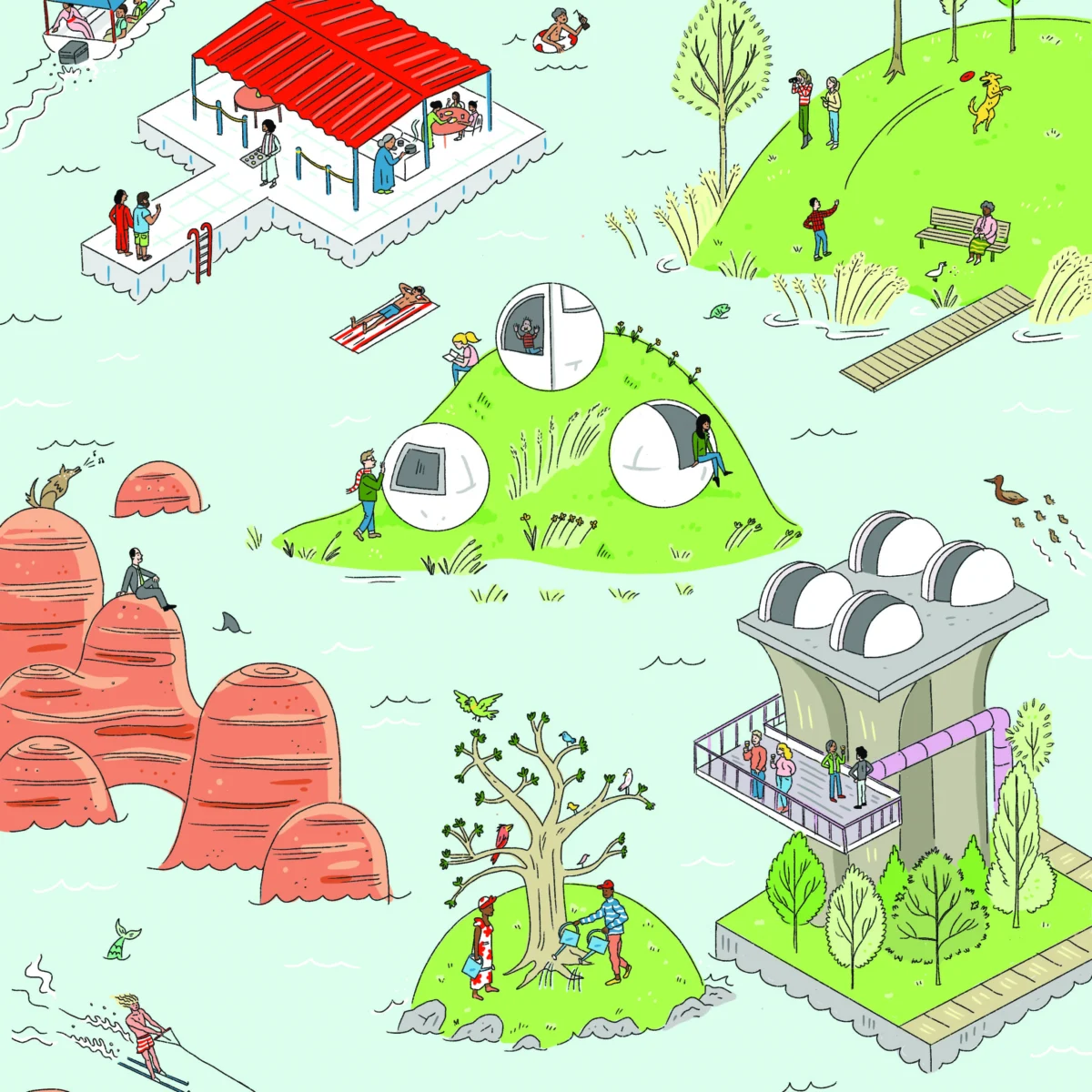
The global landscape is undergoing a profound transformation as the derelict remains of the industrial age are being systematically reimagined as vibrant centers of culture, ecology, and recreation. This movement, often described as the "shedding of skin," represents a paradigm shift in urban planning and environmental stewardship. Former coal plants, wartime factories, desolate docklands, and massive landfills—once considered permanent scars on the earth—are being repurposed into cultural hubs, mixed-use housing, and verdant playgrounds. This evolution reflects a growing global recognition that the end of an industrial site’s lifecycle does not necessitate its abandonment; rather, it offers a unique opportunity for creative reinvention.
The Rise of Industrial Reclamation
The transition from extraction and waste to conservation and leisure is driven by a combination of environmental necessity, economic pressure, and shifting societal values. As cities expand and land becomes increasingly scarce, the "brownfield" sites that once sat on the periphery of urban centers are now being absorbed into the metropolitan fabric. Environmental remediation technology has advanced to the point where even the most contaminated sites can be safely reclaimed for public use.
This trend is not limited to a single region but is a global phenomenon. From the coal-rich heartlands of India and Australia to the post-industrial corridors of Germany and North America, the narrative is the same: the relics of the past are being leveraged to build a more sustainable future.
India: From Coal Extraction to Eco-Tourism
In the Chhattisgarh region of India, the Bishrampur open-cast coal mine serves as a primary example of this transition. For decades, the site was a hub of carbon-heavy activity, contributing to the nation’s energy grid while leaving behind a massive geological footprint. When production ceased in 2018, the site faced the common fate of many mines: becoming a barren, hazardous crater.
However, the South Eastern Coalfields Limited (SECL) spearheaded a project to convert the defunct mine into a tourist destination. The reclamation process involved stabilizing the soil and filling the massive voids with water to create a scenic lake. Today, the site offers boating facilities and cottage rentals, providing a new source of revenue for the local community.
Chronology of Transition:
- 1980s-2018: Active coal extraction at the Bishrampur open-cast mine.
- 2018: Formal cessation of mining operations due to resource depletion.
- 2019-2021: Implementation of ecological restoration and landscaping.
- 2022: Official opening as a recreational and eco-tourism hub.
The success of the Bishrampur project has prompted the Indian government to explore similar transformations for dozens of other "exhausted" mines across the country, aiming to mitigate the environmental impact of the coal industry while fostering local economic development.
Canada: Engineering Ecological Recovery in Montreal
Montreal’s Frédéric-Back Park represents one of the most ambitious urban reclamation projects in North America. Located in the Saint-Michel district, the site was originally the Miron Quarry, which later evolved into one of the largest landfills in North America. For years, the area was a source of environmental concern for residents, characterized by odors and the release of greenhouse gases.
The transformation of this 192-hectare site into an urban greenspace required sophisticated engineering. The park now features "biogas-capturing wells"—futuristic, spherical structures that collect methane gas produced by decomposing waste beneath the surface. This gas is then converted into electricity and heat for the surrounding neighborhood.
Supporting Data:
- Total Area: 192 hectares (approx. 474 acres).
- Energy Output: The site generates enough electricity to power approximately 12,000 homes annually through its biogas recovery system.
- Biodiversity: Since its conversion, the park has seen the return of over 100 species of birds and a diverse array of native wildflowers.
The park is designed to be a living laboratory for sustainable development, proving that even a massive landfill can be integrated into a city’s ecological network.
United States: The Transformation of Fresh Kills
On Staten Island, New York, Freshkills Park is emerging as a symbol of urban resilience. Once the world’s largest landfill, Fresh Kills closed its doors to waste in 2001. At its peak, the site received 29,000 tons of household waste daily. Today, it is being transformed into a 2,200-acre park—the largest new park developed in New York City in over a century.
The project is a multi-decade endeavor managed by the NYC Department of Parks & Recreation. The transformation involves a "capping" process, where layers of soil, geotextiles, and geomembranes are used to seal the waste and protect the environment.
Phased Development Timeline:
- 2001: The landfill officially closes (temporarily reopened to process debris from the World Trade Center).
- 2006: The Master Plan for Freshkills Park is released.
- 2012: Schmul Park, the first renovated section, opens to the public.
- 2023: The opening of North Park Phase 1, marking the first time the public has had access to the interior of the former landfill site.
- 2030s: Estimated completion of all major park phases.
The project has been praised by urban planners for its focus on "ecological restoration," which includes the creation of wetlands to manage stormwater and the installation of one of the city’s largest solar arrays.
Australia: Lake Kepwari’s Recreational Rebirth
In Western Australia, the coal mining industry has long been the backbone of the Collie region. However, as the world moves away from fossil fuels, the region is diversifying its economy. The Western Five open-cut coal mine, which operated for decades, has been transformed into Lake Kepwari.
The name "Kepwari" comes from the local Noongar word for "playing in water." The 103-hectare recreational lake was created by diverting the Collie River into the mine void, a process that required careful monitoring to ensure water quality and acidity levels remained safe for human contact.
Official Responses:
Government officials have highlighted Lake Kepwari as a cornerstone of the "Just Transition" for mining communities. "This project shows that we can provide a future for mining towns beyond the life of the mine," stated a regional development representative. The lake now supports swimming, boating, and water skiing, drawing tourists from across the state and providing a social anchor for the local population.
Senegal: Modernizing Waste Management at Mbeubeuss
The Mbeubeuss landfill, located on the outskirts of Dakar, Senegal, has historically been one of West Africa’s most challenging environmental sites. Since 1968, it has served as an unregulated dumping ground, supporting a precarious economy for thousands of informal waste pickers.
Under the Senegal Solid Waste Management Project (PROMOGED), the site is currently undergoing a massive overhaul. The goal is to transition from an open dump to a controlled material recovery facility. A key component of this plan is the creation of an "eco-park" on the rehabilitated portions of the landfill.
Broader Impact and Implications:
- Social Equity: The project aims to formalize the work of waste pickers, providing them with safer working conditions and better material recovery tools.
- Environmental Health: By capping old waste and managing leachate (liquid runoff), the project reduces the contamination of local groundwater and the Atlantic Ocean.
- Urban Greening: The planned eco-park will provide much-needed green space for the rapidly growing suburbs of Dakar.
Germany: Landschaftspark and the Preservation of Heritage
The Landschaftspark Duisburg-Nord in Germany’s Ruhr Valley is perhaps the world’s most famous example of creative industrial reuse. Rather than tearing down the disused Meiderich Ironworks, which closed in 1985, architects chose to integrate the industrial structures into a public park.
The result is a surreal landscape where nature and industry coexist. A former gasometer has been filled with water to become Europe’s largest indoor diving center; ore bunkers have been converted into climbing gardens; and a blast furnace now serves as an observation tower.
Fact-Based Analysis of Implications:
The German model demonstrates that "industrial heritage" has significant cultural and economic value. Instead of erasing the history of the working class, Landschaftspark preserves it, turning a potential liability into a major tourist attraction that hosts over a million visitors annually. It proves that the "rust belt" can be revitalized without losing its identity.
Global Trends and Future Outlook
The case studies of India, Canada, the United States, Australia, Senegal, and Germany reveal several consistent themes in the global movement toward industrial repurposing:
- Technological Innovation: The success of these projects relies on advanced environmental engineering, from biogas capture to complex soil remediation and water quality management.
- Economic Diversification: For regions historically dependent on a single industry (like coal or manufacturing), these projects offer a path toward tourism, renewable energy, and service-based economies.
- Climate Mitigation: By converting landfills and mines into parks, cities are increasing their carbon sequestration capacity and mitigating the "urban heat island" effect.
- Social Connectivity: These spaces often provide recreational opportunities in underserved areas, improving the quality of life for urban residents.
The shift from industrial exploitation to ecological restoration is more than just a trend in landscaping; it is a fundamental reimagining of how humans interact with the land. As the world continues to grapple with the legacy of the industrial revolution, these revitalized spaces serve as a blueprint for the future. They prove that with sufficient vision and investment, the scars of the past can be healed, and the "stalwarts of yesteryear" can indeed become the vibrant hubs of tomorrow. Reinvention, it seems, is truly just an idea away.
