


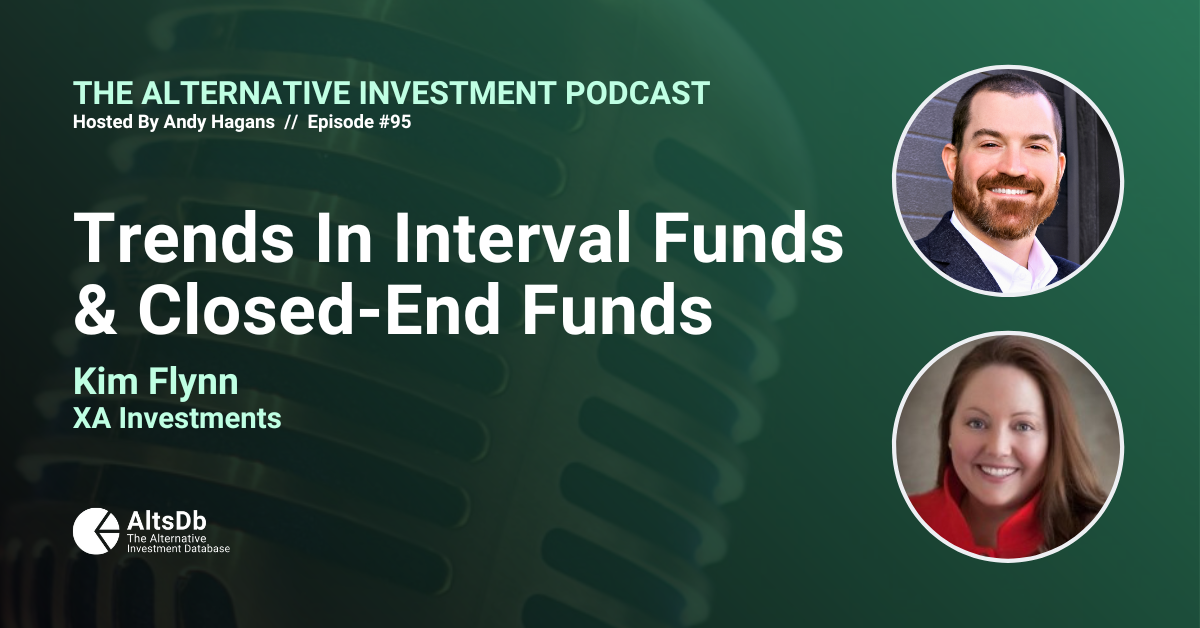
Interval funds have experienced remarkable expansion over the past five years, mirroring the broader growth trajectory of the alternative investment industry. This burgeoning sector, characterized by its unique structure and increasing appeal to a diverse investor base, is a focal point for discussions on wealth management and asset allocation. Kim Flynn, managing director at XA Investments, a firm at the forefront of this evolution, recently shared her insights on the sector’s successes, challenges, and future prospects during an appearance on "The Alternative Investment Podcast."
The rise of interval funds is not merely a fleeting trend but a significant shift in how alternative assets are accessed and managed. These investment vehicles offer a compelling solution for investors seeking exposure to less liquid asset classes while retaining a degree of liquidity, a combination that has proven increasingly valuable in today’s dynamic financial markets.
The Evolution of Closed-End and Interval Funds
Kim Flynn’s extensive background in product development, particularly her nearly 12-year tenure at Nuveen where she was instrumental in launching over 40 closed-end funds, provides a deep well of experience to draw upon. Nuveen, a recognized leader in the listed closed-end fund market, built its reputation partly on its municipal bond heritage. Flynn highlighted that Nuveen often collaborated with external portfolio managers, a strategy that underscores the specialized nature of these complex products.
"The work that we did at Nuveen was often in partnership with outside portfolio managers," Flynn stated. "When we didn’t have a capability or skill internally, we would look to partner externally." This collaborative approach paved the way for Flynn’s later endeavors, including the launch of an asset management platform focused on alternatives in partnership with sub-advisors.
This experience has given XA Investments a broad perspective on the alternative investment landscape, engaging with a wide spectrum of asset managers, from small boutiques to global wealth managers. The unique structure of closed-end and interval funds, Flynn explained, makes alternatives more accessible to a broader range of investors compared to traditional private funds, which often carry stringent suitability requirements.
Understanding the Appeal of Closed-End Funds
The appeal of closed-end funds, as explained by Flynn, lies primarily in their ability to provide investors with income. The persistent search for yield over the past decade has significantly driven interest in this segment. Unlike exchange-traded funds (ETFs), which feature creation and redemption mechanisms that typically keep their market price close to their net asset value (NAV), closed-end funds are "closed to raising new capital" after their initial public offering. This structural difference can lead to closed-end funds trading at a discount or premium to their NAV.
Historically, the average discount for listed closed-end funds has hovered around 4.5%, a figure that coincidentally mirrored early sales loads. Currently, the market presents a more pronounced discount, with averages exceeding 8%. This dislocation, particularly in the secondary market, offers opportunities for savvy investors. Flynn noted that while recent IPOs from 2021 are trading at discounts of 10% to 20%, secondary market buyers can potentially acquire shares at attractive valuations.
"Savvy closed-end fund investors take advantage of some of those market windows or dislocations to add to positions that they already hold, or to establish a position in a new fund," Flynn commented. A key differentiating factor for closed-end funds, she added, is the typical use of leverage, albeit modest, for income enhancement. For instance, a municipal bond closed-end fund might offer an additional 1% in income compared to a similar mutual fund.
The Rise of Interval Funds: Bridging Liquidity Gaps
The financial industry has witnessed a significant evolution in product structures, moving beyond traditional mutual funds and ETFs. This evolution has seen a saturation of the listed closed-end fund market, prompting a shift towards non-listed closed-end funds, including interval funds and tender offer funds. These structures, while technically a type of closed-end fund, operate differently, offering continuous offerings and the potential for growth, making them effectively open-ended.
"The shift that we’ve seen in the market in the last five years is much more focus and attention on the interval fund space," Flynn observed. XA Investments has been a key player in this space, partnering with asset managers to launch listed closed-end funds and developing a consulting practice to aid other asset managers in launching their own funds, with a particular emphasis on interval funds.
Defining Interval Funds and Tender Offer Funds
Interval funds, as explained by Flynn, are a specific type of "40 Act product, like the mutual fund." They are distinguished by their liquidity provisions. While investors can invest on a daily basis, redemptions are typically gated, often limited to 5% of the fund’s net assets per quarter. This controlled liquidity allows interval funds to invest more heavily in illiquid securities, such as real estate, private equity, venture capital, and credit strategies, which require longer investment horizons.
This structure allows for greater flexibility in asset allocation compared to traditional listed closed-end funds, which, due to their daily NAV calculation, generally hold more liquid portfolios. While legally capable of holding 100% illiquid assets, listed closed-end funds often avoid this to prevent significant discounts arising from valuation uncertainties.
Navigating the Nuances of Liquidity and Valuation
The controlled liquidity of interval funds is a double-edged sword. While enabling investments in less liquid assets, it necessitates careful liquidity management to meet quarterly redemption requests. Flynn raised concerns about the potential for prorated redemptions, especially during periods of market stress.
"The market hasn’t been tested just yet," Flynn warned. "A lot of these vehicles were not sized or scaled… I think that we need to be careful, we need to be thoughtful, and make sure we understand how these vehicles should be used." She emphasized that interval funds are not mutual funds and should not be marketed as such, highlighting the importance of investor education regarding liquidity constraints and appropriate investment horizons.
The issue of valuation also looms large. While public markets offer real-time pricing through mechanisms like Mr. Market’s daily repricing, interval funds rely on internal valuations or third-party agents. Flynn acknowledged the trend towards using specialized third-party valuation firms but stressed the importance of "skin in the game." She pointed out that the alignment of management capital with the fund’s investments, as seen in firms like Blackstone, provides a crucial indicator of confidence in asset valuations.
Best Practices for Interval Fund Design and Marketing
As the interval fund market matures, best practices are emerging for both product design and investor engagement. Flynn highlighted several key areas:
- Seed Capital and Scale: Many successful interval funds are launched with significant seed capital or contributions from existing private funds, ensuring they are not sub-scale from inception. Investors are often hesitant to commit to small, unproven funds.
- Fee and Expense Management: Expense waivers and management fee waivers are common at launch to make funds more attractive and improve their optical fee ratios as they scale. This demonstrates a commitment from sponsors to attract capital and build investor trust.
- Client-Centric Approach: Fund sponsors that prioritize the needs of the end investor, particularly Registered Investment Advisors (RIAs), and tailor their strategies accordingly, tend to fare better. This involves understanding the RIA’s role in advising clients and building long-term relationships.
- Education and Transparency: Given the complexity of interval funds, robust educational initiatives are paramount. Sponsors need to clearly articulate liquidity constraints, investment horizons, and the risks involved. Many responsible sponsors actively deter investors who do not understand these limitations, ensuring a more aligned investor base.
Emerging Trends in the Alternatives Space
Beyond interval funds, Flynn identified several other emerging trends in the alternatives industry that warrant attention:
- RIA-Sponsored Proprietary Funds: Wealth managers and RIAs are increasingly exploring the creation of their own proprietary interval funds. Leveraging their direct client relationships, these firms aim to capture the full fee stream by building their own investment vehicles rather than allocating to external managers.
- FinTech Platforms and Direct-to-Consumer Offerings: Fintech platforms are also venturing into interval fund launches, targeting a broader consumer base, sometimes including non-accredited investors. These platforms aim to democratize access to alternative investments by building their own funds, often with a focus on specific asset classes like real estate.
- Impact Investing and ESG Integration: The demand for impact-oriented investments is growing, with a notable increase in impact funds, particularly within private asset classes. These funds aim to generate both financial returns and positive social or environmental outcomes, offering a distinct alternative to traditional ESG-labeled ETFs and mutual funds.
The landscape of alternative investments is continuously evolving, with interval funds emerging as a significant innovation in providing investors with access to diverse asset classes. As the industry matures, a focus on investor education, transparent communication, and robust product design will be crucial for sustained growth and investor confidence.
XA Investments, with its deep expertise in fund structuring and product development, is positioned to guide asset managers and investors through this dynamic environment. The firm’s commitment to transparency and its comprehensive approach to understanding the intricacies of interval funds and other alternative structures underscore its role as a valuable resource in the expanding world of alternative investments.
