

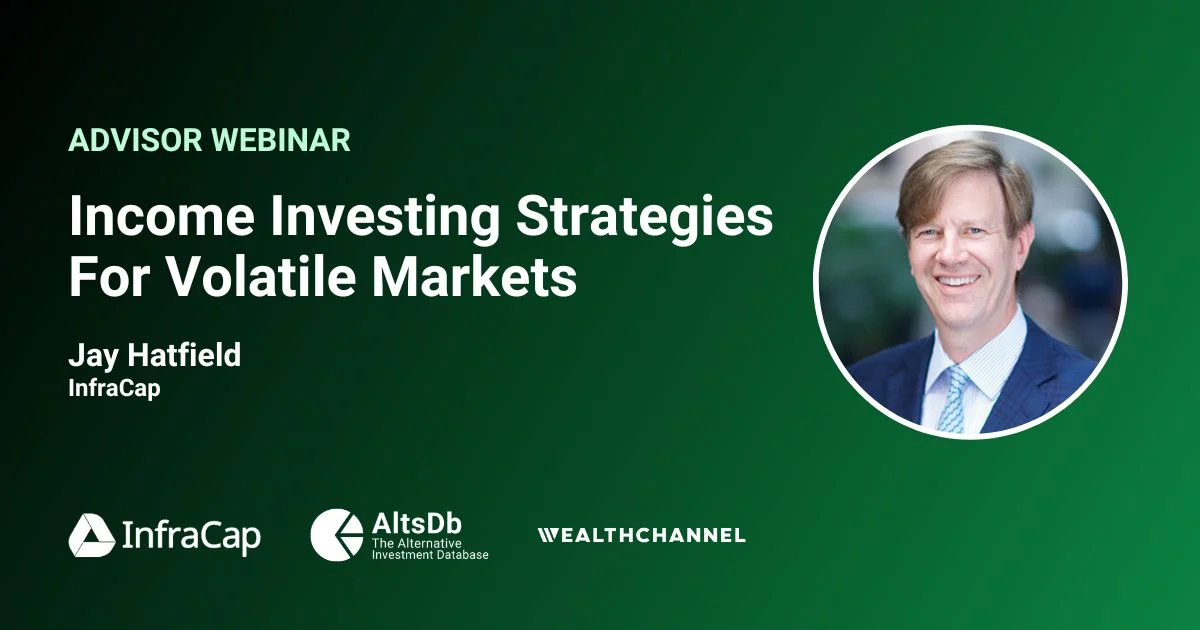
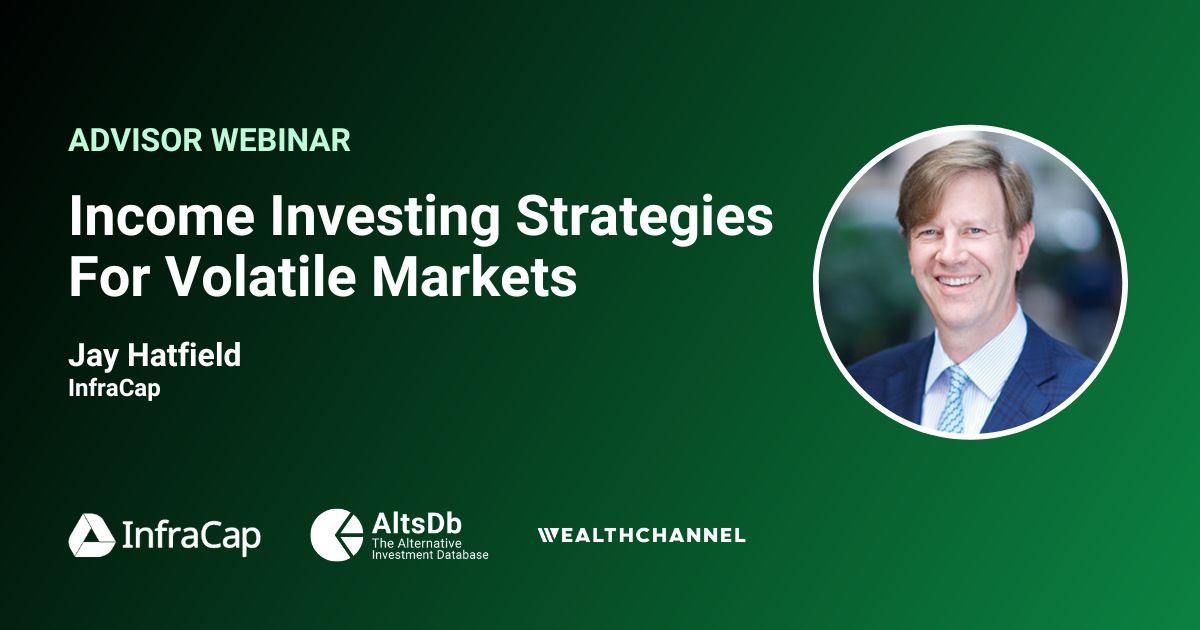
On February 8th, AltsDb, a prominent platform for alternative investment data and insights, hosted a crucial one-hour live webinar tailored for financial advisors. The session featured Jimmy Atkinson, co-founder of AltsDb, in conversation with Jay Hatfield, the founder and CEO of InfraCap. The primary objective of this educational event was to delve into effective income investing strategies within the context of today’s complex and often volatile macroeconomic environment. The webinar has been officially recognized by the CFP Board, granting attendees one hour of continuing education (CE) credit, underscoring its value and relevance to financial planning professionals.
The necessity for such a discussion is amplified by the prevailing economic conditions. Global markets have been subjected to significant headwinds, including persistent inflation, rising interest rates, geopolitical uncertainties, and the lingering effects of the COVID-19 pandemic. These factors have created a challenging landscape for investors seeking consistent income streams while simultaneously aiming to preserve capital and achieve growth. Traditional income-generating assets have faced unprecedented pressures, prompting a re-evaluation of investment approaches.
Webinar Overview and Key Themes
The webinar, titled "Income Investing Strategies For Volatile Markets," provided financial advisors with actionable insights and strategic frameworks to navigate these turbulent times. Jay Hatfield, with his extensive experience at InfraCap, a firm specializing in alternative investments, offered a unique perspective on how to identify and implement income-generating strategies that are resilient to market fluctuations.
While the specific detailed topics covered within the webinar’s agenda were not explicitly listed in the provided content, the overarching theme of "income investing strategies for today’s macroeconomic environment" suggests a comprehensive exploration of several critical areas. These likely included:
- Inflation-Resistant Income: Strategies to generate income that keeps pace with or outpaces inflation, protecting investors’ purchasing power. This could involve investments in asset classes with embedded inflation protection, such as Treasury Inflation-Protected Securities (TIPS) or real assets.
- Navigating Rising Interest Rates: How to position income portfolios to benefit from, or at least mitigate the negative impacts of, increasing interest rates. This might include considerations for duration management in fixed-income portfolios and exploring opportunities in floating-rate instruments.
- Diversification Beyond Traditional Assets: Exploring alternative income sources that offer diversification away from traditional stocks and bonds, potentially including private credit, infrastructure debt, or real estate income strategies.
- Risk Management in Income Portfolios: Techniques for managing the various risks associated with income investing, such as interest rate risk, credit risk, and liquidity risk, particularly in a volatile market.
- Sector-Specific Opportunities: Identifying specific sectors or industries that are well-positioned to generate stable income streams even during economic downturns.
- The Role of Alternative Investments: How alternative investment strategies can play a pivotal role in enhancing income generation and portfolio resilience.
The inclusion of a downloadable presentation deck, accessible via a provided link, further indicates the detailed and structured nature of the information shared. This resource would have allowed attendees to review the key slides, data points, and strategic recommendations discussed during the live session, reinforcing the educational value.
Background of InfraCap and Jay Hatfield
InfraCap, founded by Jay Hatfield, is recognized for its focus on alternative investments, particularly those designed to provide income and capital appreciation. The firm’s approach often involves leveraging specialized investment vehicles and strategies to access opportunities that may be less accessible through traditional channels. Jay Hatfield’s leadership at InfraCap signifies a commitment to providing innovative solutions for investors seeking to diversify their portfolios and enhance returns. His participation in the AltsDb webinar highlights the growing importance of alternative investments in the current financial landscape.
The context of the webinar can be further understood by examining the broader trends in the financial advisory sector. Financial advisors are increasingly being tasked with helping clients achieve complex financial goals, from retirement planning to wealth preservation. In an era of economic uncertainty, the ability to generate reliable income is paramount for many investors, especially those in or nearing retirement. The demand for strategies that can provide this income while navigating market volatility has never been higher.
The Importance of CE Credit for Financial Advisors
The recognition by the CFP Board for one hour of CE credit is a significant endorsement of the webinar’s educational merit. Certified Financial Planner™ professionals are required to complete a certain number of CE hours annually to maintain their certification, ensuring they stay current with industry developments, regulations, and best practices. Webinars that offer relevant and actionable content, like this one on income investing, are highly valued by advisors seeking to enhance their knowledge and, consequently, their service offerings to clients. This accreditation also signals to financial advisors that the content has met a certain standard of quality and relevance set by a reputable professional body.
Broader Implications for the Investment Landscape
The webinar’s focus on income investing in volatile markets reflects a broader shift in investor sentiment and strategy. For years, low-interest-rate environments led many investors to chase yield in riskier assets. However, the current environment of rising rates and economic uncertainty necessitates a more nuanced approach. Advisors are now prioritizing strategies that offer a more stable and predictable income stream, coupled with robust risk management.
The discussion likely touched upon the limitations of traditional fixed-income instruments in the current climate. For instance, while bond yields have risen, the unrealized losses in existing bond portfolios due to previous rate hikes have been substantial. This underscores the need for diversification into asset classes that may have different interest rate sensitivity or offer income through different mechanisms.
Potential Areas of Discussion and Analysis (Inferred)
Given the webinar’s topic and the expertise of the presenters, it’s reasonable to infer that several key areas were likely explored in depth:
- Private Credit as an Income Engine: The webinar may have explored the role of private credit, such as direct lending, mezzanine debt, and distressed debt, as a source of attractive income. These investments often offer floating rates, providing a hedge against rising interest rates, and can yield higher returns than traditional corporate bonds due to illiquidity premiums and specialized underwriting. Supporting data could include the growth of the private credit market, which has seen significant expansion over the past decade, with assets under management in the trillions of dollars globally. For example, Preqin data has consistently shown strong growth in private debt fundraising and deployment.
- Real Asset Income Streams: Investments in real assets, such as real estate, infrastructure, and natural resources, often provide stable income through leases, tolls, or commodity production. The webinar might have detailed how these assets can offer inflation protection due to their tangible nature and their ability to pass on rising costs to consumers. For instance, real estate income can be tied to inflation clauses in leases, and infrastructure projects can benefit from regulated revenue streams that are often indexed to inflation.
- Structured Credit and Income Enhancement: Sophisticated income-generating strategies might involve structured credit products. While these can be complex, they can be designed to offer specific income profiles and risk characteristics. A discussion here might have focused on the benefits of diversification and the potential for enhanced yield, while also cautioning about the inherent risks and the need for deep due diligence.
- Dividend-Paying Equities and Preferred Stocks: While not strictly "alternative," the webinar may have touched upon strategies involving dividend-paying equities and preferred stocks. In a volatile market, companies with strong balance sheets and a history of consistent dividend payments can provide a reliable income stream. Preferred stocks, with their fixed dividend payments, can also offer a hybrid between equity and fixed income, providing a more predictable income than common stock dividends.
- The Importance of Due Diligence and Manager Selection: In the realm of alternative income strategies, particularly those involving less liquid or more complex instruments, thorough due diligence on investment managers and underlying assets is paramount. The webinar likely emphasized the critical role of selecting experienced and reputable managers who have a proven track record in navigating challenging market conditions.
Data and Context for the Current Macroeconomic Environment
To further contextualize the webinar’s importance, consider the following data points and economic trends prevalent in early 2023:
- Inflation: In January 2023, the US Consumer Price Index (CPI) was 6.4% year-over-year, still significantly elevated above the Federal Reserve’s 2% target, though showing signs of moderation from its peak. This persistent inflation erodes the real return of fixed-income investments that do not keep pace.
- Interest Rates: The Federal Reserve had been aggressively raising its benchmark interest rate throughout 2022 and early 2023 to combat inflation. By February 2023, the federal funds rate was in the 4.50%-4.75% range. This increased borrowing costs across the economy and impacted bond valuations.
- Market Volatility: Equity markets experienced significant swings throughout 2022, and while showing some signs of stabilization in early 2023, the underlying economic uncertainties continued to fuel volatility. Measures like the Cboe Volatility Index (VIX) remained elevated compared to historical averages.
- Recession Fears: Many economists and market participants were anticipating a potential recession in 2023, adding another layer of uncertainty and risk to investment strategies.
These conditions create a compelling environment for financial advisors to seek out and implement income-generating strategies that are resilient and can perform across different economic scenarios. The need for diversification and sophisticated risk management becomes even more critical when traditional income sources are under pressure.
Connecting with InfraCap
The inclusion of "Connect With InfraCap" in the article’s structure, along with placeholders for contact information, suggests that the webinar aimed to not only educate but also to facilitate deeper engagement between financial advisors and InfraCap. This could involve follow-up consultations, access to further resources, or discussions about specific investment solutions offered by InfraCap. This is a common practice in educational webinars hosted by investment firms, aiming to convert educational engagement into potential business relationships.
Conclusion
The AltsDb webinar featuring Jay Hatfield of InfraCap served as a timely and vital resource for financial advisors. In an era marked by persistent inflation, rising interest rates, and general market uncertainty, the imperative to develop and implement robust income investing strategies has never been greater. The session’s focus on navigating these complex macroeconomic conditions, coupled with its accreditation by the CFP Board, underscores its practical value for professionals dedicated to guiding their clients through challenging financial landscapes. The availability of the presentation deck and the opportunity to connect with InfraCap further enhance the educational and networking benefits derived from this insightful event. The ongoing evolution of the global economy will undoubtedly continue to drive demand for such specialized expertise and strategic insights in income generation.
