

The effectiveness of U.S. economic sanctions against Iran, particularly those aimed at isolating the Islamic Republic from the dollar-based global financial system, is facing a significant challenge due to the increasing reliance on Chinese financial institutions and the renminbi. This strategic pivot by Iran, facilitated by China’s growing financial clout, signals a potential recalibration of global economic power and the efficacy of traditional U.S. foreign policy tools.
The "Economic D-Day" and its Complex Battlefield
In late August 2026, U.S. Treasury Secretary Scott Bessent declared what he termed an "economic D-Day" against Iran, vowing to launch "the single greatest financial offensive ever marshaled against an adversary." This aggressive rhetoric, intended to signal a decisive and overwhelming application of financial pressure, aimed to cripple Iran’s economy by severing its access to international markets and funding. The historical resonance of the D-Day analogy, however, belies the complex geopolitical realities of the current confrontation. While the original D-Day represented a united Allied effort against a common enemy, the modern "economic D-Day" against Iran is unfolding on a battlefield where the United States faces a strategic rival in China, a nation that, while once an ally in the fight against Nazi Germany, now plays a pivotal role in Iran’s economic survival.
The core of the U.S. strategy has historically revolved around the dominance of the U.S. dollar in international trade and finance. By threatening secondary sanctions on any financial institution that transacts with sanctioned entities, Washington has, for decades, compelled global banks and corporations to comply with its directives, effectively isolating targeted nations. However, Iran’s increasing integration into China-centric financial networks has introduced a critical vulnerability into this strategy. A significant portion of Iran’s oil trade, a vital source of revenue, is reportedly conducted through Chinese banks and utilizes the renminbi as the primary currency. This means that the efficacy of U.S. sanctions increasingly hinges on the cooperation of financial institutions that operate beyond direct American control and are influenced by China’s economic imperatives.
A Shifting Global Financial Landscape
The U.S. Treasury’s "economic D-Day" announcement comes at a time when the global financial system is undergoing a subtle but significant transformation. For decades, the dollar’s role as the world’s reserve currency and the primary medium for international trade has provided the United States with unparalleled leverage. However, rising geopolitical tensions, coupled with the growing economic power of nations like China, have led to increased efforts to de-dollarize and establish alternative financial frameworks.
Key Developments in De-Dollarization Efforts:
- Increased Bilateral Trade Agreements: A growing number of countries are entering into bilateral trade agreements that bypass the U.S. dollar, often settling transactions in their own currencies or in a mutually agreed-upon third currency.
- Growth of Renminbi Usage: China has actively promoted the international use of its currency, the renminbi (RMB), through initiatives like the Belt and Road Initiative and the establishment of offshore RMB clearing centers. Data from the Bank for International Settlements (BIS) has shown a steady, albeit gradual, increase in the share of RMB in global foreign exchange markets. In 2025, for instance, the RMB’s share in global foreign exchange turnover, while still modest compared to the dollar, demonstrated growth in specific trade corridors.
- Development of Alternative Payment Systems: While SWIFT remains the dominant global messaging network for financial transactions, alternative payment systems are emerging. China’s Cross-Border Interbank Payment System (CIPS) is gaining traction, offering a parallel infrastructure that is less susceptible to U.S. influence.
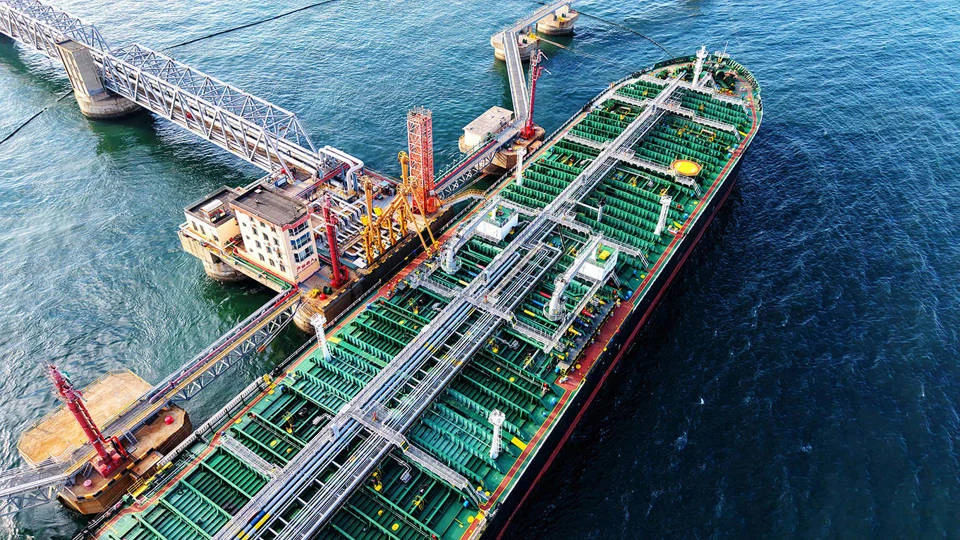
Iran has been an early adopter and beneficiary of these trends. Facing persistent U.S. sanctions, Tehran has actively sought alternative channels for its oil exports and financial transactions. The deepening economic ties with China have provided a crucial lifeline. Reports from energy analytics firms in early 2026 indicated that a substantial percentage of Iranian oil exports were being directed towards China, with payments often routed through Chinese banks and denominated in renminbi. This shift allows Iran to circumvent direct exposure to U.S. financial sanctions that target dollar-denominated transactions.
Chronology of Escalating Financial Pressure and Iranian Adaptation
The current standoff is the culmination of years of escalating financial pressure and Iran’s persistent efforts to adapt.
- 2018: The Trump administration withdrew the U.S. from the Joint Comprehensive Plan of Action (JCPOA) and reimposed stringent sanctions on Iran, targeting its oil sector and financial institutions, with the explicit goal of forcing it to negotiate a new deal. This marked a significant intensification of economic warfare.
- 2019-2022: Iran’s oil exports plummeted, and its economy faced severe contraction. However, during this period, Iran began to discreetly increase its engagement with China, exploring alternative payment mechanisms and trade routes. The COVID-19 pandemic, while impacting global trade, also accelerated the trend towards digital and alternative financial solutions.
- 2023: Chinese financial institutions, while publicly adhering to international norms, reportedly became more accommodating to Iranian trade. Reports emerged of increased use of the renminbi in bilateral trade, with some Chinese banks facilitating transactions that previously would have been routed through entities more sensitive to U.S. pressure.
- Early 2024: The International Monetary Fund (IMF) reported a modest uptick in renminbi usage for international trade settlements, a trend attributed in part to geopolitical considerations and a desire for diversification among global businesses.
- Late 2024 – Early 2025: U.S. intelligence agencies began to publicly acknowledge the growing challenge posed by China’s role in facilitating Iranian trade, noting that a significant portion of Iran’s oil revenue was being processed through Chinese banks. This prompted discussions within the U.S. Treasury about expanding the scope of sanctions to target Chinese financial institutions more directly, a move fraught with significant diplomatic and economic risks.
- August 2026: Treasury Secretary Bessent’s "economic D-Day" declaration signifies a renewed, albeit potentially more complex, attempt by the U.S. to exert maximum pressure.
Supporting Data and Expert Analysis
The reliance on China is not merely anecdotal. Several indicators point to this growing interdependence:
- Oil Trade Data: According to data from commodity tracking firms like Kpler and Vortexa, by early 2026, China was consistently one of the top importers of Iranian crude oil, often receiving a significant percentage of Iran’s total oil exports. This volume often surpassed what could be explained through openly declared trade channels, suggesting clandestine or semi-clandestine arrangements.
- Financial Transaction Flows: While precise figures are difficult to obtain due to the nature of the transactions, analysis of global payment flows and the reported increase in renminbi-denominated trade settlements between China and Iran suggests a substantial shift. Some financial analysts estimated that by mid-2026, over 60% of Iran’s oil revenue was being settled, at least partially, in renminbi through Chinese banking channels.
- SWIFT vs. CIPS Usage: While SWIFT remains dominant globally, the increasing use of China’s CIPS for cross-border transactions, particularly between Chinese and Iranian entities, indicates a growing preference for systems less susceptible to U.S. jurisdiction. While CIPS’s global market share is still small compared to SWIFT, its growth in specific regional corridors is notable.
Reactions and Implications
The U.S. "economic D-Day" announcement has elicited a range of reactions, underscoring the intricate global economic and political dynamics at play.
U.S. Position:
The U.S. Treasury’s stance is clear: to isolate Iran economically and compel it to alter its behavior, particularly concerning its nuclear program and regional activities. The "economic D-Day" rhetoric suggests a willingness to explore more aggressive measures, potentially including broader secondary sanctions. However, the administration is acutely aware of the potential for backlash from China.
Chinese Position:
Beijing has consistently maintained that it engages in legitimate trade with Iran, adhering to international law. China also emphasizes the importance of multilateralism and opposes unilateral sanctions imposed by any single country. The U.S. Treasury’s actions are viewed by Beijing as an attempt to interfere in its economic relationships and assert its dominance over global finance. China’s response to any U.S. attempts to sanction its banks would likely involve retaliatory measures, potentially impacting U.S. financial markets or trade.
Iranian Position:
Iran has hailed its ability to continue exporting oil and conducting financial transactions as a testament to its resilience and its strategic partnerships. The U.S. pressure is seen as an acknowledgment of Iran’s ability to adapt and find ways to mitigate the impact of sanctions, thereby bolstering the regime’s domestic narrative of defiance.
Broader Implications:
The U.S. challenge in sanctioning Iran due to China’s role has profound implications for the future of global economic statecraft:
- Erosion of U.S. Sanctions Power: If the U.S. proves unable to effectively sanction Iran due to China’s financial intermediation, it could signal a weakening of its ability to use financial sanctions as a primary tool of foreign policy. This could embolden other nations seeking to resist U.S. pressure.
- Accelerated De-Dollarization: The situation may further accelerate the global trend towards de-dollarization. As countries witness the limitations of dollar-based sanctions when a major economic power like China is involved, they may be more inclined to explore alternative currencies and payment systems.
- Increased Geopolitical Tension: Any direct confrontation between the U.S. and China over financial sanctions could significantly escalate geopolitical tensions, impacting global trade, investment, and diplomatic relations. The U.S. faces a difficult balancing act: to pressure Iran effectively without triggering a wider economic conflict with its primary strategic competitor.
- Shifting Global Financial Architecture: The long-term consequence could be a more fragmented global financial system, with parallel networks and currencies gaining prominence. This could reduce the predictability and stability of international finance, creating new challenges for businesses and governments alike.
In conclusion, the U.S. "economic D-Day" against Iran is a high-stakes gamble in a rapidly evolving global financial landscape. While the U.S. possesses formidable financial power, its ability to unilaterally dictate terms is increasingly constrained by the rise of China and the development of alternative financial infrastructures. The success of these sanctions will not solely depend on American resolve, but critically on the responses and strategic choices of Beijing, which now stands as a crucial, albeit often tacit, arbiter of Iran’s economic fate. The coming months will likely reveal whether the dollar’s reign as the undisputed king of international finance remains unchallenged or if this confrontation marks a significant turning point.
