

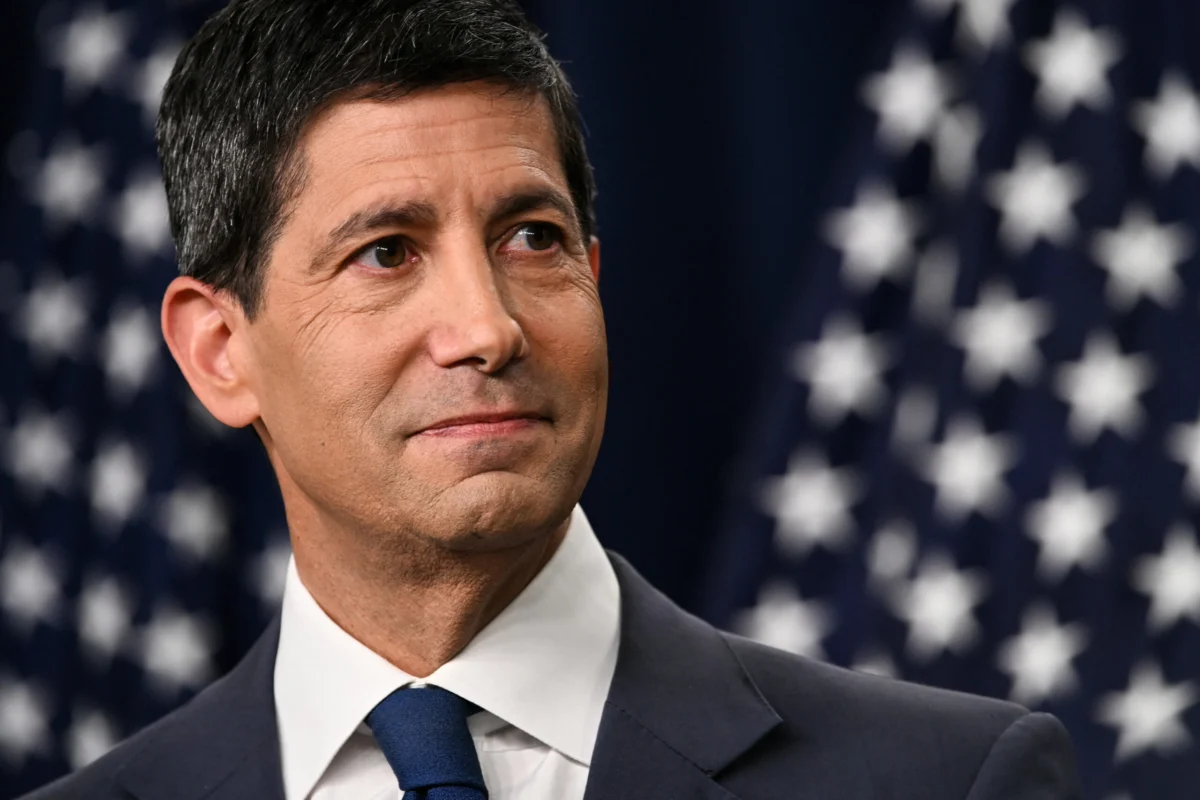
Federal Reserve Chairman Kevin Warsh is reportedly exploring a significant reduction in the frequency of Federal Open Market Committee (FOMC) meetings, a move that would dramatically shrink the central bank’s communication footprint on financial markets. This potential change, currently discussed in hypothetical terms by Fed sources, represents the latest and arguably most impactful measure in Warsh’s aggressive strategy to reverse decades of increasing transparency, a shift that market experts warn could introduce both heightened volatility and novel trading opportunities for investors.
Since assuming office in May 2026, Chairman Warsh has embarked on a systematic re-engineering of the Fed’s engagement with the public and markets. His tenure, succeeding now-Governor Jerome Powell, has been marked by a clear departure from the "aggressively transparent" era that characterized his predecessors. This philosophical pivot, aimed at fostering a market more reliant on economic fundamentals than on central bank pronouncements, has already seen several foundational changes implemented.
A New Era of Fed Communications: Less is More?
The journey towards a less vocal Fed began almost immediately with Warsh’s appointment. One of his first actions was to curtail "forward guidance," the practice by which the Fed signals its future rate moves and policy intentions. This tool, widely adopted during and after the 2008 financial crisis and further refined under Chairs Bernanke, Yellen, and Powell, was designed to provide markets with clarity and predictability, thereby enhancing the effectiveness of monetary policy. Warsh’s approach has significantly scaled back such explicit signals, leaving market participants with fewer direct clues about the Fed’s trajectory.
Accompanying this, the post-meeting statements, once meticulously crafted and often lengthy communiqués detailing the FOMC’s economic assessment and policy rationale, have been dramatically shortened. These concise statements now offer minimal insight beyond the immediate policy decision, forcing analysts to glean meaning from brevity. Furthermore, Warsh’s two news conferences held thus far – including the most recent on July 29, 2026, following an FOMC meeting – have been characterized by cryptic and often evasive answers to questions regarding his views on monetary policy. This deliberate opaqueness contrasts sharply with the open and often detailed explanations provided by past chairs, who frequently used these platforms to elaborate on the Fed’s thinking and macroeconomic outlook.
Beyond communication, Warsh has established five task forces dedicated to a top-to-bottom rethinking of the Fed’s approach across various domains, including policy formulation, communications strategy, and data utilization. This holistic review underscores his ambition to fundamentally reshape the institution, moving it away from what he perceives as an overbearing presence in financial markets.
The Meeting Schedule Debate: From Eight to Fewer
The most recent and potentially most disruptive proposal involves reducing the long-held schedule of eight annual meetings for the rate-setting Federal Open Market Committee. Historically, the Fed has adapted its meeting strategies. Until the early 1980s, the FOMC convened almost monthly. Under former Chairman Paul Volcker, a period marked by aggressive inflation fighting, the schedule was standardized to eight meetings per year, roughly every six weeks. While the Fed retains the prerogative to call emergency meetings at any time, such an unscheduled gathering is a rare occurrence, typically reserved for moments of severe economic or financial crisis, sending a potent signal of distress to markets.
The prospect of fewer meetings has elicited a mixed but mostly cautious response from within the Fed and among market observers. Minneapolis Fed President Neel Kashkari, speaking to CNBC on Wednesday, expressed an open mind about reexamining the schedule. "I don’t think there’s any magic number about eight or 10 or six," Kashkari stated, acknowledging the emergency meeting option while noting its "big event" implications. Philadelphia Fed President Anna Paulson echoed similar sentiments on Tuesday, calling it "healthy to have a good discussion about that."
Bill English, who served as the Fed’s former head of monetary affairs during Warsh’s initial stint at the central bank and is now a Yale professor, also downplayed the "magic" of eight meetings. English noted that he once proposed a six-meeting schedule, provided each included a news conference and an update to the Summary of Economic Projections (SEP). However, English voiced stronger reservations about Warsh’s broader strategy of reduced communication. "I really don’t like this effort to communicate much less," he said, emphasizing the importance of transparency for public understanding, market anticipation, policy effectiveness, and Fed accountability.
Market’s Muted Reaction: A Temporary Truce?
Despite these radical shifts and the discussions around further curtailment of communication, financial markets have, so far, responded with a surprising degree of calm, or perhaps, a wary patience. Since Warsh took the helm on May 22, the Dow Jones Industrial Average has climbed approximately 3,500 points, a robust 7% gain. Bond yields have seen a net rise, though not dramatically. The policy-sensitive 2-year Treasury yield has increased by about 8 basis points (0.08 percentage points), with the benchmark 10-year yield showing a similar modest ascent.
This muted market reaction has led some analysts to suggest that investors are either giving Warsh the benefit of the doubt or are preoccupied with other geopolitical factors. Mark Hackett, chief market strategist at Nationwide, observed, "He’s kind of getting away with it." Hackett further noted that Warsh is "really the first Fed official that I’ve seen explicitly say he wants the Fed to have less direct impact on market movement."
Indeed, Warsh himself has explicitly articulated his philosophy, urging market participants to focus on economic data rather than the nuances of "Fedspeak." During his recent news conference, he stated, "Market participants are learning to play the ball, not the referee – and market prices will continue to respond in the direction and magnitude they see fit. This is, in my view, a change for the better – and we are just getting started." This statement encapsulates Warsh’s vision of a market that processes information independently, rather than passively awaiting central bank signals. Treasury Secretary Scott Bessent, in a CNBC appearance on Tuesday, characterized Warsh’s approach as a "detox" for markets, suggesting a necessary weaning off central bank dependency.
Potential Ramifications: Volatility and Opportunity
While the initial market reaction has been subdued, many investors and economists remain wary of the long-term implications of Warsh’s strategy, particularly the potential reduction in FOMC meetings. Dario Perkins, head of global macroeconomics at TS Lombard, warned of "a regime of continuous market repricing," stating that "investors have to get used to FOMC meetings at which they don’t know the outcome ahead of time." Perkins also conceded that this uncertainty could "provide new trading opportunities," hinting that this might be Warsh’s implicit goal.
George Catrambone, head of fixed income for the Americas at DWS Group, articulated a common concern: "Certainly, it’s going to increase volatility. Having less transparency forces market participants to hedge or have a wider dispersion of outcomes." This sentiment underscores the inherent tension between Warsh’s desire for data-driven markets and the market’s traditional reliance on central bank communication to manage risk.
The information vacuum created by reduced transparency is compounded by Warsh’s stance on other communication tools. Concerns have already been raised about his skepticism toward the "dot plot," the graphical representation of individual officials’ interest rate expectations. Warsh notably declined to submit his own dot when the FOMC last updated the grid in June 2026. This, coupled with a loosely defined "reaction function"—the economic conditions that would trigger a Fed policy response—leaves markets with fewer guideposts.
Adding to this, if the Fed were to meet only four or six times a year, a market accustomed to frequent cues would face unprecedented uncertainty. Mark Hackett of Nationwide highlighted the gravity of such a change: "If you stop start having less meetings, that’s a different level, and that could be seen as disruptive."
One significant potential consequence, according to Komal Sri-Kumar, president of Sri-Kumar Global Strategies, would be a "bear steepener" in the bond market. This refers to a scenario where longer-term yields rise faster than shorter-term rates, implying that fixed income investors anticipate the Fed holding short-term rates low while inflation expectations climb. "Bondholders are not babies trying to have their hands held," Sri-Kumar asserted, adding, "The bondholders are saying, ‘Please don’t make my life more difficult by introducing even more uncertainty.’"
Such a spike in yields carries profound implications for the federal government. With an outstanding Treasury debt held by the public reaching $31.1 trillion, the cost of financing this debt is a critical concern. The Treasury Department estimates it will spend $1.3 trillion this year on debt financing, a sum second only to Social Security in government outlays. If investors lose confidence or demand higher premiums for holding government debt due to increased policy uncertainty, Treasury Secretary Scott Bessent’s task of managing the nation’s finances will become considerably tougher.
The Road Ahead: Jackson Hole and Beyond
The unfolding narrative of Chairman Warsh’s transformative leadership is still in its early chapters. While plausible benefits, such as fostering more robust and self-reliant markets, are touted, the potential drawbacks of increased volatility and reduced accountability are equally compelling. The efficacy of this new approach remains an open question, with only a few months having passed since Warsh took office.
All eyes are now turning to the end of August, when the Federal Reserve holds its annual economic symposium in Jackson Hole, Wyoming. This gathering has historically served as a critical platform for Fed chairs to unveil new agendas, articulate shifts in monetary policy philosophy, and signal future directions. Chairman Warsh’s speech at Jackson Hole is anticipated to be a pivotal moment, offering him the opportunity to more fully articulate his vision for a leaner, less communicative central bank and to provide further insights into the rationale behind these profound institutional changes.
As George Catrambone of DWS Group aptly summarized, "Warsh is trying to undertake a very large change in terms of how to communicate the data and how to interpret it. I would say we should also provide a little bit of grace." The financial world watches with a mixture of apprehension and anticipation as Warsh continues to steer the Federal Reserve into uncharted waters of reduced transparency and potentially fewer, but perhaps more impactful, policy deliberations.
