

The global movement toward environmental sustainability is undergoing a fundamental shift, moving away from top-down international mandates toward a model defined by local ownership and community-led innovation. At the forefront of this transition are two distinct yet philosophically aligned organizations: the Honnold Foundation and Blue Ventures. Despite operating in vastly different ecosystems—the dense rainforests of the Upper Amazon and the coastal waters of Madagascar—both nonprofits operate on the shared conviction that the most effective solutions to climate change and resource depletion are those designed and managed by the people most affected by them. Supported by the Everpure Foundation, the philanthropic arm of data management firm Everpure, these organizations are scaling proven models of local stewardship to address the dual crises of energy poverty and ecological collapse.
The Amazonian Solar Revolution: Sovereignty Through Energy
In the northeastern reaches of the Ecuadorian Amazon, a historic coalition of four Indigenous nationalities—the Kofán, Siekopai, Waorani, and Siona—has spent the last decade redefining the relationship between energy and environmental defense. Formed in 2014, the Ceibo Alliance emerged as a direct response to decades of environmental degradation caused by oil extraction and industrial encroachment. Their mission was clear: to secure a sustainable future by reducing dependency on external fossil fuel interests and revitalizing traditional practices.

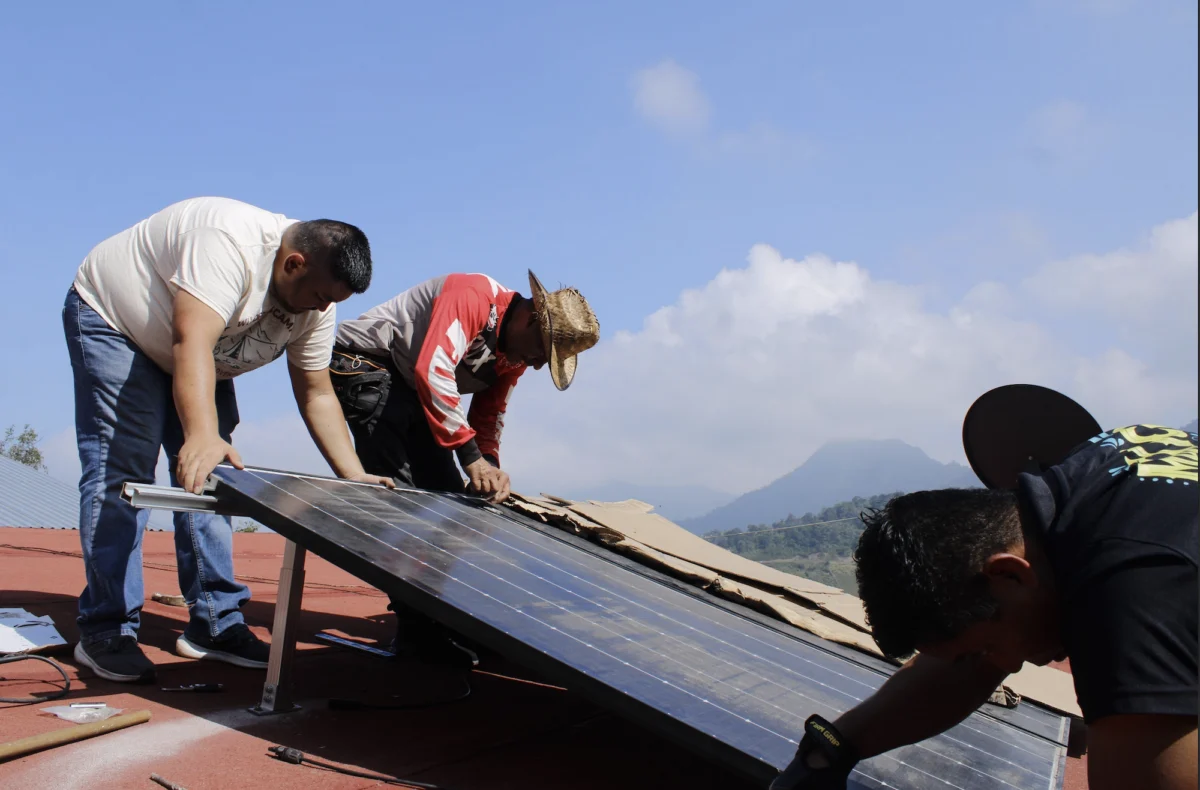
A critical component of this mission has been the integration of renewable energy through a partnership with the Honnold Foundation and Fundación Kara Solar. In remote rainforest communities where the power grid does not reach, the alliance has installed off-grid solar systems and introduced solar-powered electric motors for river transportation. These technological advancements are not merely conveniences; they are tools of sovereignty. By utilizing solar-powered boats and recharge stations, over 3,500 people across remote territories have gained increased mobility and access to essential services without contributing to the pollution of their ancestral waterways.
The Honnold Foundation, established by world-renowned rock climber Alex Honnold, provides the financial and technical scaffolding for these projects. Honnold, who famously donates one-third of his annual income to the foundation, launched the initiative after witnessing the stark disparity in energy access during his global climbing expeditions. The foundation’s approach is intentionally hands-off regarding project design. In the Upper Amazon, the Ceibo Alliance trains local Indigenous technicians to build and maintain the solar arrays, ensuring that the knowledge—and the power—remains within the community.
Restoring Madagascar’s Marine Wealth: The Blue Ventures Model
While the Amazonian tribes look to the sun, coastal communities in Madagascar are looking to the sea to solve a different set of challenges. Small-scale fisheries are the lifeblood of Madagascar, providing food security and income for millions. However, in the early 2000s, these communities faced a crisis as octopus stocks—a primary export and food source—began to collapse due to overfishing and unregulated market pressures.

In 2003, Blue Ventures began working with the Vezo people, a seafaring community in southern Madagascar, to pilot a new approach: community-based fishery management. The initiative introduced the concept of "Locally Managed Marine Areas" (LMMAs), which utilize temporary fishing closures to allow stocks to recover. The results were immediate and measurable. By closing specific reef areas for short periods, the communities saw a dramatic increase in the size and quantity of octopus catches, leading to higher incomes and more stable food supplies.
Gildas Andriamalala, Blue Ventures’ Regional Director for Southern Africa and a Madagascar native, noted that the success of the pilot sparked a grassroots movement. "Now, at least half of the coast of Madagascar has community-based fisheries management," Andriamalala stated. Today, approximately 280 villages have adopted the LMMA model. The nonprofit has since expanded this community-managed framework to 11 countries across the Indian Ocean, Southeast Asia, and the Caribbean, dispersing more than $5.2 million in support of local NGOs and fishery partnerships.
The Philosophy of Local Stewardship and Risk-Tolerant Capital
The synergy between the Honnold Foundation and Blue Ventures lies in their rejection of traditional, paternalistic philanthropy. Peter Walle, Director of Partnerships for the Honnold Foundation, emphasizes that communities are the ultimate experts on their own needs. "They don’t need someone to come in there to tell them what is needed," Walle explained. "When properly supported, they are the best ones to implement the solutions."

This philosophy requires a specific type of financial support: risk-tolerant capital. In the world of high-impact philanthropy, many donors are hesitant to fund projects in remote or politically unstable regions. However, the Honnold Foundation views risk through a different lens. Last year alone, the foundation distributed 37 grants worth nearly $5 million, supporting projects that directly impact an estimated 650,000 people. Walle argues that philanthropists must reframe their understanding of risk, noting that for the communities they serve, the "risk" is often a matter of survival against climate breakdown and poverty.
The Everpure Foundation has become a vital partner in this endeavor. By providing grants to organizations that advance locally-led solutions, the Everpure Foundation allows nonprofits like Blue Ventures and the Honnold Foundation to scale their efforts. This corporate support is often unrestricted yet project-specific, allowing for the flexibility needed to navigate the complexities of grassroots work while maintaining a focus on measurable outcomes in environmental sustainability and workforce development.
Chronology of Impact: A Decade of Grassroots Growth
The trajectory of these initiatives reveals a steady progression from localized pilots to global models:

- 2003: Blue Ventures is founded, launching its first community-based fishery management projects in Madagascar.
- 2012: Alex Honnold establishes the Honnold Foundation to reduce environmental impact and address global energy inequity.
- 2014: The Ceibo Alliance is formed by four Indigenous nationalities in Ecuador to defend their territory and promote sustainable development.
- 2018-2022: The LMMA model expands globally; Honnold Foundation hits the milestone of 100 supported projects across 30 countries.
- 2024: The Honnold Foundation reports distributing nearly $5 million in annual grants, while Blue Ventures reaches a total of $5.2 million in dispersed funds for marine management.
- 2025: Demand for community-led solar surges, with the Honnold Foundation receiving over 1,200 applications from 100 countries.
Supporting Data: The Global Context of Local Solutions
The work of these foundations addresses staggering global needs. According to international energy and environmental data:
- Energy Poverty: An estimated 700 million to 760 million people worldwide still lack access to electricity. The Honnold Foundation’s focus on community-scale solar targets this gap, providing a decentralized alternative to traditional grid expansion, which is often slow and ecologically damaging.
- Small-Scale Fisheries: Over 500 million people globally depend on small-scale fisheries for their livelihoods. These fisheries provide roughly half of the world’s fish catch and employ 90% of the world’s fishers.
- Climate Resilience: Indigenous territories contain approximately 80% of the world’s remaining biodiversity. Supporting groups like the Ceibo Alliance is increasingly recognized as one of the most effective ways to prevent deforestation and preserve carbon sinks.
Broader Implications and the Path to 2030
The success of these models suggests that the future of environmentalism is inseparable from social and economic equity. By combining technical training—such as solar technician certification for Amazonian youth—with environmental protection, these organizations are creating "green" jobs in some of the world’s most marginalized regions.
However, significant challenges remain. The gap between the demand for funding and the available supply is wide. In 2025, the Honnold Foundation could only fund a small fraction of the 1,200 applications it received. Similarly, Blue Ventures points to a lack of technical training and data as a major barrier for the 225 million people living in coastal communities in low-income tropical countries.

To bridge this gap, both organizations are focusing on "capacity building"—a process that includes not only funding but also storytelling and advocacy. By bringing community leaders to international environmental conferences, the foundations give local stakeholders a seat at the table where global policy is made.
As the climate crisis intensifies, the resilience and adaptability shown by the Vezo fishers of Madagascar and the Indigenous technicians of the Amazon provide a blueprint for the rest of the world. The shift toward local stewardship, backed by risk-tolerant corporate and private philanthropy, represents a move toward a more democratic and durable form of environmentalism. As Gildas Andriamalala concluded, the goal is not just to survive the current humanitarian and ecological crises, but to provide communities at the frontlines with the resources they need to thrive on their own terms.
