

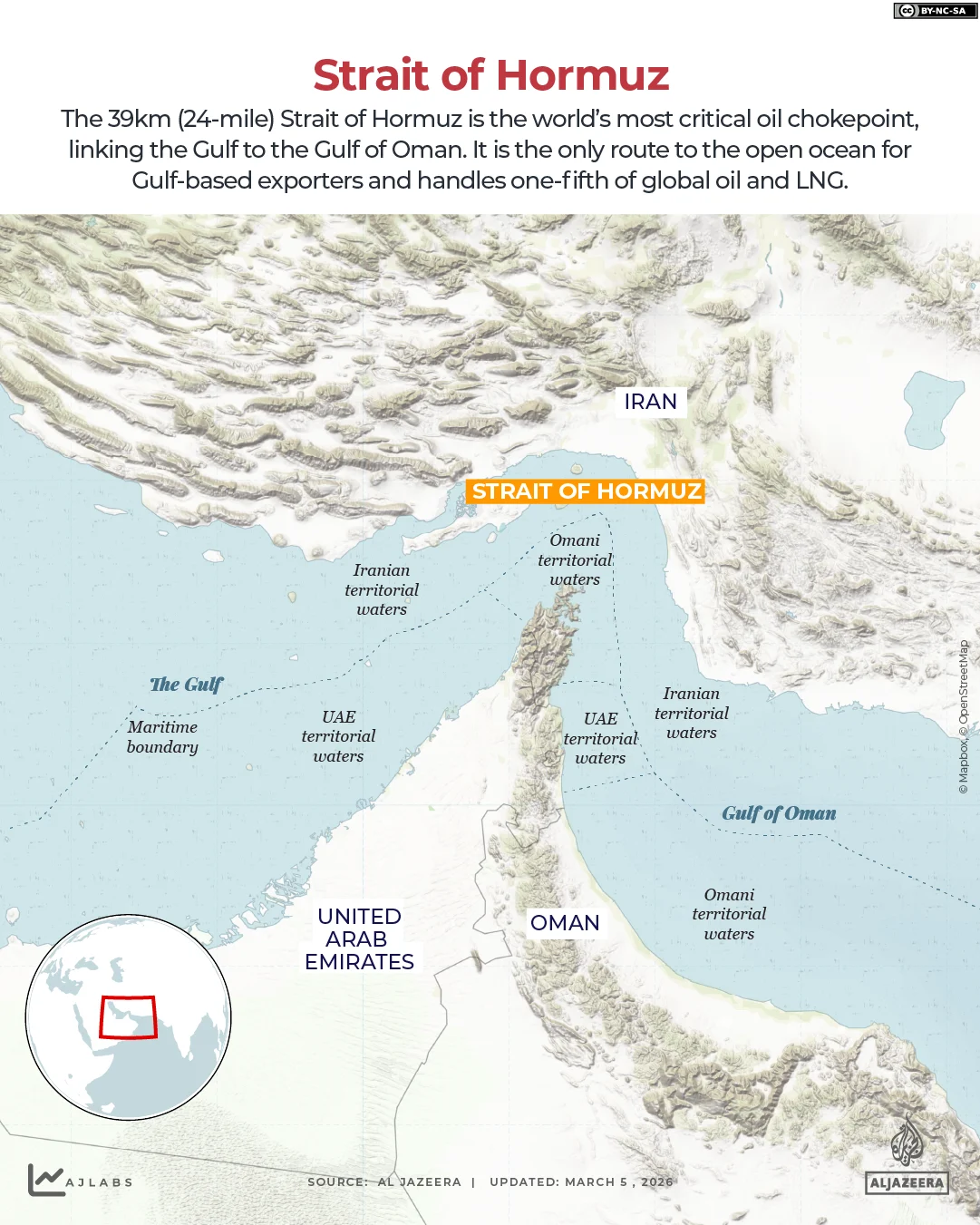
The United States, Iran, and Oman appear to be on the cusp of an interim agreement that could lead to the crucial reopening of the Strait of Hormuz, raising cautious hopes for de-escalation in one of the Middle East’s most volatile flashpoints. This diplomatic breakthrough, if solidified, promises to alleviate a crisis that has profoundly impacted global energy markets and maritime security since early 2026.
Current State of Negotiations and Proposed Agreement
Negotiations, which have reportedly been underway for several weeks, aim to achieve multiple critical objectives. Primarily, the proposed agreement seeks to reinstate the June 17 ceasefire between Washington and Tehran, which has been fragile amidst continued maritime incidents. Secondly, it endeavors to resolve contentious disputes over shipping through the strategic waterway. Before the recent escalations, the Strait of Hormuz served as the transit point for approximately one-fifth of the world’s oil supplies, making its disruption a global economic concern. Finally, a successful interim deal on Hormuz is envisioned as a crucial precursor, creating much-needed space for broader, more complex negotiations concerning Iran’s nuclear program and other long-standing regional issues.
US President Donald Trump struck an unexpectedly optimistic note on Tuesday evening, telling reporters that discussions with Iran were "moving along very nicely." When pressed on the imminence of a deal, Trump remarked, "We’ll find out. We’ll know in 48 hours." He underscored the urgency and stakes, adding, "The strait is going to be open very soon, or they’re going to get hit very hard, and then the strait is going to be open." These comments followed reports that President Trump had, over the weekend, opted against executing what he had previously described as the largest US military attack since World War II. This pattern reflects his now familiar approach of issuing severe threats against Iran before ultimately pivoting towards diplomatic solutions at the eleventh hour.
Iran’s Stance and Oman’s Crucial Mediation
In contrast to Washington’s public statements, Iran continues to deny holding direct talks with the United States. Iranian officials have consistently maintained that discussions are exclusively taking place with Oman, focusing on the management of the Strait of Hormuz. Oman, a nation whose territorial waters also encompass parts of the strait, has historically played a critical, neutral mediating role between Washington and Tehran, a tradition it continues to uphold in the current crisis.
Esmaeil Baghaei, spokesperson for the Iranian Ministry of Foreign Affairs, described the talks with Oman as "positive" and ongoing. However, a report from Iran’s Sepah News, quoting an unnamed official, indicated that persistent US military threats remain a significant impediment to reaching a comprehensive agreement. This highlights the delicate balance of pressure and diplomacy that defines the current geopolitical landscape.
Escalating Tensions and Economic Fallout
The diplomatic push unfolds against a backdrop of heightened tensions in and around the Strait of Hormuz. Just this Tuesday, the United Kingdom Maritime Trade Operations (UKMTO) agency reported a cargo ship being struck by an unidentified projectile off the coast of Oman, a stark reminder of the volatile environment.
Commercial maritime traffic through the waterway remains severely disrupted. On Monday, only eight vessels transited the strait, a drastic reduction compared to the average of roughly 130 ships per day recorded before the US-Israel war on Iran erupted on February 28, 2026. This prolonged disruption has raised significant concerns among international observers and economists, who warn that continued closures or impediments could lead to sharply rising global oil prices, potentially triggering broader economic instability.
Against this pressing backdrop, mediators are engaged in a frantic race to secure at least a temporary agreement over the waterway. This immediate goal is seen as essential before any attempts can be made to revive a broader memorandum of understanding (MoU) signed by Iran and the US in June, which was initially intended to lay the groundwork for wider peace negotiations.
The Strategic Significance of the Strait of Hormuz: A Global Lifeline
The Strait of Hormuz, a narrow choke point connecting the Persian Gulf to the Arabian Sea and the broader Indian Ocean, is arguably the world’s most critical oil transit waterway. Its strategic importance cannot be overstated. Roughly 21 million barrels per day (bpd) of crude oil, condensates, and petroleum products flowed through the strait in 2025, representing about 21% of global petroleum liquids consumption. Key oil exporters like Saudi Arabia, Iraq, UAE, Kuwait, and Iran depend entirely or significantly on the strait for their crude exports. Any disruption here sends immediate shockwaves through global energy markets, impacting prices, supply chains, and the economies of importing nations worldwide.
The current crisis, stemming from the US-Israel war on Iran that commenced on February 28, 2026, has underscored this vulnerability. Iran’s initial response to the conflict was to close the strait, directly impacting global energy prices and disrupting international trade. This move, while a powerful geopolitical lever, also carries significant economic risks for Iran itself.
Chronology of the Crisis
To understand the current negotiations, it is vital to trace the recent sequence of events:

- February 28, 2026: The US-Israel war on Iran erupts, marking a significant escalation in regional tensions.
- Early March 2026: In response to the conflict, Iran closes the Strait of Hormuz, leading to immediate spikes in global oil prices and severe disruptions to commercial shipping.
- Late March 2026: Iran reopens parts of the waterway but directs commercial ships to use a northern shipping lane passing through Iranian territorial waters around Larak Island.
- April 2026: A ceasefire is declared between Washington and Tehran. In an attempt to increase economic pressure on Iran, which was still exporting its own oil via the strait, the US imposes a naval blockade on Iranian ports. Simultaneously, Washington proposes that ships instead use a southern route along Oman’s coast.
- May-June 2026: Iran rejects the US proposal for the southern route, arguing it violates the spirit of the US-Iran MoU. Iranian forces subsequently target several ships that attempted to follow the Oman route, further escalating maritime insecurity.
- June 17, 2026: A broader Memorandum of Understanding (MoU) is signed between Iran and the US, intended to lay the groundwork for wider peace negotiations. Article 5 of this agreement stipulated that Iran would allow commercial vessels to pass through the Strait of Hormuz without charge for 60 days. However, vague wording regarding control and routes quickly led to disagreements.
- July-August 2026: As the 60-day period of the June MoU nears its end, and with lingering disputes over interpretation, new, intensive negotiations commence, primarily mediated by Oman, to find an interim solution specifically for the Strait of Hormuz.
- August 6, 2026: US President Trump expresses optimism about a deal within 48 hours, while Iran maintains talks are with Oman, not directly with the US. A cargo ship is reported struck off Oman, highlighting ongoing risks.
Key Issues Under Negotiation: Control, Lanes, and Fees
The core of the current negotiations revolves around two fundamental questions: who ultimately controls the Strait of Hormuz, and whether Iran should be permitted to impose fees on commercial vessels for passage.
The dispute over the waterway ignited shortly after the US and Israel launched their war on Iran. Tehran’s subsequent closure of the strait, a move unprecedented in its scope, not only disrupted one of the world’s busiest shipping routes but also caused global energy prices to soar to alarming levels. When Iran partially reopened the waterway, it mandated that commercial ships use a northern shipping lane traversing Iranian waters near Larak Island. The US countered this by imposing a naval blockade on Iranian ports, aiming to intensify economic pressure, even as Iran continued to export its own oil through the strait.
Following the April ceasefire, Washington advocated for ships to utilize a southern route along Oman’s coast. Iran, however, rejected this proposal, contending that it infringed upon the US-Iran MoU, and subsequently targeted several vessels that attempted to navigate the Omani route. Mediators are now working tirelessly to forge a compromise that would enable commercial shipping to resume safely while simultaneously addressing the critical security concerns of both Iran and Oman.
Iran’s Demands: Sovereignty and Shared Management
The Iranian Foreign Ministry spokesman, Baghaei, has articulated Iran’s primary objectives in the talks with Oman: "establishing safe inbound and outbound shipping lanes" that "uphold sovereign rights while also addressing the national security considerations of both Iran and Oman." He noted that discussions have been assessed positively at both political and technical levels, despite lingering differences over the operational specifics of shipping through the strait.
Iranian officials have highlighted outstanding issues including the precise mechanism for reopening the waterway, the structure of maritime service fees, and broader security arrangements. Tehran steadfastly insists that its negotiations are exclusively with Oman, not directly with Washington. It advocates for Iran and Oman to jointly manage the strait, respecting their respective territorial waters and maintaining control over navigation within those bounds.
Furthermore, Iran has signaled its intention to introduce some form of fee system for ships. Under established international maritime law, tolls for mere passage cannot be levied on international straits like Hormuz. However, coastal states are permitted to charge for legitimate services they provide, such as navigational assistance, pilotage, and environmental protection. Iran’s proposal likely seeks to align with this principle, positioning any charges as compensation for services rendered rather than outright transit tolls.
The US Perspective: Freedom of Navigation and No Iranian Tolls
Conversely, US officials have made it clear that the Trump administration’s core demand is total freedom of commercial navigation through the waterway. This includes a resolute rejection of any Iranian tolls or any arrangement that would require ships to obtain Tehran’s approval before transiting the strait.
A US official, speaking anonymously to The Associated Press, confirmed that any temporary arrangement would explicitly not involve Iranian approval for ship transit or the imposition of charges for using the waterway. The official reiterated Washington’s commitment to restoring the previous system, where "no party controls the lanes or the ability to transit through them." President Trump himself, addressing reporters on Monday, emphatically dismissed any notion that Iran should be permitted to charge vessels using the strait, declaring, "I’m not going to let them charge. Anybody’s going to charge, we’ll charge."
US Secretary of State Marco Rubio has also distinguished the Hormuz negotiations from wider diplomatic efforts regarding Iran’s nuclear program. "There’s the big deal, which is the one that has to do with their nuclear ambitions," Rubio stated, clarifying, "The immediate deal and the one that you’ve seen a lot of focus on is the straits." This indicates a strategic prioritization, addressing the immediate crisis in the strait to stabilize energy markets before tackling the more complex nuclear issue.
Proposed Compromises and International Models
Despite the Trump administration’s firm public rhetoric, various US media reports suggest that negotiators are exploring more conciliatory positions. According to Axios, a news website with direct communication channels to the Trump administration during the conflict, a proposal is taking shape where vessels entering the Gulf would utilize a northern shipping lane through Iranian waters, while those exiting would travel through a southern lane in Omani waters, coordinated with Iran. This arrangement would initially last 60 days, with no transit fees charged during this period, as per Axios.
The Associated Press, citing two regional officials, further reported that discussions include potential service fees tied to maritime security and environmental protection. Crucially, these discussions also reportedly encompass a broader agreement linked to the lifting of the US naval blockade on Iranian ports. Whether the US is prepared to accept such a linkage remains a key point of contention.
One proposal previously put forward by Oman reportedly draws inspiration from the operational model of the Strait of Malacca, which connects the Indian and Pacific Oceans. In that vital waterway, Indonesia, Malaysia, and Singapore collectively manage the strait, and ships are voluntarily asked to contribute funds towards navigation aids, environmental protection, and search and rescue operations. This model offers a precedent for shared responsibility and voluntary contributions, potentially providing a framework for the Strait of Hormuz.
Furthermore, Axios reported that negotiators are also discussing the critical task of clearing naval mines from the center of the strait as an immediate measure, before attempting to forge a longer-term agreement on the waterway’s permanent operational framework. Reuters, quoting a senior Iranian source involved in the negotiations, indicated that Tehran has already softened its initial demand for full control over shipping in both directions, though the source added that Iran is "unlikely to change its position" further on other core demands.

Iranian state media, specifically Press TV, has outlined a slightly different proposal, stating that negotiations have entered "a new phase" with "a bilateral understanding within reach." Quoting a senior Iranian official, the broadcaster reported that the talks aim to establish a new "middle corridor" through the Strait of Hormuz. This proposed corridor would eventually replace the existing northern and southern routes, aiming to ensure safe navigation while simultaneously safeguarding what it describes as "Iran’s rights as a coastal state."
Lingering Sticking Points and Sanctions Challenges
Much of the reported framework for these current talks appears to build upon, rather than completely replace, the Memorandum of Understanding (MoU) signed by Iran and the US on June 17. Article 5 of that agreement stipulated Iran’s consent to allow commercial vessels free passage through the Strait of Hormuz for 60 days. However, the ambiguous language surrounding ultimate control and permissible routes quickly led to interpretational disagreements. Therefore, the latest proposals seem to focus less on the immediate reopening (which was theoretically covered by the MoU) and more on the operational specifics and administrative framework after the initial 60-day period expires.
The reported framework also bears a striking resemblance to a proposal outlined last month by Iranian Deputy Foreign Minister Kazem Gharibabadi, who suggested that "the inbound shipping lane must be entirely under Iran’s control while part of the outbound lane may remain under Oman’s control." The remaining disagreements now largely revolve around who should administer the waterway over the longer term and whether Iran would ultimately be permitted to collect fees for maritime services.
Even if Iran and the US manage to strike an agreement, another significant obstacle looms. If Iran is granted responsibility for managing some of the shipping lanes or collecting fees, international shipping companies would need to coordinate with Iranian authorities. However, existing US sanctions could prevent many companies from doing so unless Washington explicitly grants an exemption.
Esfandyar Batmanghelidj, founder and chief executive of the Bourse & Bazaar Foundation, a think tank specializing in economic development and diplomacy in West and Central Asia, believes this dynamic could play into Iran’s hands. "Iran can also take advantage of the fact that US sanctions may prohibit coordination or payments with the Iranian authorities," he noted. "A large portion of vessel owners will not engage the channel unless expressly authorized by the Trump administration, putting the ball back in Trump’s court to effectively endorse" a proposal. This implies that even a theoretical agreement might be rendered ineffective without clear sanction waivers from the US.
Why the US Might Agree to Iranian Demands Now
The timing of these intensified negotiations is critical, as Washington faces mounting military and economic pressure to avert another major escalation. US media reports have indicated that concerns over dwindling defensive munitions stockpiles have significantly influenced President Trump’s decision-making, contributing to his reluctance to carry out threatened large-scale strikes against Iran. The financial and logistical strain of prolonged military engagement in the region is becoming increasingly apparent.
Furthermore, keeping the Strait of Hormuz largely closed poses a substantial risk of driving up global energy prices, which would inevitably translate into higher domestic petrol prices in the United States. Such an outcome would be highly unpopular with American voters, particularly with the November midterm elections fast approaching.
Oil analysts have issued dire warnings: if disruptions to the Strait of Hormuz persist, many nations could rapidly deplete their strategic oil stockpiles. This could push global energy prices to unprecedented and unsustainable levels, triggering a worldwide economic crisis. Given the ticking clock and the potential domestic and international repercussions, a temporary agreement now appears increasingly preferable for the US, even if it entails some concessions.
Trita Parsi, executive vice president of the Quincy Institute for Responsible Statecraft, emphasized that Washington’s priority should shift from an absolute denial of Iranian control to ensuring safe passage. "The Trump administration has increasingly framed the objective as preventing Iran from ‘controlling’ the strait. Yet the central American interest in strategic waterways has historically been less about who administers them than about whether ships can pass through them freely, predictably and without discrimination," he argued. Parsi suggests that "preventing a hostile state from acquiring coercive leverage has generally been a means of preserving passage, not an end that supersedes passage itself." Therefore, if reopening the strait necessitates acknowledging Iran’s legitimate capacity to regulate traffic in waters along its coast, Washington "should not reject an agreement merely because it fails to preserve the appearance of unqualified American dominance."
David Des Roches, a former director of Arabian Peninsula affairs in the US Department of Defense, concurred, stating that "what’s really needed here is some sort of agreement that leads to Iran formally announcing that it will cease to attack neutral civilian shipping whether in Omani waters or in international waters." He told Al Jazeera that any eventual agreement would likely reflect the geopolitical reality that Iran cannot simply be excluded from managing a vital waterway that borders its coast. "I think that the rough outlines of a deal are that Iran would deny free international passage in areas of its territorial waters," Des Roches said. "I think that’s probably about the best that can be reached at this point in time."
Broader Regional Implications: A Step, Not a Solution
While a deal to reopen the Strait of Hormuz would undoubtedly ease one of the most immediate and dangerous sources of tension between Iran and the United States, experts caution that it would not, by itself, resolve their wider disagreements. Abas Aslani, a senior research fellow at the Center for Middle East Strategic Studies, told Al Jazeera that while an agreement over Hormuz would be "a good start," it "will not magically solve all the issues."
If commercial shipping resumes, negotiators would still face the formidable task of reviving the broader June MoU and eventually returning to talks on Iran’s nuclear program, a complex and politically charged issue. Other regional flashpoints also remain acutely unresolved. These include the ongoing conflict between Israel and Hezbollah in Lebanon, persistent attacks by Iran-aligned groups throughout the region, and continued disruptions to shipping in the Red Sea caused by the Iran-backed Houthis in Yemen. Compounding these challenges is President Trump’s inherent unpredictability and his recurring predisposition towards threatening military action, which keeps the region in a perpetual state of uncertainty.
Aslani noted the rapid swings between military escalation and diplomacy have left the region feeling like "a high-speed roller-coaster." He concluded that a Hormuz agreement could, however, allow both sides to return to implementing the June MoU, thereby creating a pathway towards "a final agreement on the nuclear issue." Such a deal would be a critical first step on a long and arduous journey towards lasting stability in the Middle East.
