

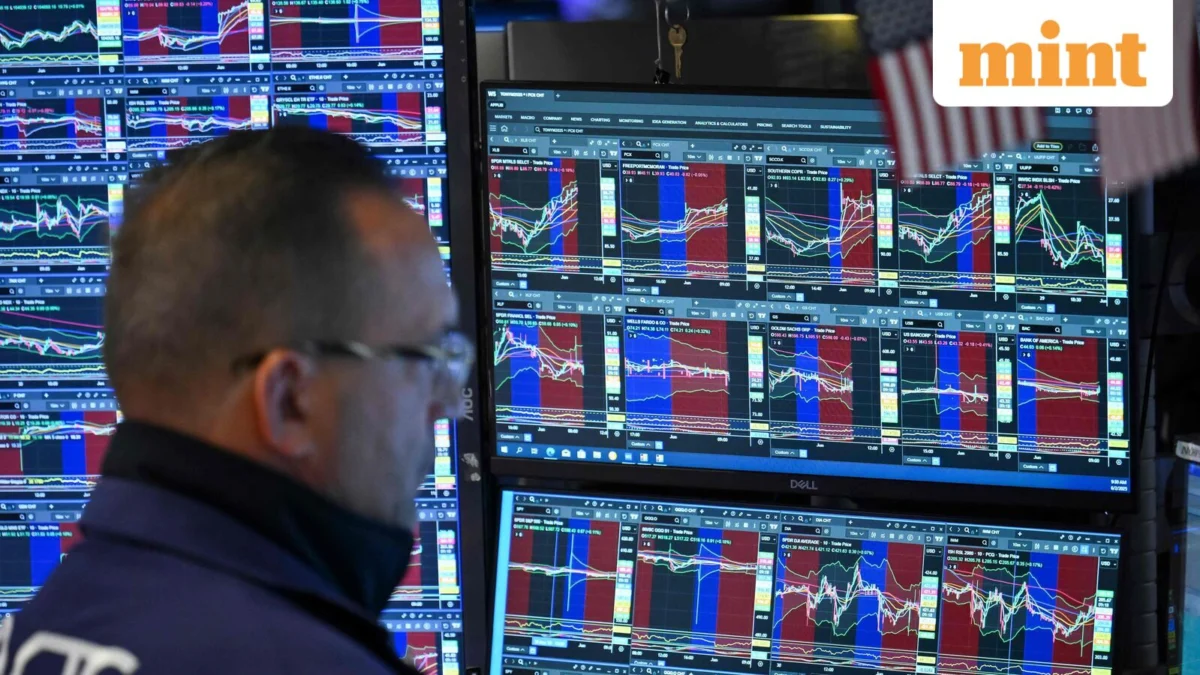
Global equity markets experienced a significant relief rally in early Monday trading on August 3, as United States stock futures surged following President Donald Trump’s decision to halt planned military strikes against Iranian targets. The sudden de-escalation of a high-stakes geopolitical standoff in the Middle East provided a much-needed catalyst for risk assets, leading to a substantial retreat in crude oil prices and a stabilization of investor sentiment after a volatile month of July. Dow Jones Industrial Average futures jumped 413 points, representing a 0.8% gain, while the broader S&P 500 futures rose by 0.6% and the tech-heavy Nasdaq-100 futures advanced 0.4%.
The pivot toward diplomacy came late Saturday when President Trump announced via social media that he had suspended kinetic military operations. According to the administration, the decision was influenced by a consensus among Middle Eastern allies on a broad framework for a peace deal. This framework reportedly includes the restoration of safe passage for cargo traffic through the Strait of Hormuz, a narrow waterway that serves as the world’s most vital oil transit artery. The news immediately mitigated fears of a full-scale regional war, which had been simmering since the US and Israel launched coordinated strikes on Iranian assets earlier in February.
Geopolitical De-escalation and the Strait of Hormuz
The primary driver behind the market’s positive opening was the reduction in the "geopolitical risk premium" that has been baked into asset prices for months. The Strait of Hormuz, located between Oman and Iran, connects the Persian Gulf with the Gulf of Oman and the Arabian Sea. It is estimated that nearly 20% of the world’s daily seaborne oil consumption passes through this chokepoint. Any disruption to this route typically sends global energy prices into a tailspin, creating inflationary pressure that complicates the mandate of central banks worldwide.
President Trump’s move to opt for diplomatic negotiations over military escalation follows a pattern of "maximum pressure" followed by sudden overtures for dialogue. In his statement, the President noted that regional allies had urged a diplomatic resolution to avoid a catastrophic disruption of global trade. The proposed deal aims not only to end the current military exchanges but also to establish a long-term maritime security protocol. This development is particularly significant for Wall Street, as it removes the immediate threat of a supply-side shock to the global economy.
Crude Oil Prices Plunge Amid Supply Security Hopes
The impact of the de-escalation was most visible in the energy markets. Crude oil prices, which had remained stubbornly high throughout the first half of the year, came under intense selling pressure. Brent crude, the international benchmark, tumbled more than 7%, hitting an intraday low of $81.55 per barrel. Simultaneously, West Texas Intermediate (WTI), the US benchmark, dropped by 7% to settle near $78.95 per barrel.
The decline was exacerbated by a recent decision from OPEC+ (the Organization of the Petroleum Exporting Countries and its allies). The cartel recently announced a modest increase in production quotas, signaling that major producers are prepared to maintain market stability. When combined with the reduced risk of Iranian retaliation or a blockade of the Strait of Hormuz, the market suddenly shifted from a narrative of scarcity to one of relative abundance.
While lower oil prices are a boon for consumers and energy-intensive industries such as airlines and logistics, they present a mixed bag for the S&P 500’s energy sector. Major US oil producers had reported record profitability during the June quarter, bolstered by prices that had frequently spiked above $100 per barrel. However, the broader market views the decline in energy costs as a net positive, as it helps cool the persistent inflation that has plagued the US economy for several quarters.
Federal Reserve Policy and Macroeconomic Headwinds
Despite the optimism surrounding the Middle East, investors remain tethered to the reality of the Federal Reserve’s "higher for longer" interest rate environment. Last week, the Federal Open Market Committee (FOMC) opted to keep the benchmark federal funds rate steady at 3.50%-3.75%. However, the decision was far from harmonious.

Internal friction within the Fed has become a focal point for market analysts. Three officials formally dissented against the pause, advocating for an immediate 25-basis-point hike to combat "sticky" inflation. These hawkish members warned that by delaying further tightening, the Fed risks allowing inflation expectations to become unanchored, which might eventually necessitate more aggressive and painful rate hikes in the future.
The most recent Personal Consumption Expenditures (PCE) Price Index data—the Fed’s preferred metric for tracking inflation—showed a month-on-month increase of 0.1% in June. This brought the annual inflation rate to 3.7%. While this figure was largely in line with analyst expectations, it remains significantly above the Fed’s long-term 2% target. The central bank’s cautious stance has left the market in a state of suspended animation, with all eyes now turning to the July employment report due this Friday. A strong jobs report could embolden the hawks within the Fed, while a cooling labor market might provide the justification needed for a pivot toward rate cuts later in the year.
Corporate Earnings and the AI Valuation Debate
As Wall Street enters the first trading week of August, corporate earnings remain a critical pillar of market support. The second-quarter earnings season has been characterized by a stark divide between traditional industries and the high-growth technology sector.
Semiconductor and chip stocks, which have been the darlings of the 2026 bull market due to the ongoing artificial intelligence (AI) revolution, are facing increased scrutiny. While companies like Nvidia and AMD continue to post impressive numbers, investors are beginning to question whether current valuations have outpaced the actual pace of AI monetization. The Nasdaq-100’s relatively modest gain of 0.4% in futures trading compared to the Dow’s 0.8% suggests a slight rotation out of high-valuation tech and into more value-oriented, cyclical stocks that benefit from lower energy costs and geopolitical stability.
Chronology of the Conflict: From February to August
The road to the current de-escalation has been marked by extreme volatility. Understanding the timeline is essential for interpreting the current market reaction:
- February 2026: Tensions flared after a series of cyberattacks and maritime skirmishes. The US and Israel conducted targeted strikes on Iranian military facilities, citing intelligence of an imminent threat to regional stability.
- March – May 2026: Oil prices surged past $105 per barrel as Tehran threatened to close the Strait of Hormuz. Global supply chains, already fragile, faced renewed pressure.
- June 2026: The Federal Reserve held rates steady but signaled a hawkish bias, citing the inflationary impact of high energy prices.
- July 2026: Iran launched a series of drone and missile attacks on US installations in the Middle East. Wall Street experienced its most volatile month of the year, with the S&P 500 posting multiple 2% daily swings.
- August 1-2, 2026: Diplomatic channels, reportedly mediated by Gulf allies, intensified. President Trump announced the suspension of military strikes, citing a "broad framework for peace."
- August 3, 2026: US stock futures react positively, and oil prices collapse as the immediate threat of war recedes.
Implications for the Near-Term Outlook
The cooling of tensions with Iran provides a temporary "goldilocks" scenario for the US stock market: lower energy prices and a reduced risk of a catastrophic war. However, the underlying economic challenges have not disappeared. The persistence of 3.7% inflation and a divided Federal Reserve mean that the path forward remains fraught with uncertainty.
Market analysts suggest that if the peace deal regarding the Strait of Hormuz is formalized, it could lead to a sustained rally in consumer discretionary stocks and transportation sectors. Conversely, the "safe haven" trade in gold and Treasury bonds may see some outflows as investors move back into equities.
The broader impact on global trade cannot be overstated. A stabilized Middle East ensures the flow of not just oil, but also liquefied natural gas (LNG) and commercial shipping that connects Asian manufacturing hubs with European and American markets. For now, Wall Street is breathing a sigh of relief, but the focus will quickly shift from the geopolitical stage back to the halls of the Federal Reserve and the data-driven reality of the American economy. As the July employment report looms, the market remains on high alert, balancing the euphoria of peace with the pragmatic concerns of inflation and interest rates.
