

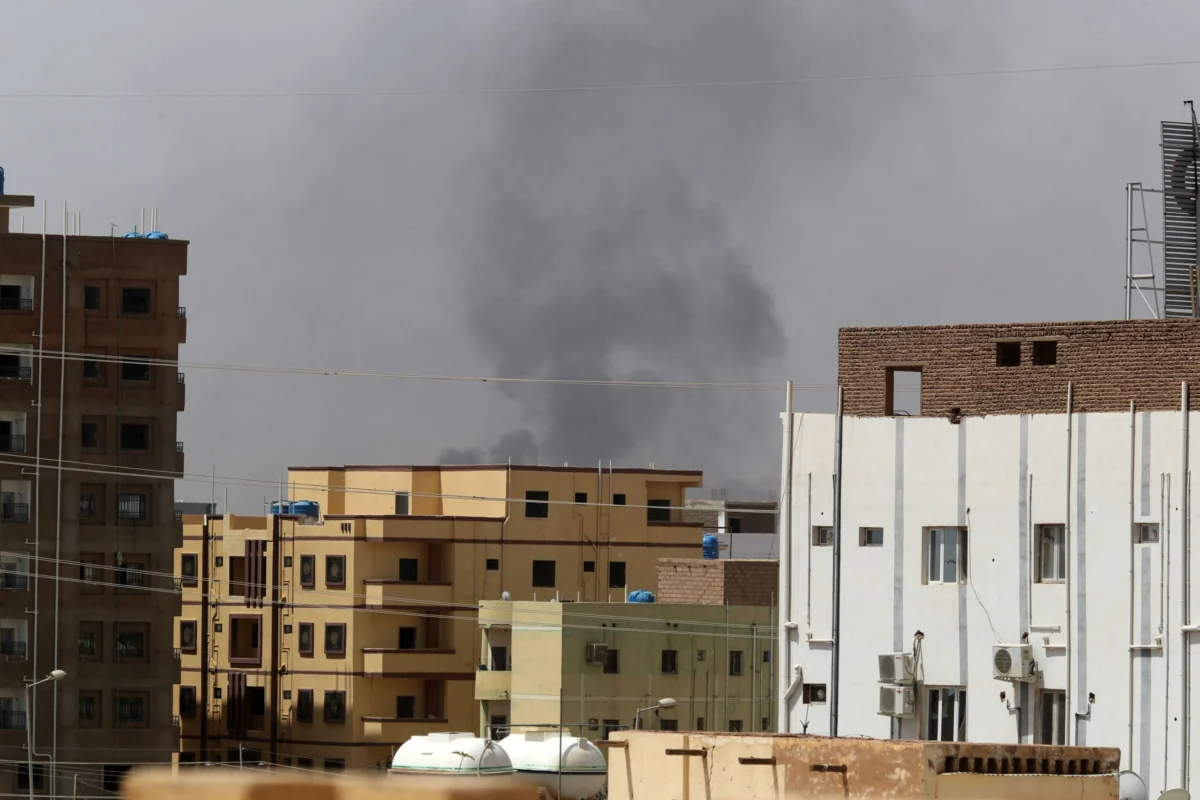
The signing of a week-long ceasefire agreement between Sudan’s warring military factions in the Saudi Arabian city of Jeddah has provided a tentative glimmer of hope for a nation gripped by five weeks of relentless urban warfare and a rapidly deteriorating humanitarian crisis. The deal, brokered by the United States and Saudi Arabia, marks a significant diplomatic milestone as the first written truce signed by both the Sudanese Armed Forces (SAF) and the paramilitary Rapid Support Forces (RSF) since the conflict erupted on April 15, 2023. While previous verbal agreements and short-term truces were repeatedly violated, this latest accord includes an internationally supported monitoring mechanism designed to ensure compliance and facilitate the delivery of life-saving aid to millions of trapped civilians.
Despite the formal signing, the atmosphere in the capital remains tense. On Sunday, residents in Khartoum reported hearing the familiar sounds of sporadic artillery fire and heavy machinery, a stark reminder of the challenges ahead as the ceasefire is not scheduled to take effect until Monday evening. The conflict, which pits General Abdel Fattah al-Burhan’s army against General Mohamed Hamdan Dagalo’s RSF, has already transformed the sprawling metropolis of Khartoum into a battleground, forcing over a million people to flee their homes and pushing the nation’s infrastructure to the brink of total collapse.
The Jeddah Agreement: A New Framework for De-escalation
The "Agreement on a Short-Term Ceasefire and Humanitarian Arrangements" represents the culmination of weeks of proximity talks in Jeddah. Unlike previous unilateral declarations, this seven-day truce is a bilateral commitment that specifically outlines the obligations of both parties. Key components of the deal include the withdrawal of forces from hospitals and essential public facilities, the restoration of basic services such as water and electricity, and the creation of safe passages for civilians and humanitarian workers.
A critical feature of the Jeddah deal is the establishment of a Ceasefire Monitoring and Coordination Committee. This body will be composed of representatives from the United States, Saudi Arabia, and both warring factions. The committee is tasked with observing the situation on the ground and reporting violations, providing a layer of accountability that was absent in earlier attempts to halt the violence. Mediators have emphasized that this short-term ceasefire is intended to be a stepping stone toward more comprehensive negotiations, which would eventually address the removal of military forces from urban centers and the resumption of a civilian-led political transition.
However, skepticism remains high among analysts and the Sudanese public. Neither General al-Burhan nor General Dagalo, widely known as Hemedti, traveled to Jeddah to sign the document personally, delegating the task to lower-ranking representatives. This absence has raised questions about the level of buy-in from the top leadership and whether commanders on the ground will follow the directives issued from the negotiating table.
A Chronology of the Conflict: From Transition to Total War
The current war is the violent climax of a long-standing power struggle between the SAF and the RSF, which had been uneasy partners following the 2019 popular uprising that toppled longtime autocrat Omar al-Bashir. The two generals initially collaborated to sideline civilian leaders in a October 2021 coup, effectively stalling Sudan’s transition to democracy. However, the alliance fractured over the specifics of a civilian-backed "Framework Agreement" proposed in late 2022.
The primary point of contention was the integration of the RSF into the regular army. The SAF pushed for a swift two-year integration period under its command, while the RSF demanded a ten-year timeline and a degree of autonomy. Tensions reached a breaking point in mid-April when RSF units were mobilized near military airbases. On the morning of April 15, gunfire and explosions erupted across Khartoum, with both sides accusing the other of firing the first shot.
Over the subsequent five weeks, the fighting spread from the capital to the volatile Darfur region and other parts of the country. The SAF has largely relied on its superior air power and heavy artillery, launching frequent strikes on RSF positions embedded within densely populated residential neighborhoods. Conversely, the RSF has utilized its mobility and knowledge of urban guerrilla tactics to seize control of key government buildings, hospitals, and private residences, using the civilian population as a shield against aerial bombardment.
The Humanitarian Crisis in Numbers
The human cost of the conflict has been staggering. According to data provided by the World Health Organization (WHO) and the Sudanese Ministry of Health, at least 705 people have been confirmed killed and more than 5,287 injured. However, medical professionals and local activists warn that these figures are significant undercounts, as many bodies remain uncollected in the streets or are buried in private gardens because it is too dangerous to reach cemeteries.
The displacement crisis is equally severe. The International Organization for Migration (IOM) reports that approximately 1.1 million people have been displaced since the fighting began. Roughly 840,000 people are internally displaced within Sudan, while over 250,000 have crossed borders into neighboring countries including Egypt, Chad, South Sudan, and Ethiopia. Many of those fleeing have described harrowing journeys through checkpoints manned by armed groups, where looting and harassment are commonplace.
In Khartoum, the collapse of the healthcare system has reached a critical stage. The Sudanese Doctors’ Trade Union reports that nearly 80% of hospitals in conflict zones are out of service. Those that remain open are operating with minimal staff, no electricity, and a desperate shortage of medical supplies, oxygen, and blood. The scarcity of food and clean water has triggered a spike in prices, leaving the millions who could not flee the city in a state of constant peril.
Voices from the Frontline: The Civilian Perspective
For the residents of Khartoum, the Jeddah agreement is a "wait and see" moment. Safaa Ibrahim, a 35-year-old resident who has seen her family scattered across borders, expressed the exhaustion felt by millions. "We are tired of this war. We have been chased away from our homes, and the family has scattered between towns in Sudan and Egypt," she told reporters. Her sentiment reflects a broader desire for a return to normalcy and safety, placing the moral burden on al-Burhan and Hemedti to respect the sanctity of human life.
Mohamed Hamed, an activist remaining in the capital, highlighted the urgency of the situation. "The people of Khartoum are waiting for the truce and the opening of humanitarian corridors. The health situation is getting worse day after day," he noted. For activists like Hamed, the ceasefire is not just a political maneuver but a literal lifeline for those suffering from chronic illnesses or injuries sustained during the shelling.
Military Stance and the Risk of Civil Armament
The military leadership continues to project a posture of eventual victory. Senior army general Yassir al-Atta recently stated on Sudan state TV that the military’s objective remains the total removal of RSF "rebels" from civilian infrastructure, including schools and hospitals. While the SAF has faced criticism for its use of indiscriminate shelling in residential areas, General Atta defended the military’s actions as necessary to dislodge an enemy that has "occupied" the homes of citizens.
A concerning development in the conflict is the growing call for civilian armament. When asked about tribal leaders urging their followers to take up arms, General Atta remarked that while the army does not currently require civilian recruits, residents have a "natural right" to arm themselves for self-defense. Analysts warn that such rhetoric risks escalating the conflict from a war between two military factions into a full-scale civil war characterized by ethnic and tribal militias, a scenario that would make a negotiated peace nearly impossible to achieve.
Regional and International Implications
The stability of Sudan is central to the security of the Horn of Africa, the Red Sea, and the Sahel. Neighboring countries, many of which are already grappling with their own internal challenges, are ill-equipped to handle a prolonged influx of refugees. Chad, for instance, is hosting tens of thousands of refugees in its eastern provinces, where resources were already stretched thin.
International observers, including the African Union and the United Nations, have lauded the Saudi-US mediation efforts but remain cautious. UN Secretary-General António Guterres has repeatedly called for an immediate cessation of hostilities, noting that the conflict is "tearing the country apart" and could have "catastrophic consequences" for the entire region. The involvement of the United States and Saudi Arabia is seen as a vital counterweight to the influence of regional actors who may have vested interests in the victory of one side over the other.
Fact-Based Analysis: The Path Forward
The success of the Jeddah ceasefire hinges on the effectiveness of the monitoring mechanism. Without a physical presence of neutral observers or high-resolution satellite monitoring coupled with immediate diplomatic consequences for violations, the truce risks becoming another "breathing space" for both sides to regroup and rearm.
Furthermore, the core political issues—the integration of the RSF and the return to civilian rule—remain unresolved. The Jeddah talks intentionally narrowed their focus to humanitarian concerns to achieve a quick result. However, until a political settlement is reached that addresses the dual-power structure of the Sudanese security apparatus, the underlying causes of the war will persist.
The international community now faces the dual challenge of scaling up a massive humanitarian response while maintaining diplomatic pressure on the warring generals. With the Sudanese economy in freefall and the agricultural season at risk of being missed due to the violence, the window to prevent a total state collapse is rapidly closing. The coming days will reveal whether the Jeddah agreement is a genuine turning point or merely a brief pause in a conflict that threatens to redefine the map of Northeast Africa.
