

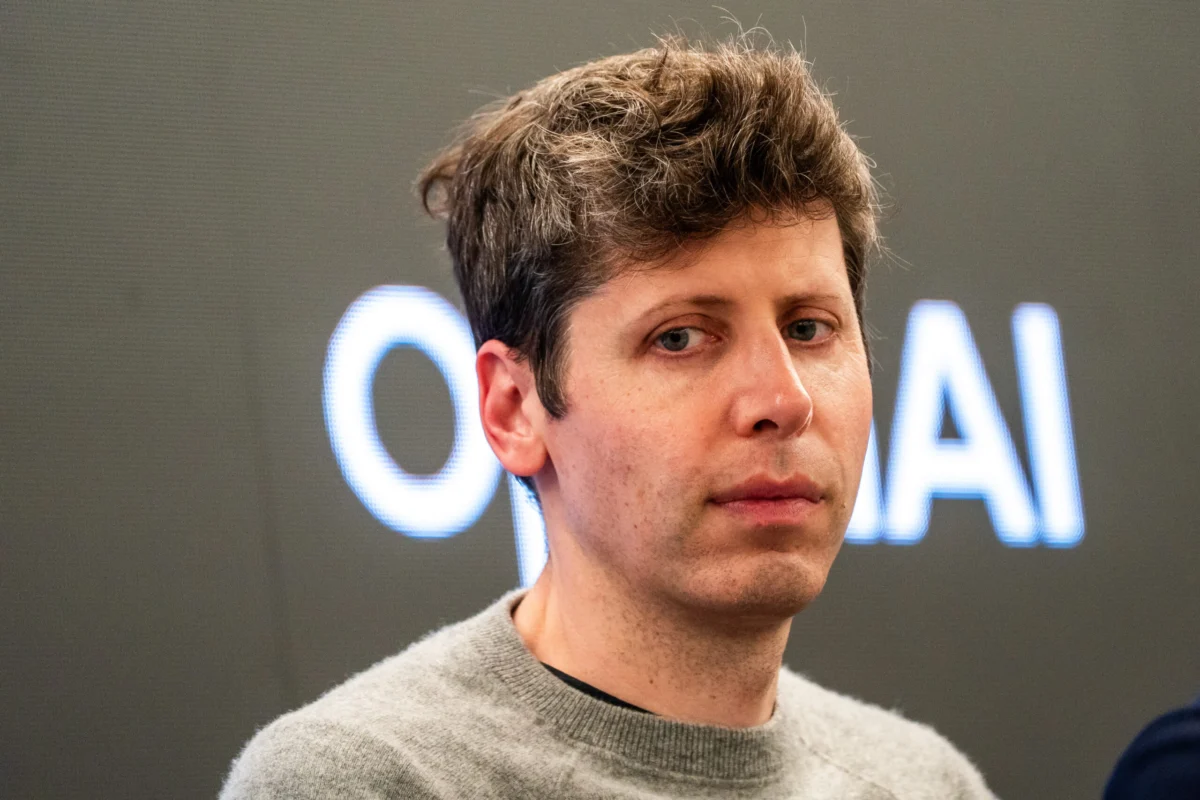
OpenAI Chief Executive Officer Sam Altman recently ignited a significant public discourse regarding the integration of artificial intelligence into the intimate spheres of family life. In a post shared on the social media platform X, Altman proposed what he described as a "cool use case" for the company’s latest enterprise-focused product, ChatGPT Work. He suggested that parents could synchronize their family calendars and input their children’s specific interests into the AI system. According to Altman’s vision, the AI could then generate a personalized podcast every morning for the drive to school, covering topics such as a child’s afternoon soccer game, an upcoming birthday, and relevant news snippets.
The proposal, intended to showcase the utility of OpenAI’s new family of models—including the anticipated GPT-5 and GPT-6 architectures—was met with a wave of skepticism and criticism from various sectors of the public and creative industries. The most prominent rebuttal came from Alex Hirsch, the creator of the acclaimed animated series "Gravity Falls." Hirsch’s response, which simply asked, "What if you just talked to your children?", resonated deeply with users, quickly eclipsing Altman’s original post in terms of engagement. As of the weekend following the exchange, Hirsch’s retort had garnered over 122,000 likes and 9,000 reposts, significantly outperforming Altman’s initial post, which stood at approximately 9,600 likes and 300 reposts.
The Evolution of ChatGPT Work and the Push for Domestic Integration
The context for Altman’s suggestion lies in the recent launch of ChatGPT Work, a tier of OpenAI’s service designed to handle more complex, data-integrated tasks. By encouraging users to connect personal data such as family calendars and private interests, OpenAI is signaling a shift from general-purpose assistance toward highly personalized, proactive "agentic" behavior. This move is part of a broader strategy to embed AI into the daily routines of consumers, moving beyond the office and into the household.
Industry analysts note that OpenAI is currently in a phase of aggressive expansion. Following the release of its new family of models, which the company claims offers unprecedented reasoning capabilities, the focus has shifted toward finding "sticky" use cases—applications that make the technology indispensable to a user’s lifestyle. The "family podcast" concept represents an attempt to solve the "mental load" of parenting by automating the synthesis of daily schedules and interests. However, the viral backlash suggests a growing tension between technological efficiency and the preservation of human-centric experiences.
A Growing Trend of AI-Mediated Reality
Altman’s vision of an AI-generated morning commute is not an isolated sentiment among Silicon Valley leadership. It mirrors a trend of "disintermediation," where AI is used to filter or summarize human experiences to save time. Last year, Microsoft CEO Satya Nadella revealed that he had altered his own morning routine by replacing his favorite podcasts with AI-generated summaries. Nadella noted that instead of listening to the original content, he preferred to ask a chatbot to synthesize the key points of those podcasts, effectively prioritizing information density over the experience of listening to a long-form conversation.
This shift toward AI-mediated consumption raises questions about the value of nuance and the "messy realities" of human interaction. Critics argue that when a parent uses an AI to "talk" to their children about their day via a synthesized podcast, they are outsourcing the emotional labor of engagement. The viral success of Hirsch’s response highlights a societal anxiety that the convenience of AI may come at the cost of genuine interpersonal connection.
OpenAI’s Strategic Focus on Families and Parental Trust
Despite the public skepticism, OpenAI is moving forward with plans to capture the family market. Recent internal developments at the San Francisco-based company indicate a concerted effort to build products specifically for parents and children. The company recently posted a job listing for a product manager with a specialized background in building "trust-sensitive consumer experiences for parents and families." This role is expected to bridge the gap between OpenAI’s powerful technical capabilities and the sensitive requirements of a domestic environment.
The push into the family sector is also a response to market competition. With competitors like Google and Meta also vying for the "personal assistant" space, OpenAI is leveraging its brand recognition to become the default platform for household management. To support this, the company has introduced a variety of safety features, including improved parental controls and safety routing systems designed to prevent the AI from generating age-inappropriate content.
Historical Context and Altman’s Personal Advocacy for AI Parenting
Sam Altman has been a vocal proponent of AI’s role in child-rearing for some time. During an appearance on "The Tonight Show with Jimmy Fallon," Altman discussed his own perspective on the challenges of modern parenting. He stated, "I cannot imagine having gone through figuring out how to raise a newborn without ChatGPT." While he conceded that humanity has successfully raised children for millennia without such tools, his comments underscored a belief that AI is a necessary evolution in the "parental toolkit."
This perspective aligns with Altman’s broader philosophy that AI should act as a co-pilot in all aspects of life. For Altman, the AI-generated podcast is not a replacement for conversation, but a supplement—a way to ensure that no detail of a child’s life is overlooked in the rush of a morning commute. However, the public’s reaction suggests that many view the "commute to school" as one of the few remaining times for uninterrupted, face-to-face communication, making it a particularly sensitive target for automation.
Legal and Ethical Challenges in the Family Sector
As OpenAI seeks to deepen its involvement in family life, it faces significant legal and ethical hurdles. The company is currently navigating multiple lawsuits filed by families who allege that the technology has had detrimental effects on their children. Some of these lawsuits claim that ChatGPT played a role in fostering delusions or, in tragic cases, contributing to suicides by providing harmful responses during sensitive interactions.
In response to these allegations, OpenAI has maintained that it is "continuously improving how our models respond in sensitive interactions." The company has invested heavily in "Red Teaming"—the process of stress-testing AI models to identify potential harms—and has implemented stricter guardrails for interactions involving minors. Nevertheless, the legal pressure highlights the high stakes of introducing AI into the emotional and developmental lives of children.
Chronology of OpenAI’s Parental Outreach
The trajectory of OpenAI’s focus on the domestic sphere can be traced through several key milestones over the past 24 months:
- Late 2023: Microsoft CEO Satya Nadella discusses the use of AI to summarize podcasts, signaling a shift toward AI-filtered information consumption.
- December 2024: Sam Altman appears on "The Tonight Show," advocating for the use of ChatGPT in newborn care.
- September 2025: OpenAI rolls out a comprehensive "Safety Routing System" and enhanced parental controls to prepare for a younger user base.
- November 2025: Legal challenges intensify as seven additional families join a lawsuit against the company regarding the AI’s impact on youth mental health.
- July 2026: OpenAI officially launches the GPT-5 and GPT-6 model family, alongside "ChatGPT Work," a product designed for deep data integration.
- Present: Sam Altman’s "family podcast" post goes viral, sparking a global debate on AI and parenting.
Implications for the Future of Human Interaction
The debate sparked by Altman and Hirsch reflects a broader cultural reckoning with the "efficiency-first" mindset of Silicon Valley. As AI models become more capable of mimicking human speech and organizing human lives, the boundary between a tool and a surrogate becomes increasingly blurred.
From a sociological perspective, the "family podcast" proposal represents the commodification of the "mental load"—the invisible labor of remembering dates, interests, and schedules. While automating these tasks can reduce stress, the backlash suggests that the process of remembering and discussing these details is where human bonding occurs.
Furthermore, the technical implications are significant. For Altman’s vision to work, users must grant the AI unprecedented access to their private lives, including real-time location data, private calendars, and the personal preferences of minors. This raises long-term privacy concerns regarding how this data is stored, utilized for future model training, and protected from potential breaches.
As OpenAI continues to develop its "Work" and "Family" ecosystems, the company will likely need to navigate a public that is increasingly wary of "tech-creep." While the utility of a personalized news and schedule summary is undeniable, the viral response to Alex Hirsch’s simple question serves as a reminder that in the age of artificial intelligence, the most valued "use case" may still be a simple, unmediated human conversation.
