

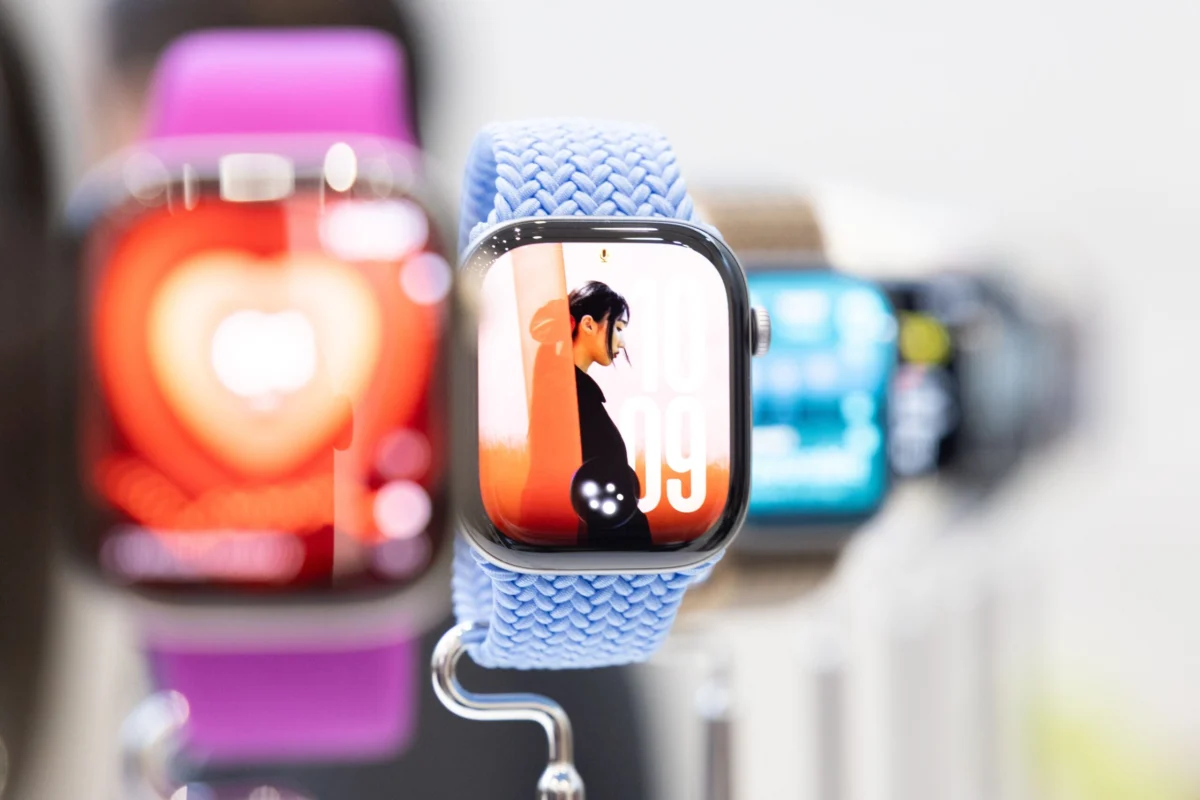
The release of the Apple Watch Series 12 marks a significant pivot in the trajectory of wearable technology, transitioning the device from a smartphone companion into a sophisticated, high-frequency medical and productivity hub. Central to this evolution is the introduction of the S11 system-in-package (SiP), a custom-designed silicon architecture that prioritizes machine learning efficiency and real-time biometric processing. While previous iterations of the Apple Watch focused on incremental design refinements, the Series 12 introduces substantial hardware overhauls to its sensing array and a suite of "Audio Intelligence" features that leverage the company’s broader push into generative AI.
Advanced Navigation and Gesture Control Integration
A primary focus for the Series 12 is the enhancement of "one-handed" usability, a design philosophy intended to make the watch more accessible during multitasking or for users with limited mobility. Building upon the "Double Tap" feature introduced in earlier models, Apple has expanded the gesture vocabulary to include a single-tap gesture and refined wrist-flick controls.
The new single-tap gesture, performed by touching the index finger and thumb together once, allows users to select specific widgets within the Smart Stack. The existing double-tap remains the primary method for scrolling through these widgets. Furthermore, a wrist flick—a quick rotation of the forearm—can now be mapped to system-level commands such as returning to the watch face, silencing active timers, or dismissing incoming notifications. These additions are powered by the S11 chip’s enhanced Neural Engine, which uses a refined transformer model to distinguish intentional gestures from natural arm movements with higher precision than its predecessors.
The S11 Chip: A Foundation for Proactive Intelligence
The S11 chip represents the most significant internal upgrade in several generations. While Apple has maintained a standard of smooth UI performance, the S11 focuses on the efficiency of the Neural Engine to handle persistent background tasks. This silicon upgrade powers a remodeled pedometer system designed to solve long-standing inaccuracies in indoor movement tracking. By utilizing advanced sensor fusion—combining data from the accelerometer, gyroscope, and the new high-frequency heart rate monitor—the Series 12 can more accurately estimate stride length and cadence during indoor walks and runs where GPS data is unavailable.
Beyond fitness tracking, the S11 chip enables the "Steps" complication, a highly requested feature that allows users to view real-time step counts directly on the watch face. Previously, users were required to navigate into the Activity app to view specific numerical data, a friction point that Apple has finally addressed to compete with dedicated fitness trackers from brands like Garmin and Fitbit.
The Health Sensing System: From Snapshots to Continuous Monitoring
The most consequential hardware change in the Series 12 is the redesigned Health Sensing System. For years, wearable devices have struggled with the "snapshot" problem—taking measurements at intervals that may miss significant physiological events. The Series 12 addresses this by dramatically increasing the sampling frequency of its sensors.
The new array features 32 electrodes for ECG readings, a massive increase from the two electrodes found on the Series 11. This increase in electrode density improves skin contact and reduces signal noise, potentially leading to more reliable readings for users with varying skin types or those in motion. Additionally, the optical heart rate sensors (photodiodes) have been rearranged into a ring configuration. This geometry, coupled with larger green LEDs, allows for deeper light penetration and more accurate data capture during high-intensity exercise.
The result of this hardware shift is a transition to near-continuous monitoring:
- Heart Rate Frequency: The Series 12 measures heart rate every five seconds, even during non-workout periods. In contrast, the Series 11 defaulted to a five-minute interval when the user was stationary.
- Heart Rate Variability (HRV): The device now captures HRV data every five minutes, compared to the previous two-hour interval.
- Dual-Metric HRV: The system now distinguishes between "Recovery HRV" (measured during rest or sleep) and "Overall HRV" (captured throughout the day), providing a more nuanced view of the autonomic nervous system’s response to stress.
The Readiness App and Longevity Metrics
To synthesize this influx of high-frequency data, Apple has introduced the Readiness app, a direct response to the "recovery scores" popularized by Oura and Whoop. The Readiness app requires a baseline of seven days of sleep data before it can generate a daily score. This score aggregates activity levels, sleep quality, resting heart rate, and HRV to provide a 1-to-100 metric indicating how prepared the user’s body is for physical or mental exertion.
In addition to recovery, Apple is expanding its focus toward the growing "longevity" market. A planned update to the Health app later this year will introduce a Longevity tab. This section will feature "Health Age," a metric that uses a proprietary algorithm to compare a user’s biometric data—such as VO2 max, walking steadiness, and resting heart rate—against demographic averages. This shift signals Apple’s intent to move beyond fitness tracking and into the realm of long-term health span management.
Audio Intelligence and the Siri Recap Feature
Perhaps the most technologically ambitious, yet potentially controversial, addition to the Series 12 is the "Audio Intelligence" suite. This includes four distinct features: accelerated Shazam identification, Sound Recognition (for alerts like sirens or smoke detectors), Siri Recap, and Live Rewind.
Siri Recap is positioned as a productivity tool that utilizes the Apple Watch’s microphone to capture and process audio in real-time. Using "Apple Intelligence"—Apple’s on-device and private cloud-based AI framework—the watch can transcribe conversations, such as meetings or lectures, and generate concise summaries and action items. This feature represents a significant leap in the watch’s role as a standalone productivity device, though it raises questions regarding privacy and consent in social and professional settings.
To mitigate these concerns, Apple has integrated "Private Cloud Compute," ensuring that any data processed off-device is not accessible to Apple and is deleted immediately after the summary is generated. Live Rewind, a companion feature, allows users to "scroll back" through the last few minutes of captured audio to hear something they might have missed, effectively providing a short-term buffer for real-world conversations.
Comparative Chronology: The Path to Series 12
The development of the Series 12 follows a decade of evolution in the Apple Watch line:
- 2015-2018: Early models focused on notifications and basic heart rate tracking.
- 2019-2021: The introduction of the Always-On display (Series 5) and Blood Oxygen sensing (Series 6) established the watch as a health tool.
- 2022-2023: The launch of the Ultra and Series 9 introduced the first iterations of the Neural Engine-driven gestures (Double Tap).
- 2024 (Series 12): The focus shifts to high-frequency data sampling and generative AI integration, moving the device toward a "proactive" rather than "reactive" health assistant.
Market Implications and Industry Reaction
Industry analysts suggest that the Series 12’s move toward five-second heart rate sampling is a strategic attempt to capture the "prosumer" fitness market currently dominated by Garmin. By providing medical-grade frequency in a consumer-grade form factor, Apple is narrowing the gap between lifestyle wearables and clinical monitoring devices.
Health tech experts have expressed a mix of optimism and caution regarding the new metrics. While the increased sampling frequency provides a clearer picture of cardiovascular health, some warn that "Health Age" and "Readiness" scores can lead to "data anxiety" among users. "The challenge for Apple," says one industry analyst, "is to ensure that this wealth of data leads to actionable health improvements rather than just more time spent looking at a screen."
Privacy advocates are also closely monitoring the "Audio Intelligence" features. While Apple’s commitment to on-device processing is a strong safeguard, the social etiquette of a device that can "recap" a conversation remains a point of public debate.
Technical Summary and Future Outlook
The Apple Watch Series 12, powered by the S11 chip, represents a convergence of three major tech trends: the miniaturization of high-frequency medical sensors, the rise of on-device generative AI, and the mainstreaming of longevity science. By increasing the ECG electrode count to 32 and slashing heart rate measurement intervals by 98%, Apple has created a device that functions less like a watch and more like a continuous digital twin of the user’s physiology.
As the redesigned Health app rolls out with Longevity and Health Age metrics later this year, the Series 12 will likely set a new benchmark for what consumers expect from wearable technology. The success of the device will ultimately depend on how well Apple balances its aggressive new data-collection capabilities with its long-standing commitment to user privacy and intuitive design. For now, the Series 12 stands as a testament to the company’s ambition to own the "health stack" of the modern consumer.
