

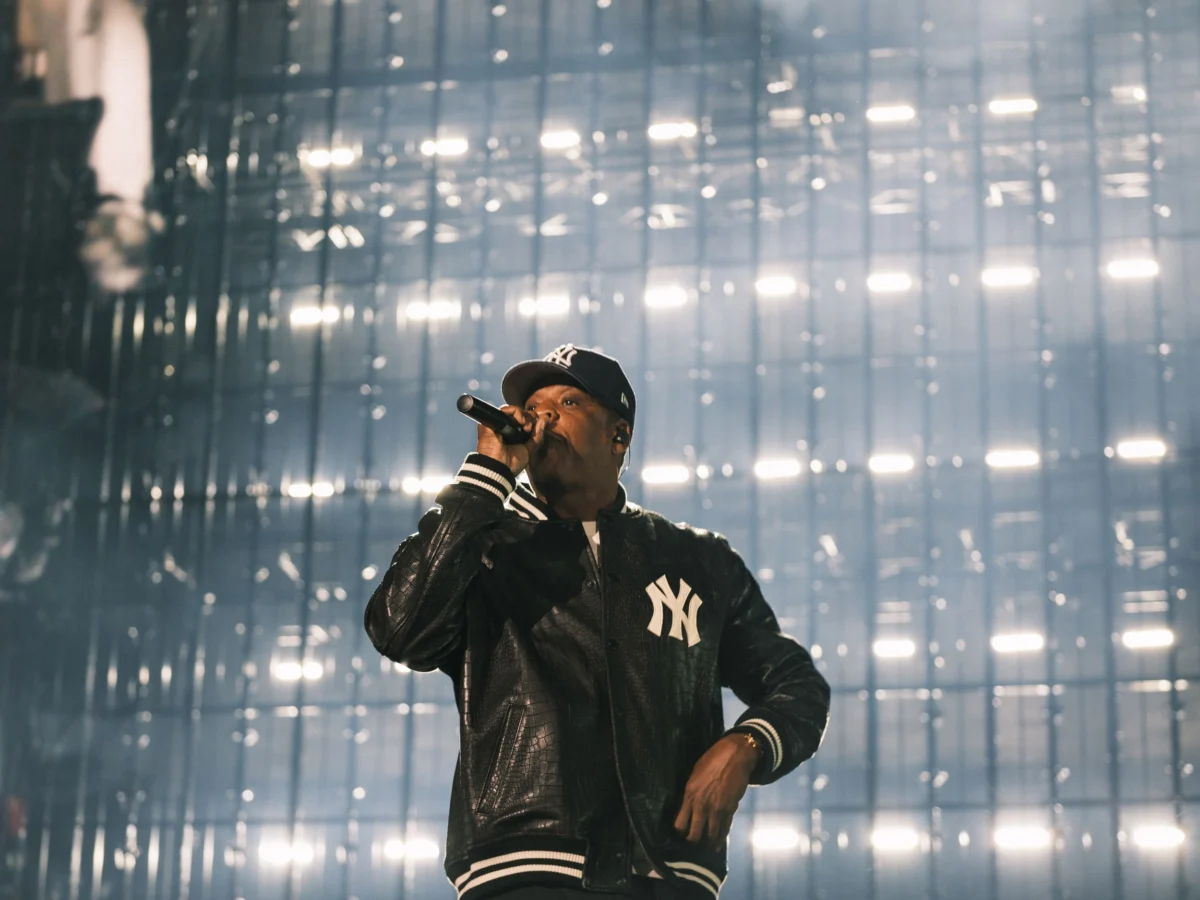
The return of Shawn "Jay-Z" Carter to the New York stage this past weekend served as a masterclass in artistic restraint and cultural resonance, marking the anniversary celebrations of his seminal albums, Reasonable Doubt and The Blueprint. While contemporary stadium tours often rely on pyrotechnics, complex kinetic structures, and high-concept theatricality, Jay-Z’s three-night residency at Yankee Stadium pivoted toward a minimalist aesthetic that prioritized narrative over spectacle. Designed by renowned creative director Willo Perron, the production sought to strip away the artifice of the modern concert to highlight the raw charisma of an artist widely regarded as the greatest rapper of all time.
The shows, which drew an estimated 135,000 fans over three nights, were not merely concerts but a curated retrospective of a career that spans nearly three decades. On Friday, the opening night focused on the 1996 debut Reasonable Doubt, while Saturday celebrated the 2001 classic The Blueprint. Due to overwhelming demand, a third "Extra Innings" show was added for Sunday, which served as a career-spanning victory lap. The speed at which these tickets were acquired was historic; according to Scott Krug, the New York Yankees’ Chief Financial Officer, the event saw one of the fastest sell-out rates in the history of the venue.

A Design Philosophy of Intentional Simplicity
The visual architecture of the show was a deliberate departure from the "ostentatious" designs typically associated with billionaire-tier performers. Willo Perron, who previously engineered the high-flying spectacles of Beyoncé’s Cowboy Carter tour, explained that for Jay-Z, the "statement piece" is the artist himself. The stage was largely bare, dominated by a massive 2,952-square-foot screen that spanned the outfield. This screen did not feature abstract CGI but rather focused on grainy, high-contrast archival footage of New York City and close-up live feeds of the performance, ensuring that even those in the upper tiers felt a sense of intimacy.
A key feature of the staging was the inclusion of bleacher seating on either side of the main platform. This design choice was intended to evoke the atmosphere of legendary, crowded New York clubs like The Tunnel, where Jay-Z built his reputation in the mid-1990s. By placing "hardcore" fans directly on the stage, the production blurred the line between the performer and the audience, creating a communal energy that is often lost in massive stadium settings. Perron noted that the goal was to resist the modern urge to design specifically for social media "moments," though the show nonetheless generated significant viral traction through its sheer musical gravity.
Performance Highlights and Surprise Collaborations
The musical execution of the weekend was bolstered by a 10-person band and an 18-piece string section, providing a rich, orchestral depth to tracks originally built on gritty street samples. On the opening night, Jay-Z moved through his catalog with a precision that belied the length of the set. A major highlight occurred when his wife, Beyoncé, took the stage to perform the chorus of "Can’t Knock the Hustle," a role originally recorded by Mary J. Blige. The appearance of their daughter, Blue Ivy Carter, on the keys during "Feelin’ It" further emphasized the theme of legacy and family that permeated the event.

The setlist also served as a live documentation of hip-hop history. Nas joined Jay-Z for "Dead Presidents," a song that famously sampled Nas’s "The World Is Yours," signifying the enduring peace and mutual respect between the two former rivals. Other guests included his mentor Jaz-O and Alicia Keys, who joined the rapper for a thunderous rendition of "Empire State of Mind." Keys introduced the anthem by playing Billy Joel’s "New York State of Mind" on a grand piano, a gesture that linked different eras of New York’s musical identity and elicited one of the loudest ovations of the weekend.
Technical Engineering and Stadium Logistics
Executing a three-night residency in the middle of a Major League Baseball season presented significant logistical challenges for the Yankees’ management. Because the stadium is situated within a dense urban environment without traditional sprawling parking lots, the arrival of staging equipment had to be timed to the minute. Scott Krug noted that the "just-in-time" delivery system was essential to prevent gridlock on the surrounding city streets.
The preservation of the "sacred ground" of the baseball diamond was a primary concern. The Yankees are scheduled to host the Los Angeles Dodgers shortly after the residency, requiring the Kentucky bluegrass to remain in pristine condition. To achieve this, the production team utilized several specialized engineering solutions:

- Polypropylene Panels: The outfield areas where spectators stood were covered in flat-bottomed panels designed to distribute weight evenly and prevent the grass from being crushed or suffocated.
- Vinyl-Mesh Diamond Cover: The infield diamond was strictly off-limits for foot traffic and equipment. Perron utilized a vinyl-mesh cover that protected the dirt and grass while doubling as a massive projection screen for additional visual content.
- No-Vehicle Zones: Strict protocols prohibited any vehicles from driving across the diamond, necessitating manual labor for much of the equipment placement in the center-field area.
Krug emphasized that while the stadium hosts occasional concerts from global icons like Paul McCartney or Madonna, the venue is "picky" about its bookings. The decision to host Jay-Z was based on his unique status as a New York institution, ensuring the risk to the field was balanced by the event’s cultural significance.
Historical Context: Reasonable Doubt and The Blueprint
To understand the weight of these performances, one must look at the albums they celebrated. Reasonable Doubt (1996) was Jay-Z’s entry into the music industry, released on his own Roc-A-Fella Records after major labels initially rejected him. It is cited as a foundational text of "mafia rap," blending street narratives with high-level entrepreneurial ambition.
The Blueprint (2001), released on the morning of September 11, became an unintentional soundtrack to the city’s resilience. It moved away from the synthesizers of the late 90s in favor of soul-heavy samples, largely produced by a then-emerging Kanye West and Just Blaze. By performing these albums back-to-back at the "Cathedral of Baseball," Jay-Z solidified his transition from a street-level hustler to a billionaire mogul who remains tethered to his roots.

The Broader Cultural Impact of a "New York Summer"
The anniversary shows arrived during a period of intense cultural activity in New York City. The city recently celebrated a championship victory by the New York Knicks, during which "Empire State of Mind" became the de facto victory anthem. This, combined with the city’s preparations for the 2026 World Cup and recent high-profile events at Madison Square Garden, has created a sense of a "collective IRL (In Real Life) experience" that many analysts believe is a reaction to the digital fatigue of the post-pandemic era.
Isra Ali, a professor of media, culture, and communication at NYU Steinhardt, suggests that the value of in-person contact has surged as audiences grow weary of curated digital personas and the rise of AI-generated content. A recent survey by the Royal Philharmonic Orchestra supported this, finding that 78 percent of people believe live performance is a realm where "AI will not touch human creativity." Jay-Z’s decision to keep the show "analog" and performance-focused aligns with this broader industry shift toward authenticity.
Furthermore, the event highlighted the complex relationship between the city and its wealthiest residents. While New York has seen rising tensions regarding affordability and the influence of billionaires, Jay-Z occupies a unique space in the public consciousness. As an artist who rose from the Marcy Houses in Brooklyn to the heights of global finance, he represents a specific "New York Dream" that resonates across class lines. During his set, Jay-Z addressed the dichotomy of his success, stating, "They said I sold out. Hell yeah, I sold out. Three nights. Yankee Stadium."

Conclusion: A Legacy Cemented
As the final notes of the "Extra Innings" show faded on Sunday night, the residency was hailed as a defining moment in the history of hip-hop performance. By rejecting the standard "pop" infrastructure of stadium tours, Jay-Z and Willo Perron proved that the most powerful special effect in a concert is the connection between an artist and their hometown. The meticulously protected Kentucky bluegrass will soon host the Yankees and the Dodgers, but the cultural imprint of the "JA-Z30" celebration—supported by subway takeovers, library card collaborations, and pop-up installations—will likely persist as a benchmark for how legacy artists can engage with their history without becoming relics of the past.
