

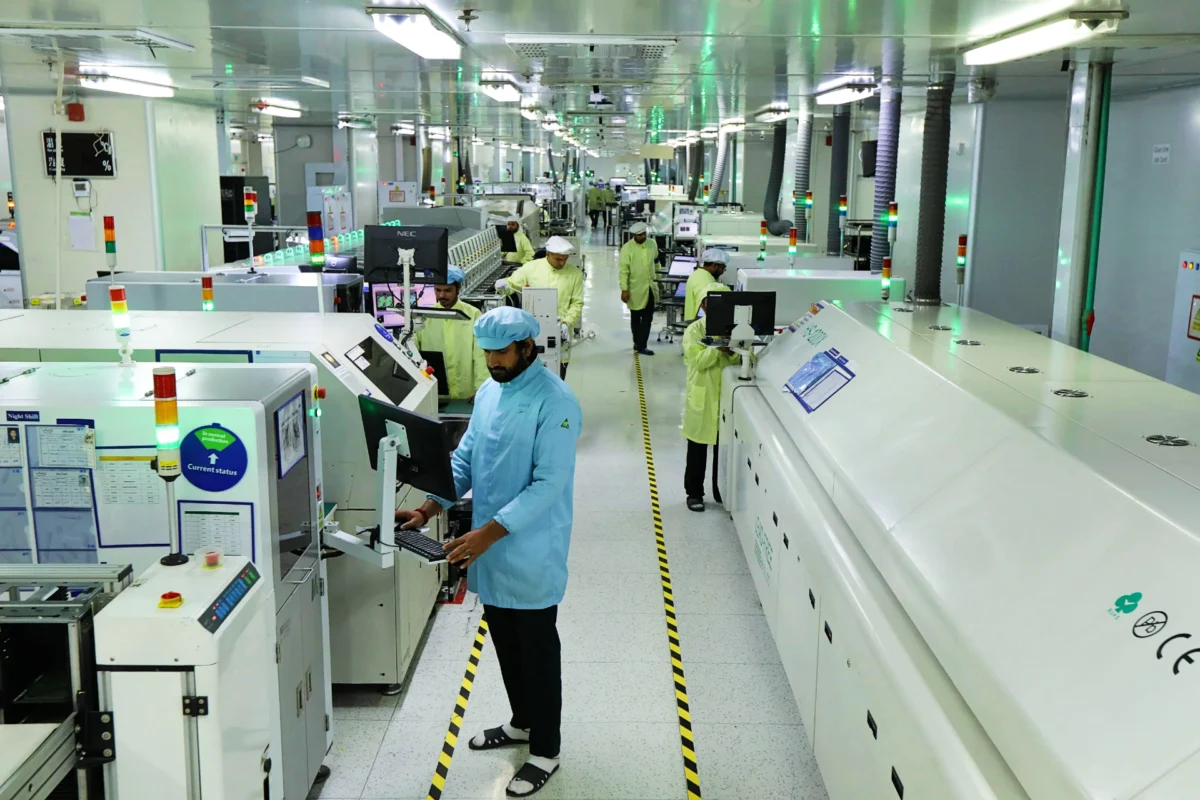
The Indian government has officially granted approval for a landmark manufacturing joint venture between the Chinese smartphone giant Vivo and the prominent Indian electronics manufacturer Dixon Technologies, a move that signals a transformative shift in the country’s industrial policy and its burgeoning electronics sector. This strategic partnership, which has been under rigorous government scrutiny for several months, represents a significant milestone in New Delhi’s efforts to integrate Chinese capital and technical expertise with domestic ownership and management. By clearing this investment, India is effectively creating a new blueprint for how foreign technology companies, particularly those from nations sharing a land border with India, must operate within its borders. The approval allows Vivo to proceed with a long-delayed manufacturing partnership first conceptualized in late 2023 and formally announced in December 2024, reflecting a broader geopolitical and economic recalibration following years of strained relations between the two nuclear-armed neighbors.
The Architecture of the Dixon-Vivo Joint Venture
Under the terms of the agreement, the joint venture is structured as a 51/49 partnership, with Dixon Technologies holding the majority 51% stake and Vivo India retaining the remaining 49%. This majority-Indian ownership is a critical component of the deal, designed to align with the Indian government’s preference for "Indian-led" manufacturing entities. The venture will see Dixon acquire specific manufacturing assets from Vivo’s existing operations in India. Beyond merely assembling Vivo’s own product line, the joint venture is designed to be a versatile manufacturing hub; it will handle a substantial portion of Vivo’s domestic smartphone orders while maintaining the capacity to produce electronic components and finished goods for other global brands.
The financial and operational scale of this venture is substantial. According to stock exchange filings by Noida-based Dixon Technologies, the partnership is expected to manage annualized manufacturing volumes of approximately 20 million to 22 million smartphones. This figure is based on Vivo’s current market performance and sales trajectory in India. For Dixon, which has already established itself as the country’s largest electronics manufacturing services (EMS) provider, this deal provides a massive boost to its production capacity and reinforces its status as a cornerstone of the "Make in India" initiative.
Navigating Regulatory Hurdles and Geopolitical Tensions
The path to this approval was fraught with regulatory complexities, primarily stemming from the investment rules introduced by the Indian government in April 2020, known as Press Note 3. These rules mandated prior government approval for any foreign direct investment (FDI) coming from countries that share a land border with India—a policy widely understood to be directed at China following the deadly military clashes in the Galwan Valley. Since the implementation of these rules, hundreds of investment proposals from Chinese firms had been placed in a state of limbo, leading to a significant cooling of cross-border corporate activity.
The approval of the Dixon-Vivo venture suggests a pragmatic softening or, at the very least, a refinement of this stance. It indicates that the Indian government is willing to permit Chinese investment provided it comes in the form of a minority stake within a domestic-controlled entity. This "controlled integration" allows India to benefit from Chinese manufacturing prowess and supply chain efficiency while ensuring that the ultimate corporate control and economic value addition remain within the domestic ecosystem.
Furthermore, the deal arrives against a backdrop of intense regulatory pressure on Chinese smartphone brands. Over the past three years, companies including Vivo, Oppo, and Xiaomi have faced a series of high-profile investigations by Indian agencies, including the Enforcement Directorate (ED) and the Income Tax Department. These probes have involved allegations of money laundering, customs duty evasion, and illegal remittances. In 2022, the Indian government accused Vivo of evading approximately $280 million in import taxes and later arrested several executives associated with the firm. By ceding majority control to an Indian partner like Dixon, Vivo gains a degree of "regulatory insulation" and a more stable, locally-compliant operating model.
The Successor to the Apple Model
The evolution of India’s smartphone manufacturing story is often divided into the "pre-Apple" and "post-Apple" eras. Over the last five years, Apple has successfully turned India into a global production hub for the iPhone, largely through its primary suppliers Foxconn, Pegatron, and the Indian conglomerate Tata Group (which recently acquired Wistron’s Indian operations). Currently, Apple accounts for a staggering 57% of India’s smartphone exports by volume, despite having a relatively small share of the domestic retail market.
In contrast, Chinese brands have historically dominated the Indian consumer market—accounting for approximately 72% of total sales—but have contributed less than 10% to the country’s exports. This disparity highlights a massive untapped potential for the Indian economy. The Dixon-Vivo venture is seen by industry analysts as the beginning of a second wave of growth, where Chinese brands move beyond "manufacturing for India" and begin "manufacturing in India for the world." If Chinese brands can replicate Apple’s export-oriented success by leveraging local partners, India could see its electronics export figures grow exponentially.
Dixon Technologies: The Rise of a Domestic Giant
For Dixon Technologies, the joint venture is a crowning achievement in its rapid ascent within the global electronics value chain. Under the leadership of Managing Director Atul Lall, Dixon has aggressively utilized the Indian government’s Production Linked Incentive (PLI) schemes to scale its operations. The company already boasts a diverse portfolio, manufacturing smartphones for Xiaomi, Motorola, and Samsung, as well as televisions, washing machines, and lighting products for various global labels.
The addition of Vivo’s volumes will significantly impact Dixon’s bottom line. During an earnings call in May, Lall emphasized that winning such manufacturing contracts is central to the company’s growth strategy. By moving into a majority-ownership role with a brand as large as Vivo, Dixon is transitioning from a mere contract manufacturer to a strategic partner that owns a significant portion of the production infrastructure. This provides Dixon with greater leverage to deepen local value addition—moving from simple assembly to the manufacturing of complex sub-components.
Market Impact and Industry Reactions
The market reaction to the approval has been largely positive, with analysts viewing it as a "win-win" for both the companies involved and the broader Indian economy. Tarun Pathak, Research Director at Counterpoint Research, noted that the structure provides Vivo with much-needed policy alignment and political capital. "The approval of this joint venture creates a win-win for both players," Pathak stated. He added that for Dixon, the scale provided by Vivo’s market lead—Vivo held a 23% shipment share in Q1 2024, making it the top brand in India—is instrumental in pursuing aggressive export targets.
The broader industry is watching this development closely. It is widely expected that other Chinese majors, such as Oppo and Realme, may seek similar arrangements with Indian firms like Dixon, Optiemus, or the Tata Group. This shift could lead to a consolidation of the manufacturing landscape, where a few large Indian EMS providers handle the production for a multitude of global brands, creating an ecosystem similar to the one found in Shenzhen or Dongguan, but with an Indian ownership structure.
Broader Economic and Geopolitical Implications
The approval of the Dixon-Vivo JV carries implications that extend far beyond the telecommunications sector. It marks a potential de-escalation in the economic "cold war" between New Delhi and Beijing, suggesting that economic pragmatism is beginning to balance out national security concerns. By integrating Chinese technology into Indian-owned firms, India is attempting to de-risk its supply chain without completely decoupling from the world’s second-largest economy.
From a labor perspective, the expansion of manufacturing facilities is expected to create thousands of direct and indirect jobs in the National Capital Region (NCR), particularly in Noida and Greater Noida, which have become the heart of India’s electronics belt. This aligns with the government’s broader goal of increasing the manufacturing sector’s contribution to the national GDP.
Conclusion and Future Outlook
The Indian government’s green light for the Dixon-Vivo joint venture is a watershed moment for the "Make in India" campaign. It successfully navigates the complex intersection of national security, economic necessity, and global supply chain shifts. By requiring a 51% local stake, India has set a firm precedent: foreign brands are welcome to profit from the Indian market and utilize its labor force, but they must do so by empowering domestic industry.
As the venture begins its operations, the focus will shift to how quickly it can scale and whether it can meet the high quality-control standards required for international exports. If successful, the Dixon-Vivo partnership will not only solidify India’s position as the world’s second-largest smartphone manufacturer but also serve as a definitive template for the future of foreign investment in high-tech sectors across the Global South. The move signals that India is no longer content with being just a consumer of technology; it is determined to own the means of its production.
