

The global financial landscape entered a period of heightened sensitivity on Thursday as investors weighed a complex confluence of geopolitical tension, rapid advancements in generative artificial intelligence, and a divergent earnings season for major American retailers. While S&P 500 futures showed a modest recovery in early trading following a consecutive losing session, the underlying sentiment remains cautious. This caution is driven by escalating military activity in the Middle East and the legal complexities surrounding the executive branch, even as the technology sector prepares for a landmark public release of new artificial intelligence models.
Geopolitical Tensions and the Middle East Conflict
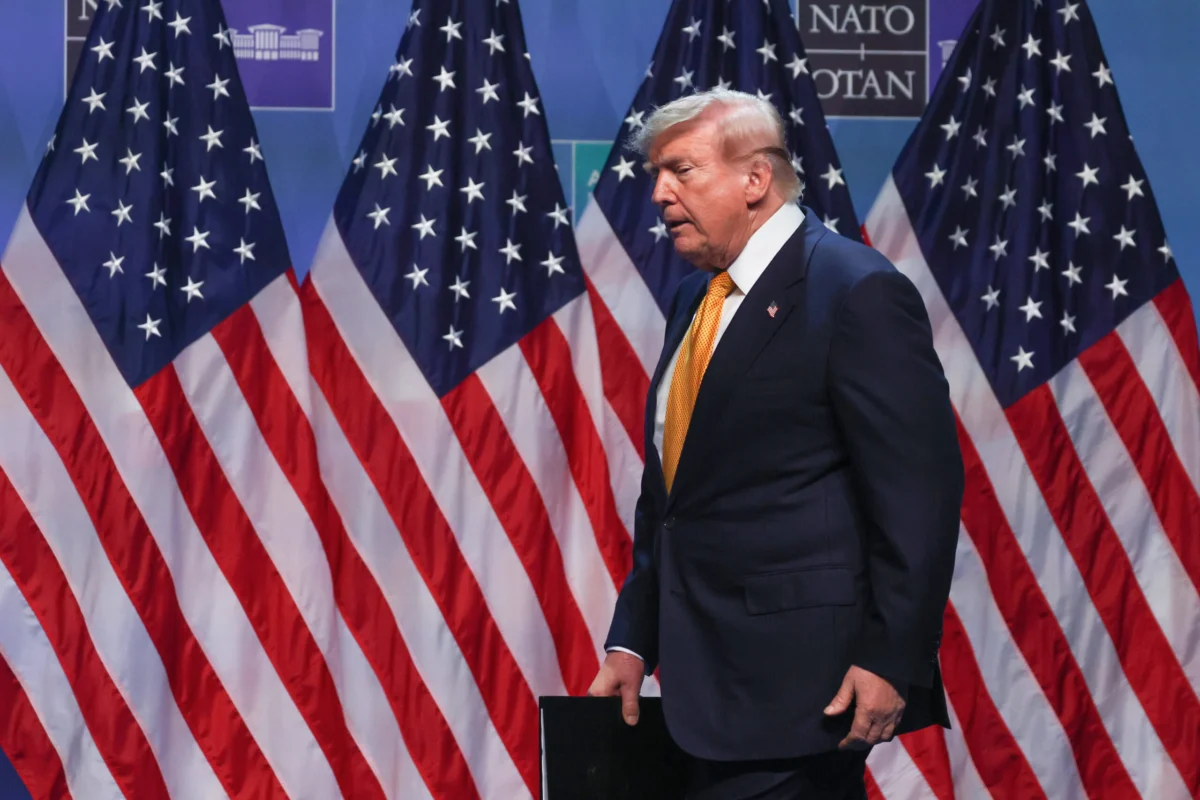
The geopolitical arena remains the primary driver of market volatility following recent developments at the 2026 NATO Ankara Summit in Turkiye. President Donald Trump’s rhetoric regarding the ongoing conflict with Iran has injected a fresh layer of uncertainty into global energy markets and international diplomacy. Despite diplomatic efforts during the summit on July 8, 2026, the President indicated a lack of urgency in reaching a de-escalation agreement with Tehran, stating he was "not sure" if a deal was currently in the best interest of the United States.
This diplomatic ambiguity was followed almost immediately by a new round of U.S. military strikes. These actions have focused on strategic assets, further complicating the security of the Strait of Hormuz, a critical chokepoint for global oil transit. Analysts suggest that the administration’s "maximum pressure" 2.0 strategy is intended to force a more favorable ceasefire agreement, but the immediate result has been a "risk-off" environment for traders. The lack of a clear timeline for a cessation of hostilities has led to fluctuations in crude oil futures and a defensive posture among institutional investors.
The Evolution of Generative AI: OpenAI’s GPT-5.6 Release
In the technology sector, OpenAI has announced the public release of its highly anticipated GPT-5.6 series, comprising the Sol, Terra, and Luna models. This release marks a significant milestone in the AI roadmap, coming two weeks after the startup initially limited the rollout at the request of the U.S. government. The government’s intervention was reportedly based on concerns regarding the models’ advanced reasoning capabilities and potential implications for national security.
Previously, access to the GPT-5.6 series was restricted to a select group of vetted organizations whose research and development activities were monitored by federal authorities. The decision to move to a public release suggests that OpenAI has satisfied regulatory benchmarks concerning safety protocols and alignment. The Sol model is expected to focus on high-speed multimodal processing, while Terra and Luna are optimized for environmental modeling and specialized scientific research, respectively.
OpenAI CEO Sam Altman is scheduled to provide further clarity on the models’ capabilities and the company’s future trajectory in an exclusive interview on CNBC’s "Squawk on the Street." Market participants are particularly interested in Altman’s perspective on the ending of government-imposed limits and how these models will integrate into the broader enterprise software ecosystem.
Corporate Earnings: A Tale of Two Consumers
The second-quarter earnings season has highlighted a growing divergence in consumer behavior, as evidenced by reports from Levi Strauss & Co. and PepsiCo.
Levi Strauss reported financial results that exceeded analyst expectations for both revenue and earnings per share. Despite this performance, shares of the denim manufacturer fell more than 4% in pre-market trading, a move analysts attribute to "profit-taking" after a strong year-to-date run and general market skittishness. CEO Michelle Gass emphasized that demand remains robust, particularly in the direct-to-consumer (DTC) channel. Crucially, Gass noted that approximately two-thirds of the quarter’s sales growth was driven by unit volume rather than price increases, suggesting that the brand maintains significant pricing power and consumer loyalty despite broader inflationary pressures. In a show of confidence, the company also hiked its full-year guidance and increased its quarterly dividend.
Conversely, PepsiCo reported mixed results, reflecting the challenges facing the global snack and beverage giant. While international demand remains a pillar of strength, the company’s North American business continues to struggle with "penny-pitching" consumers. As inflation persists, low-to-middle-income households in the U.S. are increasingly opting for private-label brands or reducing discretionary spending on branded snacks. PepsiCo CEO Ramon Laguarta is expected to discuss the company’s strategies for navigating this bifurcated consumer environment, including potential shifts in packaging sizes and promotional pricing to recapture domestic market share.
Legal and Judicial Developments Surrounding the Presidency
The legal landscape for President Trump has become increasingly fraught following a series of judicial setbacks. A New York federal appeals court recently denied the President’s bid to halt the disbursement of more than $5 million to writer E. Jean Carroll. This sum is tied to a jury verdict that found the President civilly liable for sexual abuse and defamation.
Judge Lewis Kaplan of the Manhattan Federal Court granted Carroll’s request to receive the $5 million plus accumulated interest, totaling nearly $5.8 million. The funds had been held in a court-controlled account pending appeal. However, with the Supreme Court’s recent refusal to hear the case, Judge Kaplan ruled that the conditions for the transfer of funds to Carroll had been met.
Simultaneously, the President is pursuing a series of unconventional legal maneuvers. These include a long-shot petition for the Supreme Court to rehear a case regarding birthright citizenship, a cornerstone of his administration’s immigration policy. Furthermore, an appeals court recently denied a bid to restore the President’s name to the Kennedy Center, following a controversial rebranding effort. These legal challenges, while largely independent of daily market movements, contribute to the broader narrative of domestic political volatility that investors must navigate.
The Emergence of the Orbital Economy
The space sector continues to capture the imagination of Wall Street, though the transition from speculative growth to stable equity remains turbulent. SpaceX, which recently made its debut on the Nasdaq-100, has faced significant selling pressure. The stock closed below its initial trading price for the second consecutive session, despite a flurry of bullish notes from major financial institutions including Morgan Stanley and UBS.
Analysts at these firms maintain that SpaceX is uniquely positioned to dominate the emerging "orbital data center" market. This concept involves placing massive server arrays in low Earth orbit (LEO) to provide high-speed, low-latency data processing for global enterprises. The space-based data center race has attracted the involvement of semiconductor giants such as Nvidia, AMD, and Broadcom, all of which are reportedly developing radiation-hardened chips designed for long-term deployment in the vacuum of space.
The shift toward space-based infrastructure represents a new frontier for the cloud computing industry. Proponents argue that orbital data centers can leverage solar energy more efficiently and utilize the natural cold of space for thermal management, potentially lowering the massive energy costs associated with terrestrial data centers. However, the high cost of deployment and the complexities of orbital mechanics remain significant barriers to entry, contributing to the current volatility in SpaceX’s valuation.
In a related development, Blue Origin, the aerospace company founded by Jeff Bezos, has reportedly concluded its first significant round of outside funding. While the company has historically been funded primarily by Bezos himself, this shift toward external capital suggests a maturing business model and a more aggressive pursuit of commercial contracts in the satellite launch and lunar exploration sectors.
America’s Top States for Business: A 20-Year Retrospective
Coinciding with these global events, CNBC has released its 20th annual "America’s Top States for Business" study. This comprehensive ranking evaluates all 50 states across various categories, including workforce quality, infrastructure, cost of doing business, and technological innovation. Over the past two decades, the study has become a benchmark for corporate relocation and state-level economic policy.
The 2026 rankings reflect a shift in priorities for modern corporations. While low taxes and minimal regulation remain important, the availability of a "tech-ready" workforce and robust renewable energy infrastructure have become the primary deciders for high-growth industries. The study highlights how states in the Sun Belt and the Pacific Northwest are increasingly competing for dominance in the semiconductor and AI sectors, while traditional manufacturing hubs in the Midwest are rebranding themselves as "Clean Tech" corridors.
Market Implications and Outlook
As the trading day commences, the convergence of these factors suggests a period of "choppy" price action. The strength of the technology sector, bolstered by OpenAI’s model release, provides a tailwind for the Nasdaq, while the geopolitical risks and mixed consumer data may weigh on the Dow Jones Industrial Average and the S&P 500.
Investors will be closely watching the 10 a.m. ET hour for Sam Altman’s commentary, as well as any further updates from the Pentagon regarding the situation in the Middle East. The long-term outlook remains tethered to the Federal Reserve’s response to these divergent economic signals—balancing the need to support a slowing consumer base with the necessity of managing the inflationary risks posed by potential energy supply disruptions.
In summary, the market is currently caught between the promise of an AI-driven future and the realities of a volatile geopolitical and legal present. Professional guidance suggests a focus on quality and earnings visibility as the primary shields against the ongoing macro-level uncertainty.
